Give forgotten household items a place, a label and a system with these creative Cricut projects for organizing your home.
Household organization is not always about finding another place to put things.
Sometimes, it is about keeping track of what belongs together, knowing which supplies require replacement, or making sure an item can be identified without opening several containers.
These small details often determine whether a storage arrangement remains useful or becomes difficult to manage.
With a Cricut machine, ordinary materials can be turned into practical household organization tools, from identification systems for sewing and cleaning supplies to freezer inventory labels and document dividers.
The following 27 easy Cricut projects for organizing your home focus on useful solutions that give everyday household items a clearer purpose and make them easier to manage.
Personalised kitchen gifts, such as recipe boards and labelled storage jars, can be useful beyond the occasion they are made for. Find more inspiration in 31 Easy Cricut Projects for Gifts.
What Makes a Cricut Organization Project Useful Beyond Its Appearance?
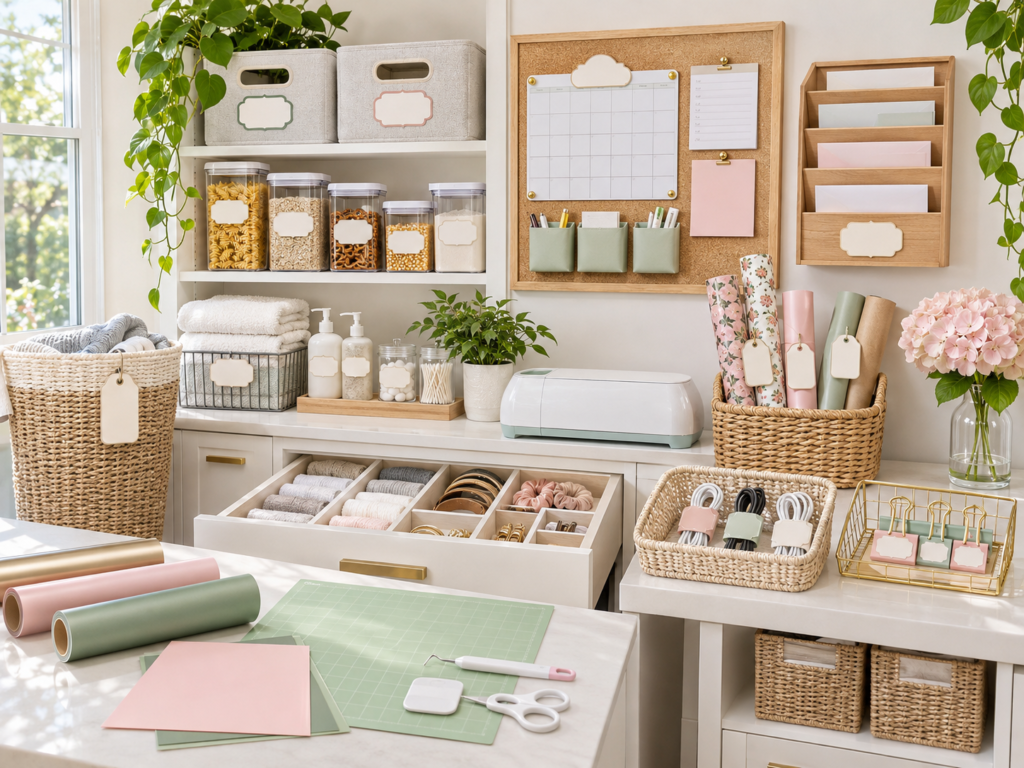
Good household organization requires more than assigning names to storage containers. The real value lies in the details that help people manage what they own. A label identifying a replacement filter, for instance, becomes more useful when it also records the appliance model and filter size.
A sewing storage insert can do more than separate needles; it can preserve their sizes and intended fabric uses, making the right needle easier to select later.
This is an important distinction when choosing Cricut projects. Some household supplies have interchangeable parts, others require regular replenishment, while certain items must be stored with specific instructions or identifying information.
The design should account for these differences rather than simply decorate the storage space.
Material choice should also reflect the conditions of use. A paper insert may work perfectly inside a dry drawer but is unsuitable for a damp cleaning area. Similarly, permanent vinyl is not always appropriate for information that changes regularly.
Writable surfaces, removable labels and replaceable inserts can be more practical in those situations.
The most worthwhile projects are those that make household information easier to access, reduce avoidable mix-ups and give stored items a system people can realistically maintain.
A personalised water bottle, snack container or accessory can make a thoughtful gift for a teenager. More age-specific ideas are featured in 30 Cute Cricut Projects for Teen Girls.
Cricut projects for organizing your home
1. Freezer Inventory Labels with Space for Dates
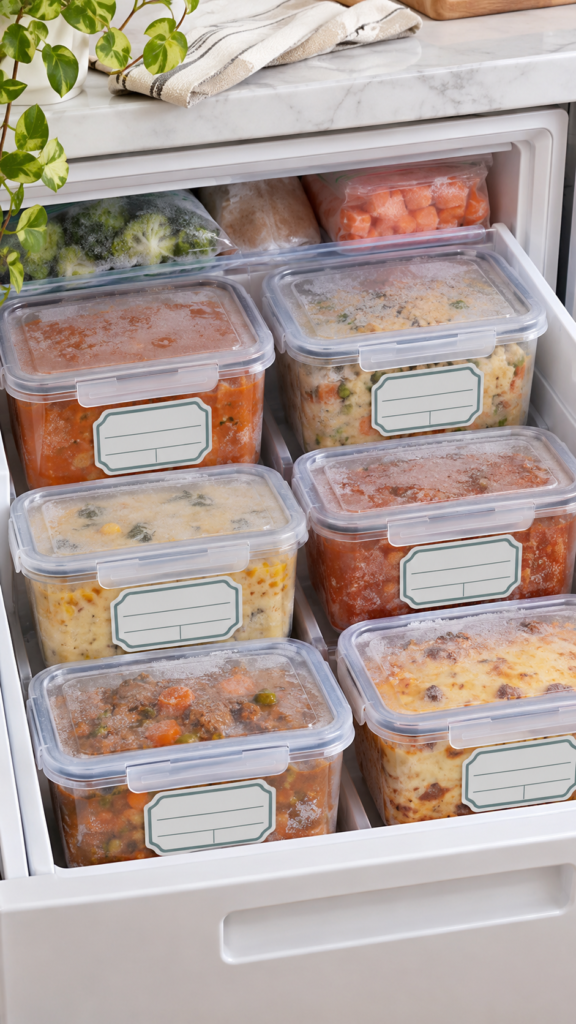
Freezing several batches of the same food can make it difficult to distinguish recently prepared meals from older portions, especially when they are stored in identical containers.
Create Cricut labels for freezer containers with spaces for the food name, freezing date and number of portions.
For foods prepared in batches, this makes it easier to identify what is available and decide which container to use first. A writable label or reusable label holder is preferable because the food description and dates will change with each new batch.
2. Measuring Cup and Spoon Storage Identification Tags
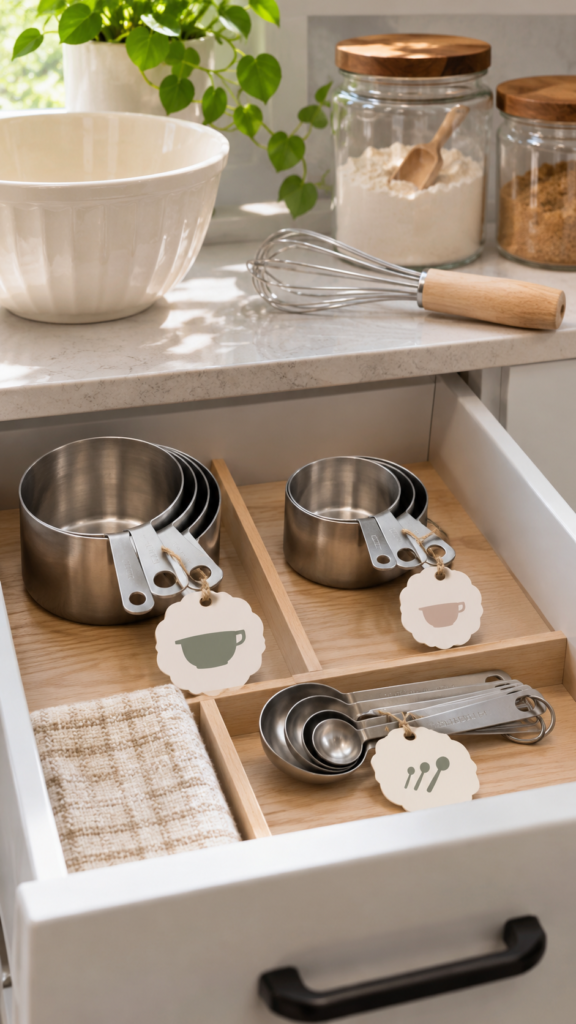
A ½-cup measure and a ¼-cup measure can look almost identical when several measuring utensils are kept in one drawer. Use your Cricut to cut small measurement tags for a hanging rack or individual drawer sections.
Include both the number and unit, such as ½ cup or 1 tablespoon, so the measurements are easy to recognise without picking up each utensil to inspect its markings.
This is a particularly useful addition to a baking station where several sizes are used regularly.
3. Food Container Lid Matching Labels
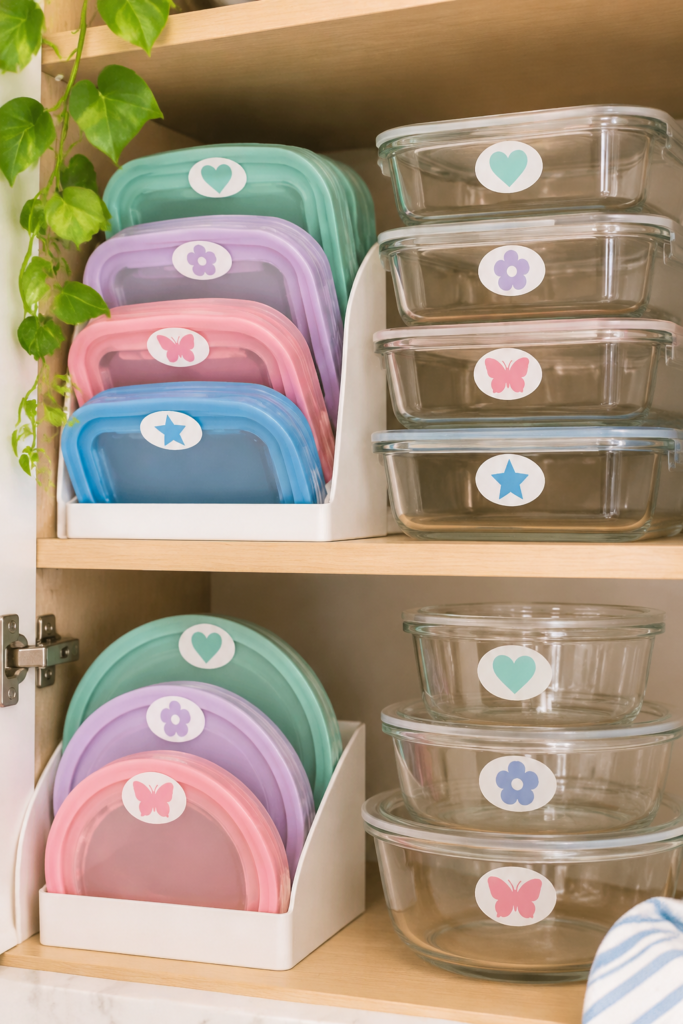
Instead of writing food names on every container, give each container and its lid a matching number or symbol. For example, container 01 and its lid both carry the same small identifier.
This is useful when a kitchen has several containers of similar shapes but different capacities. Cricut-cut vinyl can be applied to suitable exterior surfaces, away from areas that come into contact with food.
The system also makes it easier to identify lids when they are stored separately from the containers.
Kitchen labels and decorative signs can also complement other handmade touches around the house. 29 Easy Cricut Projects for Home Decor has more projects for different rooms.
4. Opened Food Package Storage Clips
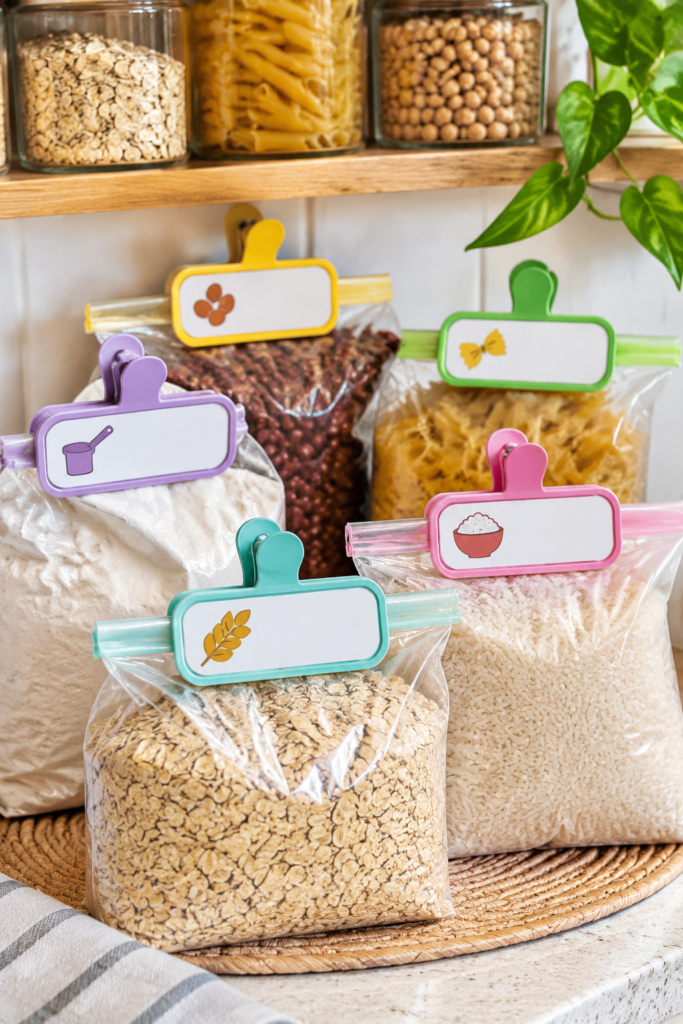
Some opened food packets are difficult to identify once their original packaging has been folded, cut or placed inside another storage bag.
Make small category markers for reusable bag clips, using names such as Rice, Flour, Oats and Dried Beans.
The clip can then identify the contents while keeping the packet closed. Choose clips with a flat area large enough for the lettering, and decorate only their outer surfaces with suitable vinyl.
5. Kitchen Refill Station Identification Tags
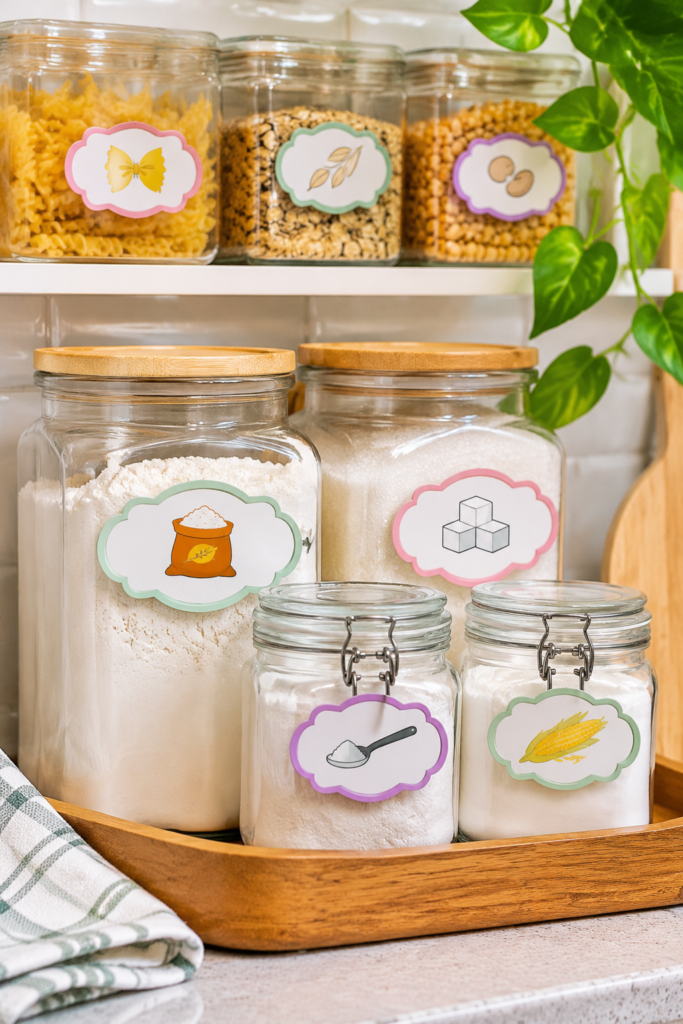
A refill container should tell household members exactly what belongs inside it.
Create Cricut labels for frequently used ingredients, but give special attention to products that can easily be confused, such as flour, cornflour, icing sugar and baking powder.
Include the full ingredient name rather than relying on decorative abbreviations. For containers that are washed and refilled often, removable labels or replaceable tags are more practical than permanent designs.
6. Refrigerator Shelf and Food-Zone Labels
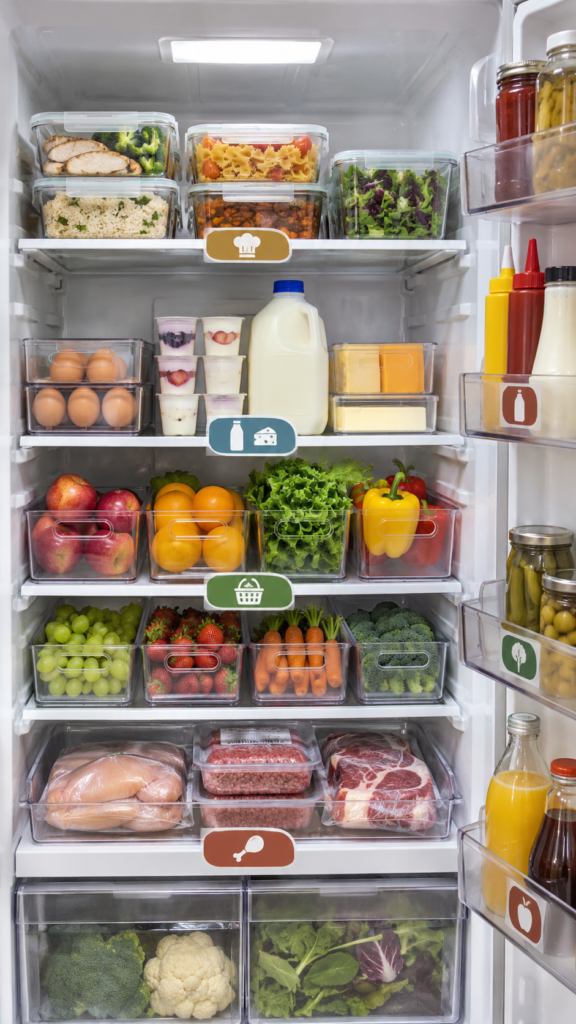
A shared refrigerator can become confusing when everyone puts groceries wherever there is available space. Make small removable labels for designated shelves or storage drawers, particularly where household members regularly keep similar foods.
For example, a shelf can be reserved for prepared ingredients that will be used in the next meal.
Keep raw meat and seafood securely contained on the lowest shelf to prevent their juices from reaching other foods. The labels should support safe storage, not dictate it.
Cardstock can be used for recipe cards, meal-planning inserts and other paper-based kitchen projects. Readers can find additional ideas in 27 Easy Cricut Projects Using Cardstock.
7. Cleaning Cloth Identification Bands
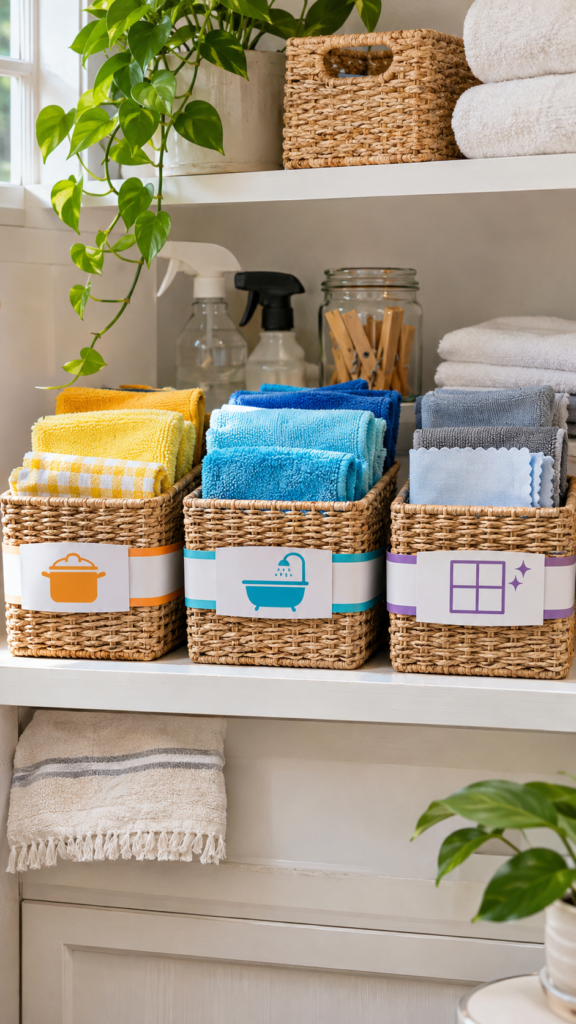
A cleaning cloth used on a kitchen worktop should not find its way into the bathroom cleaning basket.
Make Cricut-cut identification bands for the baskets where these cloths are kept.
Use clear names such as Kitchen Cloths, Bathroom Cloths and Glass Cleaning Cloths.
Cardstock bands can be placed around the storage baskets rather than attached to the cloths themselves, so they can be removed easily when the cloths are washed.
8. Cleaning Concentrate Dilution Reference Tags
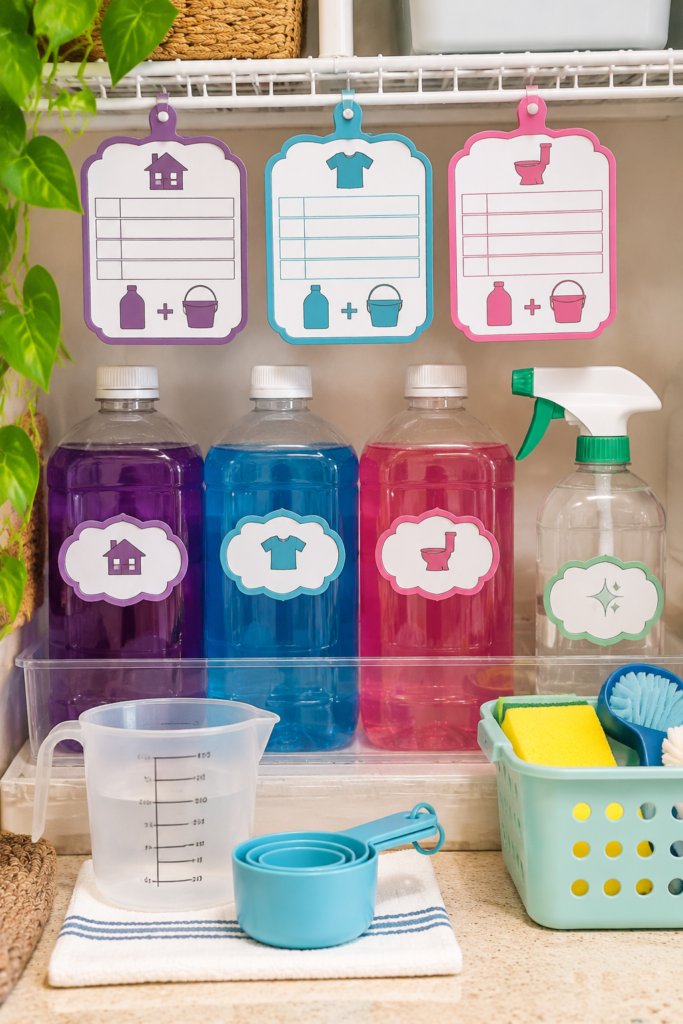
Small print on cleaning concentrate bottles can be difficult to read when preparing a cleaning solution.
Create a Cricut reference tag for each product and record its recommended dilution ratio, measuring instructions and important precautions.
For example, a tag can remind the user of the exact amount of concentrate required per litre of water, provided that information comes directly from the manufacturer’s instructions.
Keep these references with the original products; never use them to justify mixing different cleaning chemicals.
Infusible Ink offers another option for personalising compatible kitchen accessories, such as suitable coasters and fabric items. See 25 Easy Cricut Projects Using Cricut Infusible Ink for more projects.
9. Laundry Sorting Basket Labels
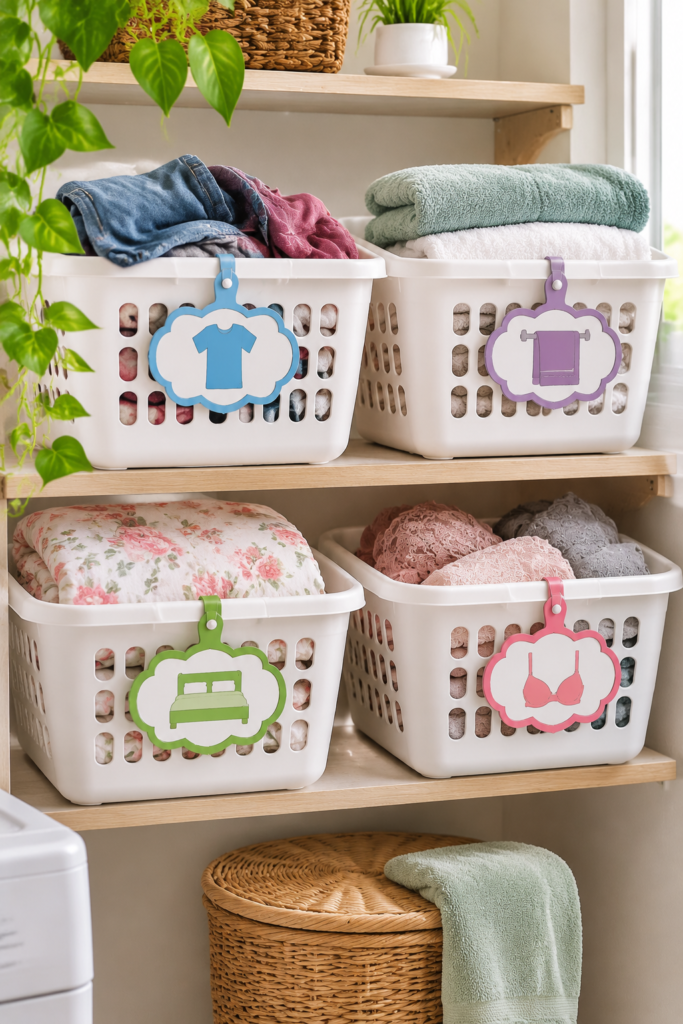
Not every garment should go into the same wash. Create Cricut labels for laundry baskets that separate everyday clothing, towels, bedding and delicate garments.
A separate basket for items requiring special attention can also help prevent them from being washed with an unsuitable load. For woven baskets, hanging tags may be more reliable than adhesive vinyl, which can struggle to stick to uneven surfaces.
10. Ironing and Garment Care Symbol Reference Board
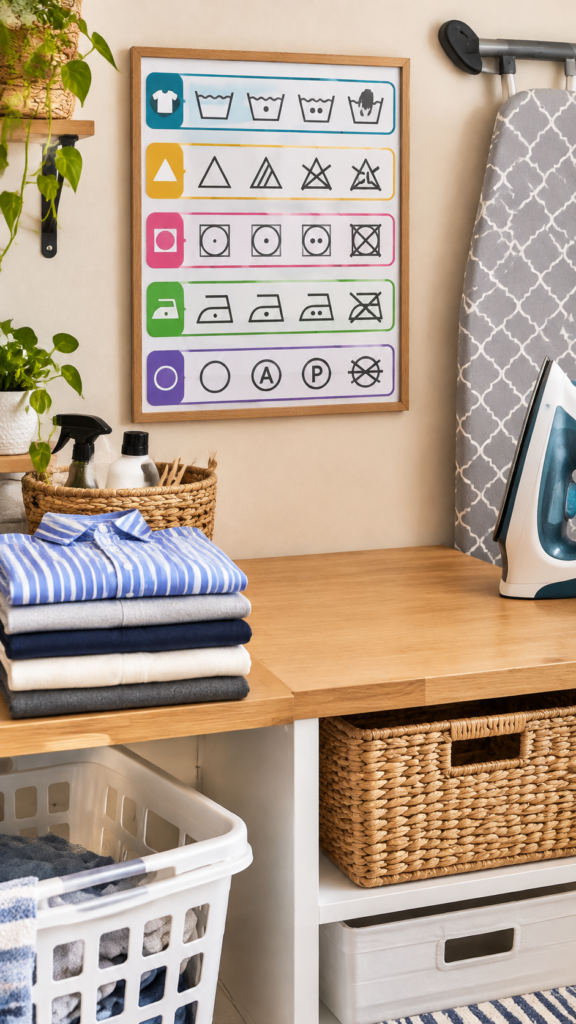
Make a small garment-care reference board with Cricut-cut symbols and their meanings. Include the common washing, bleaching, drying and ironing symbols, together with their correct explanations.
One particularly useful detail is the ironing temperature guidance: one dot indicates a low temperature, two dots a medium temperature and three dots a high temperature.
This gives household members a quick reference before ironing clothes with unfamiliar care instructions.
Vinyl lettering can help identify pantry containers, spice jars and kitchen storage. More ways to use this material are covered in 23 Cricut Projects for Beginners Using Vinyl.
11. Household Battery Storage Identification Chart
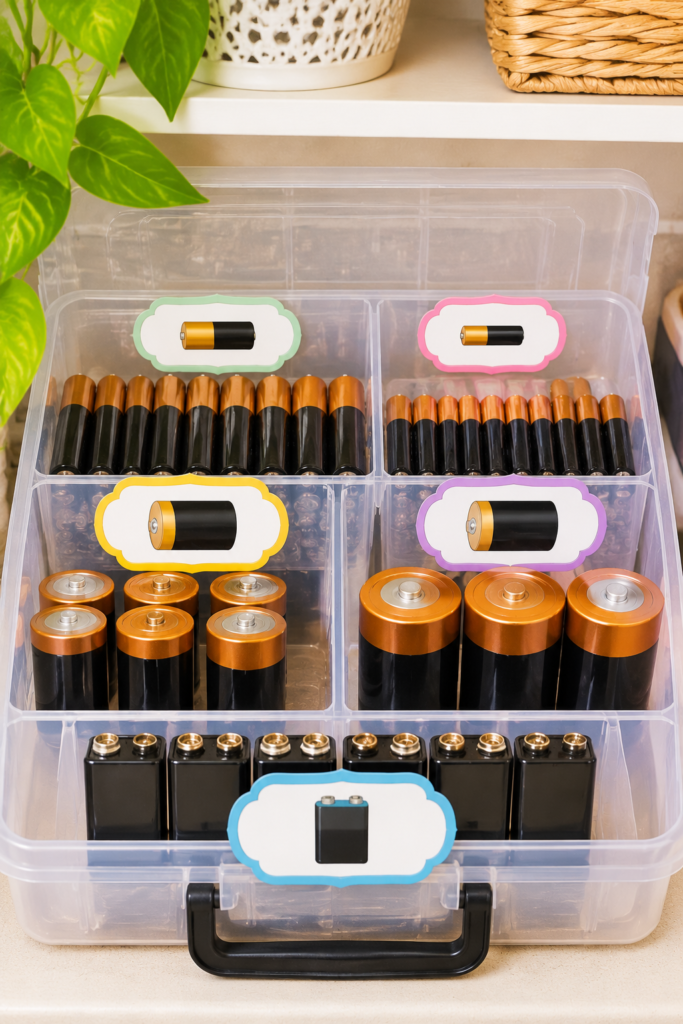
A battery organiser is more useful when each compartment clearly identifies the size it should hold. Cut labels for AA, AAA, C, D and 9V battery sections, matching each label to the actual compartment.
You can also include a small reminder to check battery polarity and condition before storage.
Keep loose batteries away from metal objects, and take particular care with 9V batteries because their terminals can short-circuit when they touch conductive materials.
12. Replacement Filter and Maintenance Date Tags
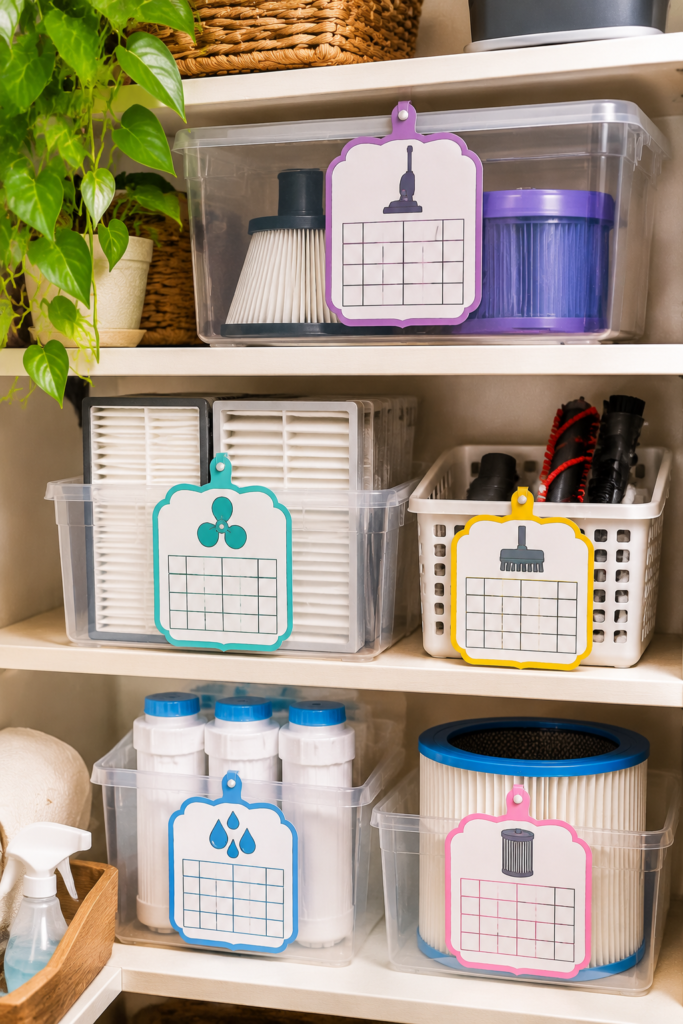
An appliance filter can be difficult to replace correctly when its model number is no longer easy to find.
Make a small Cricut identification tag for the appliance or its filter storage area, recording the filter reference number and the date it was last changed.
For example, a vacuum filter tag can help distinguish the correct replacement from other filters that look similar. Leave space for the next maintenance check, but use the appliance manufacturer’s instructions to determine when replacement is due.
Small leftover pieces of vinyl and cardstock can be useful for making spice labels, recipe cards and other little kitchen details. See 23 Cricut Projects You Can Make with Scrap Materials for more ways to use those offcuts.
13. Sewing Machine Needle Reference and Storage Cards
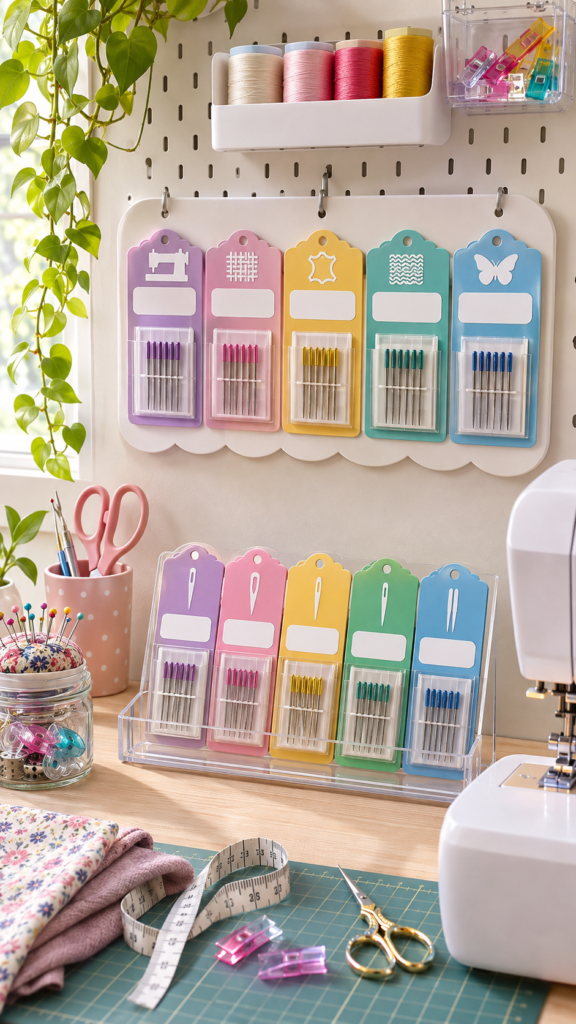
Buying the correct sewing machine needle is not just about choosing a size. Needle type also matters because the point and construction are designed for different fabrics.
Create Cricut-cut reference cards for universal, jersey, stretch, denim, Microtex and quilting needles.
Include the needle size, its intended fabric and a small illustration or photograph of the needle packet.
For example, a 75/11 stretch needle and a 75/11 universal needle have the same size designation but are not interchangeable in every sewing situation. Keep the cards beside the original needle packets so the identification remains accurate.
Some kitchen projects, including personalised labels and recipe accessories, may also appeal to buyers who enjoy organised cooking spaces. Explore 25 Easy Cricut Projects to Make and Sell for Extra Money for more product ideas.
14. Fabric Swatch Library with Sewing Information
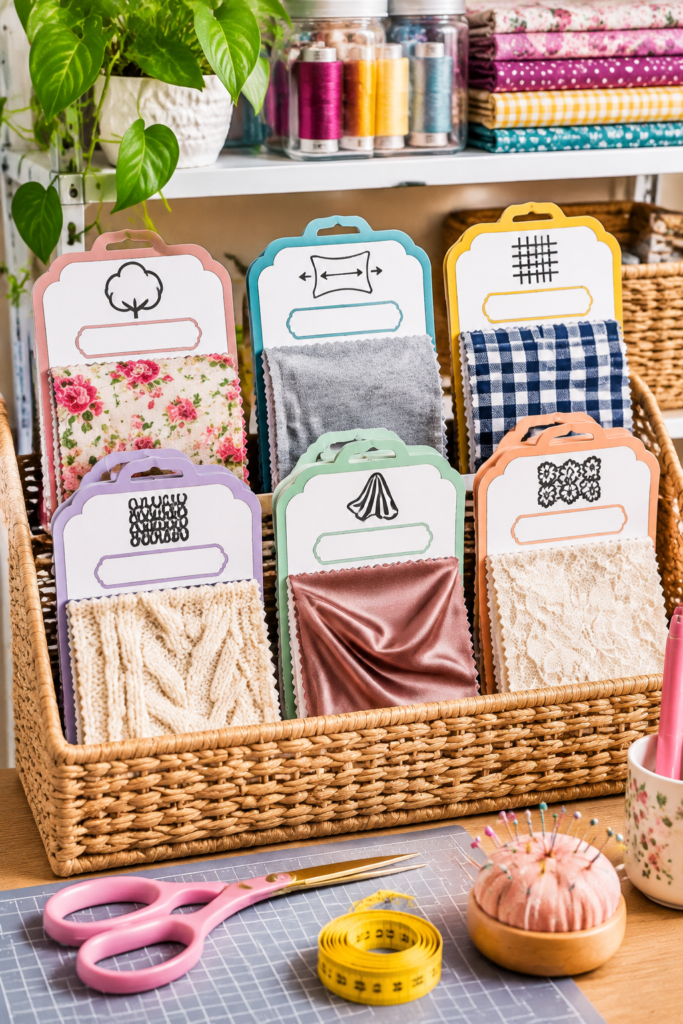
Fabric samples are much more useful when they retain the details needed to choose them for another project.
Use your Cricut to cut small labels for swatch cards, recording the fabric composition, width, weight, stretch and care instructions where known.
Include the supplier or purchase reference when you may need to buy the same fabric again.
Keep similar-looking materials on separate cards; cotton poplin, polyester blends and cotton jersey, for example, have different properties that affect pattern selection and garment construction. Store the cards on a ring or in a small filing box.
Personalised cups, food labels and party favour details can also be adapted for birthday tables and celebrations. 20 Easy Cricut Projects for Birthdays and Parties has more ideas for those occasions.
15. Unfinished Sewing and Craft Project Tracking Cards
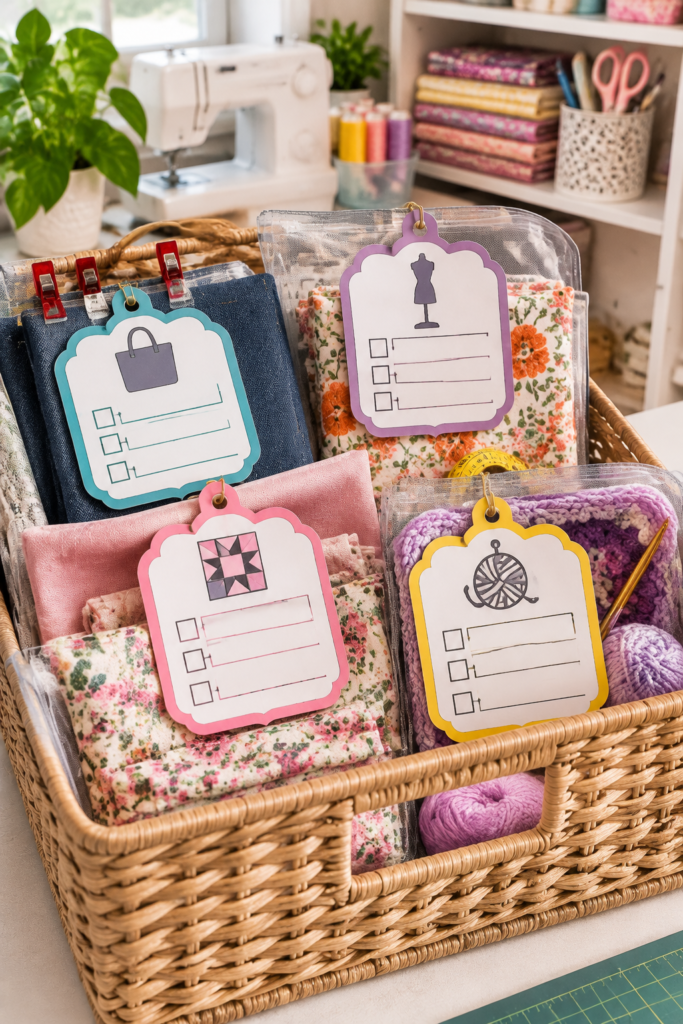
Keep unfinished projects from losing their materials or important measurements by giving each one its own project card.
Cut the card with your Cricut and include the project name, pattern or design reference, fabric or material required, measurements and next unfinished task.
For sewing projects, the card could record that the fabric has been cut but the zipper and matching thread have not yet been purchased.
Keep the card with the project rather than in a separate notebook, so the information stays with the correct materials.
16. Charger and Electronic Cable Identification Tags
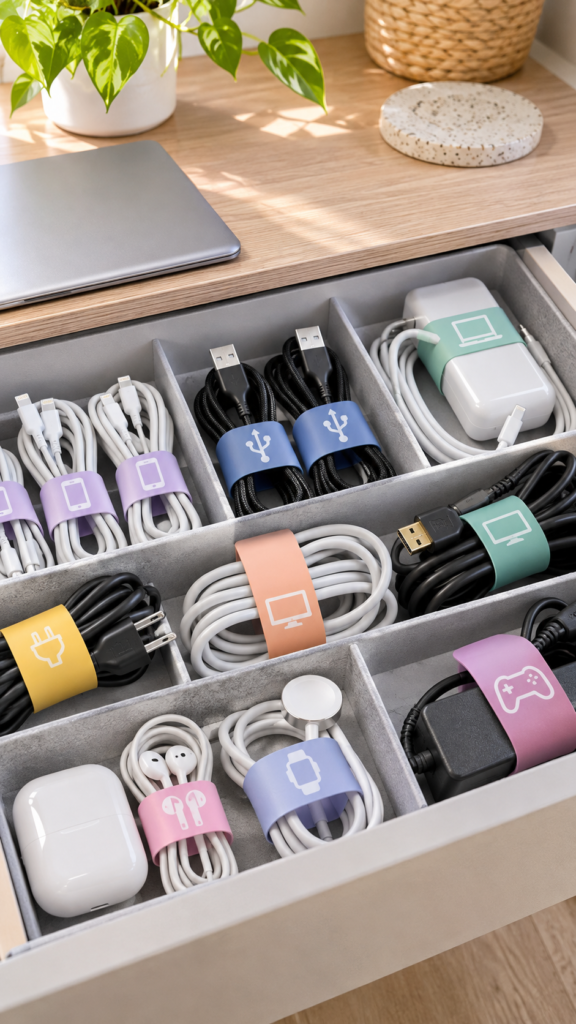
Not every cable with a USB-C connector is suitable for every charging or data-transfer requirement.
Make Cricut-cut tags for individual cables, identifying the device they belong to and their verified capabilities where known.
Include information such as the cable’s supported power rating or data speed only when it has been confirmed from its packaging or manufacturer’s specifications.
This is particularly useful when several similar cables are kept in one drawer. Use small hanging tags or cable wraps rather than placing bulky decorations near the connectors.
A small collection of useful kitchen items can be a starting point for testing demand for handmade products. 21 Simple Cricut Projects for Beginners That Actually Sell offers further ideas for beginner sellers.
17. Paper and Cardstock Specification Storage Dividers
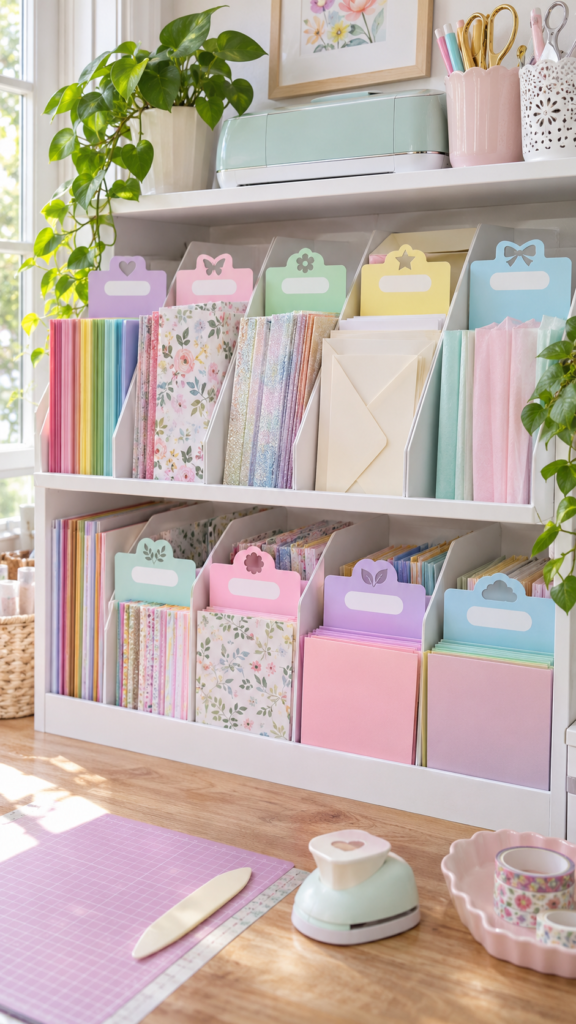
Paper storage requires more than separating sheets by colour. Different projects call for different paper weights, sizes and finishes, and choosing the wrong stock can affect printing, folding and cutting.
Create Cricut-cut dividers for A4 and A5 paper, US Letter sheets, envelopes, cardstock and specialty paper. Where known, record the paper weight in gsm or lb, along with the finish, such as matte, glossy or textured.
This gives a home craft workspace a useful paper reference instead of a collection of unidentified sheets.
Many kitchen projects rely on paper crafts or adhesive vinyl rather than heat-transfer applications. Readers without a heat press can find suitable alternatives in 21 Cricut Projects for Beginners Without a Heat Press.
18. Screw and Fixing Identification Cards for Small Hardware Organisers
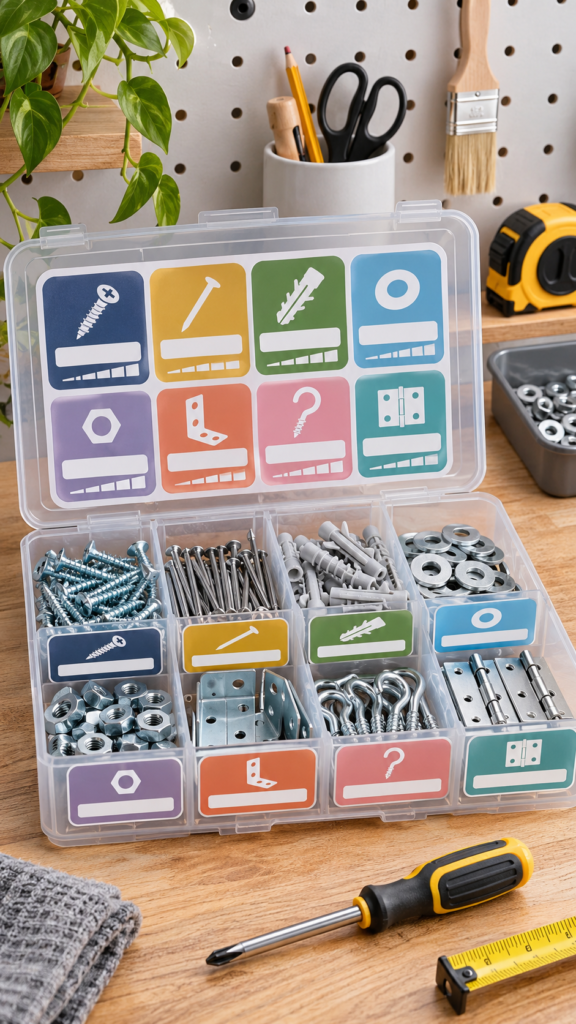
Small hardware is difficult to identify when several screws, nails and wall plugs look almost alike.
Rather than labelling a compartment simply Screws, make Cricut-cut identification cards showing the fixing type, diameter, length and head style where applicable.
For example, a wood screw and a machine screw may look similar but are designed for different fastening applications.
Attach the cards to the front of a compartment organiser or place them inside its lid. Record measurements from the original packaging or verify them before discarding it.
19. First-Aid Supply Stock and Expiry Tracker
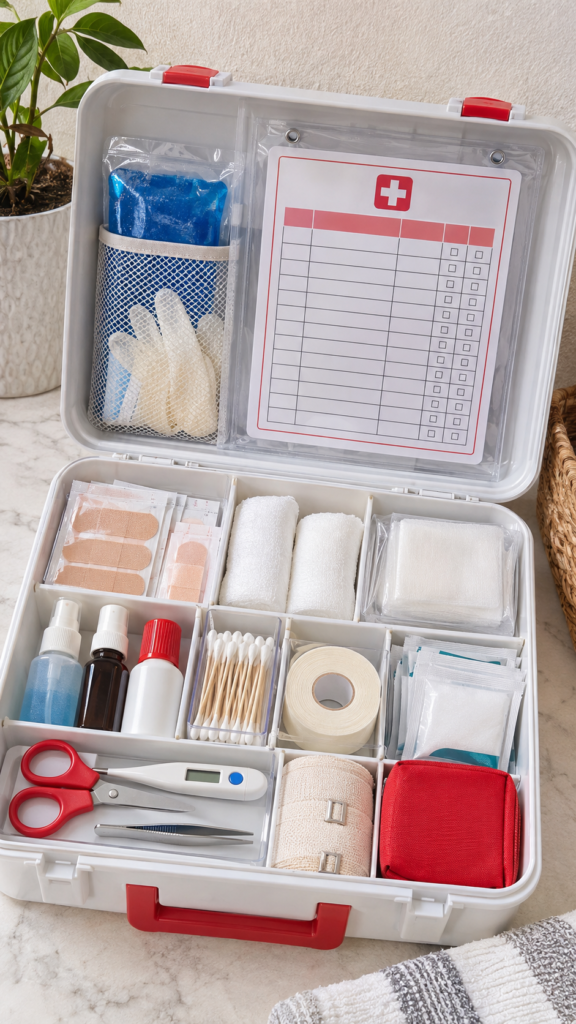
First-aid supplies require periodic checks because dressings, antiseptic products and other items can expire, become damaged or run out after use.
Create a Cricut-designed inventory sheet for the first-aid box with columns for the item, quantity, expiry date and replacement status.
Separate sterile dressings, adhesive bandages, gauze and medical tape into clearly identified sections. Keep medicines in their original packaging, and make sure the inventory does not cover expiry dates or product instructions.
This project is particularly useful for households that want to check their first-aid supplies before an item is urgently required.
Beginners can practise making simple labels and kitchen accessories before attempting more detailed designs. 22 Easy Cricut Projects for Beginners You Can Make at Home has projects to help build those skills.
20. Bathroom Toiletry Refill and Product Identification Tags
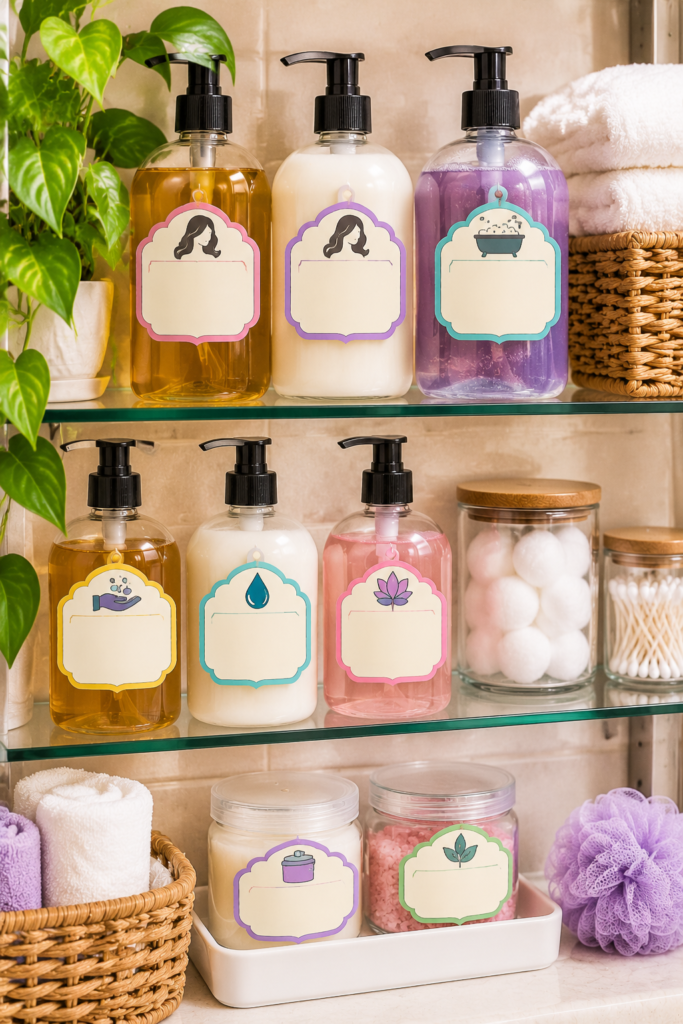
Refillable bathroom containers can become confusing when shampoo, conditioner and body wash are transferred into identical bottles. Create Cricut labels with the full product names and, where useful, the original product brand.
For frequently refilled containers, include a small space to record the refill date.
Choose a material that suits the bottle surface and bathroom conditions, and check that the label remains readable when exposed to splashes.
Keep the original product packaging or ingredient information available, especially for products used by people with allergies or sensitivities.
21. Hair Tool Heat-Resistant Storage Identification Tags
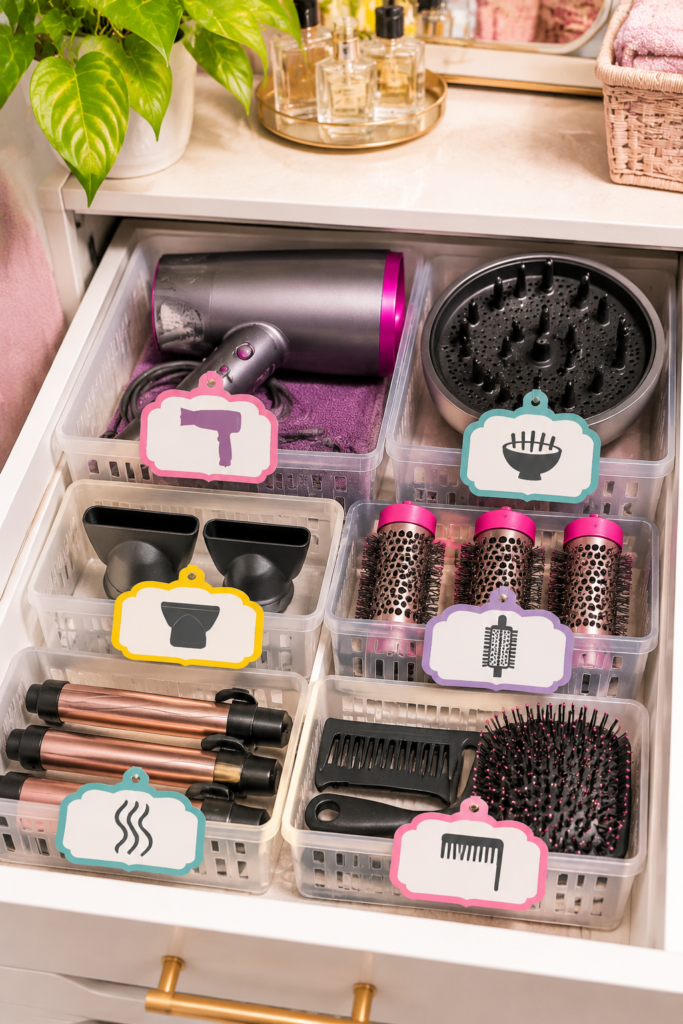
Hair styling tools often come with different attachments, such as concentrator nozzles, diffuser attachments and interchangeable curling barrels.
Use your Cricut to make labelled storage inserts for these accessories, identifying which tool or model each attachment belongs to.
This is more useful than placing all attachments in one basket, where compatible and incompatible parts can become mixed. Store heat-resistant accessories only after they have cooled, and keep the tags away from hot surfaces and heating elements.
Basic cutting and assembly practice can make it easier to produce neat, consistent kitchen labels and decorations. More starter projects are available in 19 Easy Cricut Projects for Beginners.
22. Bathroom Linen and Towel Rotation Labels
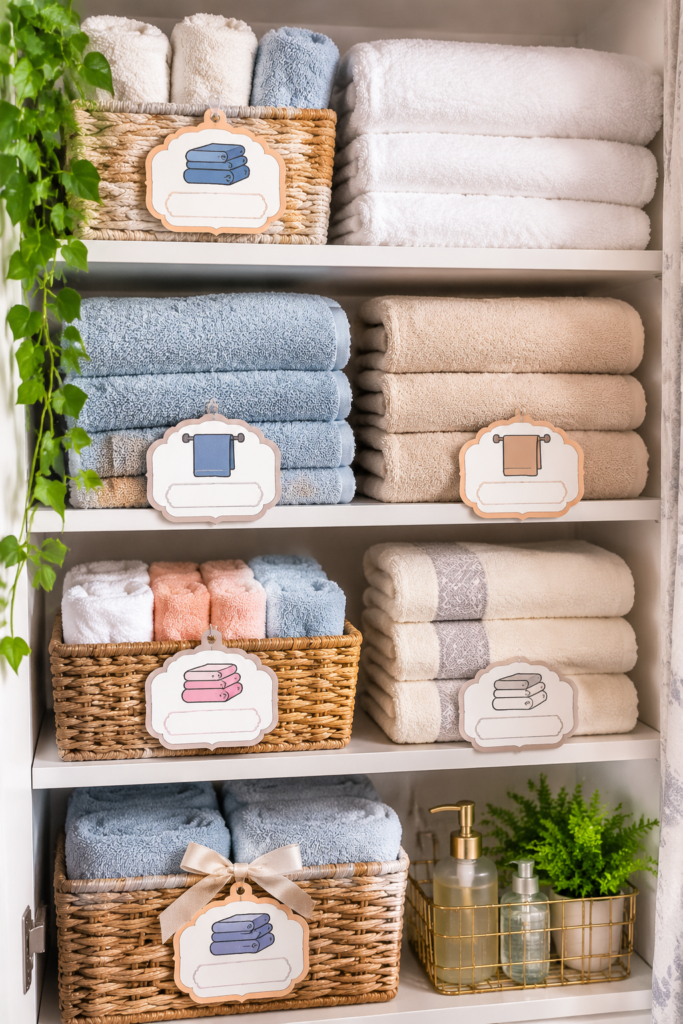
Households with several sets of towels can lose track of which ones are newly washed, in use or due for replacement. Make Cricut-cut labels for separate linen shelves or storage baskets, identifying bath towels, hand towels, face cloths and spare sets.
You can also use numbered shelf inserts to distinguish between towel sets without attaching anything directly to the fabric.
This is particularly useful when several people share one bathroom and clean towels need to be returned to the correct storage area.
23. Reusable Family Command Centre Name Plates
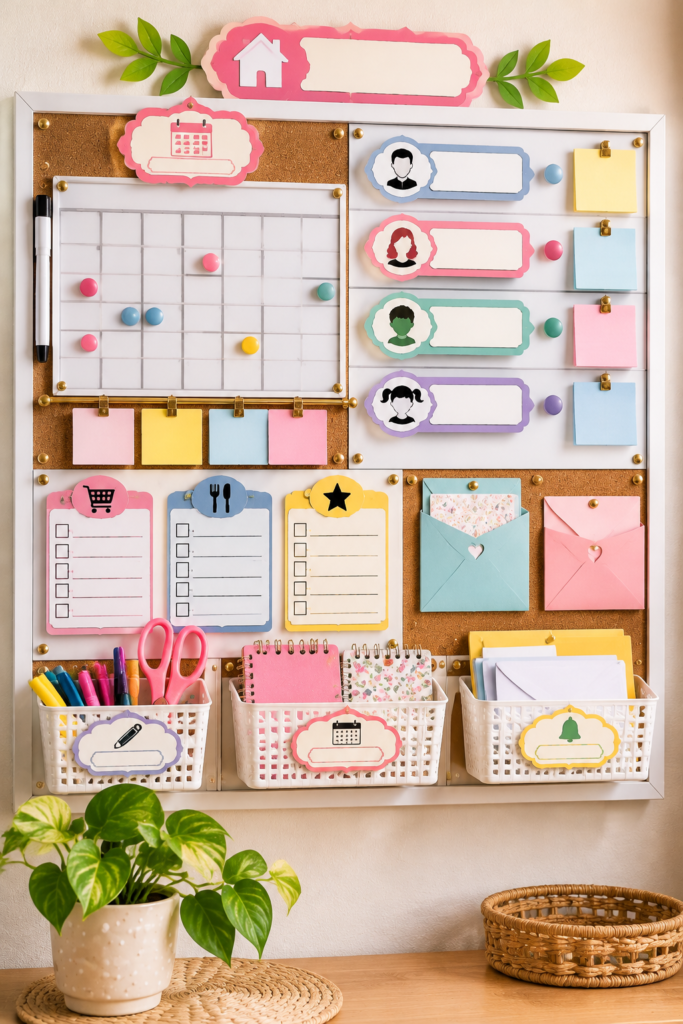
When several people share one noticeboard, reminders can easily get mixed up.
This is one of the more useful Cricut projects for organizing your home because it gives each person a clearly assigned space.
Create individual name plates with your Cricut and attach them above designated sections of the board. Each space can hold that person’s appointment reminders, school notices, shopping requests or tasks.
Use magnetic backing on a compatible magnetic board, or removable adhesive on a suitable smooth surface.
For a household where responsibilities change, write-on name plates allow names or assignments to be updated without remaking the entire board.
24. Mail Sorting Category Dividers
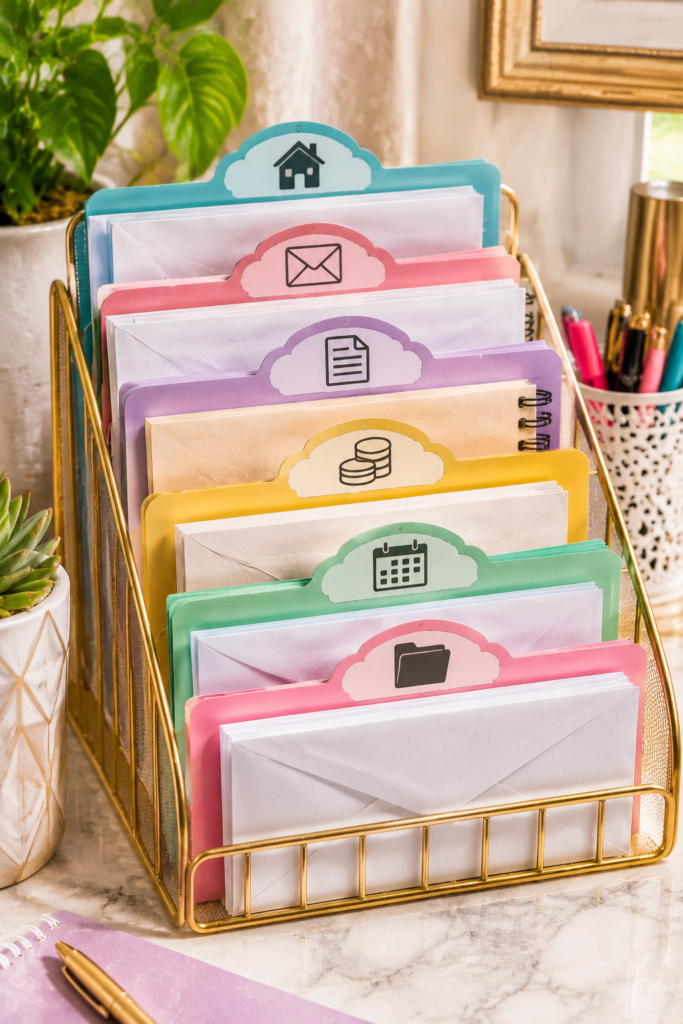
Unopened letters, bills and documents waiting for attention can quickly become one untidy pile.
Use your Cricut to make dividers for a desktop file organiser, with categories such as To Open, To Pay, To Respond, To File and Completed.
Among Cricut projects for organizing your home, this one is particularly useful because each section gives a document a clear next step, rather than simply sorting mail by type.
Add a small blank area to the dividers to record payment or action deadlines where necessary, but keep account numbers and other private details out of view.
Personalised recipe books, kitchen towels and other handmade items can make thoughtful presents for someone who enjoys cooking. Find more gift inspiration in 33 Cricut Projects for Beginners That Make Great Personalized Gifts.
25. Reusable Gift-Wrap Supply Storage Tags
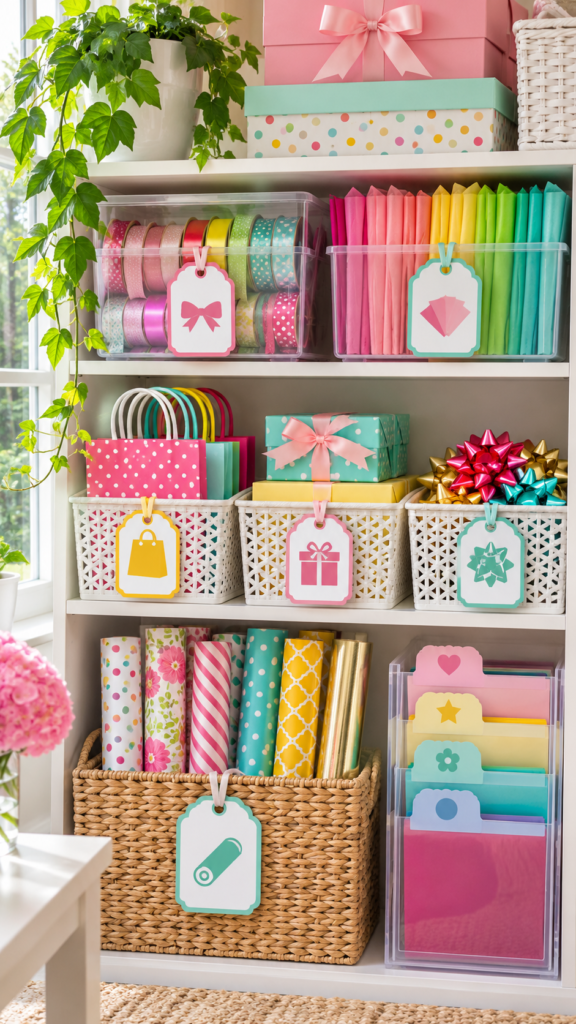
Wrapping supplies are often stored together even though they serve different purposes.
Create hanging tags for storage boxes or containers to separate gift bags, tissue paper, ribbons, gift boxes and wrapping paper.
Make the tags more useful by including details such as bag size, ribbon width or paper roll length.
For example, a tag marked Small Gift Bags – Birthday helps distinguish those supplies from larger bags kept for other occasions.
Use card or laminated cardstock with a hole for attaching each tag, so it can be moved when the contents change.
This is a simple addition to your Cricut projects for organizing your home when gift-wrapping materials are stored in one shared space.
26. Seasonal Clothing Storage Identification Cards
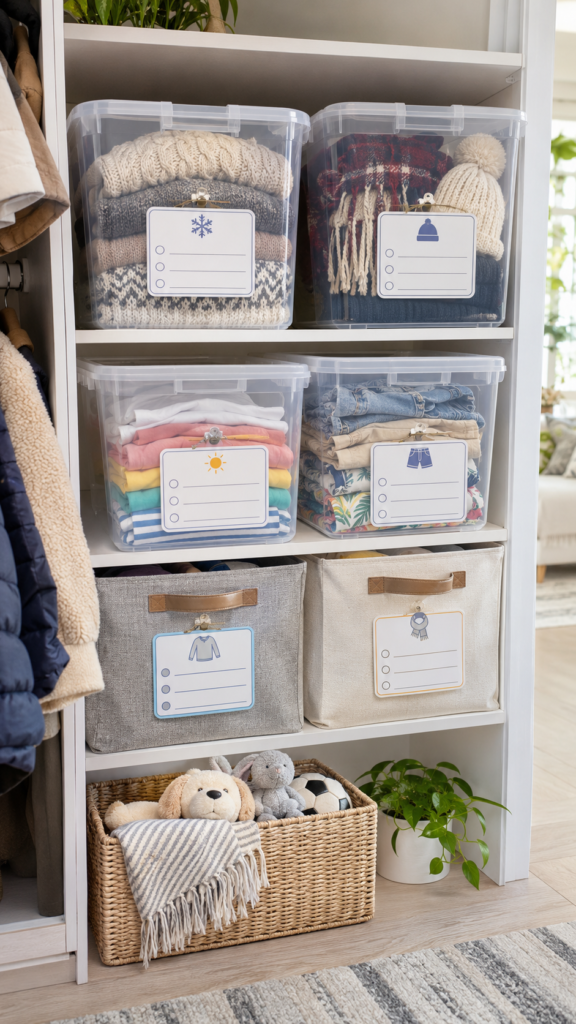
Clothing packed away for several months can be difficult to identify without opening every bag or box.
Make Cricut-cut identification cards that list the contents, clothing sizes, season and storage location.
Instead of writing only Winter Clothes, a card could read Children’s Winter Wear – Sizes 6–8 – Upper Wardrobe Shelf.
This level of detail helps distinguish similar storage boxes, particularly when clothes are kept for different family members or saved for another season.
Attach the cards to container handles or place them inside clear storage boxes where they remain visible.
These Cricut projects for organizing your home are especially useful when seasonal clothing is divided among several storage spaces.
Children can join in with supervised paper-based kitchen activities, such as making pretend food labels or recipe cards. 35 Easy Cricut Projects for Kids has more projects for younger makers.
27. Household Instruction and Reference Folder Tabs
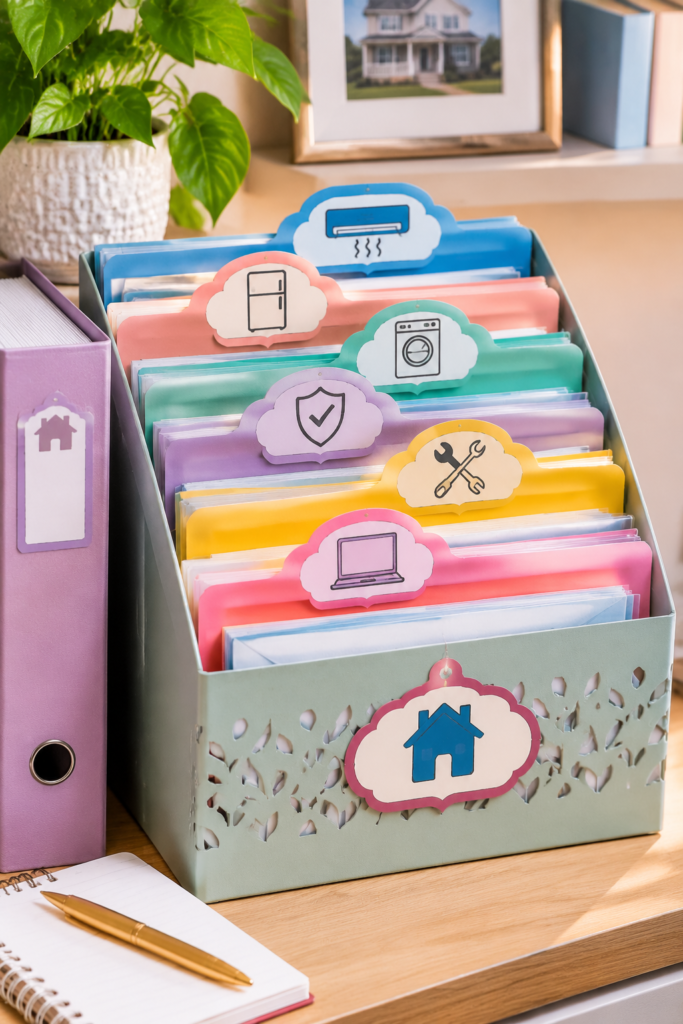
Appliance manuals and warranty papers are easy to misplace, especially when they are filed together without a clear system.
Use your Cricut to cut sturdy folder tabs for categories such as Kitchen Appliances, Laundry Equipment, Electronics, Warranties and Maintenance Records.
Take the organisation a step further by recording the appliance name or model on an individual document sleeve, so the correct manual and warranty information stay together.
This is one of the Cricut projects for organizing your home that can save time when arranging repairs or checking which replacement part an appliance requires.
Seasonal kitchen touches, such as festive recipe cards, jar labels and table decorations, can add a personal detail during the holidays. See 31 Easy Cricut Projects for Christmas for more ideas.
What to Consider Before Applying Vinyl Labels to Household Surfaces
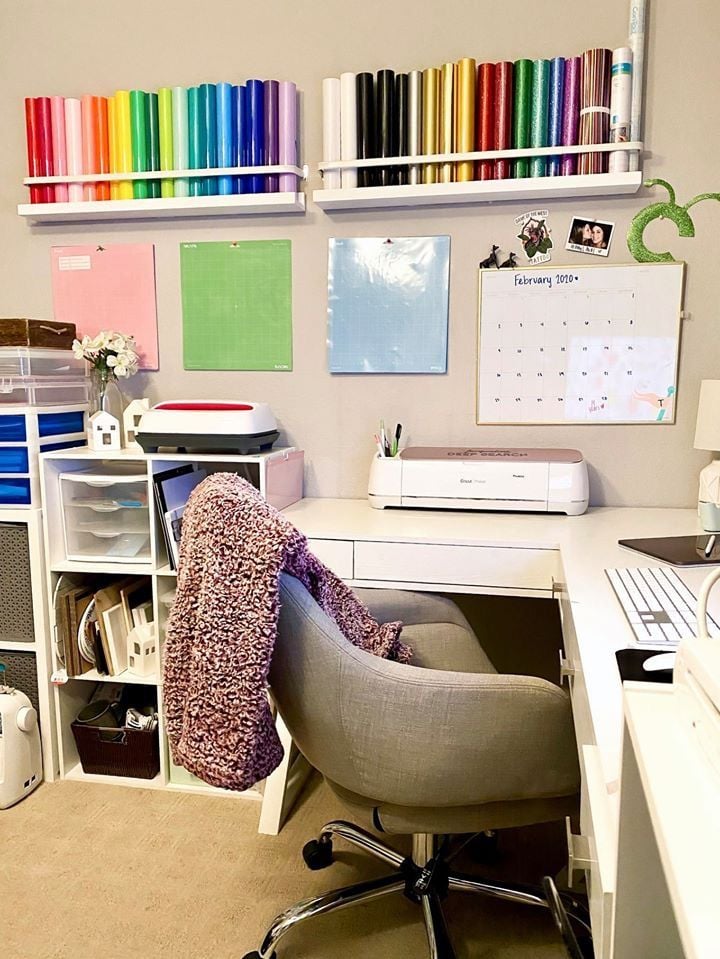
Vinyl labels can make household storage easier to identify, but the result depends on the surface, the type of vinyl and the conditions the label will face.
Applying the wrong material can lead to peeling, poor adhesion or residue when the label is removed. Before cutting your designs, consider these factors:
-
Surface condition:
Clean, smooth and dry surfaces generally provide better adhesion than dusty, greasy or textured ones. Wash away cleaning-product residue and allow the surface to dry completely before applying vinyl.
-
Type of vinyl:
Permanent adhesive vinyl is intended for longer-term applications, while removable vinyl is more suitable when labels may need to be changed.
However, removable does not mean residue-free or safe for every surface. Check the manufacturer’s instructions before use.
-
Surface compatibility:
Glass, smooth plastic, metal and painted surfaces can respond differently to adhesive vinyl. Test a small piece in an inconspicuous area, particularly on painted furniture, delicate finishes or containers with textured surfaces.
Exposure to moisture and heat:
Labels used near sinks, showers, dishwashers or heat-producing appliances require particular care. Do not assume ordinary adhesive vinyl is waterproof, dishwasher-safe, food-safe or suitable for high temperatures. Check the material manufacturer’s stated limitations.
-
Label placement:
Apply labels to the outside of containers, away from food-contact areas, moving parts and surfaces that experience frequent friction. On curved containers, keep designs simple and avoid placing large, rigid lettering across sharply curved sections.
-
Text size and readability:
Choose lettering that can be read without removing the container from its shelf. Long descriptions may work better on wider labels, while small containers benefit from short category names rather than crowded text.
-
Removal and replacement:
Consider how often the information will change before choosing your material. Storage categories that remain constant can use longer-lasting labels, while changing contents may be better identified with removable tags, writable inserts or hanging cards.
One important point: Always check the specific vinyl manufacturer’s application and care instructions. Two materials described as permanent vinyl may not have identical adhesion, surface compatibility or durability.
Halloween-themed kitchen labels, treat bags and party accessories can help carry a seasonal theme into the cooking and serving area. 33 Easy Cricut Projects for Halloween offers more inspiration.
Conclsuion
Organising a home does not always require new storage furniture or complicated systems. Sometimes, a few well-designed labels, dividers and identification cards can make everyday belongings easier to manage and household routines less confusing.
These Cricut projects for organizing your home offer practical ways to keep track of supplies, separate important documents and make better use of existing storage spaces.
Choose a project that addresses an organisation problem you currently have, gather the appropriate materials and adapt the design to suit your space.
Which of these Cricut projects would you like to make first? Share your favourite in the comments, and save this list on Pinterest for your next crafting session.