Organization products to sew and sell start with a simple problem: things have nowhere to go.
Clutter shows up slowly. A few chargers here, a pile of socks there, and soon the bedroom, the car, and the kitchen drawer all feel crowded.
The good news is that fabric can fix a lot of this. Handmade organizers sort small things into pockets, use empty wall and closet space, and keep belongings easy to find.
That makes organization products to sew and sell a practical idea for a small handmade shop.
Some projects are small accessories you can finish in one sitting.
Others are bigger storage pieces that need stiff layers, careful measuring, and strong hardware.
If you are still planning your shop, these ideas for things to sew and sell from home can help you compare options.
Below are 31 organizers, each with its own job, fabric needs, and buyer. Let’s find the ones that fit your skills.
Organization Products to Sew and Sell
1. Makeup Organizer Bags
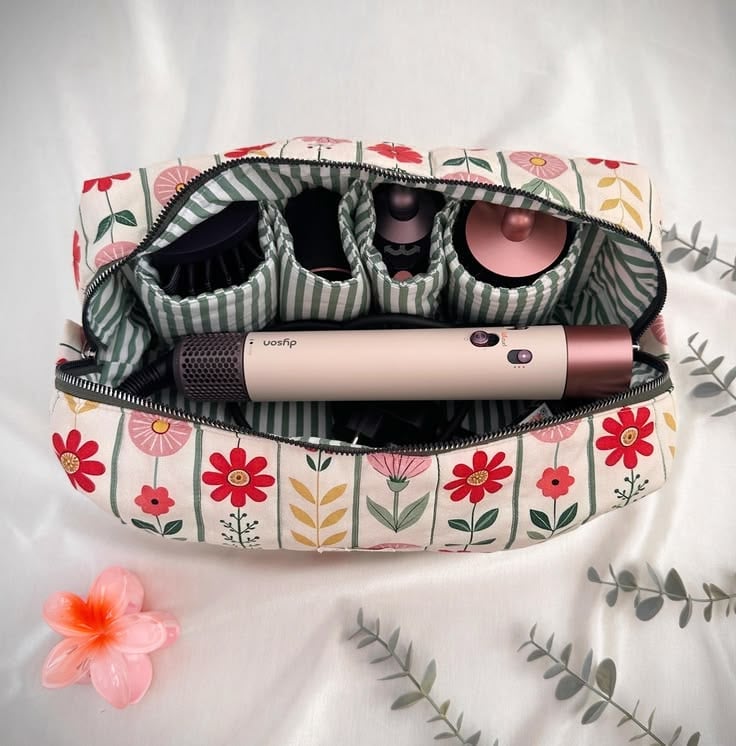
A makeup bag can get messy fast.
Brushes poke out, powders crack, and liquid foundation leaks onto everything.
A good organizer gives each kind of product its own spot.
Try a main pocket for palettes, a row of slim loops for brushes, and a deeper section for bottles.
Use cotton canvas or quilting cotton outside, and a wipeable lining such as laminated cotton inside, so spills clean up easily.
Pick a strong zipper, because buyers will use it every day.
Offer a small bag for daily use and a larger one for travel.
Matching pieces, like a mini lipstick pouch or a brush roll, can turn one bag into a set.
The pieces are small, so they are easy to cut in batches.
This list of sewing products with low material costs can help you plan your prices.
Still, add the zipper and lining to your costs.
2. Jewelry Organizer Rolls
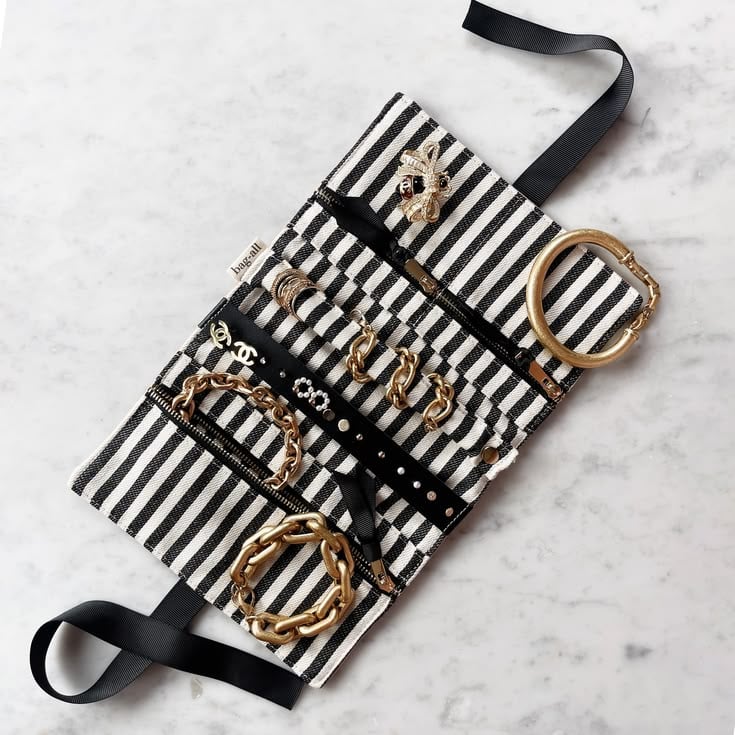
Necklaces tangle, earrings go missing, and rings roll away.
A jewelry roll fixes this by giving each piece its own space in one soft bundle.
Lay out a long panel with a zipper pocket for earrings, ring slots made from folded fabric, a strap with a snap for necklaces, and wide pockets for bracelets.
Soft linings like flannel or microfiber help stop scratches, and a thin layer of batting adds light padding.
Roll it up and close it with a ribbon or a snap tab.
Travelers and gift buyers are the most likely customers, so initials or a choice of lining color can add value. Offer two layouts, one for rings and studs and one for long necklaces.
Make a sample with real jewelry before you list it, because pocket size matters.
The padding and small stitches take time, so price your work fairly.
3. Hanging Closet Organizers
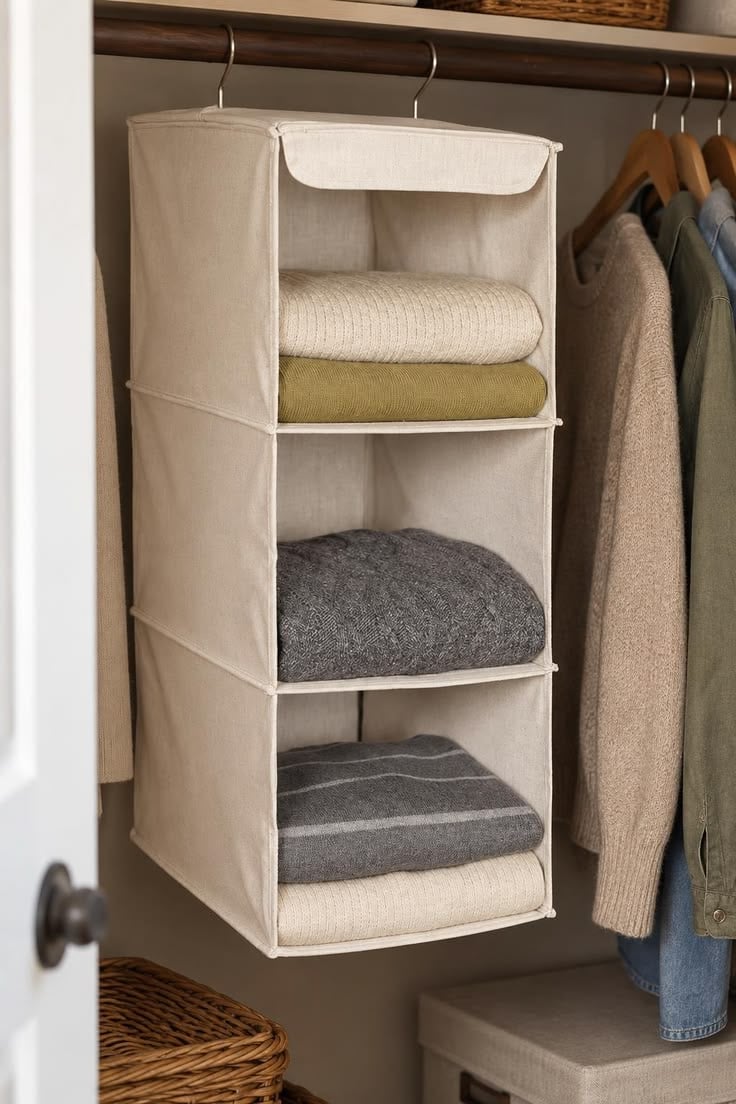
Most closets waste their upright space.
A hanging organizer turns the area under a rail into shelves and pockets.
Sew it from sturdy cotton canvas, add fusible interfacing to the panels, and stitch strong loops or a wide strap at the top for the closet rod.
Measure the rail and the space below it before you choose a size.
You can make one with cubbies for folded sweaters, one with pockets for scarves and belts, or one with small slots for shoes and accessories.
Keep the contents light so the fabric does not sag. If you plan to add this to your range of organization products to sew and sell, list exact sizes and a weight limit so buyers can check their closet.
Calm, plain prints also fit well with the ideas in these home decor items to sew and sell.
4. Shoe Storage Organizers
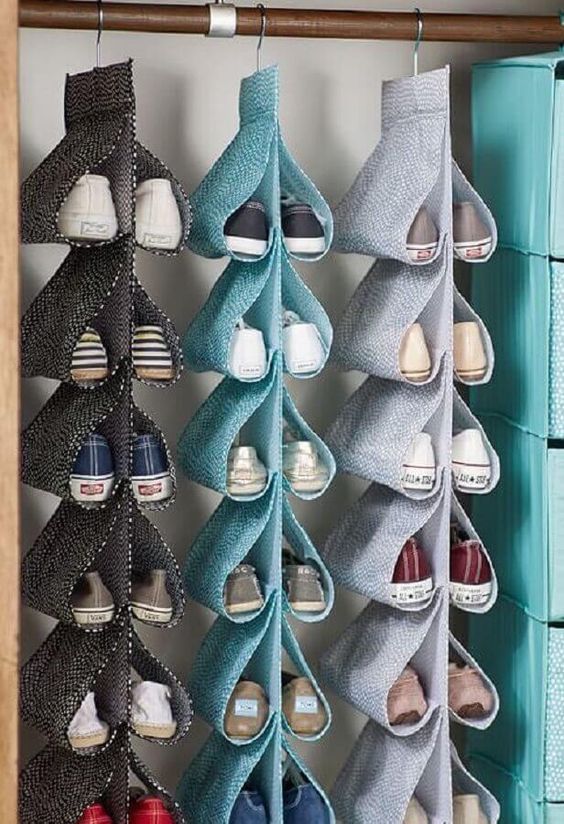
Shoes bring dirt, odor, and odd shapes into a tidy space. Shoe organizers come in a few forms.
Single drawstring bags protect one pair in a suitcase.
Multi-pair versions hold several pairs in pockets on a hanging panel or in a flat tote for the closet.
Use strong fabrics such as canvas, ripstop nylon, or heavy cotton, and line the inside with something that wipes clean.
Mesh panels or a few sewn-in eyelets let air move through, which helps shoes dry.
A boot, a sneaker, and a flat sandal need different pocket sizes, so say which shoes each design fits.
Family sets in matching fabric, or travel sets with a small and a large bag, give buyers a reason to buy more than one.
Strong thread and a reinforced base are worth the extra time, because shoes are hard on seams.
5. Fabric Storage Baskets
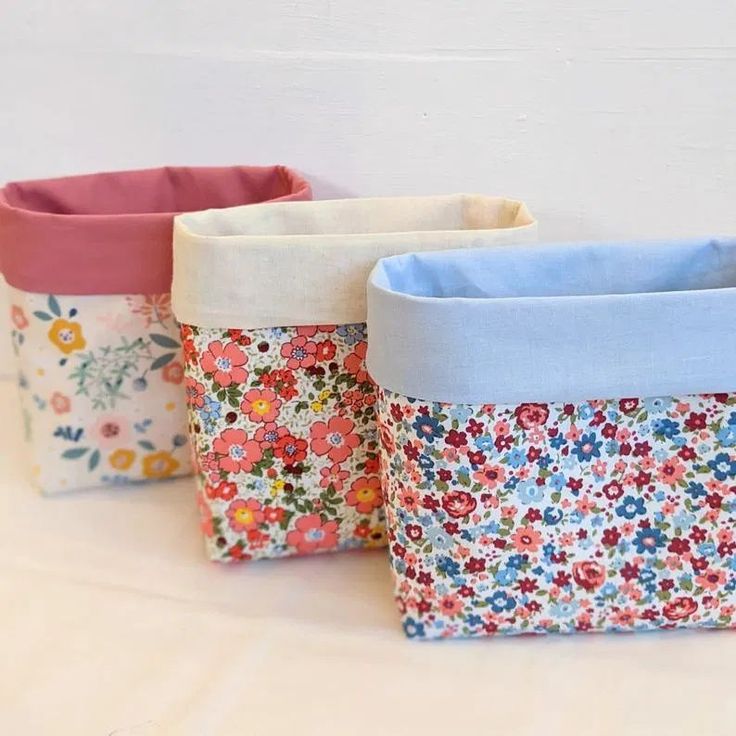
A good fabric basket looks soft but stands up straight.
The shape comes from a stiff layer. Fusible fleece, heavy interfacing, or cotton batting between the outer fabric and the lining gives the walls body, and a firm base keeps the bottom flat.
Baskets can hold toys, laundry items, toiletries, craft supplies, and household odds and ends, so think about who will use them.
A nursery basket needs a gentle finish, while a craft room basket needs strong handles.
Offer small, medium, and large sizes that nest together, and sell them as a set.
Baskets are good for batch sewing, because the pattern pieces repeat.
This makes them a smart pick when you build sets of organization products to sew and sell.
Small leftover pieces can become matching handles, like the ideas in these sewing projects made from fabric scraps.
Choose washable fabric and tell buyers how to clean it.
6. Fabric Storage Bins
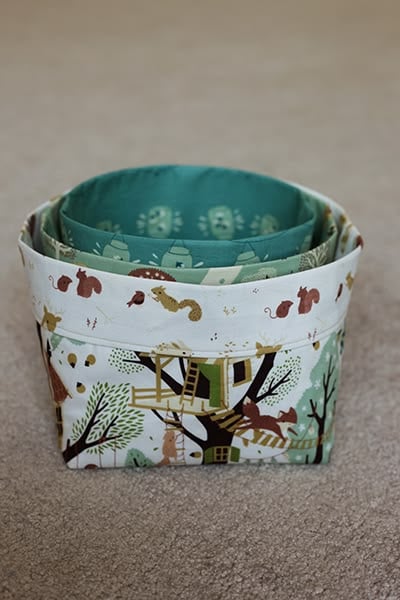
A bin is firmer and boxier than a basket.
It stands on a shelf, stacks neatly, and keeps its square shape even when it is half empty.
That makes bins a good fit for closet shelves and cube units, holding folded scarves, T-shirts, pajamas, or spare linens.
Build the walls from heavy interfacing or thin craft plastic between two layers of cotton canvas or linen blend.
A stiff base and bound top edges help the bin keep its shape.
Add a fabric label pocket on the front so owners can see what is inside.
Short side handles make it easy to pull the bin out. Offer sizes that match common shelf cubes, and say the measurements clearly.
A lidded version also keeps dust off clothes.
Bins need more structure and more fabric than most items here, so price them with that in mind.
7. Toy Storage Bags
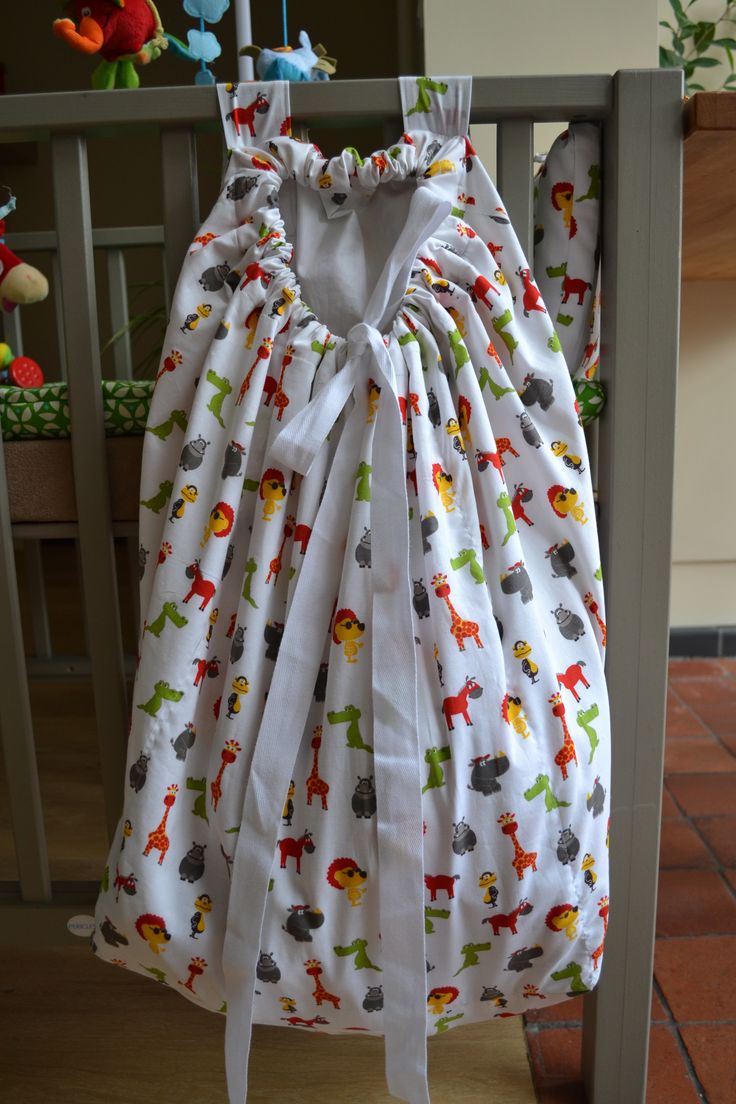
Toys end up everywhere. A toy storage bag gives them one place to go, and the best ones double as a play mat.
A drawstring bag spreads flat on the floor, then pulls closed so a parent can lift everything away in seconds.
Use strong, washable fabric such as canvas or denim, and reinforce the seams and the drawstring tunnel, because toy bags carry real weight.
Add a wide, flat strap or a loop so the bag can hang on a hook.
A smaller zipper bag works well for puzzle pieces or building blocks.
Safety matters with children’s products.
Skip long loose cords, small buttons, and detachable trims, and keep any drawstring short and secure.
Do not call it a safety product. A plain drawstring version is a friendly project, like these easy sewing projects to make and sell fast. Offer a car trip size and a playroom size.
8. Tote Bag Insert Organizers
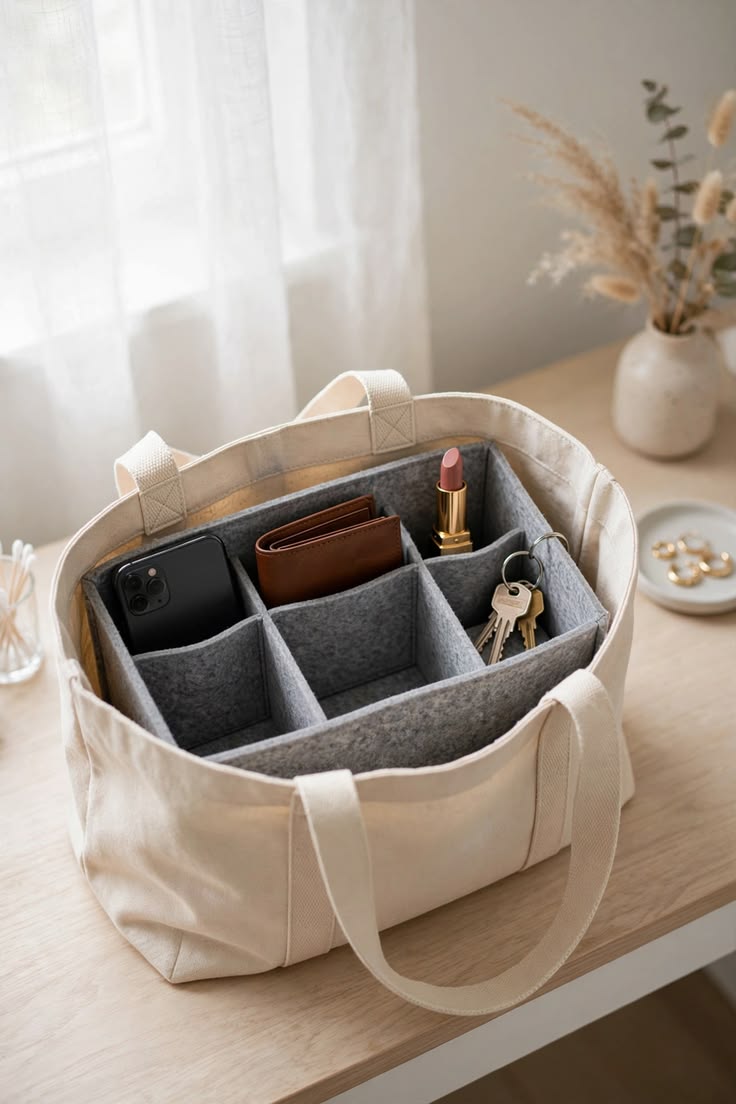
Tote bags are roomy, but most have no pockets, so everything sinks to the bottom.
A tote insert is a larger organizer that sits inside and holds its shape, with tall sides and pockets for a laptop, a water bottle, a notebook, and small items.
It differs from a handbag insert because it is made for big, open bags used for work, school, or daily errands.
Use sturdy cotton canvas with heavy interfacing, plus a firm base cut from stiff board or plastic canvas.
Add a zipper pocket on one side and tall slip pockets on the other.
Side handles make it easy to lift out.
Measure the inside of popular tote sizes, and offer two or three widths.
Inserts are also an easy way to widen your range of organization products to sew and sell.
A coordinated insert and tote makes a nice set for teachers and commuters.
9. Handbag Organizers
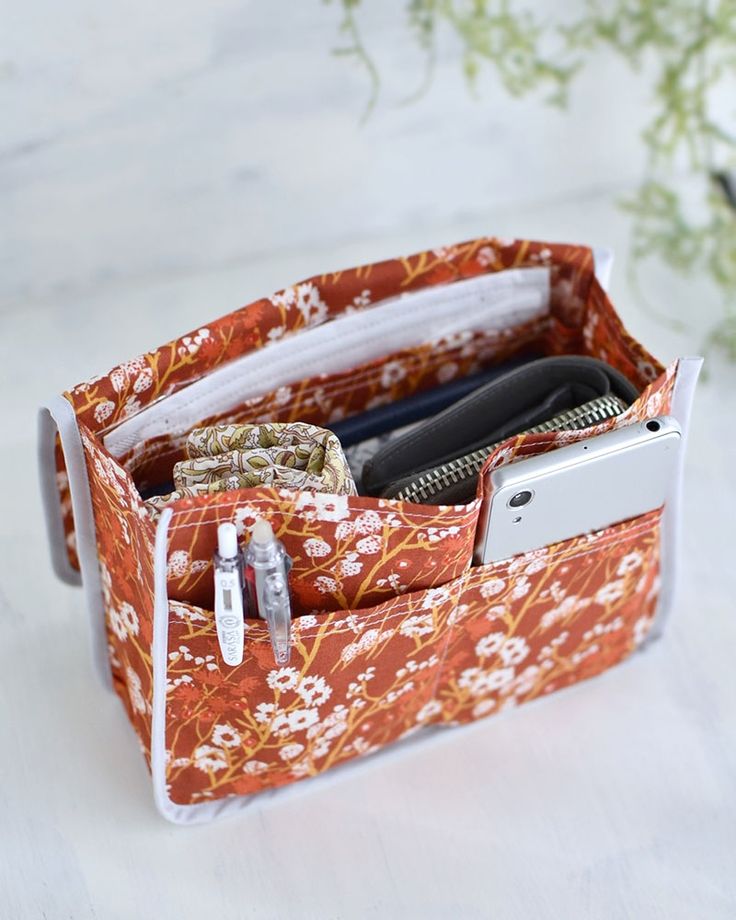
Anyone who has dug through a handbag for keys knows the problem.
A handbag organizer is a light insert that splits the bag into pockets for a phone, wallet, keys, and makeup.
It lifts out, so the owner can switch bags fast.
Use a light stabilizer, such as medium fusible interfacing, so the walls hold their shape without adding bulk.
Put a zipper pocket on one side for loose items, open pockets for a phone and sunglasses, and a key clip inside. Fit matters most.
Measure real bags, then offer small, medium, and large sizes.
For custom orders, ask for the base measurements of the bag.
A bright lining makes the contents easier to see.
Handbag inserts sit well with the everyday items in these handmade sewing projects people actually buy.
10. Travel Packing Cubes
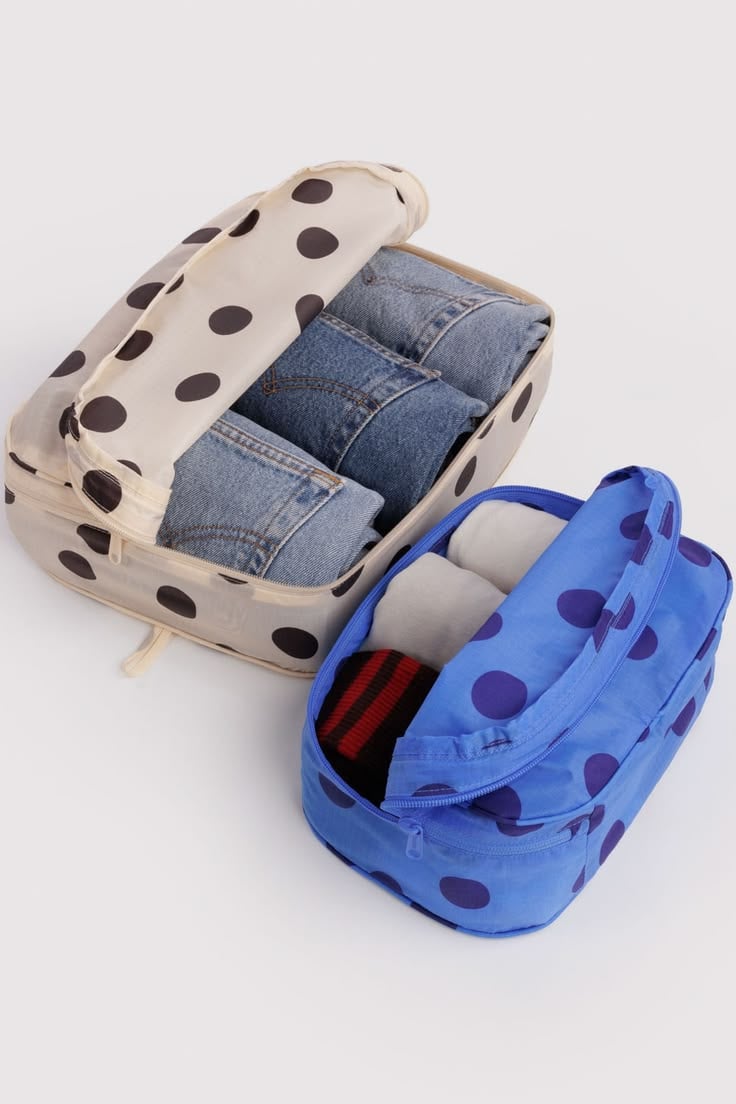
Packing cubes split a suitcase into neat zones, with shirts in one, underwear in another, and chargers or swimwear in a third.
Suitcases are already heavy, so keep the cubes light.
Use ripstop nylon or light polyester, and add a mesh panel so buyers can see inside and air can pass through.
The zipper matters most. Pick a good coil zipper with sturdy pulls, and sew the seams twice or bind the inside edges so they do not fray.
Skip thick padding or heavy interfacing that takes up room.
Sell a set of three cubes in small, medium, and large, and add a laundry cube in a different color.
Embroidered initials or tags make a nice gift.
Travel sets are a good starting point if you are building organization products to sew and sell.
Make a few test samples first, because one badly sewn zipper corner can spoil a cube.
11. Toiletry Organizer Bags
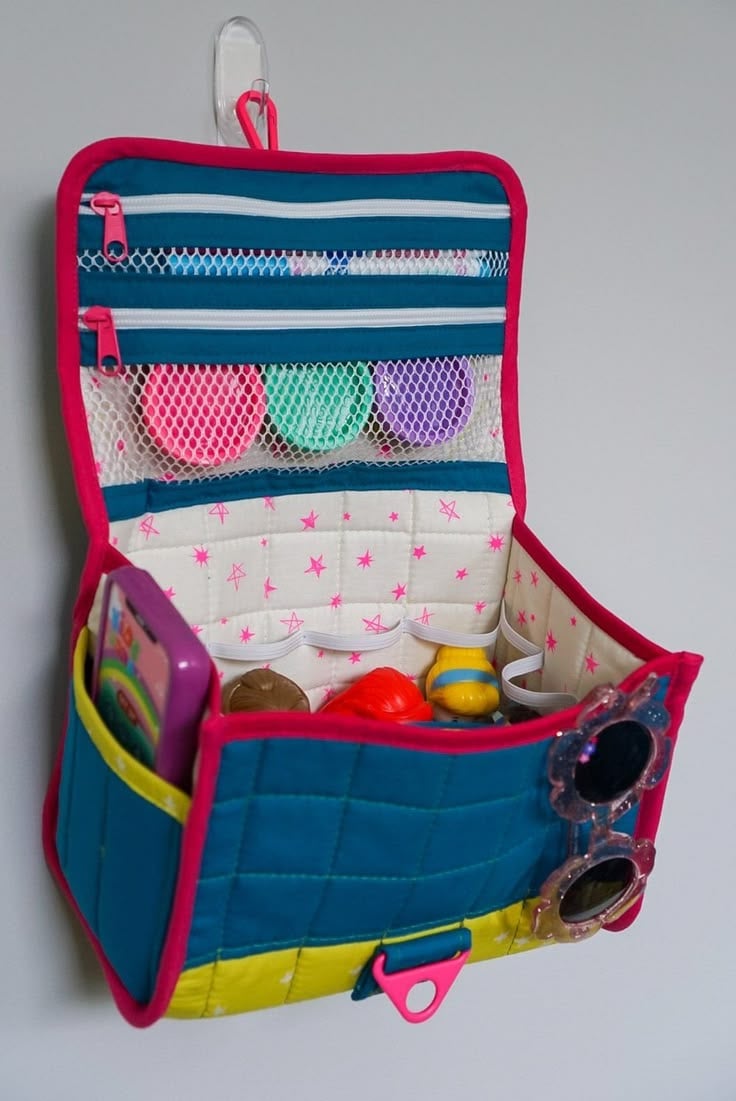
A toiletry bag solves a different problem than a makeup bag.
It holds bottles, razors, toothbrushes, and grooming items, and some of these can leak.
Use a waterproof lining such as PUL or laminated cotton, and a zipper that opens wide.
Pockets of different depths hold tall bottles and small tubes.
A sewn-in hook lets the bag hang from a towel rail in a tiny hotel bathroom.
A removable inner pouch is handy for wet items. Bind the seams so raw edges are hidden and liquids cannot soak the batting.
Offer one version in plain fabric, one in a bright print, and a small size for the gym.
If you want a bathroom collection, these bathroom items to sew and sell can give you matching ideas.
In your listing, say water resistant and easy to wipe clean, not leakproof.
12. Cable and Charger Organizers
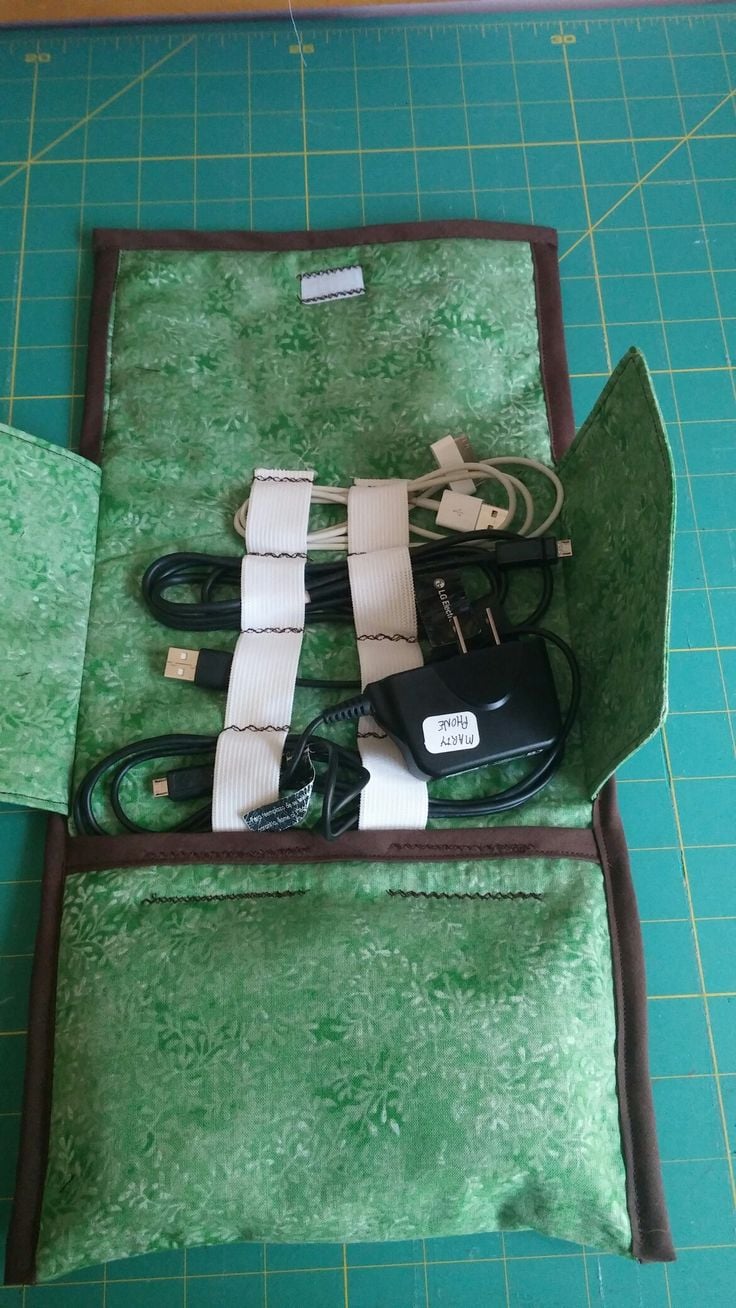
Tangled cords are a modern clutter problem.
A cable organizer is a small zippered case with elastic loops for cables, mesh pockets for adapters, and a padded slot for earphones or a power bank.
Use cotton canvas or nylon outside, a lining with a little batting, and flat elastic sewn firmly at both ends.
A flat zipper pouch or a folding wallet style can both work.
Small fabric tags help buyers tell chargers from cables.
Keep the design compact so it fits in bags and desk drawers.
One important note: these organizers are only for storing unplugged items.
Never wrap or cover electronics while they are charging or warm, because fabric can trap heat.
Say this clearly in your listing. A set in three sizes works well for frequent flyers, students, and anyone who carries a lot of tech.
13. Desk Organizer Caddies
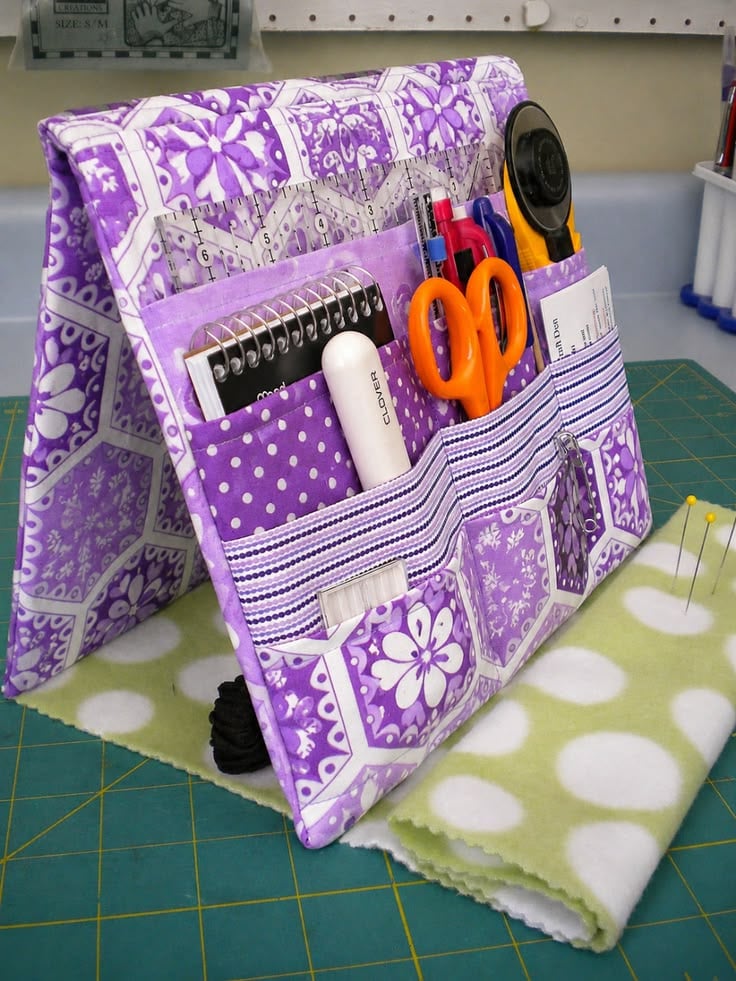
A desk caddy stands upright and keeps pens, scissors, notebooks, and sticky notes within reach.
Because it must stand on its own, structure matters.
Cut the base from a firm stabilizer or thin plastic canvas covered in fabric, then build the walls with heavy interfacing so they do not slump.
Sewn dividers keep tall items and short items apart, and an outside pocket can hold a phone or notepad.
A tight weave like canvas handles sharp pencil points better than a loose weave.
Matching desk sets for students, teachers, and home-office workers are an easy way to grow your range of organization products to sew and sell.
A matching pencil case completes the set. If shaped pieces are new to you, practice neat corners first with these simple sewing projects without advanced skills.
Size the base to fit common desk depths.
14. Remote Control Organizers
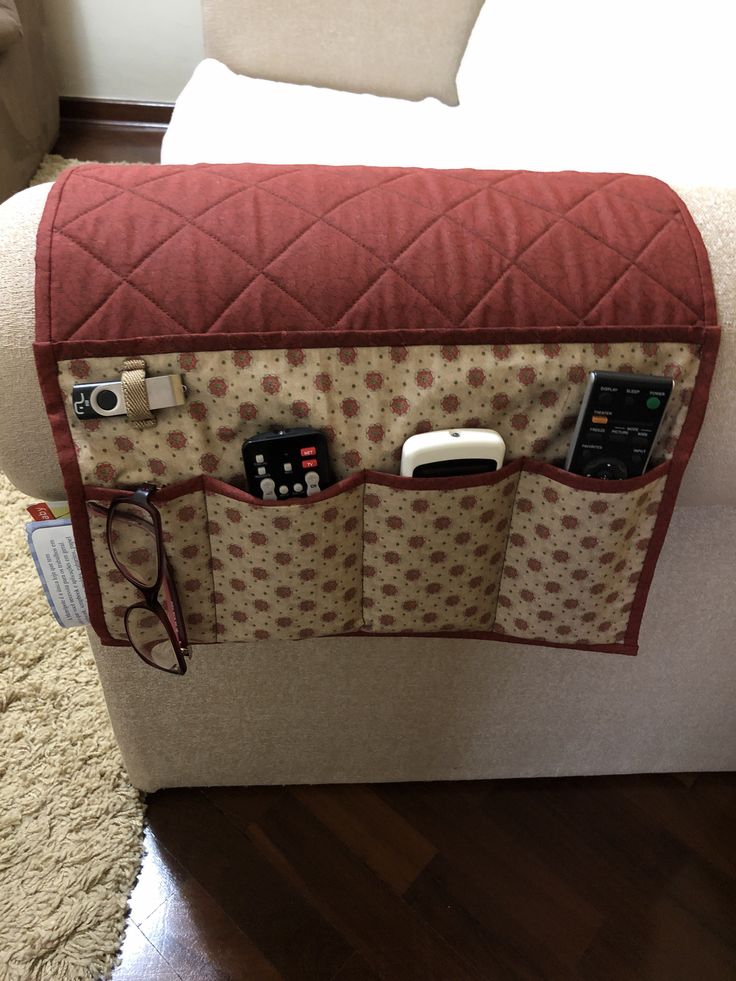
Remotes love to hide in sofa cushions. A pocketed organizer gives them a home.
The most common style drapes over the arm of a sofa or chair, with deep pockets on both sides.
A bedside version tucks under the mattress or hangs from the bed frame.
Measure the pockets to fit your buyers’ remotes, which can be long and slim or wide, and add a small pocket for a phone or glasses.
Use a tight, hard-wearing fabric such as upholstery cotton or canvas, and add interfacing so the pockets do not collapse.
Fabrics that match living room colors can make the organizer look like part of the decor.
A wide connecting panel keeps it from sliding off, so test it on real furniture before you sell.
Offer a couple of lengths for different arm widths.
15. Bedside Pocket Organizers
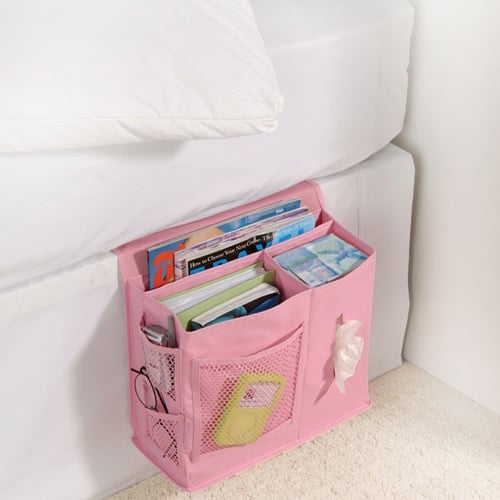
Books, glasses, a phone, and a charger all want to be near the bed, but a small nightstand fills up fast.
A bedside organizer moves some of that storage to the side of the bed.
Some designs hang from a headboard or bed frame on strong straps or loops.
Others have a long flat panel that slides under the mattress and stays in place under its weight.
Think about how the weight sits. A heavy book in a shallow pocket will pull a hanging design forward, so use deeper pockets for books and smaller ones for glasses.
Strong canvas and interfacing help the pockets keep their shape.
Offer sizes for twin, double, and queen beds.
Clear photos that show the organizer in use will help buyers picture it.
For more ideas to fill your shop, see these profitable sewing projects to make and sell.
16. Car Seat Organizers
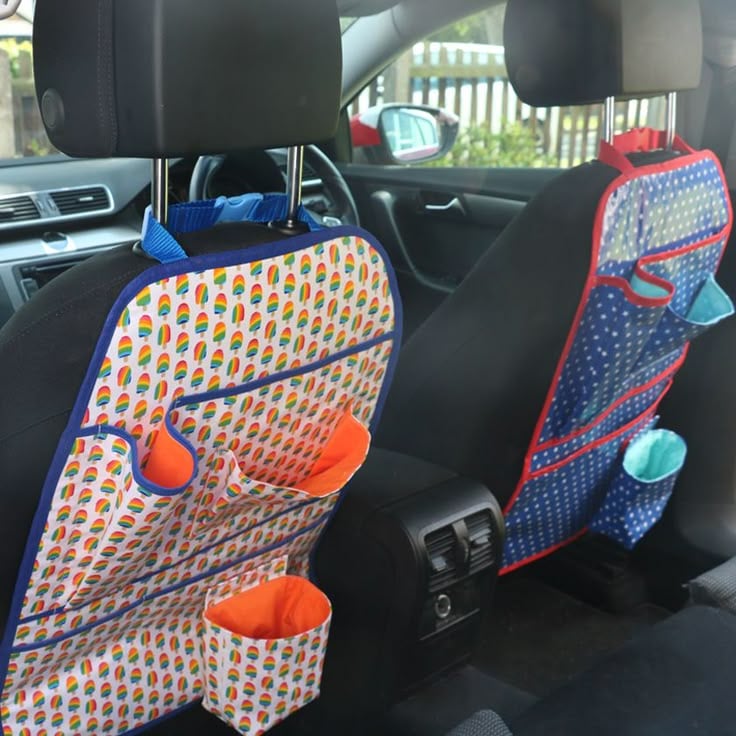
Long drives call for places to put tissues, water bottles, snacks, small toys, and books.
A seat-back organizer hangs from the front seat and gives back-seat passengers a set of pockets.
Sew it from strong, washable fabric such as canvas or coated cotton, and use sturdy straps with adjustable buckles to hold it in place.
Put heavier items low, near the bottom, and add a clear pocket for a tablet or book.
Sizing matters, because every car is different.
An organizer must never get in the way of seat belts, airbags, the driver’s view, pedals, or any vehicle controls, so design it to sit only where it cannot block them.
Do not make safety claims. Call it a storage product only.
Test the straps in more than one car and include clear sizes and setup steps.
17. Laundry Hamper Bags
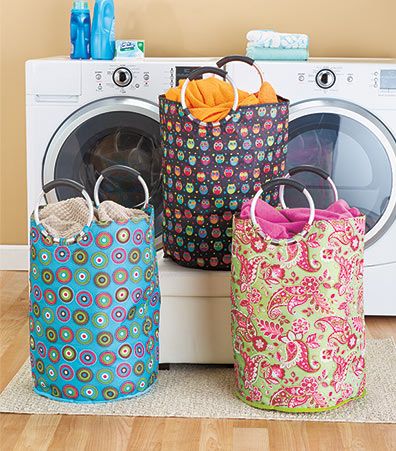
Not every laundry bag is the same.
A light bag with a drawstring and a shoulder strap is made for carrying clothes to a laundromat, a dorm laundry room, or home for the weekend.
A hamper liner is more structured, with a sewn base and firm sides, and it holds its shape inside a frame.
Breathable fabrics such as cotton canvas or mesh help keep things fresh.
Offer sizes for bedrooms, bathrooms, and travel, and add mesh for delicates.
Big pieces use more fabric than you may expect, so check your costs.
Laundry bags are a good place to start with organization products to sew and sell, because the shapes are big and simple.
A home machine can handle them, as these sewing projects you can make with a basic sewing machine show.
18. Ironing Board Organizers
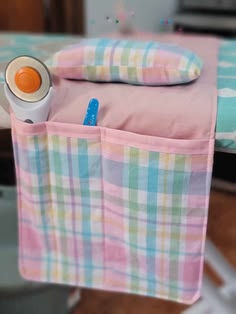
Ironing needs a lot of small gear, such as a spray bottle, pressing cloth, starch, lint roller, and a few sewing tools.
An organizer that hangs from the side of the board or from a nearby door keeps them together.
Use pockets of different heights and a canvas outer, with heat-resistant fabric near any warm tools.
Safety matters here. Pockets must stay away from the hot iron and must never block the spot where the iron rests.
Hang the organizer on the side away from the iron rest, and say so in your listing.
Remind buyers to let the iron cool before they put it away.
Sew deep pockets for tall bottles and add a small zipper pouch for pins.
A simple hook or strap is enough. You can also make a version that matches an ironing board cover for a laundry-room set.
19. Sewing Supply Organizers
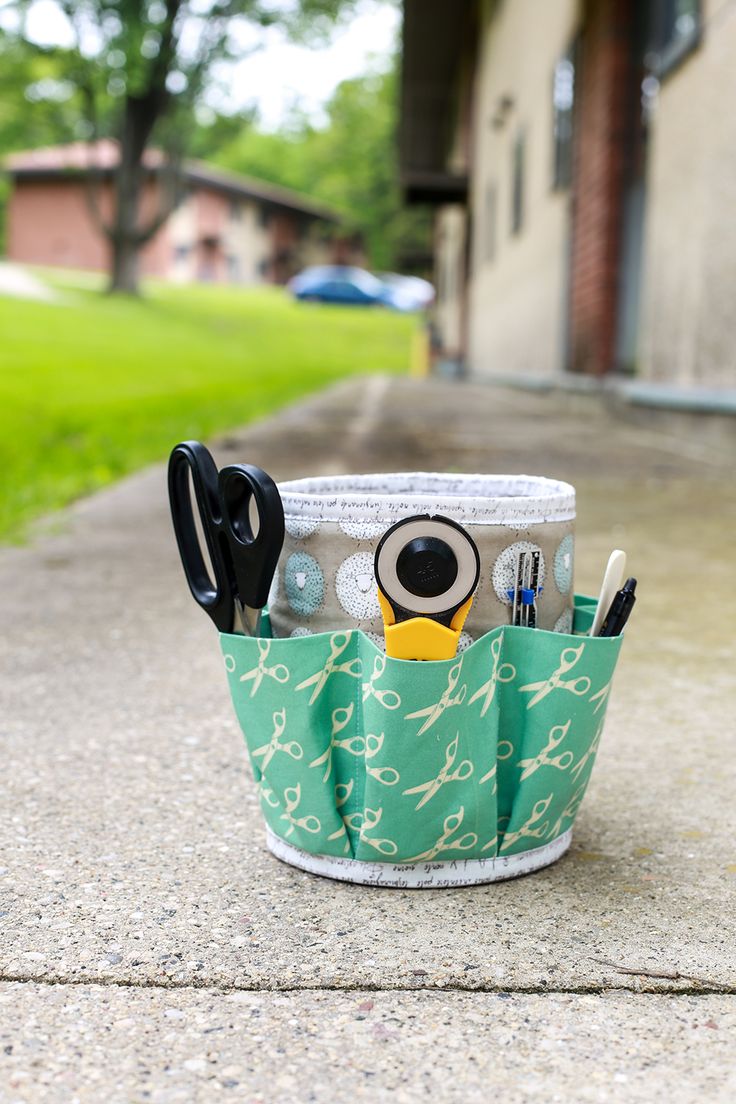
Sewing tools are small and easy to lose.
A sewing organizer keeps needles, thread, scissors, pins, measuring tapes, and bobbins in one place.
Good designs have divided pockets, a wool felt strip for needles, a pin-safe section made from firm, tightly woven fabric, and a removable pouch with a handle for items that go to a class.
Choose fabric that is firm enough to stop sharp points from poking through.
A matching pin cushion and thread-catcher bag can build a small collection, and a beginner kit with a few basic tools could suit gift buyers.
This is one of the organization products to sew and sell that you can test on your own supplies.
If you are new, quick and easy sewing projects for beginners can help you practice pockets and zippers first.
20. Craft Supply Organizers
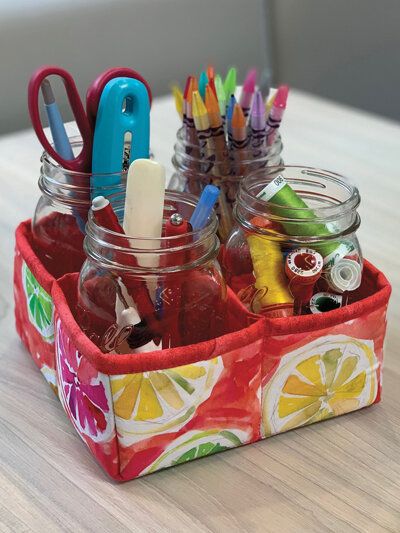
Craft supplies come in every shape, from markers and glue sticks to brushes, crochet hooks, buttons, and beads.
A craft organizer has to be flexible, because a painter and a knitter need different layouts.
Try compartments held in place with hook-and-loop strips so the crafter can move them around.
Clear vinyl pockets help makers spot beads or stamps at a glance, and a washable fabric outside handles glue and paint drips.
Make a few special versions, such as a paintbrush roll, a yarn tool pouch, and a big tote with many pockets, and say clearly what each one holds.
Vinyl is slippery to sew, so use a walking foot or a layer of tissue paper, and expect slower sewing than with plain cotton.
Photograph the organizer filled with supplies so buyers can see the layout.
21. Baby Diaper Caddies
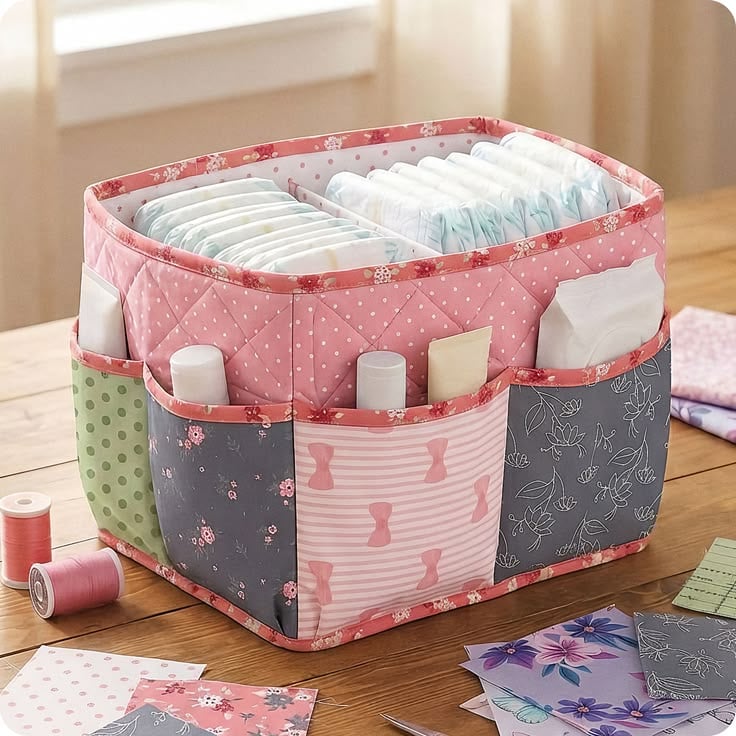
A diaper caddy is a carry-all tote for diapers, wipes, cream, a spare outfit, and other changing items.
A sturdy handle and a firm base are the first things to plan.
Removable dividers made with interfacing let parents change the layout, and a washable lining such as laminated cotton wipes clean after a leak.
Choose nursery-friendly fabric in soft colors or fun prints.
Keep the build secure, with strong seams and no loose decorations like buttons, bows, or dangling trims that could come off.
Do not call the caddy a baby safety product. It is simply storage.
A caddy with a matching changing pad cover makes a thoughtful gift for new parents.
Baby items can also be one line in a bigger shop plan, like those in these things to sew and sell for a successful small business.
22. Baby Closet Organizers
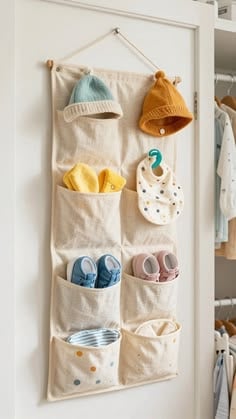
Baby clothes are tiny, and there are a lot of them.
A closet organizer with small hanging pockets can hold socks, bibs, and folded onesies, while shelf dividers keep stacks of blankets from toppling.
Sections held with hook-and-loop tape or snaps can be moved as the child grows and the clothes change size.
Choose soft, washable cotton, and add fabric tags so parents can sort items by size or type.
Keep the design simple and easy to wipe clean. Safety comes first.
Hanging loops, straps, and any small detachable pieces must be kept safely out of a baby’s reach, so skip buttons and other small trims.
Matching nursery sets are a thoughtful addition to your organization products to sew and sell.
The closet organizer can be paired with a basket or a diaper caddy in the same fabric.
23. Kitchen Drawer Organizers
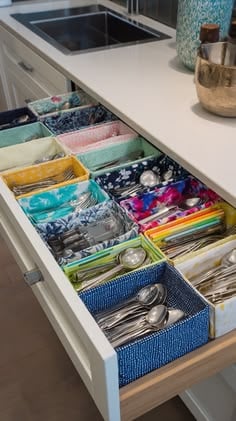
Kitchen drawers collect odds and ends, so dividers can bring order.
A fabric divider set uses stiff panels that sit inside a drawer and make sections for utensils, towels, or small gadgets.
Measure the drawer carefully, because even a quarter inch matters in a snug fit.
Choose washable cotton or a cotton-linen blend, and use firm interfacing or thin craft plastic inside to keep the walls upright.
Moisture is a common kitchen problem, so pick fabric that dries quickly and tell buyers to let it air dry.
Fabric is not automatically food-safe, so never present these organizers as surfaces for direct contact with food.
They suit linens, tools, wrapped items, and utensils.
A simple divider can be a quicker project, like these sewing projects you can make in one hour and sell.
Offer custom sizes for common drawer widths.
24. Cutlery Organizer Rolls
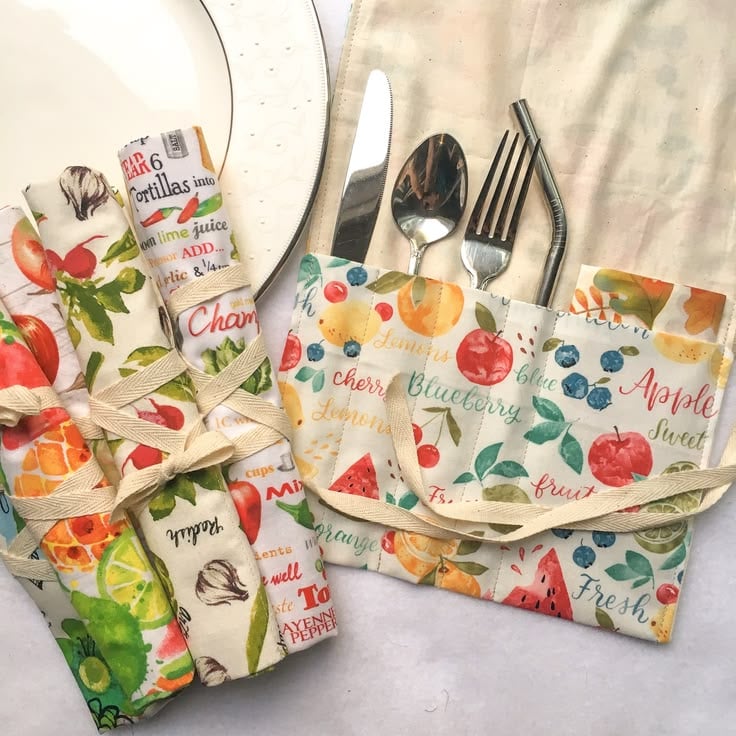
A cutlery roll keeps forks, spoons, and knives together for picnics, camping, travel, and packed lunches.
The classic design has a row of single pockets sewn onto a panel that folds and ties with a ribbon or strap.
Use washable cotton canvas or duck cloth, and add a light inner layer so utensils do not poke through.
Size the pockets for adult utensils, or make a narrow kids’ version.
Sharp knife edges need extra care.
Add a deep pocket, a folded flap, or a thicker inner layer for protection, but never call fabric cut-proof.
Tell buyers to wash and dry utensils before storing them.
A set with a matching napkin and a reusable straw pouch makes a nice eco-friendly gift.
Take photos with the roll open and closed so buyers see how it works.
25. Over-the-Door Pantry Pocket Organizers
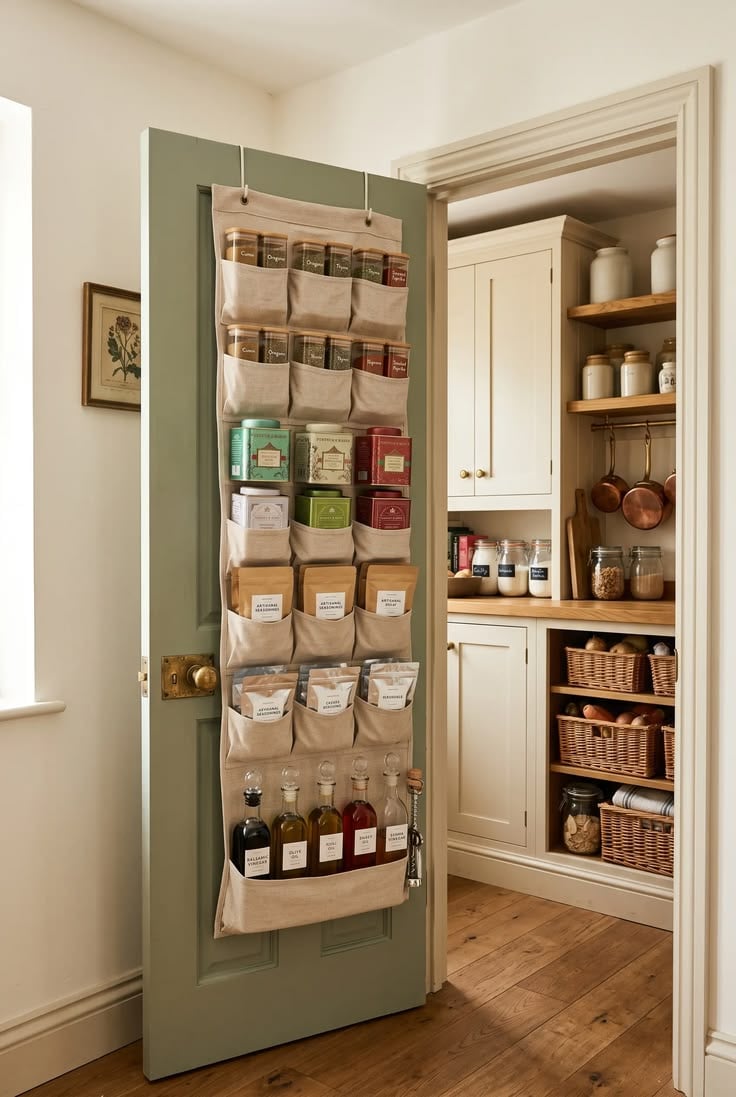
Pantry doors are usually unused space.
An over-the-door organizer is a long panel of pockets that hooks over the top of the door and holds spice jars, snack bars, tea bags, foil, and packets.
Make it from sturdy canvas, with interfacing and deep pockets that stay open.
Use strong straps with metal hooks, and check that the door still closes freely.
Do not overload it, because heavy cans can pull the panel off the door.
Keep it to dry packaged goods, since ordinary fabric is not made for loose food.
Offer a narrow and a wide version, and give the exact length so buyers can compare it with their door.
These can round out a set of organization products to sew and sell for the kitchen.
Batch sewing helps, as these sewing products you can make in bulk and sell show.
26. Receipt and Coupon Organizers
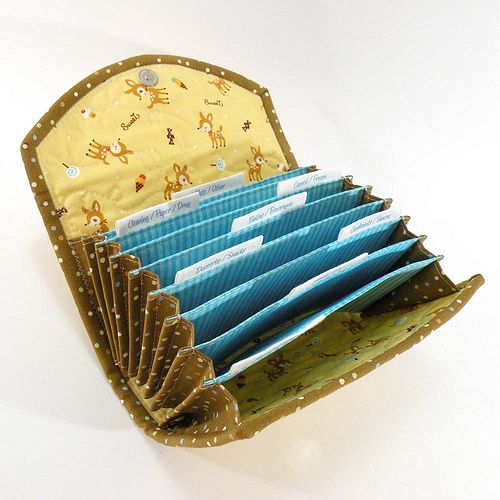
Receipts, coupons, and loyalty cards get crumpled at the bottom of a bag.
A small organizer keeps them flat and sorted.
A common design is a long, narrow wallet with a row of slim pockets or an accordion fold, each with a label tab for categories such as groceries, returns, or warranties.
Use cotton canvas with light interfacing so the pockets hold their shape, and bind the edges so paper does not catch.
A hook-and-loop strip or elastic band keeps everything closed.
Cut the pockets slightly taller than a receipt, and add one wider pocket for folded coupons.
Shoppers who like budgeting, small business owners, and students may all want one, and a matching pen loop is a useful extra.
Keep it slim so it fits in a bag or a glove box.
Show the closed size in your listing, and photograph it open with sample papers inside.
27. Wall Mail Organizers
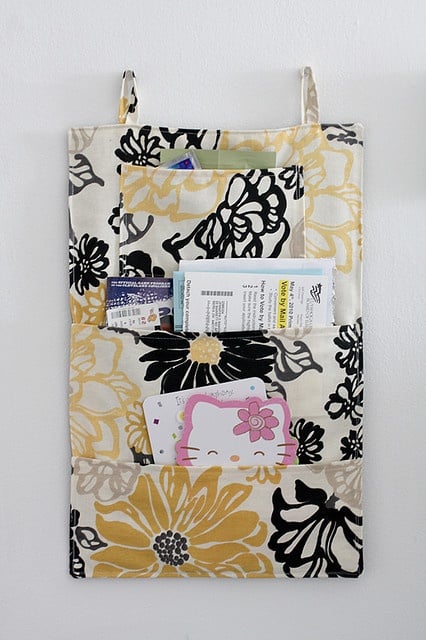
Mail piles up by the front door. A wall mail organizer gives letters, keys, and notes a spot at eye level.
Slim vertical pockets hold envelopes, a shallow pocket holds a pen, and a hook or two can hold keys.
It has a narrow shape and small pockets that sit flat, which suits an entryway.
Use heavy canvas or linen with interfacing so the pockets stay upright, and finish the top with a wooden dowel or strong loops.
Letters weigh very little, but keys and extras pull the panel forward, so use a firm backing and secure mounting.
Offer a family version with a labeled pocket for each person.
Personalized names add value. Tell buyers how to mount it, and remind them to choose hardware that suits their wall.
For more ideas on what to list, see these sewing projects that sell well on Etsy
28. Hair Accessory Organizers
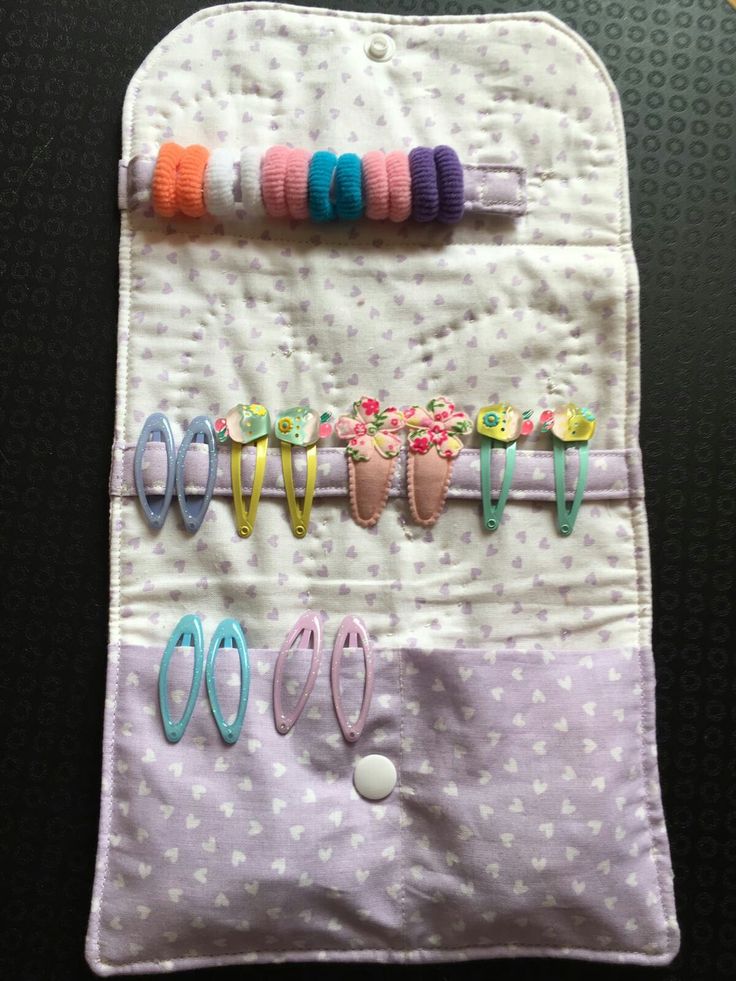
Hair clips, bands, and bows are tiny, so they vanish into drawers and bathroom bags.
A hair accessory organizer gives each kind its own place.
A popular design folds open like a wallet, with a fabric strip for snap clips, an elastic band for hair ties, and a snap or zipper pocket for bows and pins.
Use quilting cotton or cotton canvas outside, with light interfacing for body.
Make the clip strip from firm, tightly woven fabric so the clips do not slide out.
A snap or ribbon keeps it closed in a bag. A hanging version with a loop can go on a bedroom door.
Parents of kids with many clips, dancers, and students who carry spares are natural buyers.
A matching bow holder or small pouch makes a thoughtful gift set.
It is a sensible small item to add to your organization products to sew and sell for kids’ rooms.
29. Book and Notebook Organizers
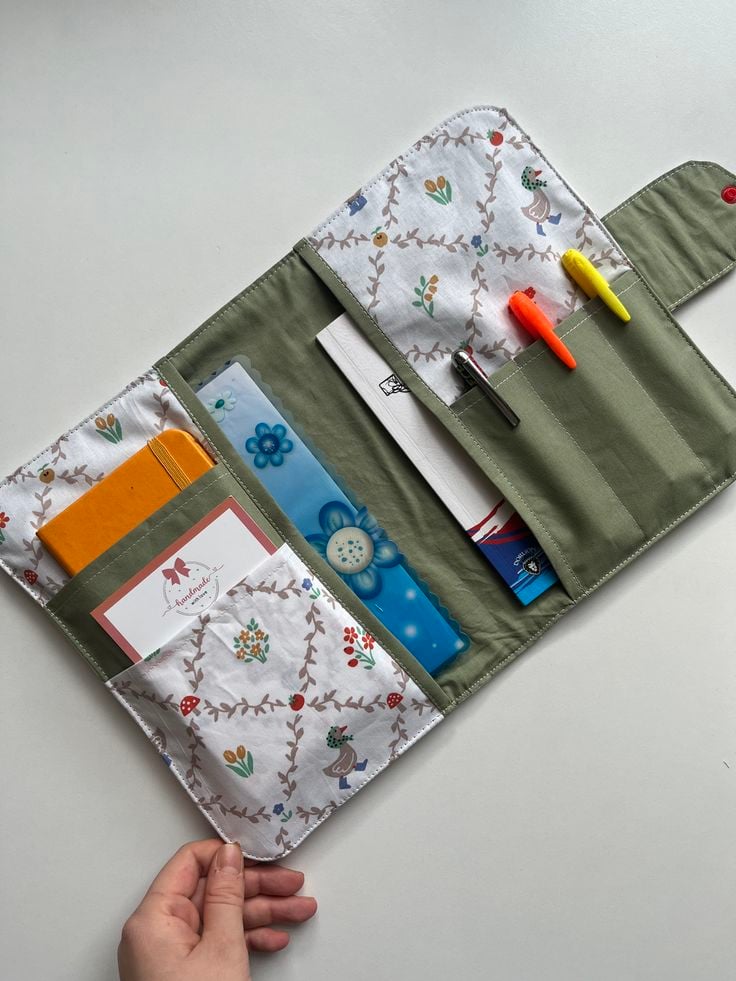
Readers and note takers often carry a book, a notebook, a pen, and a few bookmarks.
A fabric organizer holds them all in one cover.
A simple book sleeve has padding and a soft lining, while a notebook cover has flaps and a pen loop.
An elastic band or a flexible flap lets one cover fit books of different thicknesses.
Add pockets for bookmarks and reading glasses.
Use strong materials such as canvas, cotton, or linen blends with light interfacing.
Students, journal lovers, readers, and teachers are all possible buyers, and a choice of fabric makes each cover feel personal.
Offer a size for paperbacks, a size for A5 notebooks, and a larger one for textbooks.
To plan your range and prices, these best things to sew and sell for extra money have more ideas.
Photograph the cover wrapped around a real book.
30. Wall-Mounted Fabric Organizers
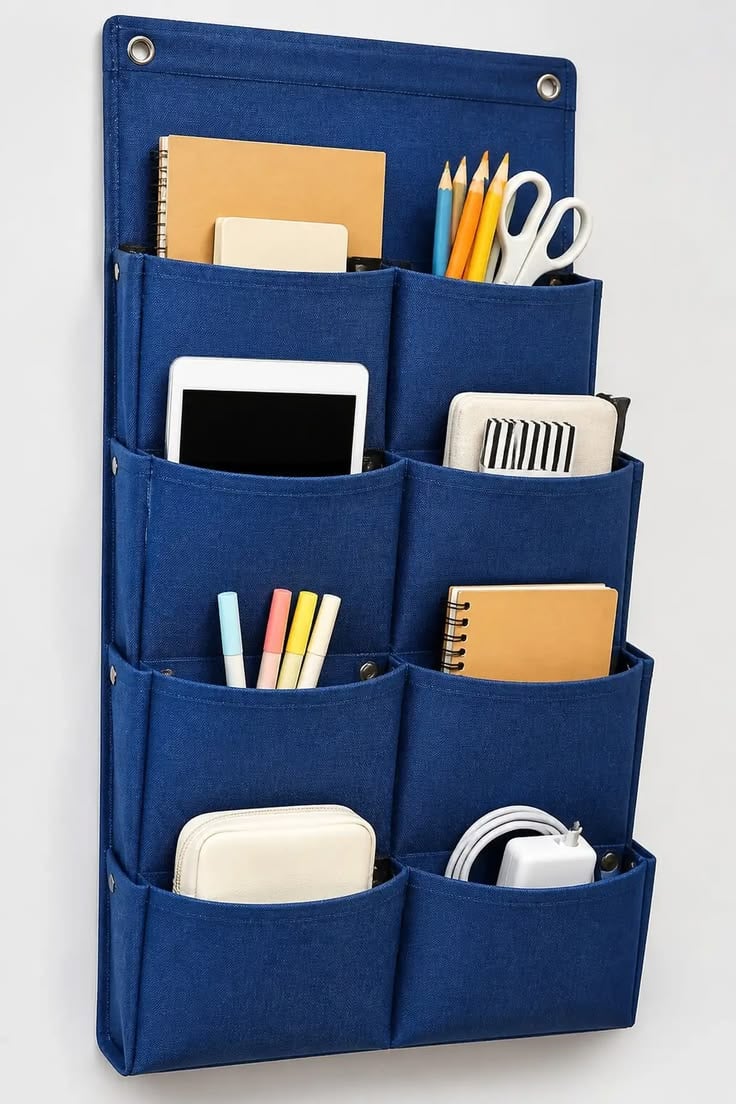
Unused wall space is a great place for storage in bedrooms, offices, craft rooms, kitchens, and entryways.
A wall organizer is a panel of pockets with a reinforced top that hangs from hooks, a rod, or a rail.
An entryway version can hold mail and keys, while a craft room version might hold scissors and tape.
You can change the size and pocket depth for different storage needs.
Use heavy fabric with interfacing, and sew a wide casing or strong loops across the top.
Heavy contents need secure mounting, such as proper wall hooks or a rod, and should not rely on fabric alone.
Give buyers mounting tips in your listing and remind them to choose hardware that suits their wall.
Exact size drawings help with organization products to sew and sell like this one.
31. Pencil Case Sets
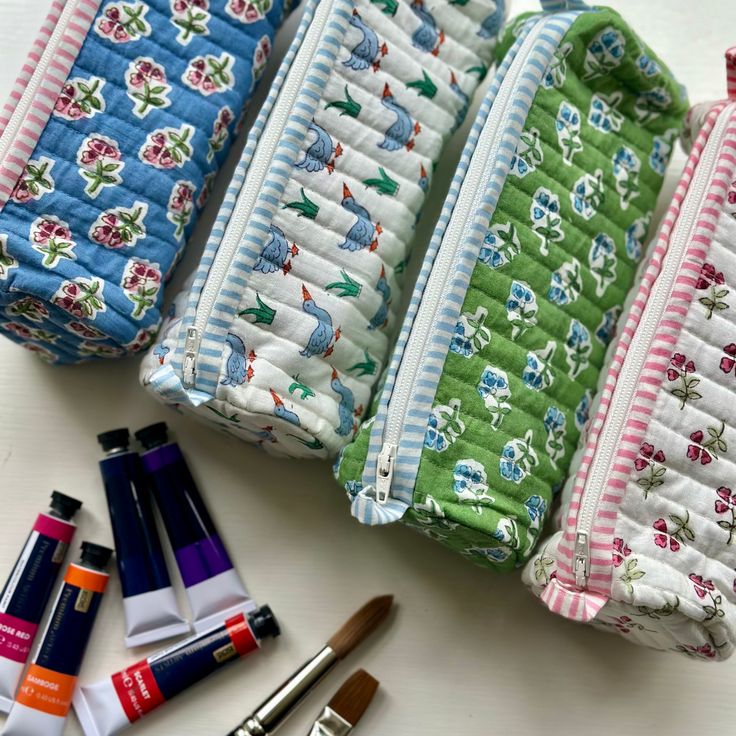
A pencil case is a small project that works well as a set.
A trio can include a long zippered case for pens and pencils, a flat pouch for erasers and notes, and a small pouch for coins or earbuds.
Use cotton canvas, quilting cotton, or laminated cotton for easy wiping, with a light layer of interfacing for body.
Choose a zipper that is long enough to open wide so everything is easy to see.
A boxed bottom gives more room than a flat pouch. Add a loop or a clip so the case can attach to a bag.
Students, teachers, artists, and craft fans are natural buyers.
Fabric choice and a name tag add a personal touch.
Because the cases are small, they are easy to cut and sew in batches, and scraps from larger projects can be used.
For a wider view of what shops offer, see these best selling products to sell on Etsy.
Conclusion
Fabric storage can solve many small problems, from tangled cables and loose socks to crowded closets and messy craft tables.
The best organization products to sew and sell match your skills, your fabric supply, and the people you want to help.
To build confidence, start small with a cable organizer or a makeup bag.
Move on to a hanging organizer or a foldable box when you are ready for stiff layers and careful measuring.
You can also group products into collections for one room or lifestyle, like a travel set, a nursery set, or a desk set.
Pick one idea, make a sample, and test it.
Then start planning your own handmade storage collection, one useful piece at a time.