Those little leftover pieces in your sewing basket can turn into some of the most fun sewing projects you can make from fabric scraps.
Every time you sew, something gets left behind. After a skirt, a tote bag, or a quilt, you end up with odd-shaped offcuts, skinny strips, and tiny squares in every color and texture.
It feels wasteful to toss them, and the good news is you don’t have to.
Those small fabric pieces can be the start of something new.
In this post, you’ll find 26 sewing projects you can make from fabric scraps, from pretty patchwork and wall art to soft toys, sensory ribbons, and little accessories.
Some need just one scrap. Others turn out best when you mix a few prints, layer different textures, or turn the scraps into new sewing material first.
If you’d like more ideas that use only a little cloth, you can also read our 20 sewing projects that don’t require much fabric.
Now grab your scrap bin and see what you’ve got.
Sewing Projects You Can Make From Fabric Scraps
1. Fabric Postcards
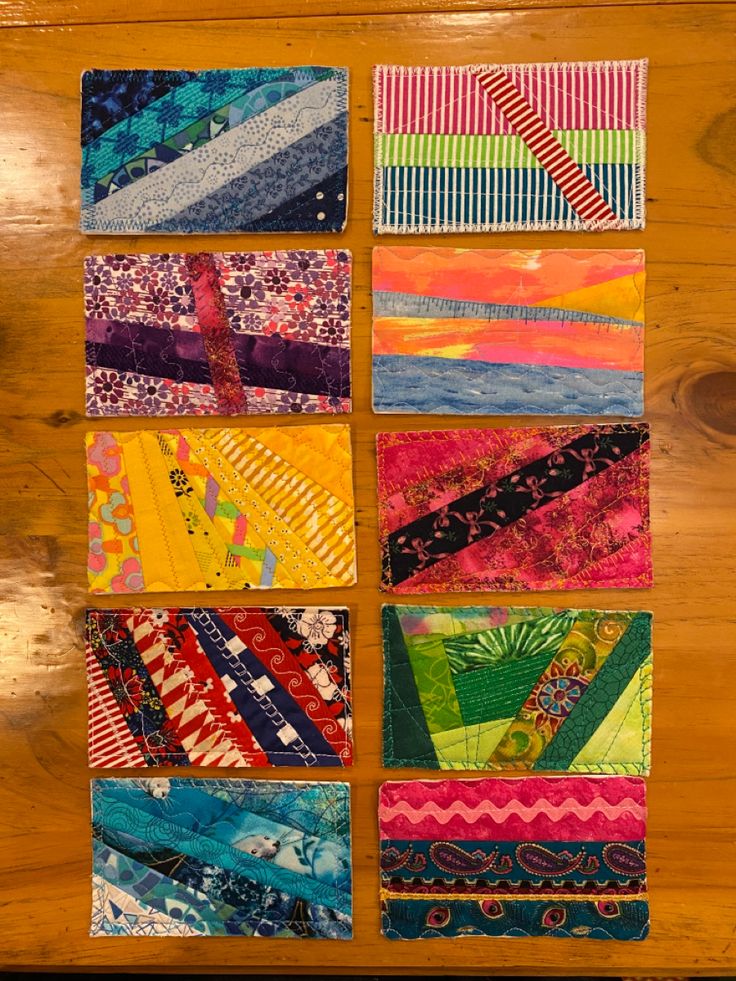
A fabric postcard is basically a tiny piece of art you can hold.
Pick a few small scraps, arrange them on a rectangle of fabric, and stitch or appliqué them in place.
A little landscape, a flower, or just a pretty mix of prints all work.
Mixing textures, like a smooth cotton next to a bit of linen or felt, makes even a simple design more interesting.
The card needs a stable backing, such as interfacing or thin craft stabilizer, so it stays flat and keeps its shape.
These are lovely for birthdays, holidays, and thank-you notes, and a themed set of four or five makes a nice gift.
You could also sell small sets, though how well they sell depends on your style and your audience.
If you plan to mail one, check your postal service’s rules on size, thickness, and backing first.
2. Doll Quilts
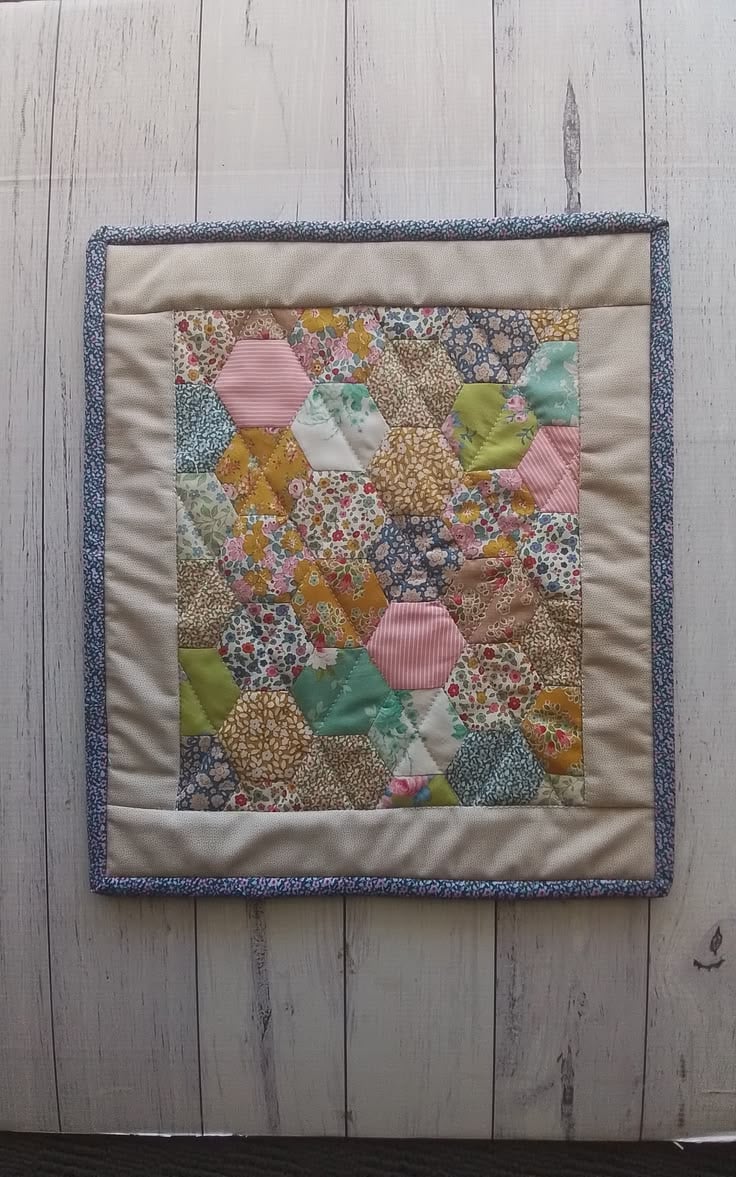
Doll quilts are one of the nicest sewing projects you can make from fabric scraps, because they use the pieces that are too small for a full-sized quilt block.
Sew simple squares or strips together, add a thin layer of batting, and finish the edges with neat binding.
Scrappy, mismatched blocks look charming here, as long as a color or two repeats to tie everything together.
Measure the doll or stuffed animal before you start, because sizes vary a lot.
A quilt that fits one doll might swamp another.
You can also sew a little pillow or mattress cover to make a bedding set, or match the fabrics to a handmade doll dress.
If a child will play with it, sew the seams securely and skip loose buttons, beads, or ribbons that could come off.
3. Fabric Birds
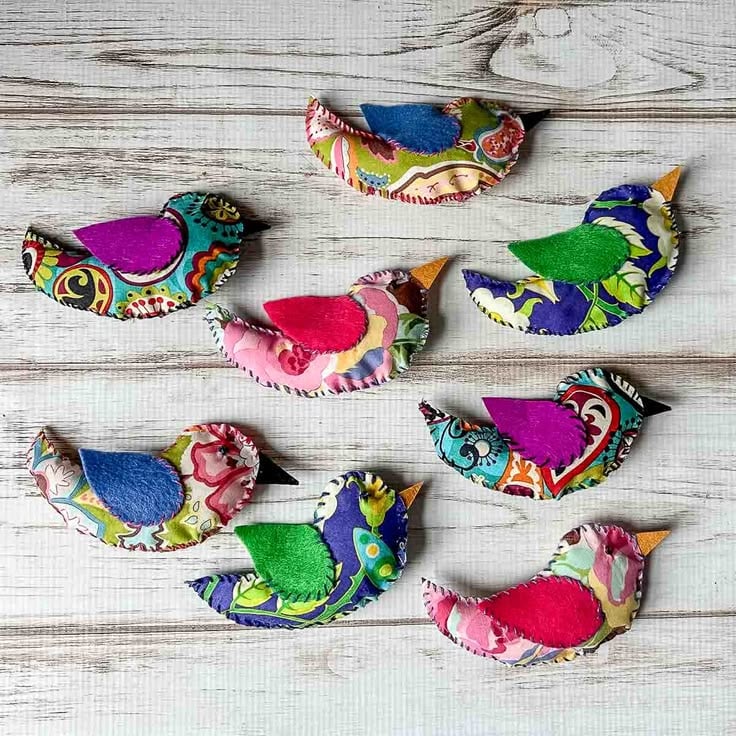
Start with a plain, rounded bird shape and let the scraps do the talking.
Use one fabric for the body, another for the wings, and a small bit of a bright color for the beak.
Simple shapes are the easiest to sew and turn right side out, and light stuffing gives the bird a soft, plump look without making it stiff.
A few embroidery stitches are enough for an eye and some wing lines.
You can stretch or shrink the pattern to make a chubby robin, a slim swallow, or a tiny finch.
Hang them as ornaments, string them into a garland, tuck them into a nursery display, or give them as small gifts.
If you’re thinking about selling, a recognizable style helps, and this list of unique sewing products to sell on Etsy might spark ideas.
If a young child will hold it, stitch the eyes instead of using buttons or beads.
4. Fabric Pinwheels
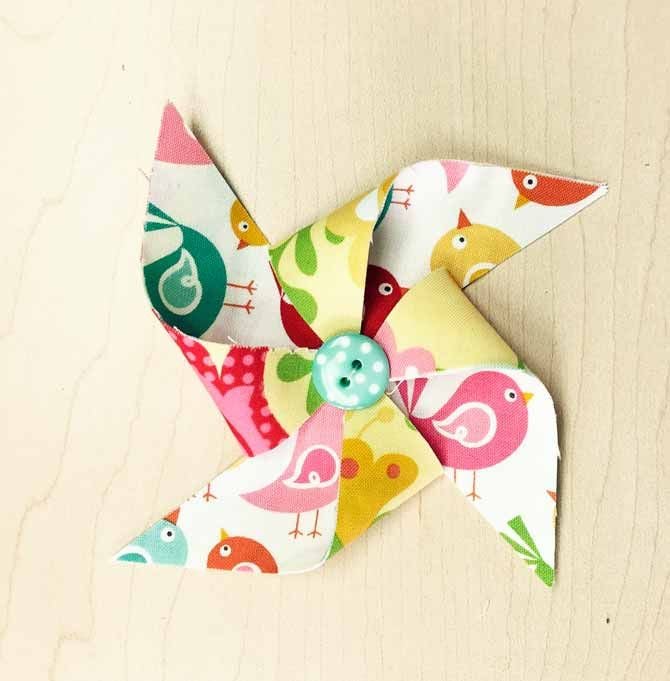
If you have a stash of square-ish scraps, fabric pinwheels are an easy, cheerful way to use them.
Cut matching squares, fold each corner into the center, and hold the points down with a few stitches or a small button.
Two prints that contrast, like stripes beside tiny flowers, make the pinwheel shape really pop.
These are decorative, not the kind of pinwheel that spins in the wind outside, so think of them as little accents.
Pin one to a wreath, tie one onto a gift, glue one to a hair clip, or line several up on a party table or craft display.
Backing lightweight cotton with a bit of fusible interfacing keeps the folds crisp.
They’re also some of the quickest sewing projects you can make from fabric scraps.
If you mount one on a stick or use pins, keep it away from young children.
5. Fabric Butterflies
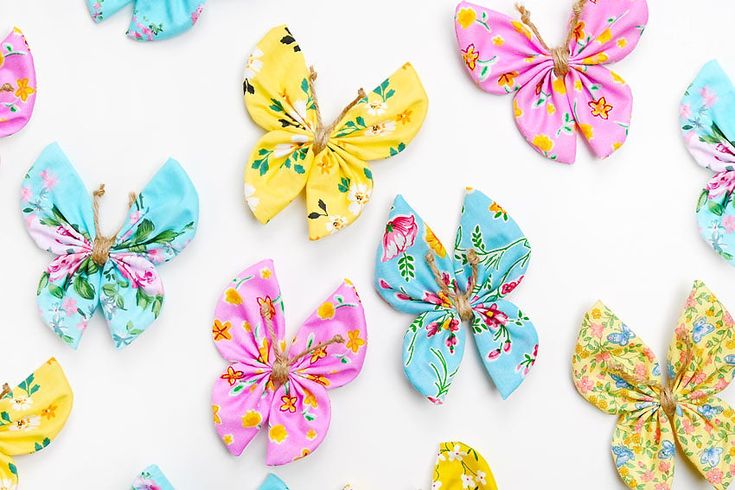
Wings are where butterflies get their charm, and they’re a perfect job for small scraps.
Cut two wing shapes, using a different print for each side if you like, and back them with interfacing so they hold their shape.
Stitch around the edges, then pinch the middle and wrap it with a thin strip of fabric for the body.
Thin, light fabrics give a soft, delicate look, while sturdier cottons make bolder wings.
You can sew butterflies onto bags, cushions, jackets, or headbands, or glue a flock to a wall display or a handmade card.
Try a set in spring pastels or deep winter shades. You can draw the wings freehand, so you don’t really need a pattern, and our list of no-pattern sewing projects to make and sell has similar ideas.
For children’s accessories, sew every attachment on firmly and skip small add-ons that could fall off.
6. Stuffed Caterpillars
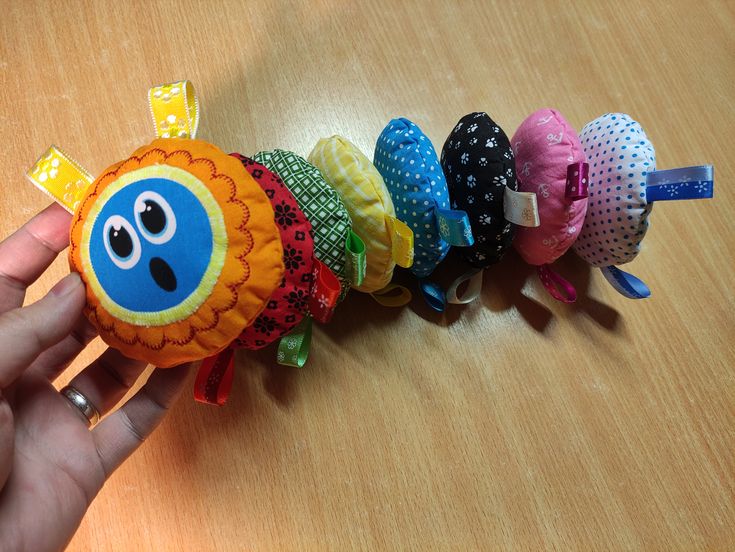
A caterpillar is made of little segments, which means every scrap gets its own spot.
Cut circles or short tubes from several fabrics, sew and stuff each one, then join them in a row.
Try keeping the segments about the same size so the caterpillar looks balanced, and mix stripes, dots, and solids for a happy, patchwork feel.
Add a face with a few embroidery stitches.
One caterpillar looks cute on a nursery shelf, and a whole family of them makes a fun soft-toy set for gifts or imaginative play.
Choose fabric that suits the age of the child, and sew every seam securely.
Skip button eyes and other small parts that can pull off.
Even then, don’t describe a caterpillar as safe for babies unless it has been made and tested to meet toy safety rules.
7. Sensory Ribbon Rings
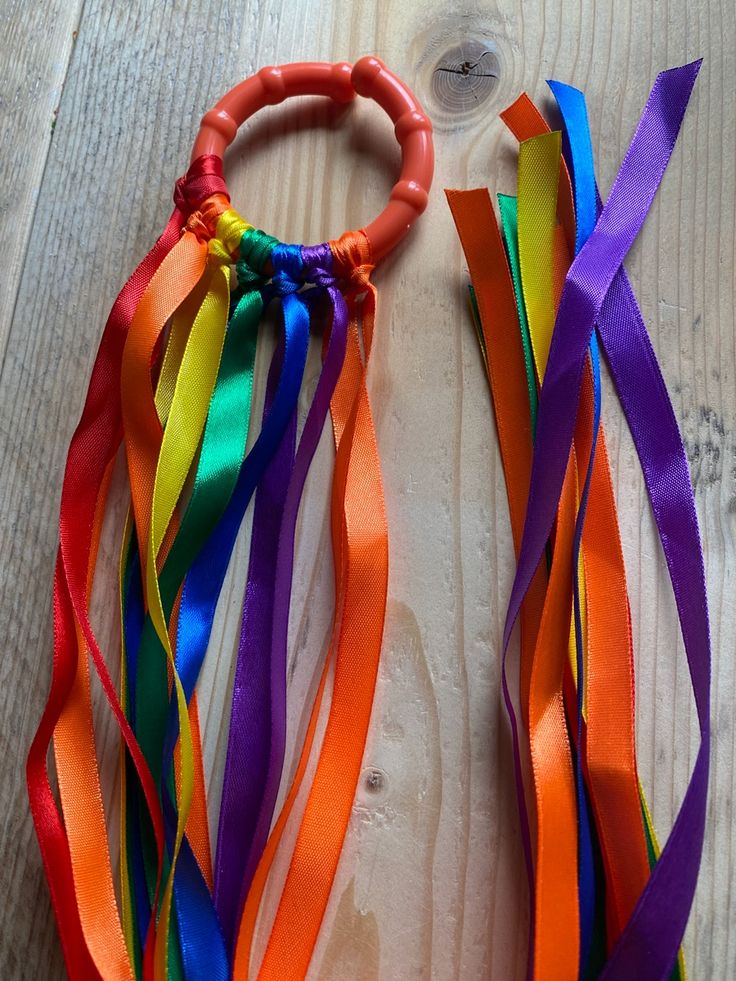
These rings are all about touch. Gather leftover ribbon in different widths and textures, such as shiny satin, ribbed grosgrain, and soft cotton, and cut a few short lengths from fabric scraps to go with them.
Fold each piece over a suitable ring or a fabric-covered base and stitch it down firmly.
The mix of colors and feels is what makes the ring interesting to look at and handle.
Safety needs real attention here.
Tug each piece hard before you call it finished.
These rings are meant for supervised sensory play, handmade gifts, or themed activity sets, not as certified baby toys, and they shouldn’t be left with a child alone.
The age of the child, the way it’s made, and the safety standards in your area all matter, especially if you plan to sell.
8. Fabric Scrap Yarn
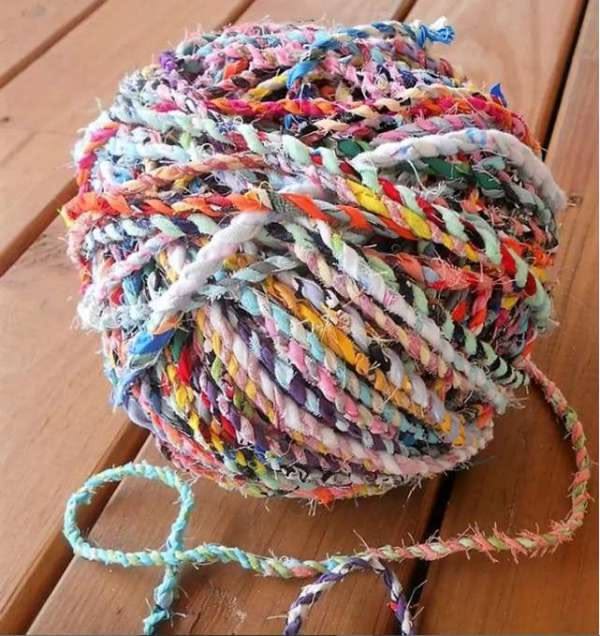
This one is different, because you’re not making a finished item.
You’re making a new craft material.
Cut or tear woven cotton into long strips, and keep the width the same all the way along, since even strips are much easier to work with.
If your fabric is a big flat piece, you may be able to cut one long continuous spiral.
With smaller scraps, cut separate strips and join them with small seams.
Very stretchy, bulky, or fraying fabrics act differently, so test a small piece first.
Treat the result as chunky, textured strips rather than a swap for knitting yarn.
Once you have a ball of strips, you’ll find plenty more sewing projects you can make from fabric scraps, like rag rugs, baskets, coasters, and woven wall pieces.
If you’re newer to sewing, our list of simple sewing projects you can make without advanced skills is a good next stop.
9. Fabric Pom-Poms
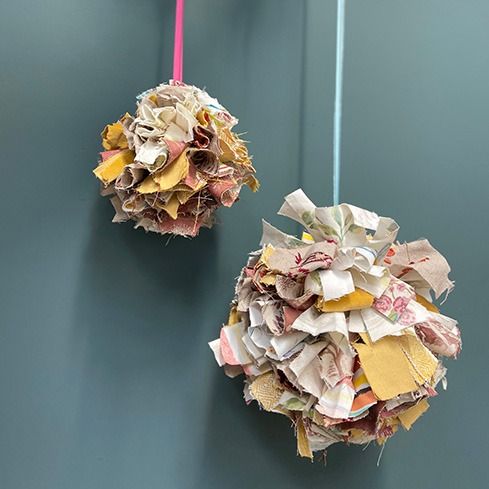
Fabric pom-poms are what happens when yarn pom-pom ideas meet your scrap bin.
Wrap narrow strips around a piece of cardboard or your hand, or gather them along a length of cord, then tie them tight in the middle and fluff out the ends.
Thin jersey strips curl softly, while cotton gives a crisper puff, so try a few to see which look you like.
Mixing several colors in one pom-pom uses up odd remnants quickly.
Just expect a fuller, less even shape than you’d get with yarn.
Once you have a few, string them into a garland, stick them on gift wrap, hang them as bag charms, or add them to party and seasonal displays.
Tie the center with strong thread or cord and knot it twice, especially if it will be handled a lot.
Around small children and pets, keep them out of reach, since loose strips can be pulled off and chewed.
10. Soft Stacking Rings
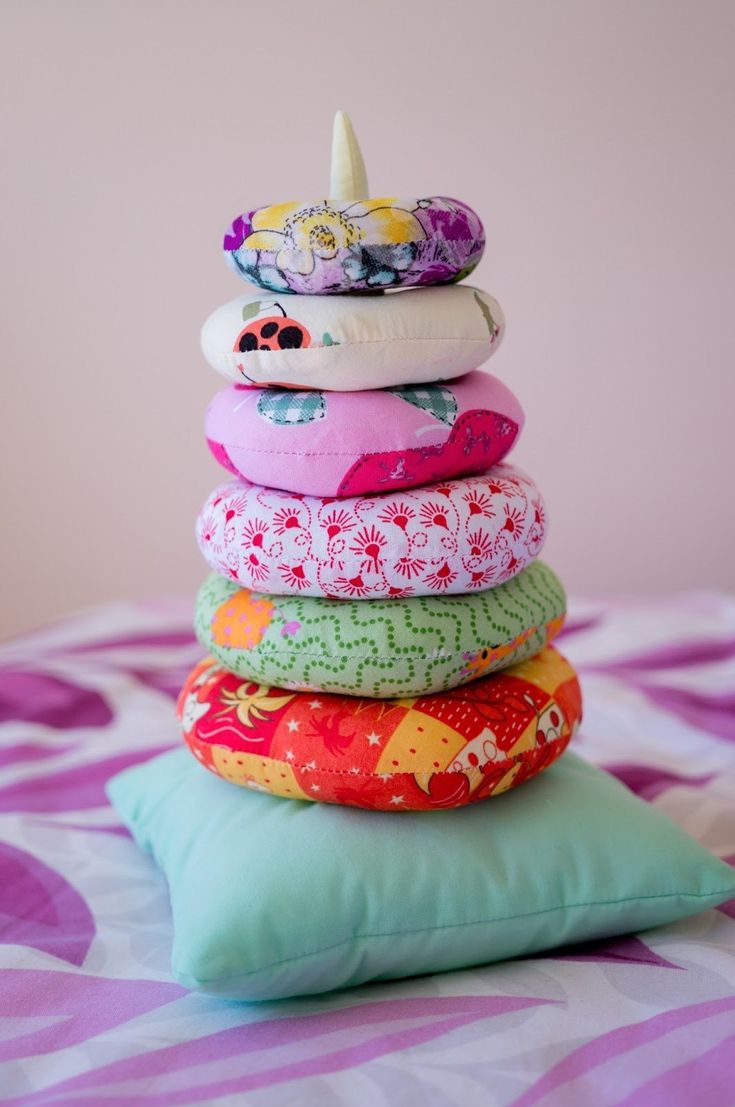
Stacking rings only work if the shapes stay put, so think about how firm you want each ring to be.
One way is to sew a long fabric tube from scraps, stuff it evenly, and join the ends into a circle.
Another is to sew two flat fabric rings together around the edges and stuff the gap between them.
Make each ring a little bigger than the last so the set stacks neatly.
Mixing colors or textures, like a solid, a print, and a bit of corduroy, makes the set fun to look at.
Depending on how it’s made and who it’s for, it can be a soft decorative stack or a handmade play item.
Either way, sew every seam strongly and make sure the filling can’t escape.
Skip big claims about helping a child learn or develop, and don’t call the set baby-safe unless it meets the right safety requirements.
11. Fabric Collage Art
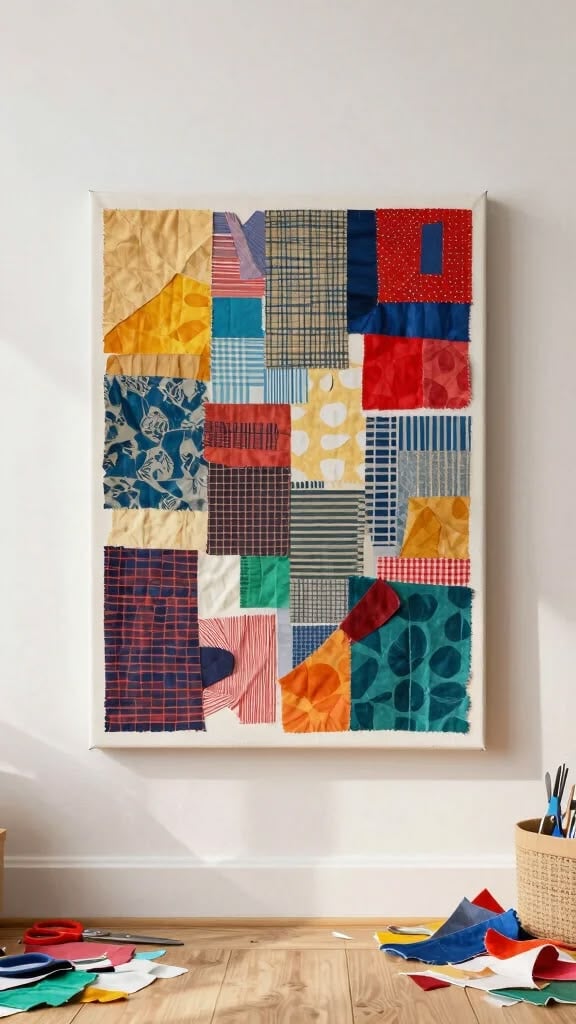
Some scraps are just awkward. They’re curved, skinny, or shaped like nothing in particular.
Fabric collage is where those pieces finally shine.
Lay them on a fabric background, overlap them into a picture or an abstract design, and attach them with fusible web, applique, or small running stitches.
Layering prints and textures, such as velvet next to linen, adds depth that paper collage can’t quite match.
A limited color palette or a clear theme, like a garden, a skyline, or the sea, keeps the piece looking planned instead of messy.
When it’s done, you can frame it, stretch it over a canvas, or turn it into a wall hanging or a personalized gift.
It’s one of the few sewing projects you can make from fabric scraps that works well with irregular pieces nobody else wants.
You may want to keep these for your own walls.
12. Fabric Swatch Books
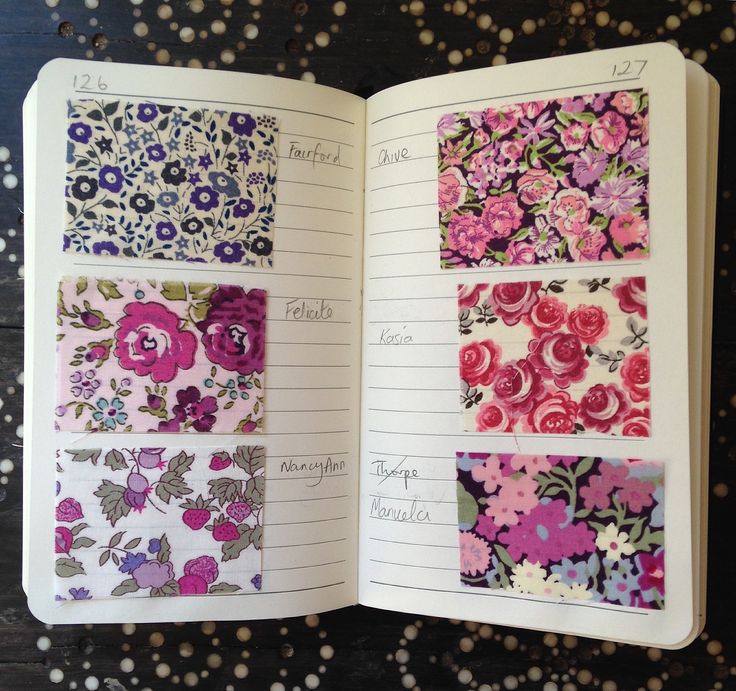
A swatch book is part sewing tool, part scrapbook.
Trim your scraps to the same size, then attach each one to a page, a card, or a fabric-backed section.
Over time, you build a little library of fabrics you’ve actually used.
Add a label to each swatch with the fabric type, color, weight, and where it came from, so you can remember what worked well later.
Plenty of sewists use a swatch book to plan colors, test combinations, or look for inspiration before they start a new project.
Designers and other makers can use one as a handy reference to show clients or keep for themselves.
Because you’ll flip through it again and again, use sturdy pages and a strong binding, like rings, stitched spines, or a ribbon tie.
Pinking the edges of each swatch cuts down on fraying, and grouping swatches by color makes the book easier to browse.
13. Fabric Leaf Garlands
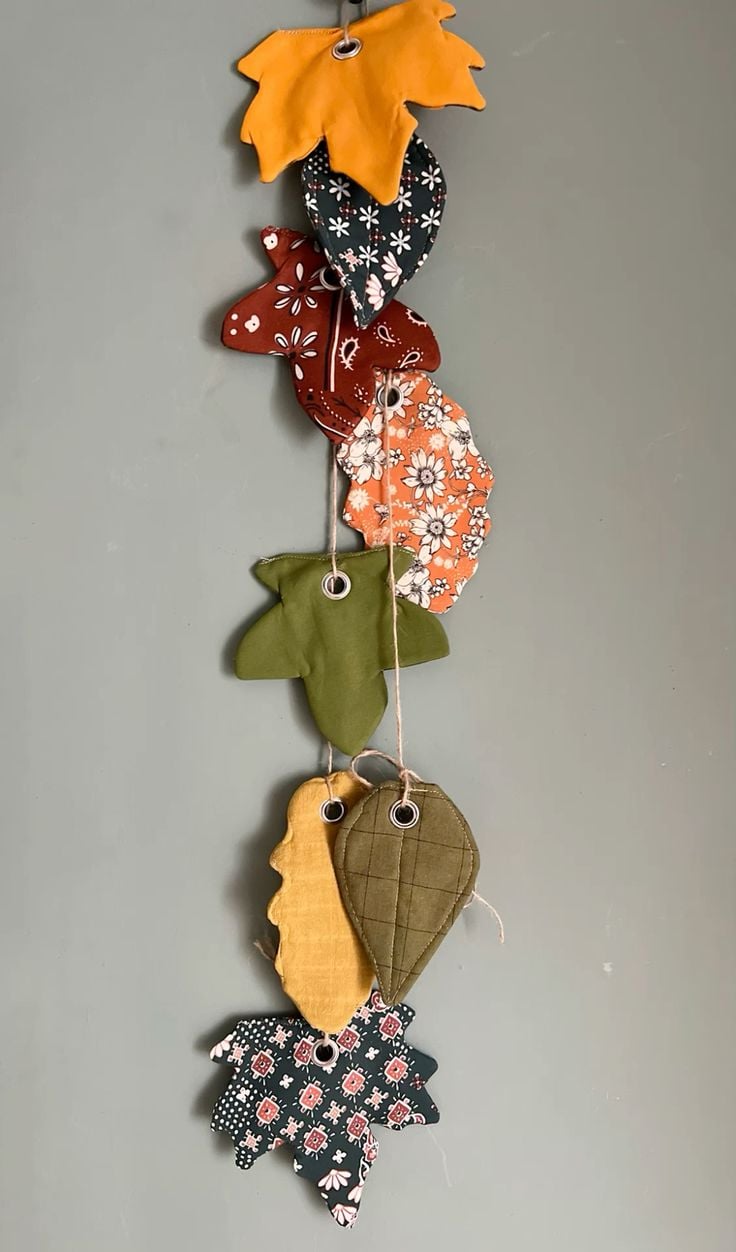
Leaf garlands look best when the scraps come in lots of different shades.
Trace a leaf template, cut pairs from different prints, and sew or fuse them together with interfacing in between.
The interfacing helps thin fabrics hold their shape, and a tidy edge stops the leaves from fraying.
Then stitch each leaf to a cord, ribbon, or fabric strip, spacing them out evenly.
Your fabric choices set the mood.
Fresh greens feel like spring, rusty oranges and browns feel like autumn, and floral prints give a softer, more romantic look.
Mixing a few leaf sizes on one strand looks more natural than a row of identical ones.
Use the garland on a mantel, in a nursery, at a party, around a wreath, or as a simple room accent.
If children are around, hang it safely and keep any loose cords out of reach.
14. Mini Quilts
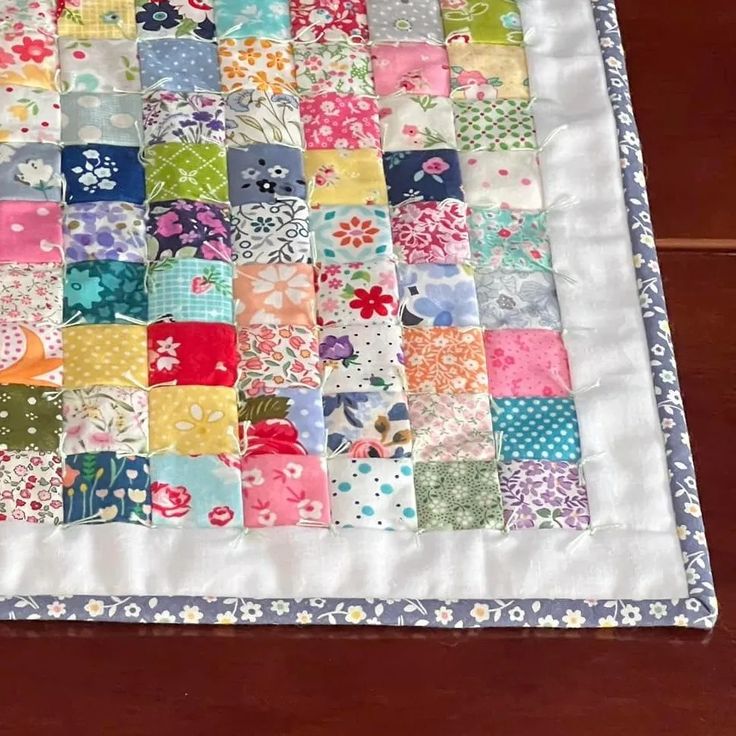
A mini quilt gives you the full quilting experience without the big commitment.
Piece together small blocks or strips, layer them over leftover batting and a backing, and quilt it as plainly or as fancy as you like.
They’re some of the most relaxed sewing projects you can make from fabric scraps, because you can test color placement, try a new block, or practice a quilting pattern without worrying about a huge finish.
A mini quilt can be a mug rug, a table accent, a small wall hanging, or a handmade gift.
Keep your seam allowances the same size so the blocks line up, and choose a backing fabric that suits the front.
If it’s going to be used, say under a hot mug, pick a size, batting, and quilting that fit the job.
For ideas on offering small pieces to buyers, browse these small sewing projects that are easy to sell.
15. Stuffed Fruit
Stuffed fruit is a cheerful way to use up reds, greens, yellows, and oranges.
Strawberries, pears, apples, and lemons are easy to spot even in simple shapes.
Sew a rounded body from one fabric, then add leaves, stems, or seeds from contrasting scraps.
Small fruits suit leftover pieces nicely, while bigger ones may need a few panels sewn together.
Stuff firmly enough to hold the shape, but not so tightly that the seams strain.
These look sweet in a kitchen, in a seasonal display, or as a themed gift, like a little basket of fruit.
They can also be play food. If a child will play with them, skip loose leaves, beads, and buttons, and stitch the details on instead.
Not every age group should play with fabric food, so pick a design that suits the child.
Washable cotton is handy for anything that gets handled a lot.
16. Fabric Yo-Yos
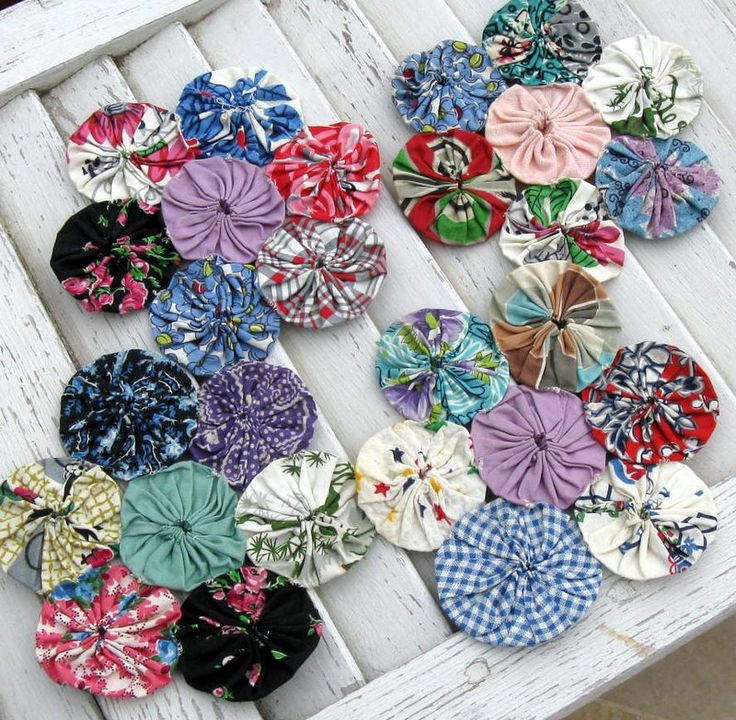
Yo-yos start with a plain circle and a simple running stitch.
Cut a circle about twice as wide as you want the finished yo-yo, fold the edge under, sew all the way around, and pull the thread tight so the fabric gathers into a puffy disc.
Knot it off at the center, and you’re done.
Small circles make tiny buttons, and larger ones make wide, flat flowers, so mix sizes and prints freely.
Yo-yos are especially handy for circular scraps and leftovers from other cutting jobs.
Sew them on quilts, cushions, bags, or clothes as single decorations, or join lots of them into a bigger piece, like a table runner or a light throw.
Even stitches and a firm knot help each one keep its shape.Thin cotton gathers best.
Since the technique is so easy to learn, it also fits right in with these beginner sewing projects that make great products to sell.
17. Fabric Rosettes
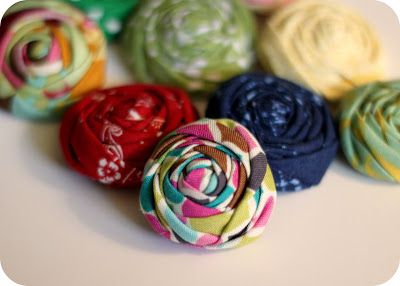
A long, skinny strip of fabric doesn’t look like much. But fold it in half lengthwise, gather one edge, and coil it into a spiral, stitching as you go, and you have a flower.
The type of fabric, the strip length, and how tight you pull the gathers all change the final look. Lightweight cotton makes tight, neat blooms, while softer fabrics give looser, ruffly ones.
Layer petals in two or three colors, or finish with a covered-button center.
Rosettes are among the most useful sewing projects you can make from fabric scraps, because they dress up hair clips, brooches, bags, clothes, gift wrapping, and home décor.
Make them one at a time, or make a matching set in a few sizes.
Sew each rosette onto a backing, like felt or a pin base, and attach it firmly, especially if it will be worn or handled often.
18. Fabric Tassels
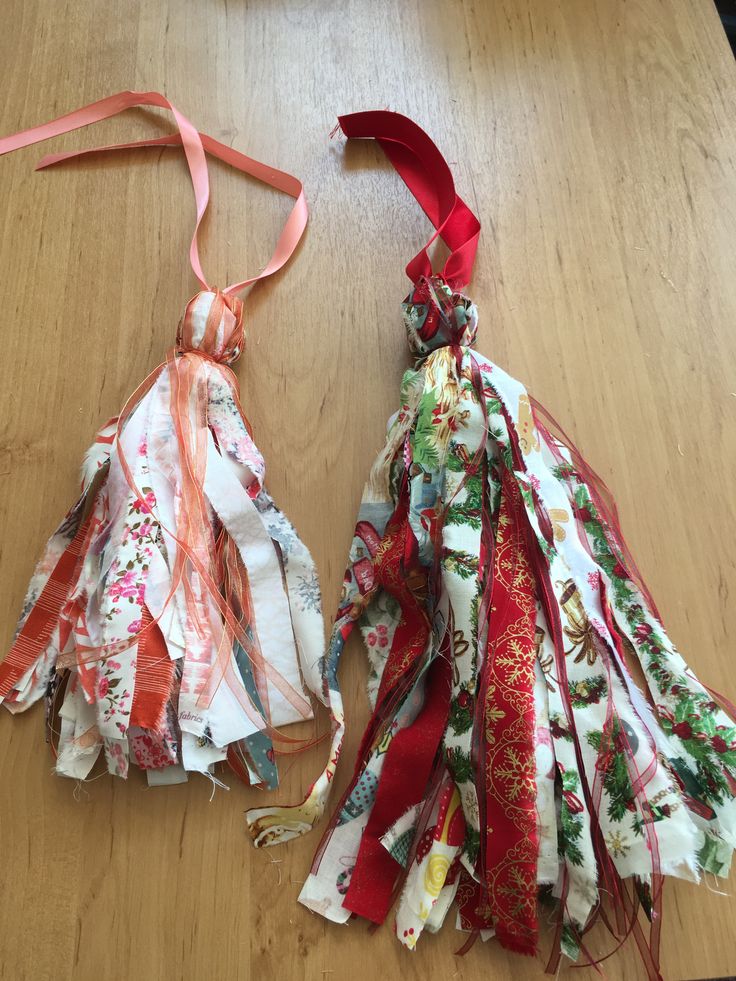
Tassels are a good use for the thin, awkward strips that never fit into anything else.
Cut your strips to the same length, stack them in the color order you want, fold the bundle in half, and wrap thread tightly below the fold to make the head.
Trim the bottom edge straight for a clean finish.
Woven cotton gives a neat, slightly frayed fringe, light fabrics swing and float, and fabrics that fray easily make a soft, fuzzy tassel.
Add tassels to keychains, bags, bookmarks, curtain tiebacks, gift wrapping, or garlands.
Make a matching set in your favorite colors, or personalize one for a friend using their favorite shades.
If you’d like to make a lot of matching sets, this guide to sewing products you can make in bulk and sell may help.
Whatever the use, check that the knot and attachment are firm, especially on bags or children’s things.
19. Fabric Bowls
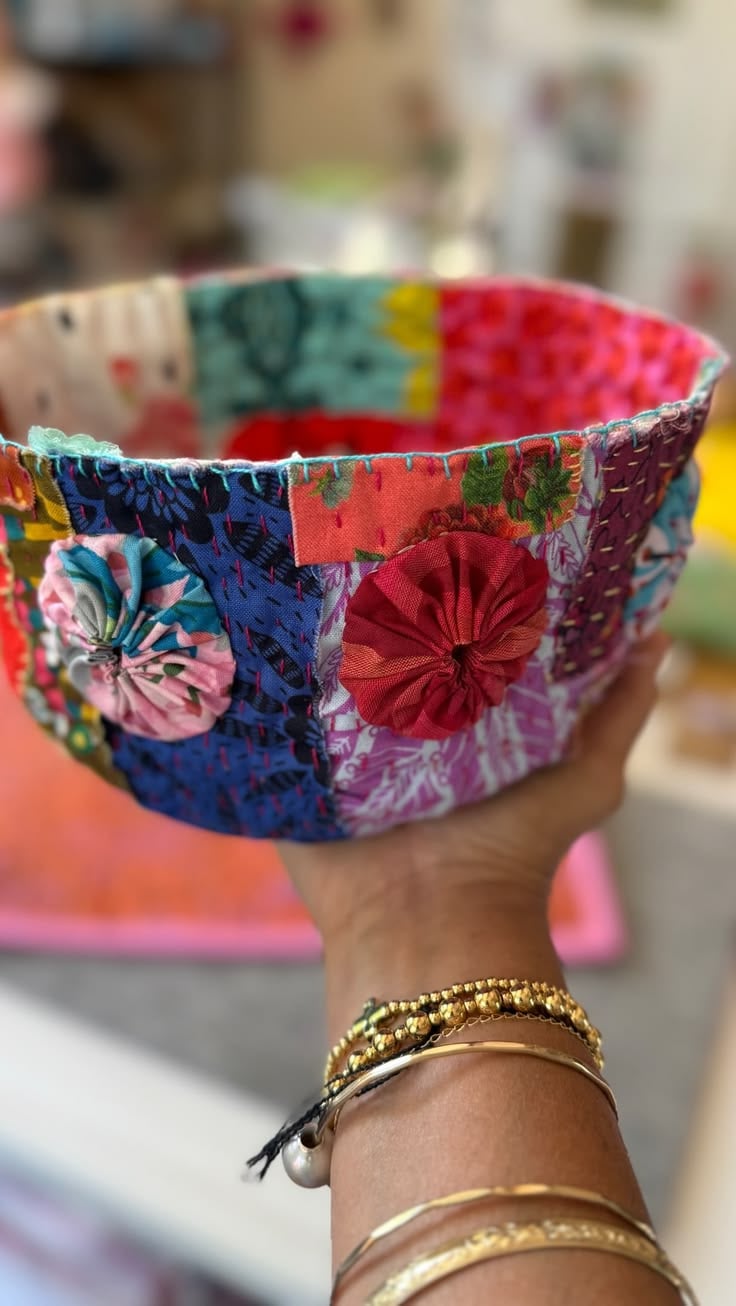
Fabric bowls are built rather than simply sewn, which makes them a different kind of scrap project.
One method wraps strips of fabric around a core, like cotton cord or clothesline, and coils it into a bowl shape.
Another layers and shapes pieces of stiffened fabric.
The fabric you pick, how stiff it is, and how you build the bowl all affect how sturdy it will be.
Use your scraps in color groups to create stripes, ombré effects, or patchwork-style patterns.
Finished bowls work well for holding sewing notions, jewelry, keys, craft supplies, and other light things around the house.
They’re for decoration and storage, not serving food, unless you’ve used materials made for that purpose.
Neat finishing makes a big difference, so tuck the coil end in tidily and keep your stitches even.
Start with a small bowl first, because the shape is easier to control.
20. Beanbags
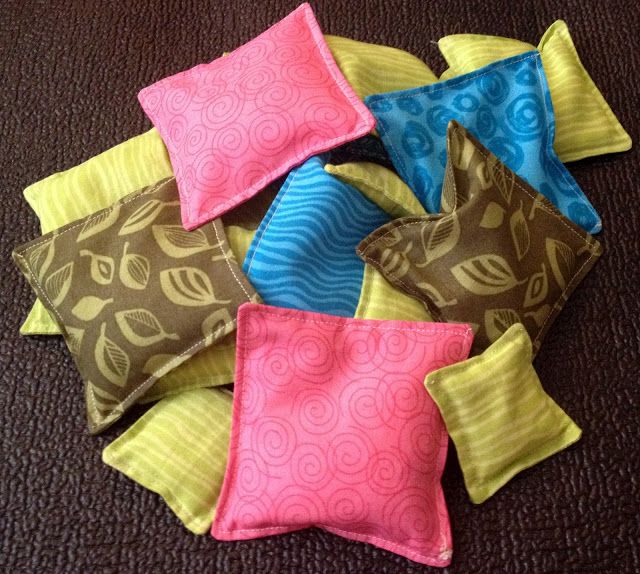
Beanbags are small, sturdy pouches, so they’re a good match for tougher scraps.
Canvas, denim, and heavy cotton hold up well to all the tossing.
Sew squares, rectangles, or shaped pieces into pouches, fill them with a suitable filling, and close the opening securely.
Reinforce the seams with a second row of stitching, because that’s where beanbags often give out first.
Use them for casual games, juggling practice, target tosses, or as a decorative set in matching prints.
One thing to keep in mind: small beanbags can be a choking hazard.
Don’t present them as baby toys, and don’t leave them where children who put things in their mouths can reach them.
The filling should stay fully enclosed, and the beanbag should suit whoever will use it.
If you like fast, repeatable makes, take a look at these quick sewing projects to make and sell.
21. Soft Play Balls
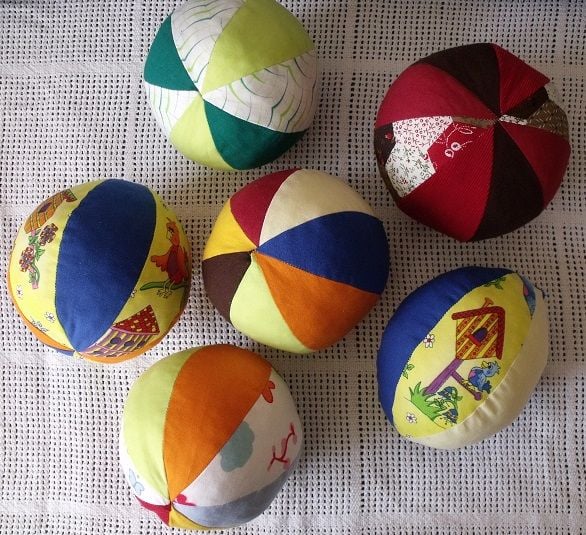
A soft ball is built from panels, so it’s a nice place to use several scraps at once.
Cut matching curved sections, sew them together, leave a gap, then turn the ball right side out and stuff it.
Alternate different prints for a bright, patchwork look, and use leftover fabric for contrasting panels.
Choose durable fabric, and cut carefully so every panel matches. Even stitching helps the ball keep its round shape.
Soft balls are some of the more playful sewing projects you can make from fabric scraps.
They’re ideal for gentle indoor play, gifts, or a handmade soft-toy set.
Since a ball gets thrown, squeezed, and dropped, use strong seams, safe filling, and a design that suits the child’s age.
Don’t say it’s suitable for infants unless it meets the safety standards that apply.
Washable fabric makes cleanup easy.
22. Juggling Balls
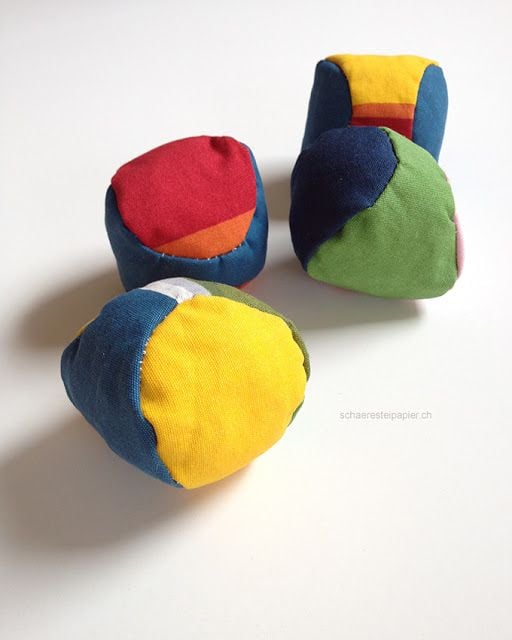
Juggling balls need to be firm and the same weight, so looks come second here.
Sew small panels or a simple pouch from sturdy scraps, using strong seams, and fill each ball evenly.
Tightly woven cotton or canvas is a sensible choice, and double stitching helps stop leaks.
Weigh or measure the filling for each ball so they all fly the same way.
If you’re making a set, cut every piece from the same template so the sizes match.
Three balls make a good beginner’s practice kit, or a fun circus-themed gift, especially in bright contrasting panels that are easy to follow in the air.
These are skill-practice accessories, not toys for very young children.
The filling must stay fully enclosed, so check the seams after practice and repair any that start to come loose.
23. Soft Dice
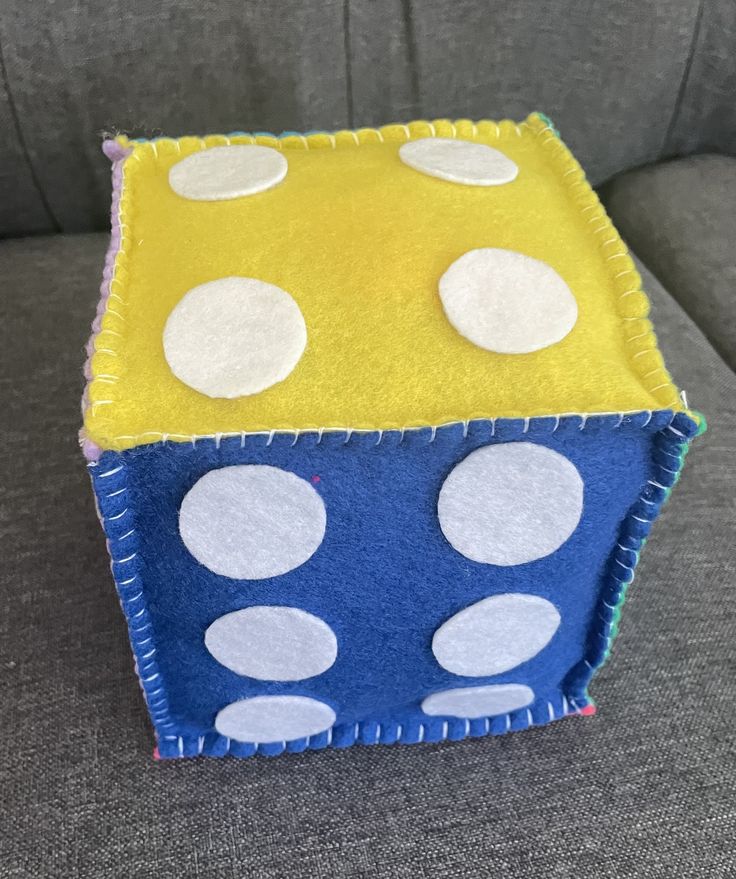
A soft die is a cube, which means six squares and eight corners to line up.
Sew the squares together with the same seam allowance on every side, turn the cube right side out, and stuff it until the corners are nicely filled.
Accurate square sizes help the dice keep their shape.
For the dots, embroider them or stitch down small fabric circles firmly rather than using loose buttons.
A light fabric for the cube with a dark fabric for the dots makes the numbers easy to read.
Pair up two dice for family games, classroom activities, or travel games, and make a little drawstring bag from the same scraps to hold them.
If the dice are for children, choose a design that suits their age and skip any small parts that could come off.
Check each seam before you hand them over, since dice get thrown and squeezed a lot.
24. Heart Pillows
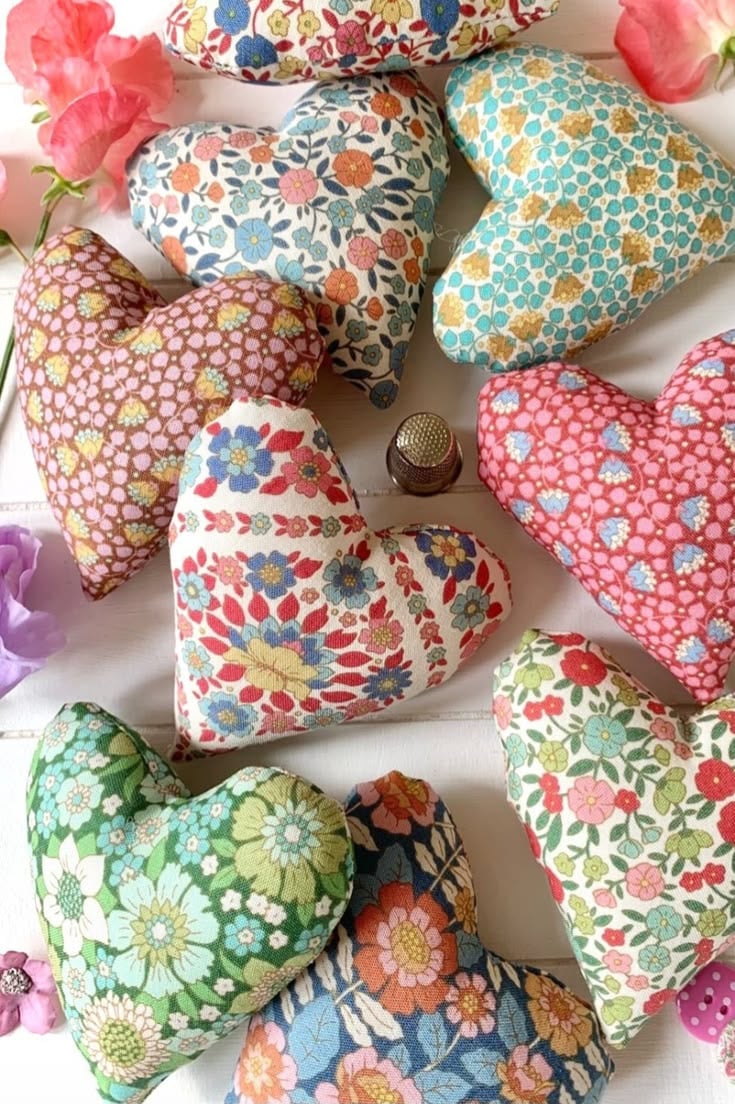
A heart pillow can be a single quiet print or a patchwork of many scraps.
Use one fabric for the front and another for the back, or piece several scraps together before you cut the heart shape.
Fold the fabric in half to cut an even heart, sew with a seam allowance, clip the curves, and turn it right side out.
Light polyester stuffing gives a plump shape, and closing the gap with a ladder stitch hides the seam.
These work well as small cushions, gifts, wedding favors, keepsakes, and seasonal decorations.
Add embroidered initials or pick colors that mean something to the person who’ll get it, and it feels truly personal.
If you’re curious how far personalizing can go, see these personalized sewing products to sell on line.
Match the size and fabric to the use, and stitch securely if the pillow will be handled often.
25. Star Pillows
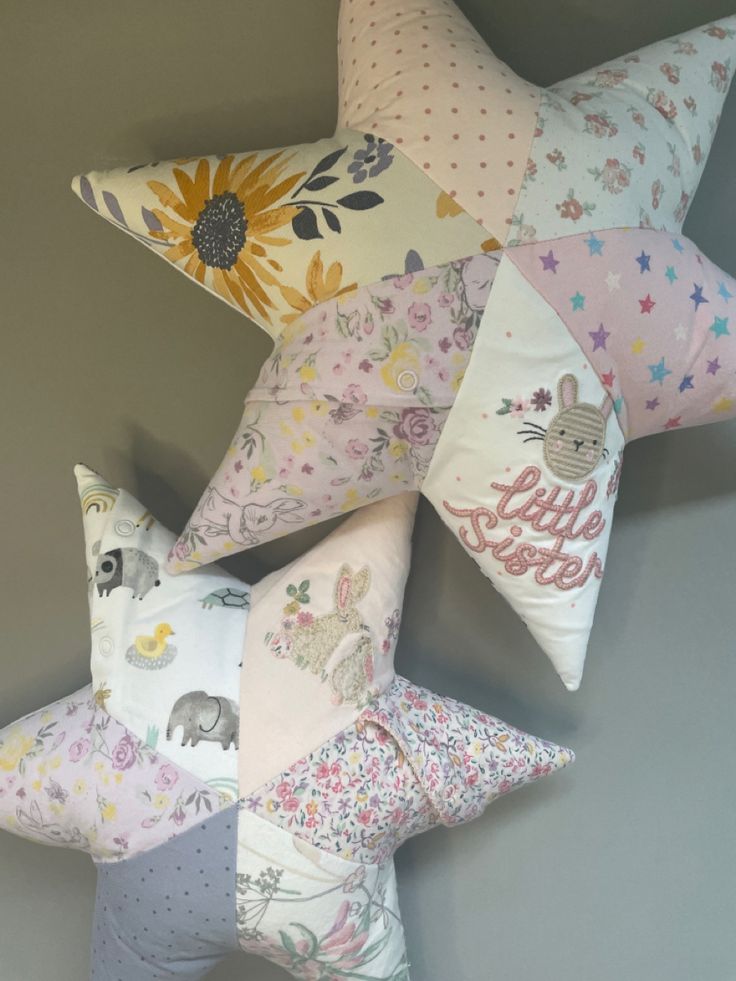
Stars are all about the points. Trace a simple star template, pick fabrics that go together for the front and back, or piece a few small scraps into a patchwork star first.
The pointed corners are the tricky part, so clip close to each tip and trim the seam allowance before you turn it.
Use a blunt tool, such as a chopstick, to gently push each point out.
Star pillows are lovely sewing projects you can make from fabric scraps, especially for nursery decor, seasonal decorations, themed bedrooms, and gifts.
A group of stars in a few sizes, all made from the same little palette of leftovers, looks especially pulled together.
If the stars are for a child’s room, attach any decoration firmly and choose a design that suits their age.
Embroidery is a safer choice than buttons for faces and details.
26. Finger Puppets
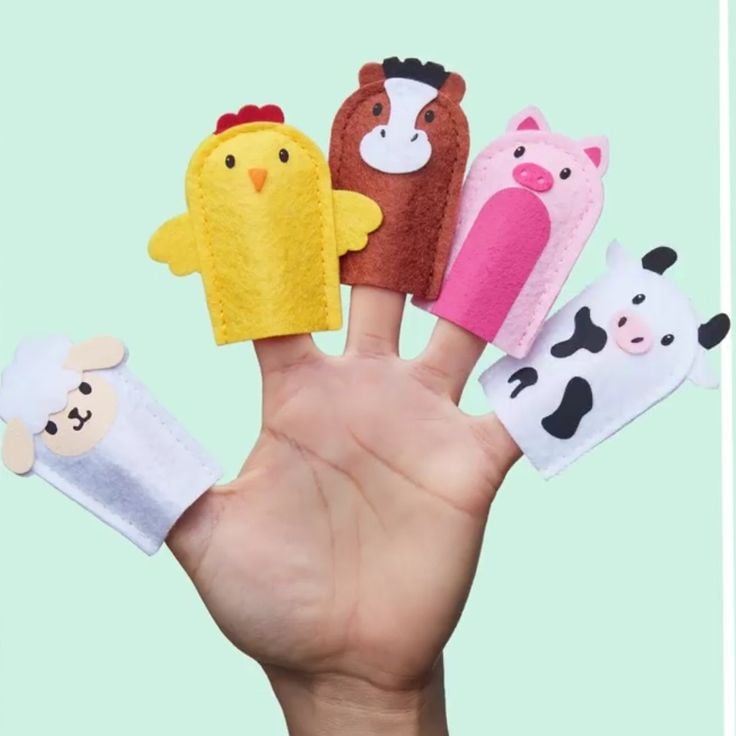
Finger puppets let tiny scraps tell big stories.
Cut two simple layers, like a rounded body with ears or a tail, and sew them together, leaving the bottom open for your finger.
A fox, a frog, a little princess, or a character from a favorite book can all start from the same basic shape.
Embroidery and neat little stitched details bring each one to life.
Make a themed set, such as farm animals or fairy-tale characters, and you have gifts, storytelling props, or toys for pretend play.
Different colors and leftover prints help you build a varied collection without needing big pieces of fabric.
Make the finger opening comfortable and the right size for whoever will wear it.
For young children, avoid small parts that could come off, loose threads, and extras that could be a choking hazard.
Don’t claim the puppets meet toy safety standards unless they’ve been tested.
Conclusion
Fabric scraps are more than leftovers.
Once you start looking at the colors, shapes, and textures already in your bin, you’ll see how many things they could become, from pretty textile crafts and patchwork to soft toys, games, and everyday sewing projects you can make from fabric scraps.
Pick projects that fit the pieces you have, your sewing level, and what you plan to do with the finished item.
If you’d like to sell some of your makes, keep your expectations realistic and put your energy into thoughtful design, tidy sewing, and nice presentation.
Most of all, have fun mixing and reshaping what you already own.
Choose one idea, dig out a few remnants, and see what happens.