The best cute pouches to sew and sell each solve one small, annoying problem.
Lipsticks roll around at the bottom of a handbag. Earbuds hide under receipts.
Charging cables turn into knots. A fabric pouch fixes these problems with very little fabric, which makes it a smart product for a home sewing business.
But customers want different things. A traveller needs a roomy pouch with a wipeable lining.
A student wants a slim case for pens. So size, shape, pockets, closures, lining, and fabric all matter.
This guide shares 21 cute pouches to sew and sell, and it explains what each one holds and how to make it well.
Pouches also work well with bigger bags. If you already sew bags, these 25 tote bag ideas to sew and sell can help you build a matching collection of bags and pouches.
Cute Pouches to Sew and Sell
1. Zipper Cosmetic Pouches
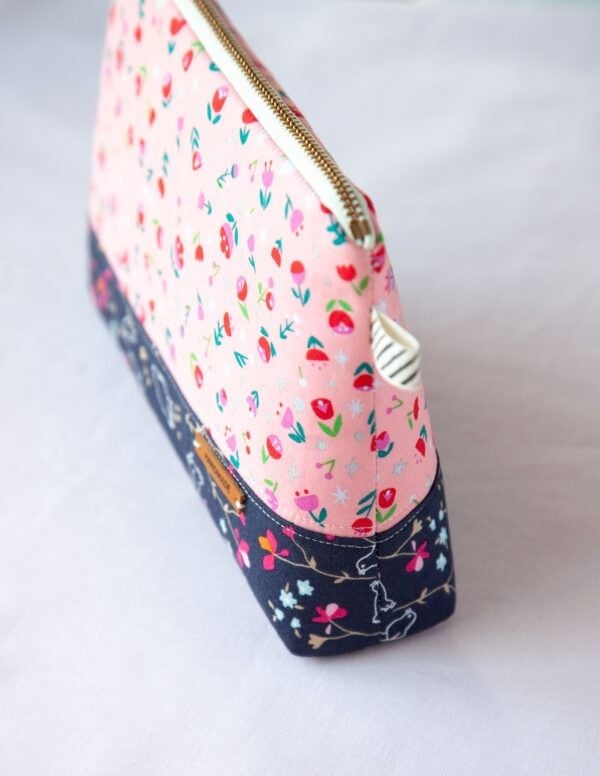
A zipper cosmetic pouch keeps makeup and skincare together in one place.
For the outside, use medium-weight cotton canvas, cotton duck, or laminated cotton.
The lining matters just as much. A wipeable coated fabric is good for products that might leak.
Washable cotton is easier to refresh in the washing machine.
Pick the lining that fits how your customer will clean the pouch, and put the care steps on the label.
The zipper should be smooth, so choose a nylon coil zipper in size 3 or 5 and test it on a scrap first.
A wide opening also helps customers see everything inside.
You can offer a flat everyday pouch, a boxed-bottom pouch for bottles and compacts, and a bigger organizer for a full routine.
Add a name or monogram to make it personal. This list of personalized sewing products to sell online has more ideas.
2. Quilted Makeup Pouches
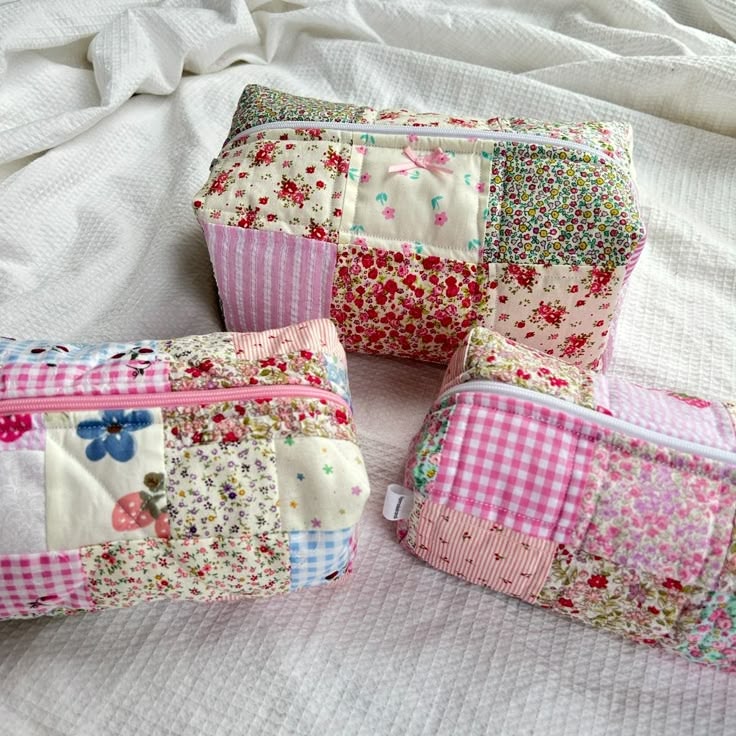
Quilting adds soft padding and a pretty texture to a makeup pouch.
Layer the outer fabric, thin cotton batting, and a backing piece.
Then stitch straight lines, diamonds, or gentle waves before you cut out the pattern pieces.
Quilting cotton with a light fusible interfacing keeps the shape neat without feeling stiff.
Floral prints, small patchwork blocks, and plain solids all give different looks.
Using the same quilting pattern on every size makes a set look planned.
Put the zipper along the top seam, and line the inside neatly. Be honest in your listing.
Quilting makes the pouch soft and gives a little padding for everyday bumps, but it does not protect fragile bottles or powder compacts from drops.
For gifts, a set of three sizes tied with ribbon works well, and it is an easy way to turn a few cute pouches to sew and sell into one bundle.
3. Mini Coin Pouches
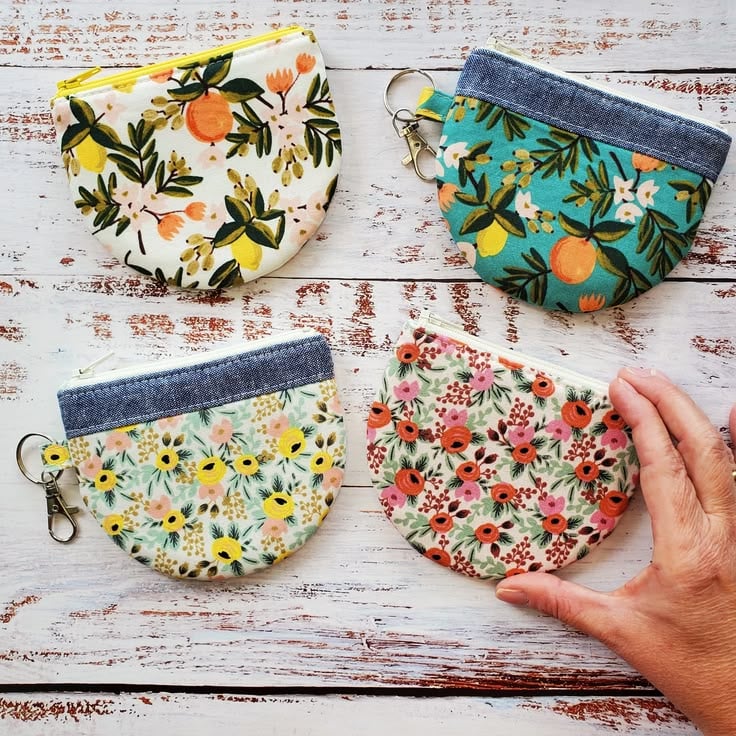
Coin pouches are very small, so every detail shows. They hold loose change, folded notes, a lip balm, or a spare earring.
Because the contents are tiny, the closure matters a lot.
A metal kiss-lock frame looks pretty and opens wide. A short zipper is more secure.
A snap works well on flatter styles. For a basic purse, cut the pieces about 10 by 8 cm.
Add stiff interfacing so the sides do not collapse.
Quilting cotton or light canvas with a smooth cotton lining works well. Trim the zipper ends neatly, clip the curves, and topstitch evenly, because customers will look closely at something this small.
Coin pouches also make an easy add-on, since they can go into an order next to a bigger item.
For more small projects that sew up fast, see these small sewing projects that are easy to sell.
4. Drawstring Gift Pouches
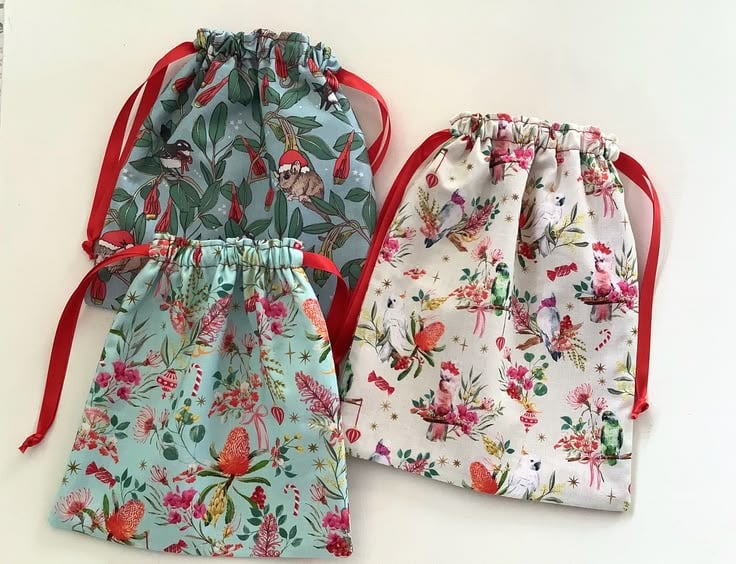
Drawstring pouches work as gift wrap that people can use again.
A small pouch, about 10 by 13 cm, fits a ring or a pair of earrings.
A bigger one, about 15 by 20 cm, holds soap, a candle, or party favors.
Light cotton or satin-style fabric looks nice, and you only need a lining if the fabric is thin.
To make the casing, fold the top edge down twice and leave a small gap in one side seam for the cord.
Cotton cord, ribbon, or satin cord all work. Knot the ends so they cannot slip back inside.
Seasonal prints and wedding colors suit sets in a few sizes, and a small tag can suggest using the pouch again.
They also use very little fabric, so they fit well with other sewing projects that don’t require much fabric.
For young children, skip long cords and loose parts because they can cause choking or strangulation.
5. Flat Pencil Pouches
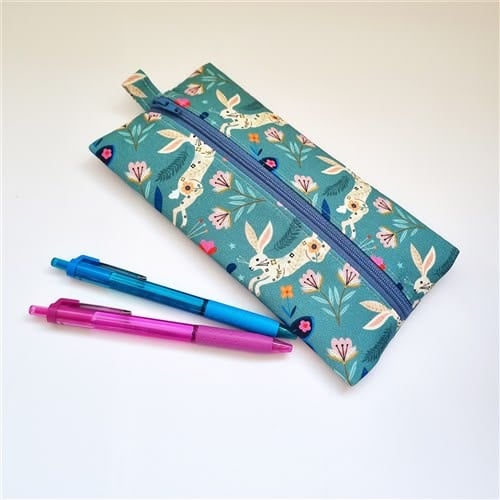
A flat pencil pouch is long and narrow, and that shape is the whole point.
A size of about 22 cm long and 9 cm tall holds pens, pencils, and markers lying side by side.
It also slides easily into a backpack or desk drawer.
Put the zipper along the full top edge so the opening is as wide as the pouch.
Then customers can tip everything out or grab one pencil without digging.
Sturdy cotton canvas or duck works well on the outside.
A plain lining hides ink marks better than a pale print.
Add light interfacing so the pouch keeps its shape when it is half empty.
For fun designs, try maps, music notes, or flowers.
Teachers and students may like subject prints, and a stitched name helps return lost pouches.
It is also a good style for practicing zip skills before you try a boxed pouch.
6. Patchwork Fabric Pouches
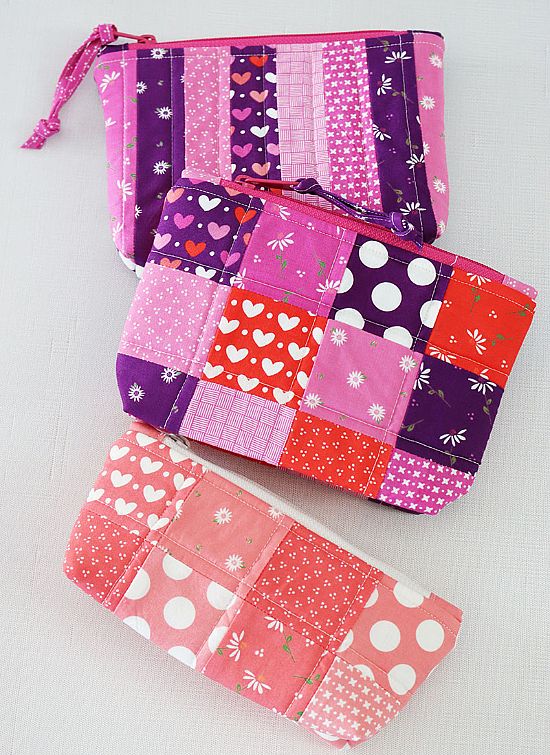
Patchwork lets you turn leftover fabric into a planned design.
The trick is to limit your choices. Pick three prints and one solid, and cut every patch the same size, such as 5 cm squares, so the seams line up.
Sew with an accurate quarter-inch seam, because small mistakes add up across the panel.
Press all seams in the same direction. Then fuse interfacing to the back of the finished panel to hold the seams flat before you add the lining and zipper.
Each pouch turns out a little different, so you can call it one of a kind and photograph each one on its own.
Color themes, like ocean blues or autumn tones, help customers choose.
Patchwork gives you cute pouches to sew and sell from fabric you already own. For more ideas, see these sewing projects made from fabric scraps.
Neat seams and crisp corners make the pouch look designed, not random.
7. Phone Charging Cable Pouches
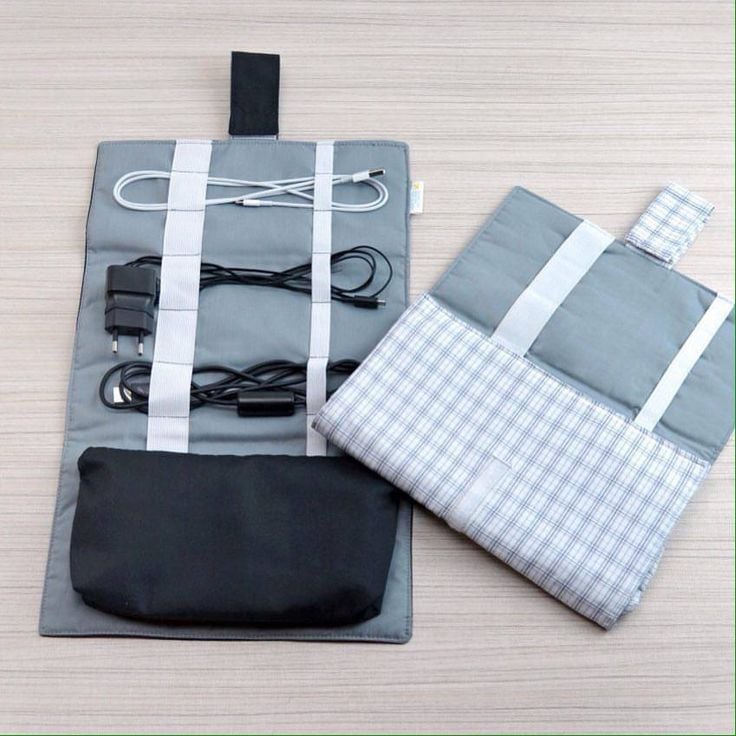
A cable pouch is all about layout.
A pouch about 18 by 12 cm can hold a charging cable, a small plug adapter, and a pair of earphones, as long as each item has its own space.
Sew one or two elastic loops inside to hold cable coils.
Add a slip pocket for the adapter. Use a zipper that opens all the way so customers can see everything at once.
Choose firm fabric, such as cotton canvas, ripstop, or water-resistant nylon, so the pouch is easy to wipe clean. Leave a little extra room.
Cables that are folded too tightly can wear out near the ends. Customers can use these at a desk, in a travel bag, or on the way to work.
Say clearly in your listing that the pouch is only for storing unplugged accessories.
Devices should never charge inside it, and hot electronics should not be stored in it.
8. Travel Jewelry Pouches
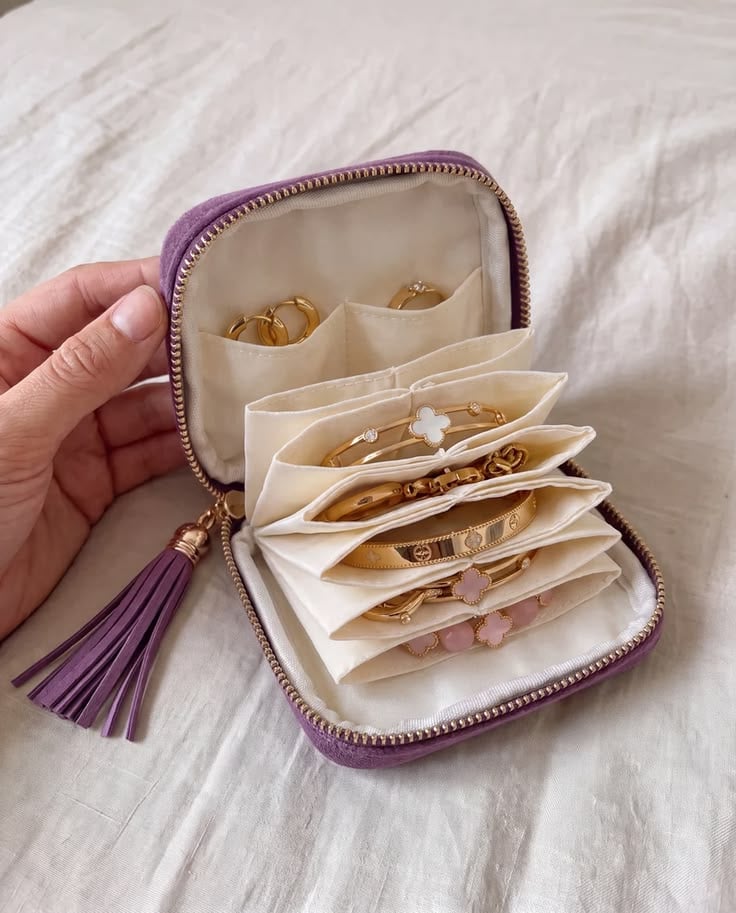
Tangled necklaces are the problem a travel jewelry pouch is made to fix. Plan the inside before you cut.
You might add a small zipped pocket for earrings, a few slip pockets for rings, a strip of loops for bracelets, and a flat panel where a necklace can lie straight.
Line the pouch with felt, microfibre, or soft flannel so metal does not rub on a hard surface.
A thin layer of batting between the lining and the outer fabric adds softness.
A zipper or wrap-around strap keeps everything closed.
Ordinary padding does not stop pieces from being crushed or bent, so describe the pouch as a way to organize jewelry and limit scratches, and suggest a hard case for delicate pieces.
If your shop sells tidy travel items, these organization products to sew and sell are a good match.
A monogram or a matching luggage tag makes a nice gift.
9. Earbud Storage Pouches
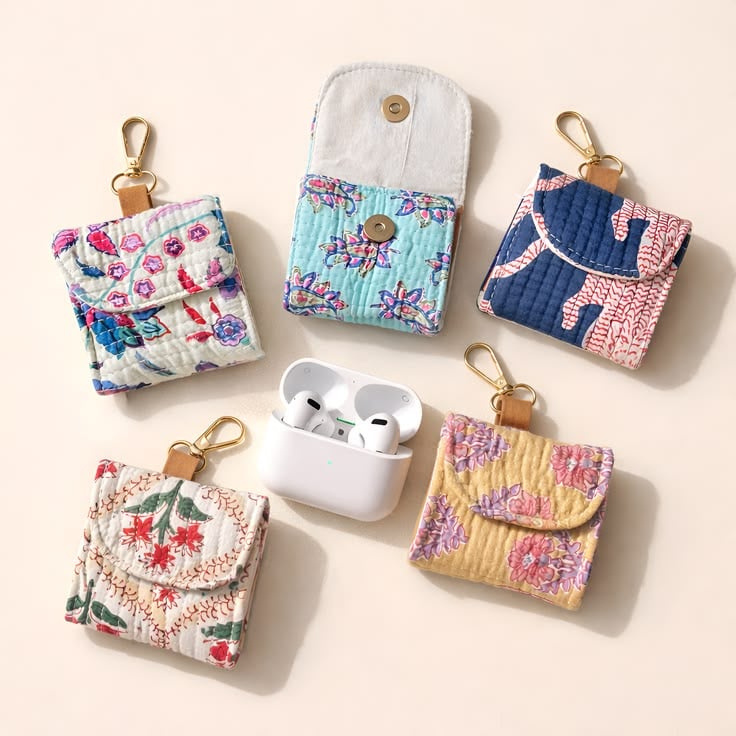
Earbud pouches are tiny, so a good fit is everything.
Start by measuring the charging case.
Add about 1 cm on every side, then draw a pouch that holds the case snugly without squeezing it.
A short zipper or a sew-in snap keeps the case from falling out.
A soft fleece or microfibre lining helps prevent scuffs.
Add a small fabric loop or a swivel clip at the top so customers can hang the pouch from a bag strap or belt loop.
Think of the pouch as storage only.
Customers should take the case out to charge it, and the opening should never cover the ports or buttons.
Earbud cases come in many shapes, so test your pattern with a real case before you sell it.
A bright print makes the pouch easy to find in a full bag.
A matching coin pouch and a stitched initial turn it into a small gift set.
10. Mini Clutch Pouches
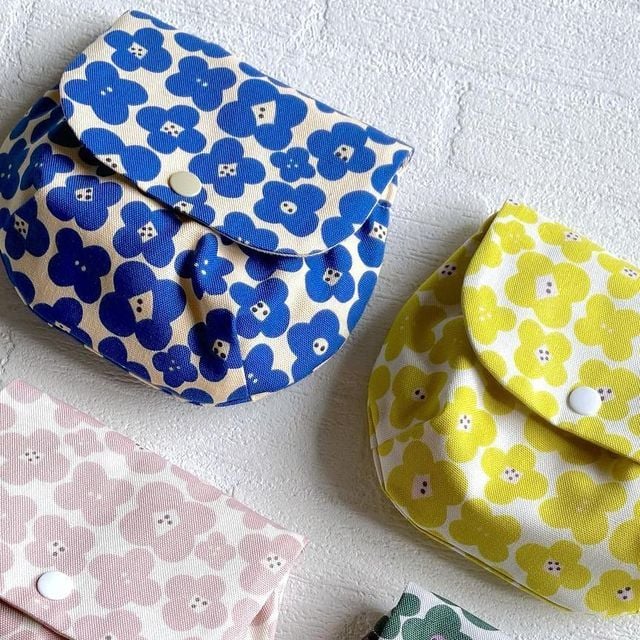
A mini clutch holds just enough: a few cards, a key, some cash, and a lipstick.
That limit is your design guide, so cut the pouch about 20 by 12 cm and test it with those items inside.
A fold-over flap with a snap looks polished.
A zipper along the top is better for busy days.
Add a removable wrist strap with a strong loop, and use interfacing on the outer fabric so the clutch keeps its shape.
The same pattern can look very different in linen for daytime, velvet or satin for evenings, or a bold floral for summer.
A big bow or tassel that catches in the zipper will annoy customers quickly.
Mini clutches are cute pouches to sew and sell for weddings, parties, and nights out, especially in colors that match the occasion.
For more small accessories to try, see these sewing projects that sell well on Etsy.
11. Reusable Snack Pouches
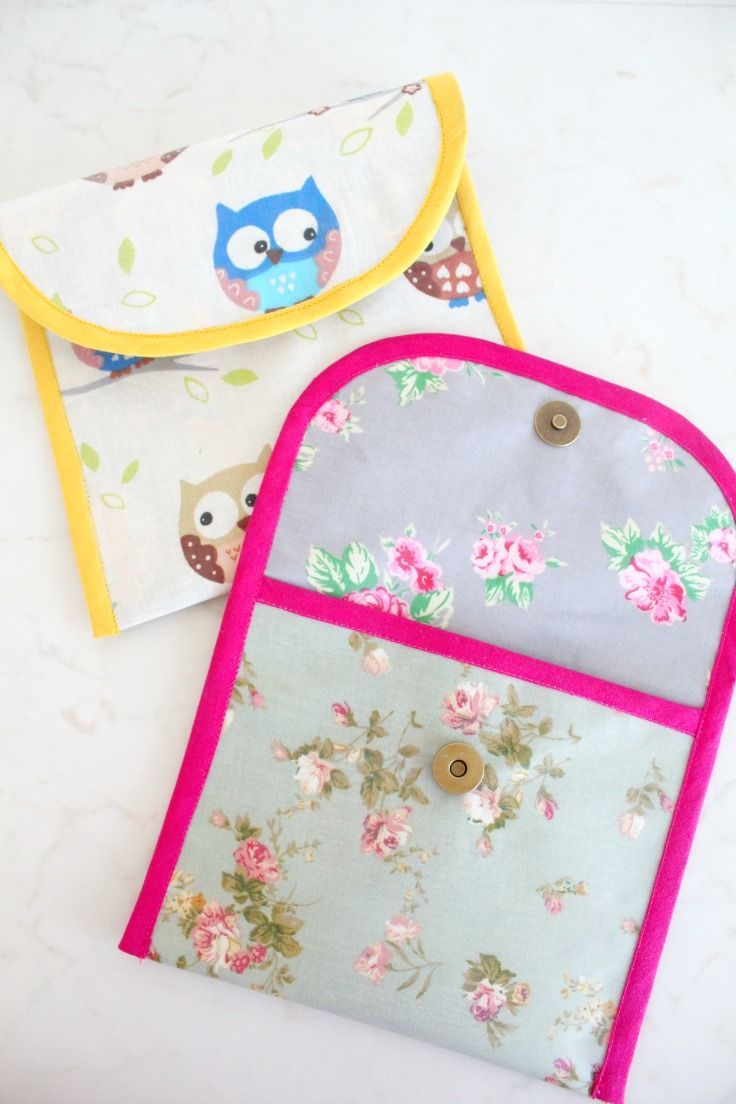
Snack pouches are different from the other pouches here, because the fabric touches food.
Choose a lining that your supplier says is food-safe, such as food-contact PUL laminate, and keep cotton for the outside.
Cotton alone soaks up crumbs and moisture.
Finish the seams neatly so crumbs cannot get stuck in raw edges.
A wide zipper or a fold-over closure is easy to rinse and wipe.
You can sew sandwich, snack, and small dry-fruit sizes, and a matching lunch napkin completes a set.
Do not say the pouches are waterproof, leakproof, or good for every food.
They are best for dry snacks, like crackers or cereal.
Add clear care steps: wash after every use, dry completely, and stop using the pouch if the lining cracks or peels.
Photograph it next to a snack so buyers can see how much it holds.
12. Sunglasses Pouches
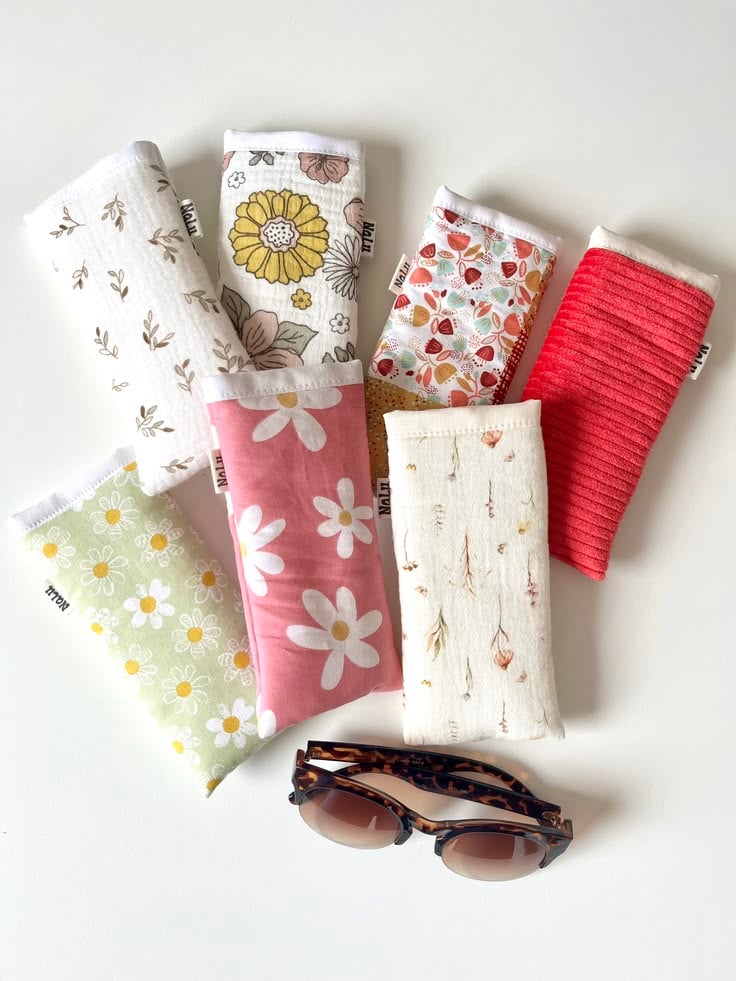
A sunglasses pouch has one main job: stopping scratches on the lenses while the glasses ride around in a bag.
Soft microfibre, fleece, or flannel inside gives the lenses a gentle surface.
On the outside, cotton canvas, linen, or quilting cotton is strong enough for daily use.
Frames come in different shapes, so offer a standard size of about 18 by 9 cm and a larger size for big or wraparound styles.
A flap with a snap, a hidden zipper, or a drawstring top can all keep the glasses in place without pressing on the frames.
A thin layer of fleece or batting adds softness, but it is only padding.
Do not call the pouch impact-proof or crushproof.
A hard case protects better, and your customers should know the difference.
A summer tote and a matching pouch make an easy bundle.
You can find more gift-friendly makes in these handmade sewing projects people actually buy.
13. Sanitary Pad Pouches
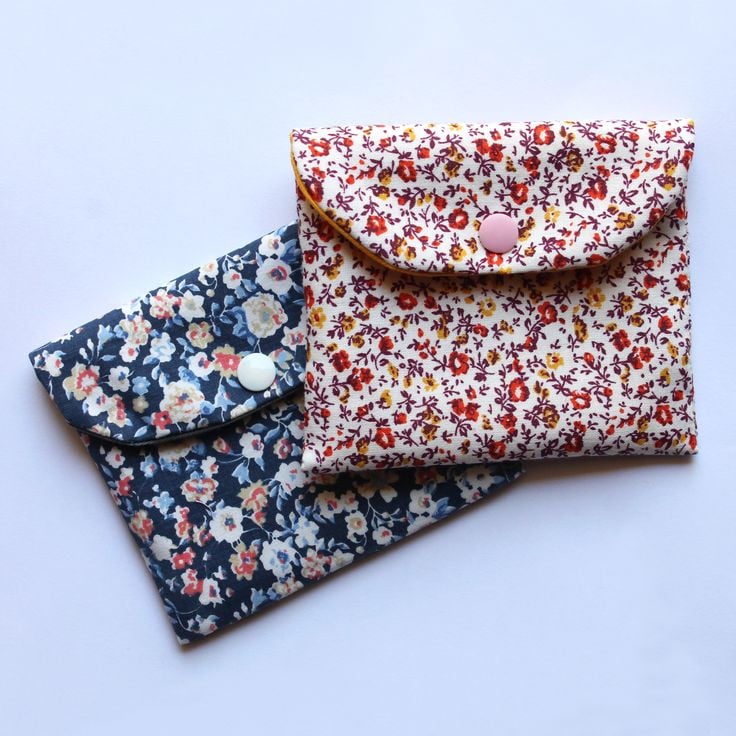
A sanitary pad pouch helps customers carry period products in a handbag, backpack, or travel bag without fuss. Think about what people really carry.
A flat pouch about 20 by 12 cm holds a few pads.
A slimmer one is better for liners or tampons.
Use soft, washable cotton on the outside.
For the lining, choose smooth cotton or a wipeable laminate, depending on how your customer likes to clean it.
A zipper keeps things from spilling out. A snap or hook-and-loop flap is quicker to open with one hand.
Many people like a design that looks like any other pouch, so offer neutral solids, small prints, and bold florals.
You can also add initials. Care notes should be simple and clear: wash the pouch often and let it dry completely before using it again.
A matching coin pouch makes a thoughtful set for someone starting university or a new job.
14. Passport Holder Pouches
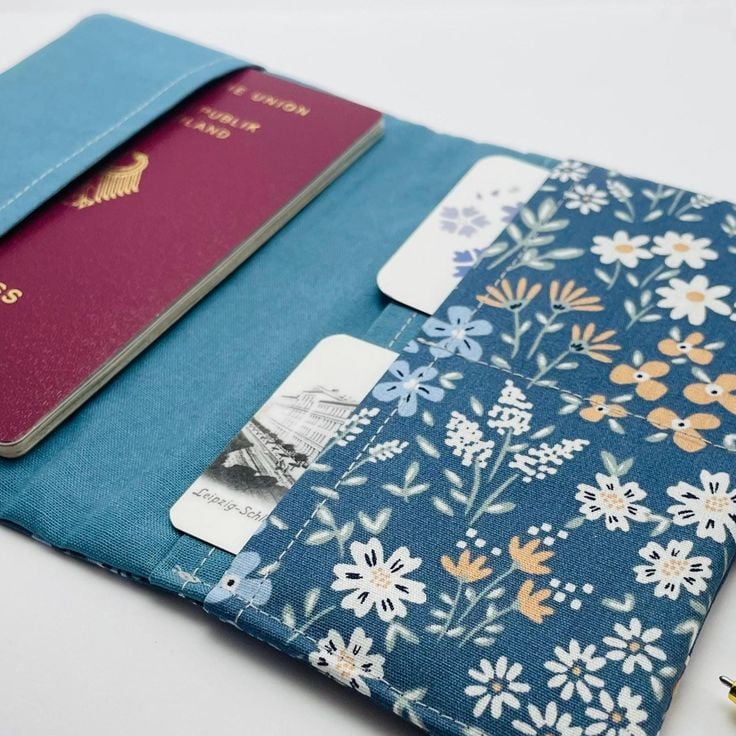
A passport pouch only works if the size is right. A standard passport is about 12.5 by 8.8 cm.
Cut the main pocket around 14 by 10 cm so the passport slides in and out without bending the cover.
Add a second pocket for boarding passes and one or two card slots.
Medium-weight canvas or cotton duck with fusible interfacing gives the pouch structure.
A smooth lining helps papers slide in easily.
A zipper on three sides, or a wide flap with a snap, keeps papers from slipping out.
Travel prints and initials make a nice gift, and a matching luggage tag turns one pouch into a travel set.
For more ideas that stand out, see these unique sewing products to sell on Etsy.
Be careful with your claims. Do not promise protection from theft, scanning, or damage unless the pouch has verified protective features.
15. Scrunchie Storage Pouches
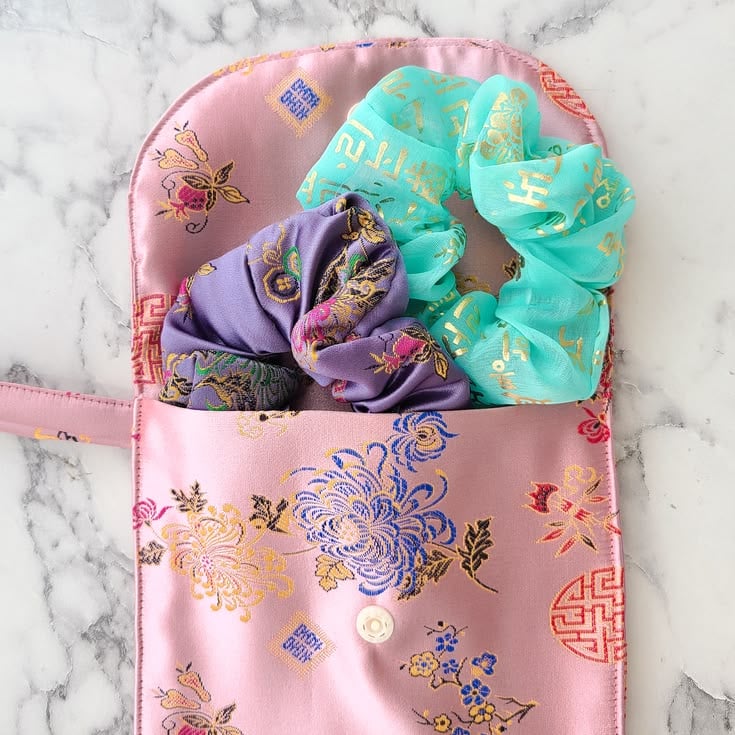
Scrunchies are soft and bulky, so their pouch should be roomy, not tight.
A round-bottomed pouch about 12 cm across and 14 cm tall holds a handful without squashing them.
A wide opening lets customers reach in easily.
Add a small inside pocket for hair clips and hair ties, so the hard items stay away from the soft fabric.
Choose fabrics that go with the scrunchies: velvet for velvet scrunchies, cotton for casual sets, or satin for a dressier look.
A scrunchie pouch is one of the simplest cute pouches to sew and sell as a set with handmade scrunchies in the same colors.
Gift bundles tied with ribbon add value without much extra sewing, and a stitched initial makes the set personal.
When you photograph the set, let a few scrunchies spill out so buyers can see the size.
Also check that the pouch opens easily with one hand.
16. Pocket Tissue Pouches
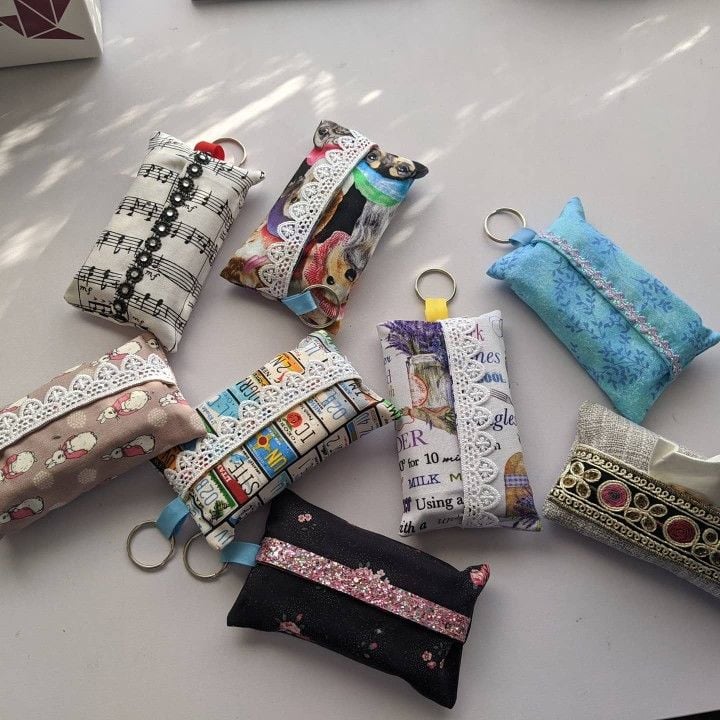
A pocket tissue pouch holds one small pack of tissues so it stays clean and easy to grab.
It is a flat, slim design, so it slips into a coat pocket or the front pocket of a bag.
Measure a standard pack first, then add about 1 cm on every side.
Make a simple envelope with an overlapping back, so the pack slides in with one hand and stays put.
A snap or small hook-and-loop tab keeps the pouch shut.
Use washable cotton or light canvas outside.
Tell customers to wash the pouch often, dry it fully, and keep only unused tissues inside, since damp or used tissues can spread germs.
A tissue pouch with a coin pouch or card holder makes a small gift set.
It is simple to repeat, so it suits batch sewing, like the ideas in this guide to sewing products you can make in bulk and sell.
17. Kids’ Crayon Pouches
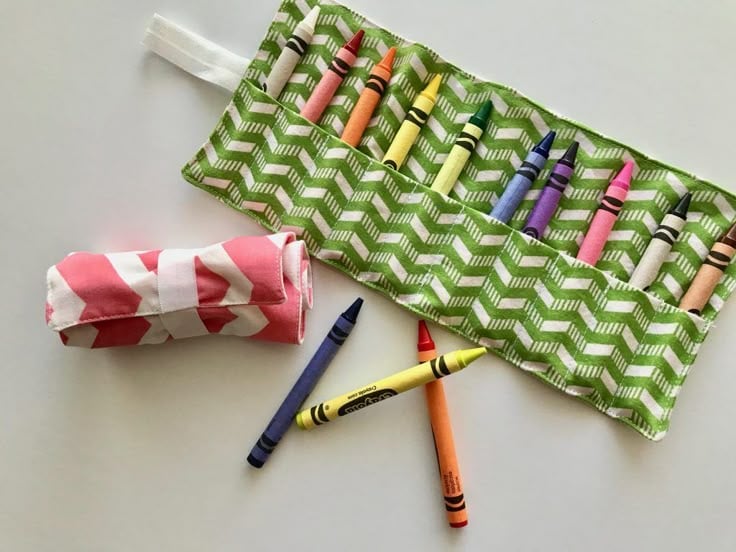
A crayon pouch keeps colors tidy at school, at home, and on trips.
A roll-up pouch with separate slots lets children see every crayon and put each one back.
Make each slot about 2 cm wide and 10 cm deep, and sew the slots to fit the crayons you plan to sell.
Jumbo crayons need wider slots.
A zipped pouch with a wide opening is easier for younger children, while a roll with a hook-and-loop closure works well on a school desk.
Use tightly woven cotton on the outside and a wipeable lining, because wax marks happen.
Sew extra stitches at the top of each slot to make it stronger.
Animal and space prints make cute pouches to sew and sell, especially with a child’s name added.
For safety, skip buttons, beads, and decorations that can come off, because they can be a choking risk.
Use embroidery or printed details instead.
18. Wristlet Zipper Pouches
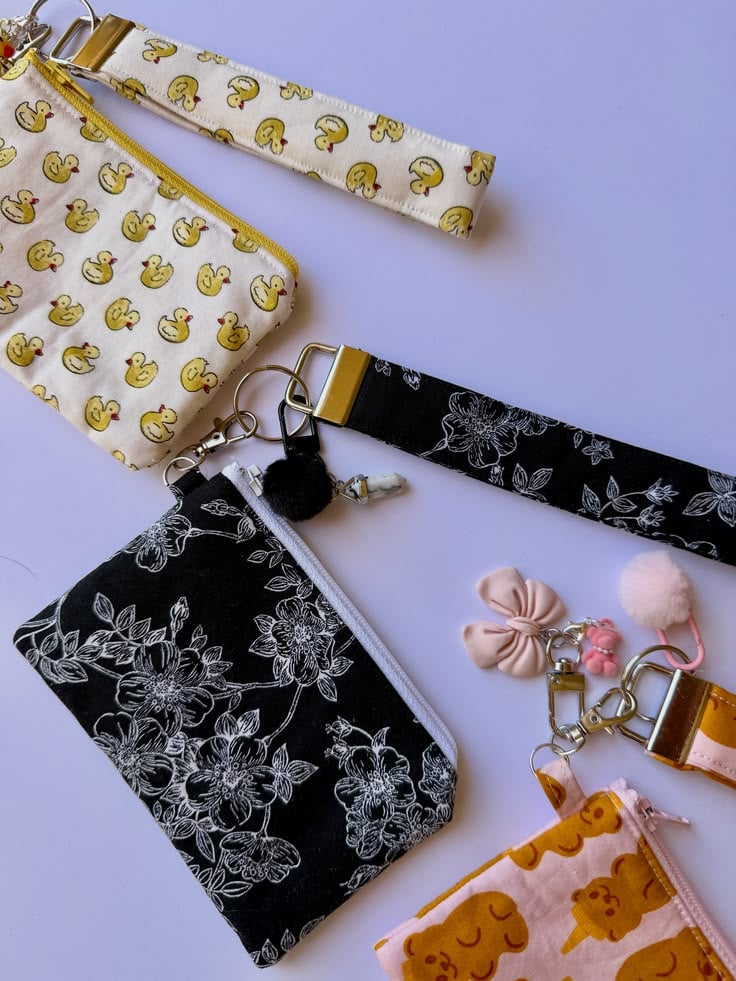
A wristlet is a zipped pouch with a strap you can hold or slip over your wrist.
People pick one up when a full bag feels like too much, such as for a quick errand, an evening out, or a school event.
The strap is the most important part. Sew it into a seam with a box-and-X stitch, or attach a metal D-ring tab with interfacing behind it.
Then pull hard to test it. The zipper matters just as much.
A size 5 zipper with an easy pull tab works well for keys, cards, and cash. Use interfaced canvas, faux leather, or heavy cotton outside, and a smooth lining so cards slide in cleanly.
A pouch about 18 by 11 cm may fit a phone, but measure first and tell buyers exactly what fits.
If you already sell handmade sewing products online, wristlets are easy to offer in several fabrics.
19. Card Holder Pouches
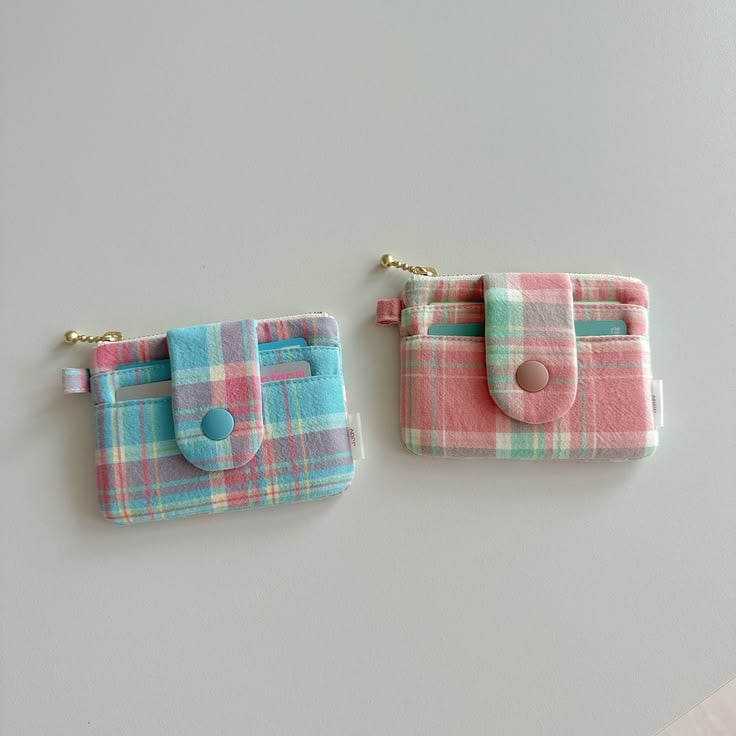
A card holder pouch is like a slim wallet.
Plan two or three slip pockets on one side, a full-width pocket behind for folded notes, and a short zipper for coins.
Cut the pockets a little shorter than the cards so each card stays easy to see.
Keep the width snug so cards do not fall out.
Use quilting cotton or light canvas, with fusible interfacing on the outer fabric to keep the holder slim and smooth.
Too many layers make bulky seams, so use thin fabric for the pocket linings. Initials or a matching key fob turn one holder into a wallet set.
Do not describe ordinary fabric holders as RFID-blocking unless they have proven shielding.
Take a photo with the cards partly pulled out to show how easy they are to reach.
A card holder uses very little fabric, so it is easy to add to your range of cute pouches to sew and sell.
20. Perfume Travel Pouches
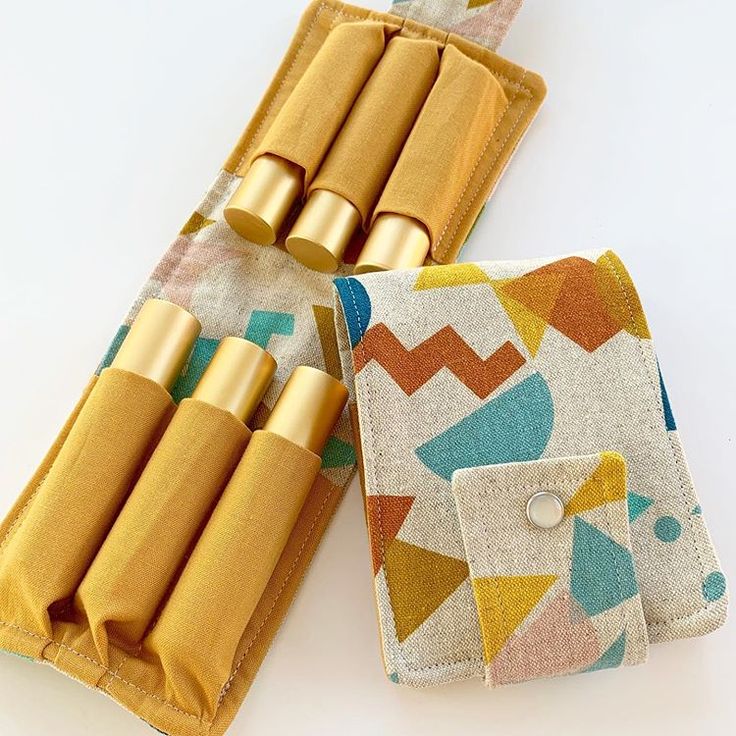
Small perfume bottles need structure and an easy-wipe inside.
Size the pouch for the travel spray bottles customers really carry, such as 10 ml bottles.
Padded dividers or fabric sleeves keep the bottles from knocking together.
Use cotton canvas or laminated cotton outside.
Inside, choose a coated or tightly woven lining that is easy to wipe if a bottle leaks a little.
A zipper, or a fold-over flap with a snap, stops bottles from rolling out.
The pouch keeps perfume apart from clothes and other items, but it does not make a bottle leakproof.
Remind customers to close their bottles tightly before packing.
Add a care note: wipe up spills quickly and let the pouch air dry.
A perfume pouch, a makeup pouch, and a luggage tag make a nice travel gift set.
For ideas on bundles and extra sales, see this list of the best things to sew and sell for extra money.
21. Mini Makeup Brush Pouches
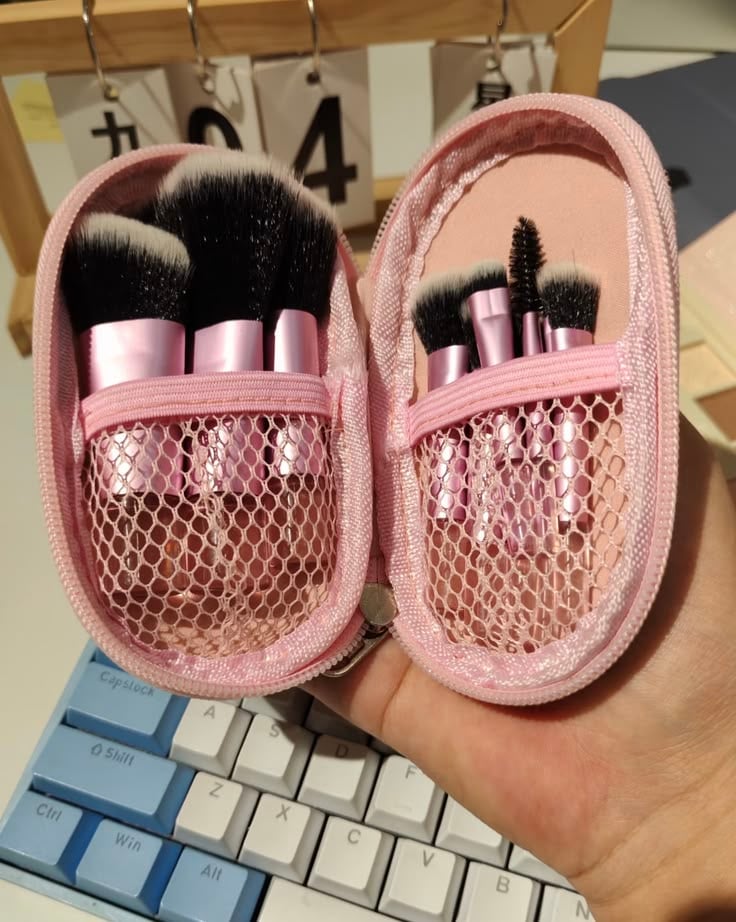
A brush pouch depends on good measurements.
Measure the longest brush you want to carry and add about 2 cm for a flap.
Sew slots about 2.5 cm apart across a fabric panel, and make wider slots for fluffy powder brushes.
Fold the flap over the bristles so the brush heads stay apart from other items.
You can roll the pouch up and tie it, or add a zipper for a boxy shape.
People often store brushes after use, so line the pouch with washable cotton or wipeable laminate.
Tell customers to wash it often and let it dry fully before closing it, since damp brushes can grow mildew.
A flat roll-up with straight seams is a gentle project for newer sewists, and these easy things to sew and sell for beginners include similar ideas.
A matching cosmetic pouch with initials makes a lovely beauty gift set, and it sits well beside your other cute pouches to sew and sell.
Fabric pouches can do many jobs.
They can organize travel items, hold pens and pencils, carry personal-care products, and keep small accessories from getting scratched.
The best cute pouches to sew and sell are not the ones with the most decoration.
They are the ones with the right size, a suitable lining, a closure that works every time, and neat seams inside and out.
Start with the designs that match your sewing skills, the fabric you can find, and the customers you want to help.
Be honest about what each pouch can and cannot protect, and add clear care steps.
Then pick a few designs, make samples, test them in real life, and slowly build a collection around what your customers need.