Personalized Sewing Products to Sell Online turn simple fabric into something a customer feels was made just for them.
Some customers don’t want a plain handmade item.
They want one that carries their name, marks a big day, suits their personality, or reminds them of someone they love.
That small personal detail is often what turns a simple piece of fabric into something worth keeping. Sewing makes it possible.
With embroidery, appliqué, fabric choices and custom sizing, you can create one-of-a-kind pieces without a factory or a big budget.
If you’re still deciding what to make, our guide to 21 handmade sewing products to sell online covers a wide range of ideas.
This post focuses on Personalized Sewing Products to Sell Online, where the customer’s details shape the final piece.
You’ll see what each product is, who might order it, which customization options work well, and what to watch for as you build a small sewing business around orders that feel personal.
Personalized Sewing Products to Sell Online: 21 Ideas to Consider
1. Personalized Name Banners
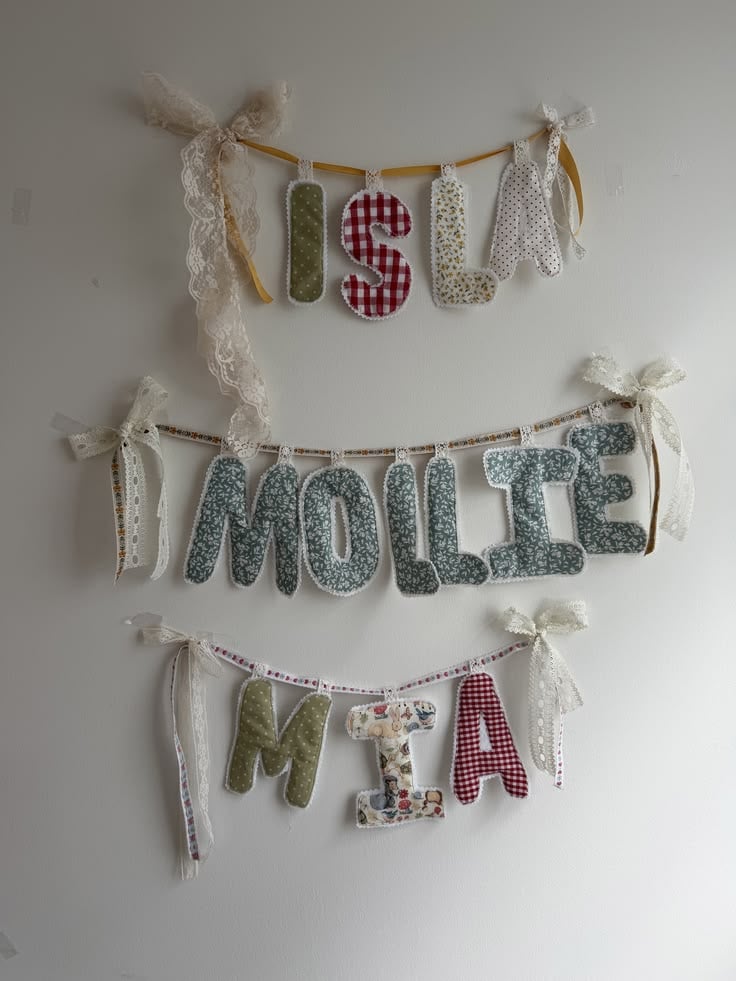
Many nurseries have a name hanging on the wall.
Name banners are a favorite for baby rooms, but they also turn up at birthday parties, baby showers and kids’ bedrooms, because big letters in friendly colors change how a room feels.
Fabric letters can be appliquéd, which simply means stitched on top of a fabric base.
You can set them on flags, pennants or rounded scallops, or embroider a name along one long strip.
Ask about the room colors or party theme first, so the fabrics and thread suit the space.
Soft neutrals, bright stripes and pastel florals all call for different choices.
Banners use mostly straight seams, so they’re a comfortable first custom product.
Our list of easy things to sew and sell for beginners has more projects at a similar level.
Before you sew, lay the letters out flat and check the spacing, because uneven gaps are easy to spot once the banner is hanging.
2. Embroidered Name Patches
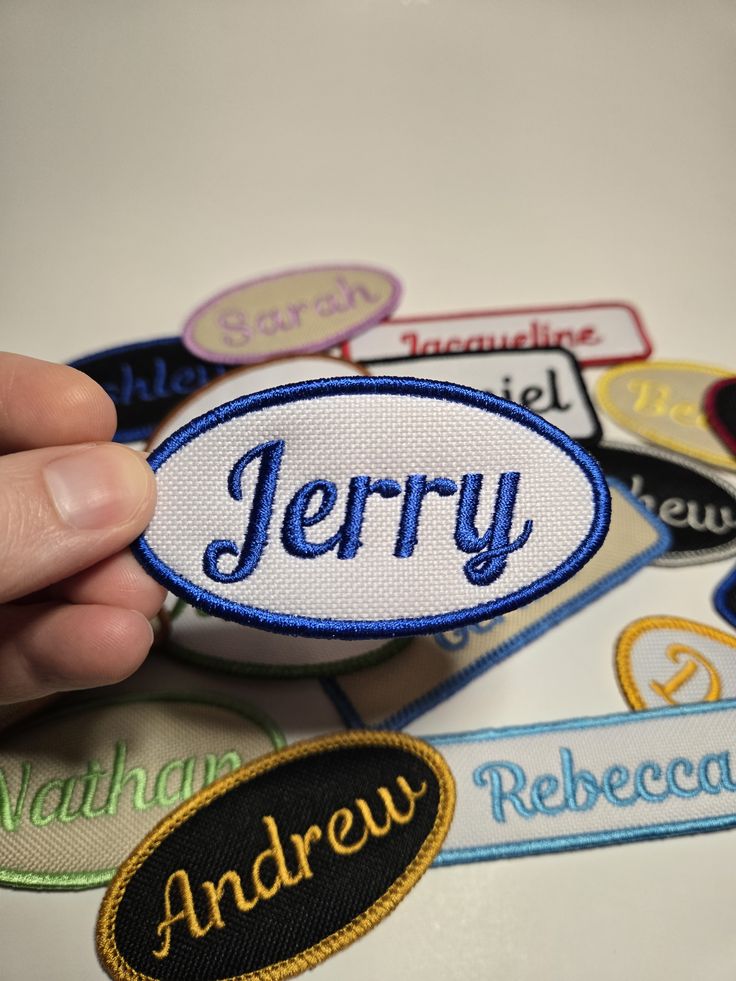
Small things get lost, and a name patch helps them find their way home.
It goes on a jacket, backpack, scout uniform or sports bag, so the owner’s name stays easy to see.
At this size, neat embroidery matters. Wobbly letters and loose threads show right away.
Keep your choices short: two or three fonts, a handful of thread colors and a few shapes, such as ovals, rectangles and circles.
Then decide on backing. Some customers will sew the patch on, while others will want an iron-on backing for quick attaching. Say which you offer in your listing.
Schools and clubs may ask for ten or twenty matching patches, so practise getting every one to look the same.
Patches use very little fabric, and leftover scraps often do the job, which is the idea behind sewing products with low material costs and high profit.
If someone sends you a club or business logo, make sure it’s theirs to use.
3. Monogrammed Makeup Bag Sets
One monogrammed makeup bag is nice. Three in matching fabric, in different sizes, look like a collection.
A small pouch for lipsticks, a medium one for brushes and a larger one for toiletries can be sold together, each carrying the same initials in the same thread color.
The details decide whether the bags get used.
A wipe-clean lining makes spills easy to handle.
A boxed bottom, where the corners are sewn so the bag stands up, works well on a bathroom shelf.
Zippers should slide smoothly, and elastic loops can hold brushes in place.
Bridesmaid groups, friends heading on a trip and people who simply like matching bags are all possible buyers.
Offer each set in two or three fabric collections and keep the stitching style the same, so customers can see what your shop is about.
That clear look helps your shop stand out among other personalized sewing products to sell online.
4. Photo Memory Pillows
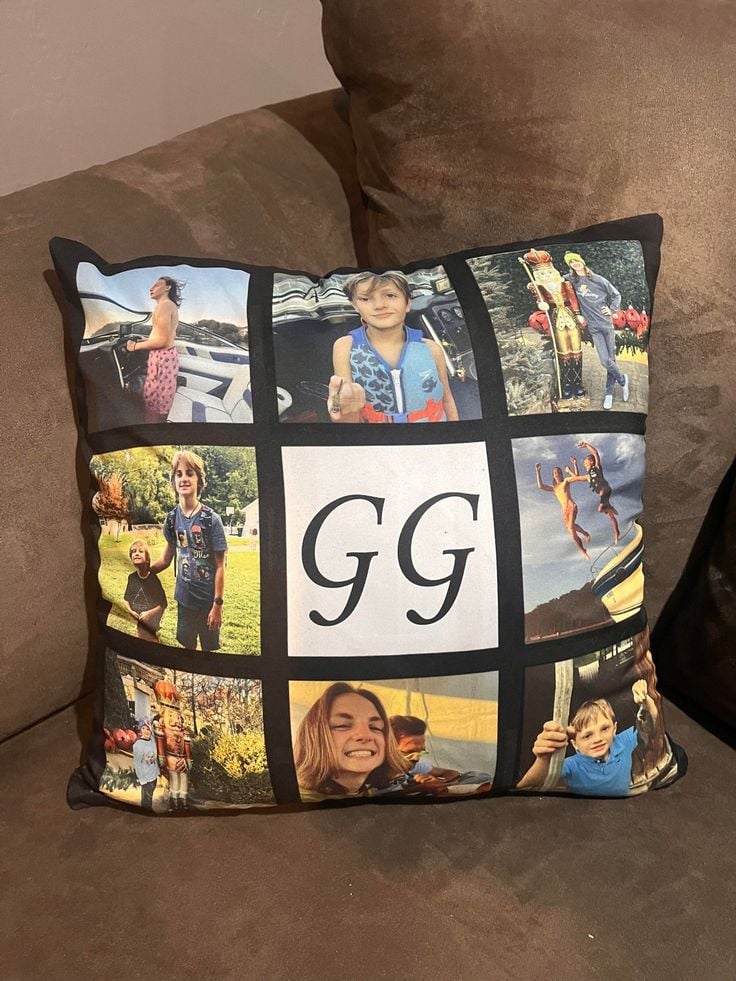
A photo on a pillow is really about a memory.
A customer might send a picture of a grandparent, a wedding day, a pet or a family trip and want it somewhere they can hold close.
The sewing is simple. Getting the photo right takes more care.
Ask for a clear, sharp picture with good light, and explain that dark or blurry images won’t print well.
Then pick a printing method that suits your setup, such as printable fabric sheets, a fabric print service or iron-on transfers.
Test on a scrap first, because colors can look different on fabric.
Keep the finish neat, since people will study the picture closely.
Use smooth cotton, sew straight seams and add a hidden zipper so the cover can come off for washing.
Be honest about what buyers can expect instead of promising a perfect copy.
Each pillow is made to order, so your price can reflect the extra time, a point we cover in high-profit sewing projects to make and sell.
5. Embroidered Pillowcases
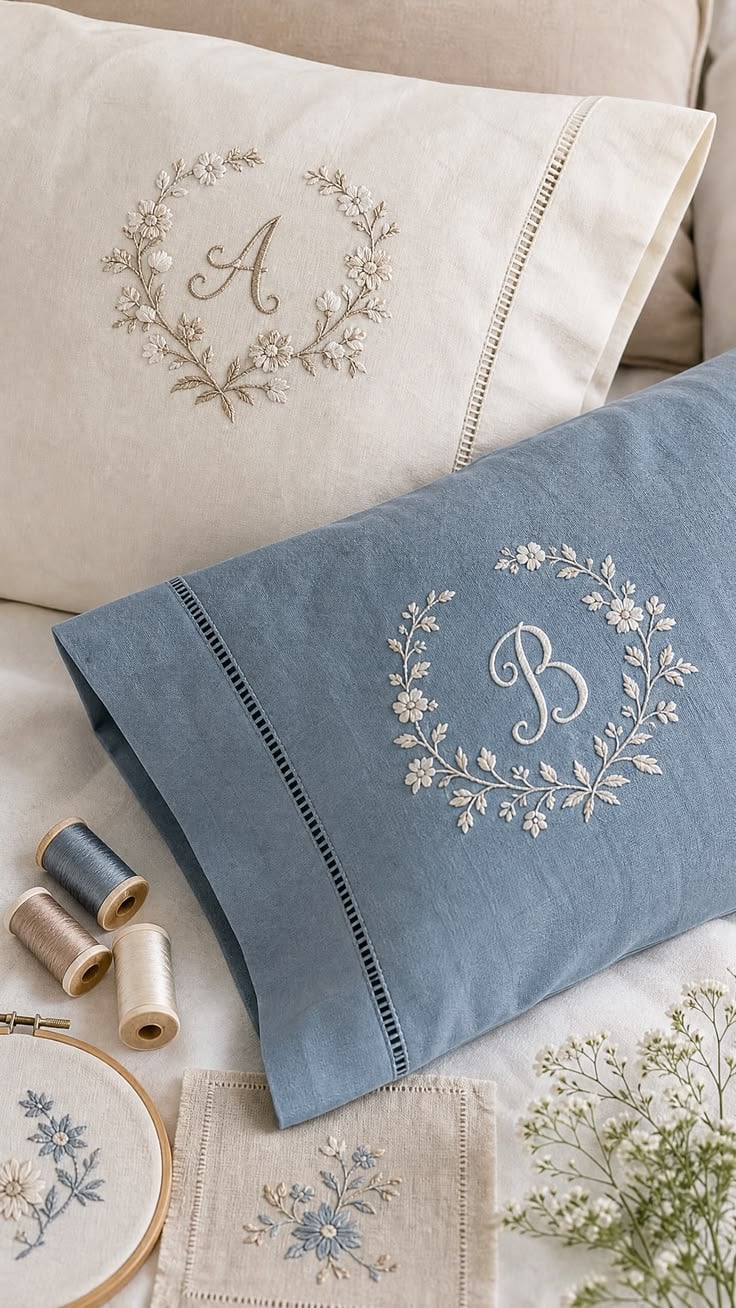
Embroidered pillowcases are the quiet cousin of photo pillows.
Instead of a printed picture, the personal touch is stitched into the fabric, which gives a softer, more classic look.
A couple’s initials in one corner, a short message along the hem or a small flower beside a name can be enough.
Because pillowcases touch skin every night, fabric comes first.
Cotton and cotton blends feel comfortable and hold embroidery well.
Wash and press the fabric before you stitch, or the design may pucker after the first wash.
Placement needs thought too. A design near the open edge shows when the bed is made, while one in the middle may disappear under a sleeping head.
Many people order matching pairs, sometimes with a different message on each case.
Once you have a base design, repeat orders are easy, which makes pillowcases a fine addition to the best things to sew and sell for extra money.
6. Personalized Laptop Sleeves
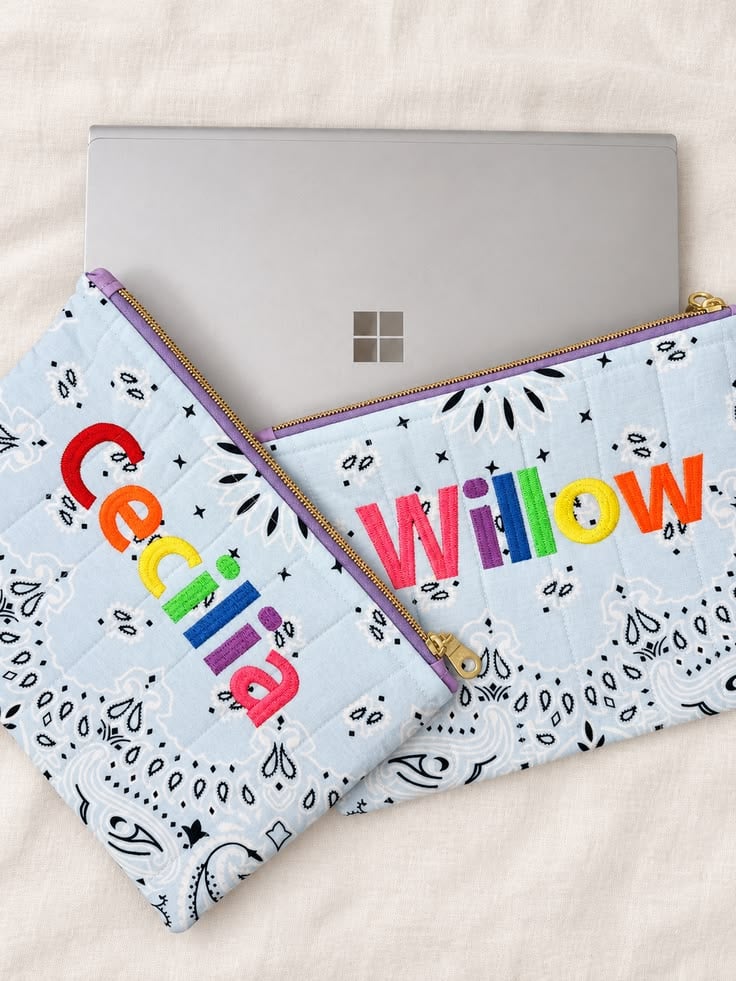
With a laptop sleeve, fit matters more than anything else.
One that’s too loose lets the laptop slide around, and one that’s too tight is hard to use.
So start every order by asking for the exact model or screen size, and measure the laptop yourself if you can.
Leave a little extra room so it slides in easily.
Padding, a soft lining and a secure closure, such as a zipper, flap or button, do most of the protecting.
Some customers will also want a small front pocket for a charger or a notebook.
The personal part can stay simple: initials in one corner, a name label on the front, or a fabric chosen to suit the owner.
Students, teachers and people who work from cafés are natural buyers, since they carry a laptop most days.
If you enjoy making custom fabric accessories like this, have a look at these handmade sewing projects people actually buy.
7. Fabric Growth Charts
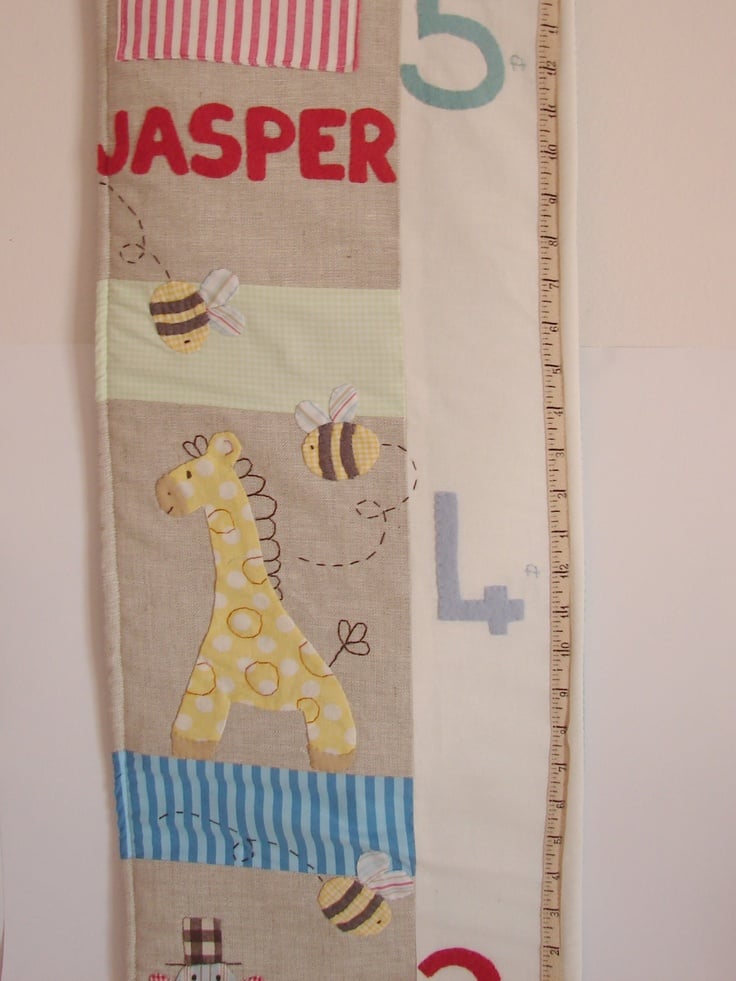
Pencil marks on a doorframe get left behind when a family moves house.
A fabric growth chart solves that. It hangs on a wall, comes along to the next home, and records each birthday where a child can see it.
The sewing is a long, narrow panel with a ruler stitched or printed down one side.
Accuracy matters most. Mark the inches or centimetres carefully with a measuring tape, and tell customers how high from the floor the bottom edge should hang.
A hanging loop, wooden dowel or sturdy tabs make mounting easy.
Themes are where you can have fun.
A forest, a rocket ship, a rainbow or a plain neutral panel can all work, with the child’s name embroidered at the top.
Some parents may like a spot to write the date beside each mark with a fabric pen.
It’s practical now and becomes a keepsake later, so include simple hanging and measuring instructions with each order.
8. Birth Stat Wall Hangings
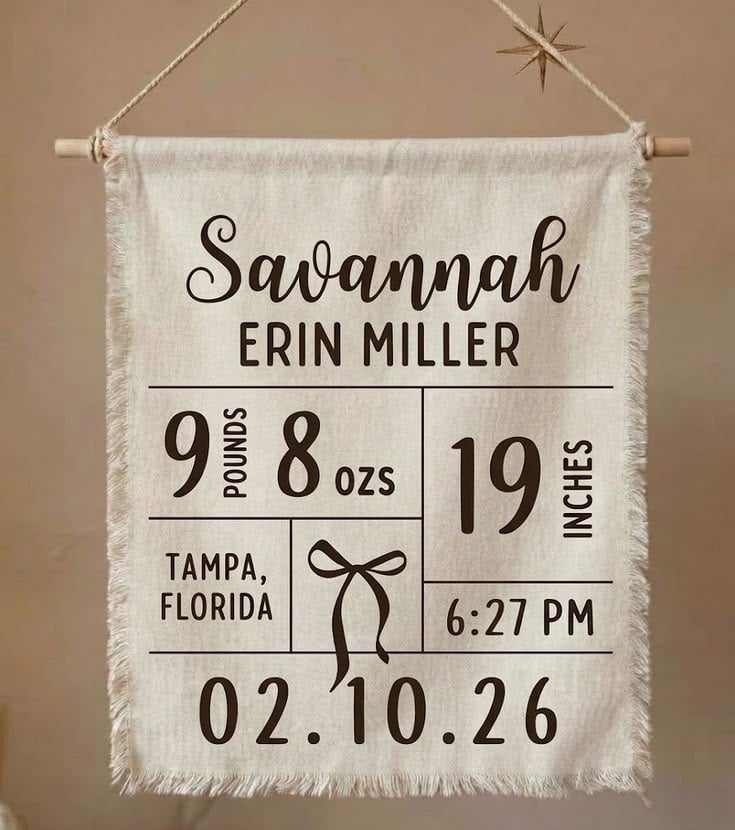
A name banner celebrates a name.
A birth stat hanging records a day. It gathers the baby’s full name, birth date, time, weight and length on one piece of fabric, usually for a nursery wall, and later it becomes something to keep in a memory box.
Layout is the main design job.
Decide where each detail sits, how big the name should be, and whether the numbers are embroidered, appliquéd or both.
A small moon, star or animal in the nursery colours can fill the gaps.
Sturdy fabrics like heavy cotton or linen blends help the piece hang flat.
Ask parents to write out every detail themselves, then check each number twice before you start, since a wrong date is hard to fix.
A few ready-made layouts make ordering easier, and that suits birth stat hangings well among personalized sewing products to sell online.
You’ll find similar ideas in our post on sewing projects that sell well on Etsy.
9. Personalized Pencil Pouches
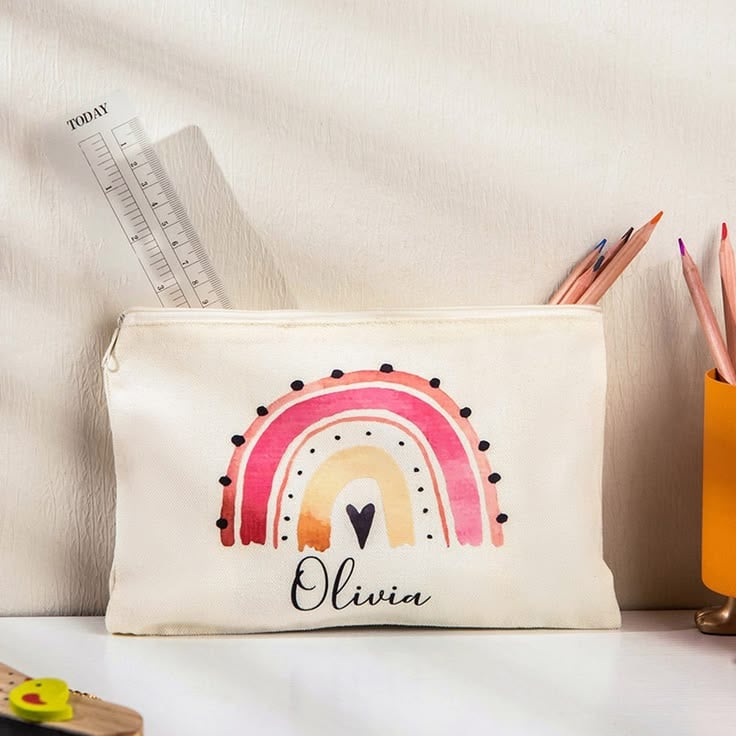
Pencil pouches are bought by very different people from makeup bags.
Picture a seven-year-old choosing a dinosaur print, a university student who wants something plain, or a teacher who needs room for a handful of markers.
The fabric, size and personalization change for each one.
Young children do well with washable cotton, a strong zipper and a name stitched on a label so the pouch doesn’t get lost in class.
Older students may like a flatter pouch with one big pocket and a small compartment for erasers.
Stationery lovers might enjoy a bright lining or a clear window.
To keep your pouches from all looking alike, build three or four styles: a simple zip pouch, a boxy pouch, a roll-up case and a double-zipper style.
A small lunch bag in the same fabric makes a neat back-to-school set.
They’re quick to sew, too, so they sit well beside the easy sewing projects to make and sell fast.
10. Drawing-to-Plush Toys
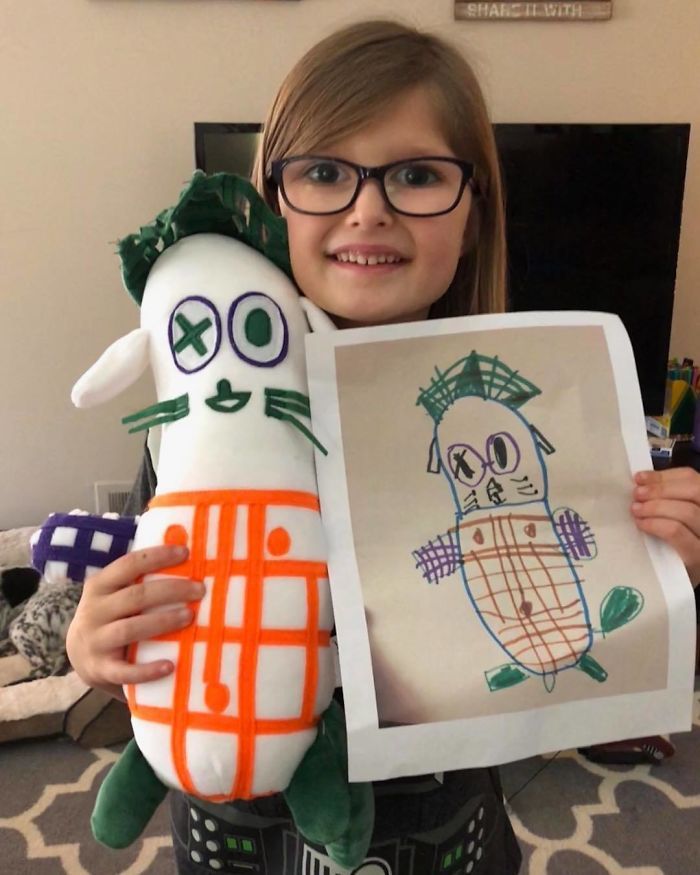
A child’s drawing has wobbly lines, odd proportions and a lot of charm.
Turning it into a plush toy means keeping that charm while making something that can really be sewn and cuddled.
Start by studying the drawing and deciding what matters most: the colors, the face, the shape of the ears or tail.
Then simplify it into a pattern. Thin arms or tiny details may need to be made thicker so they can be stuffed.
Soft, tightly woven fabrics work well.
Draw your pattern on paper before cutting, and send the parent a quick sketch so they can approve any changes.
Safety comes first. For young children, embroider eyes and noses instead of attaching buttons or plastic parts, which can come loose.
Sew seams firmly, use clean stuffing and check the finished toy for weak spots.
Be honest about which ages it suits. Parents often order these for sentimental reasons, so patience and clear updates matter as much as stitching.
11. Embroidered Golf Towels
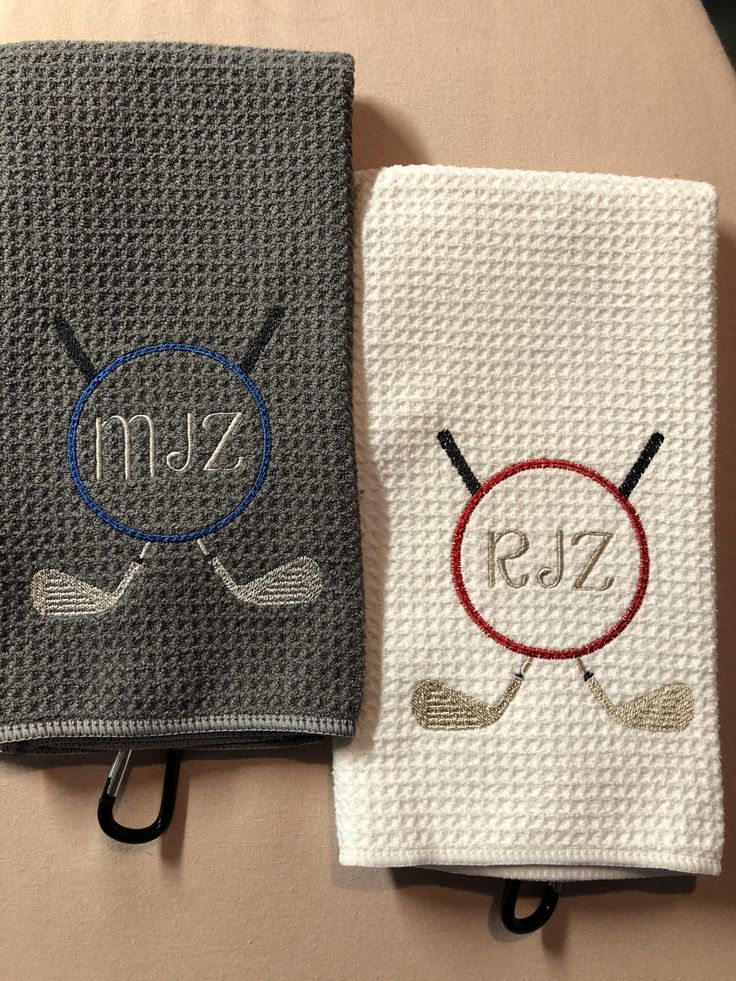
Golfers carry a towel for good reasons: wet grass, muddy balls and sweaty hands.
Add a name or initials and an everyday tool starts to feel like the owner’s own.
Buyers might be players who want their name on it, clubs ordering for members, or people planning tournament favours.
Fabric matters most. Waffle-weave or terry cloth soaks up water and dries quickly, while heavier cotton handles repeated washing.
A metal ring (grommet) or a strong loop lets the towel clip onto a golf bag.
Embroider on a flat, smooth area, because stitches can sink into thick loops. A stabiliser, a thin backing sheet that supports the stitching, keeps the lettering clear.
If a customer supplies a club logo, make sure they have the right to use it, and never copy protected team or brand logos.
Simple designs last longest through repeated washing.
For more embroidered products to sell, see our list of profitable sewing projects to make and sell.
12. Graduation Stoles
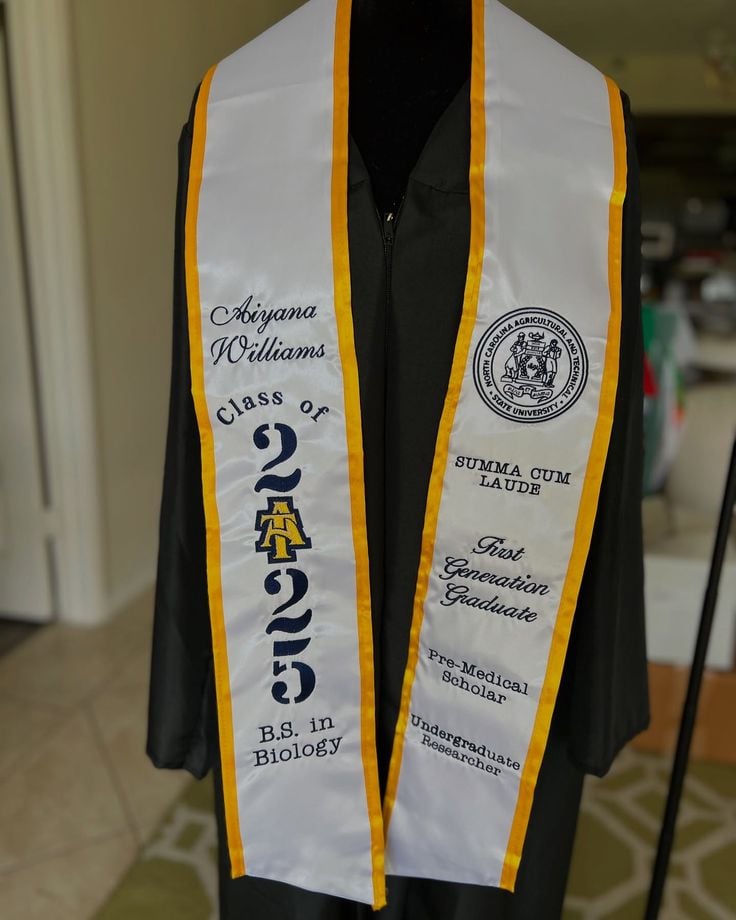
Graduation stoles come with a hard deadline, because the ceremony won’t move.
Planning ahead matters more than fancy stitching.
A stole is a long, wide band of fabric worn around the shoulders, with pointed or straight ends and often some embroidered text.
Customers might ask for a name, class year, school name or short message, in colors that match a school or tradition.
Measure carefully so the stole hangs evenly and sits comfortably.
Satin looks smooth but can slip, so a neat lining and clean edges help.
Before you start, send each customer a written proof showing the spelling, year and colors, and wait for their approval.
Group orders for a class or club can be a good opportunity, but every piece must match.
All that back-and-forth is easier to handle from a tidy home workspace, and our post on things to sew and sell from home has practical tips for that.
13. Hospital Go Bags
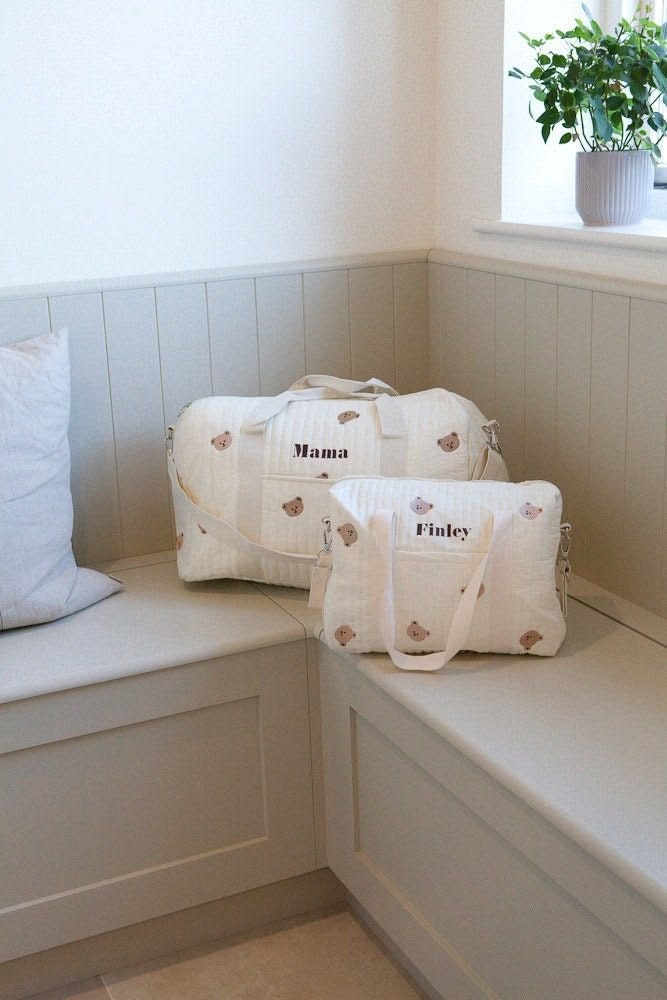
A hospital bag isn’t a casual purchase.
Someone expecting a baby, preparing for surgery or heading to regular appointments wants a bag that holds plenty and stays organized.
The sewing has to match that job.
Start with a roomy main section, then add pockets for documents, phone chargers and toiletries.
Washable fabric is sensible, since the bag may sit on a hospital floor.
Strong handles and reinforced seams help with heavier loads.
A few smaller pouches in matching fabric give the owner places for baby clothes, snacks or personal items.
Personalization can be a name or initials near the top, or a color scheme the owner likes.
Ask what they plan to pack, and think about offering two or three sizes.
Don’t make health claims, and don’t suggest the bag meets any medical standard.
It’s simply a well-planned sewn bag.
A listing with clear measurements and pocket details saves buyers a lot of questions.
14. Bible Covers
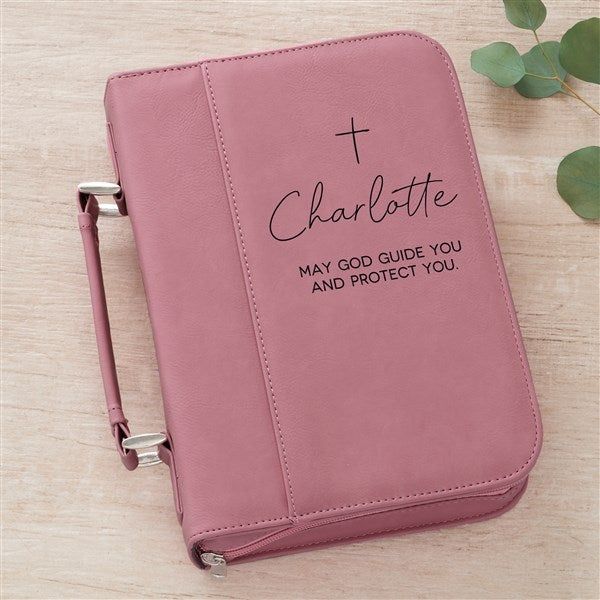
A Bible is often a book people keep and use for many years, so a cover that protects it earns its place.
It keeps the pages from bending, holds pens and notes, and carries a name or short message so the book is easy to spot.
Measurements are everything. Bibles come in compact, standard and large-print sizes, and a cover that doesn’t fit is frustrating.
Ask for the height, width and thickness, and put a simple measuring guide in your listing.
Zipper closures, a carry handle, an outer pocket for pens and a ribbon bookmark are popular extras.
The personal touch is usually quiet: a name along the front, a favorite verse or a small symbol the customer chooses.
You can design one base style in several sizes and change only the fabric and stitching.
Because buyers can send their measurements and choices in a message, covers like this work well with other easy sewing projects to sell on Etsy.
15. Sew-in Name Labels
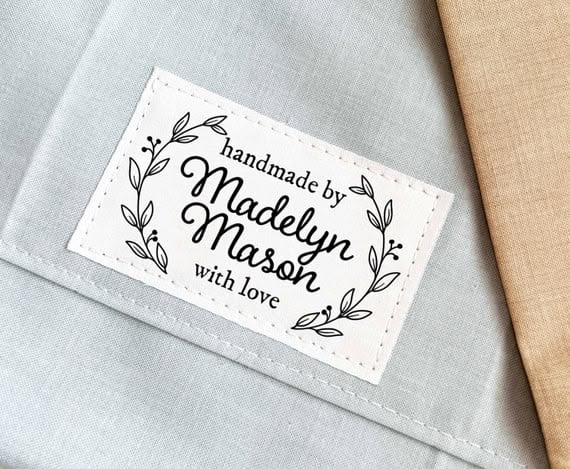
Most people only notice a sew-in label when it goes missing.
These small fabric tags are stitched inside clothing, uniforms and handmade items, which is the big difference from a patch that sits on the outside.
A label’s job is to name the owner or the maker, not to decorate.
Parents buy them for school uniforms and camp clothes.
Care homes and schools may order big batches.
Small clothing makers might want labels carrying their shop name.
Each group needs something a little different, so offer a few widths, fabrics and thread colours.
Soft fabric matters because labels rest against the skin.
Fold the edges neatly or use a finish that stops fraying.
Because they’re small, a batch can often be made in a short time, much like the sewing projects you can make in one hour and sell.
Selling labels in packs also helps, since one child’s name usually goes into many items.
16. Personalized Stroller Blankets
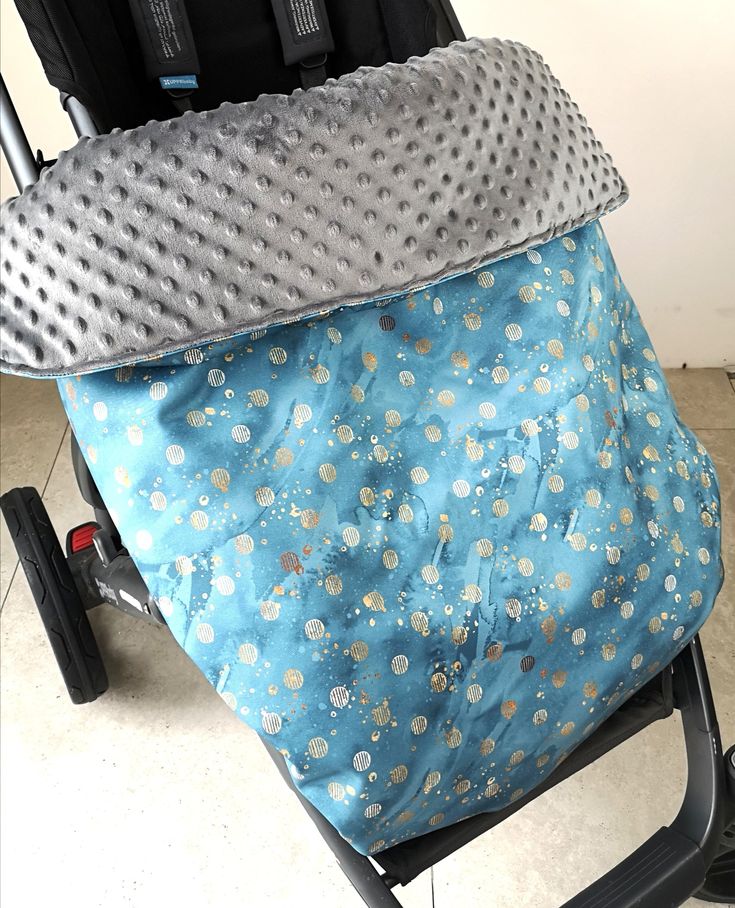
A stroller blanket lives a busy life. It’s tucked around a baby on a walk, hung over the handle, dropped on the pavement and washed again.
So unlike a nursery keepsake, this one is about everyday comfort and easy care.
Pick a medium size that’s easy to handle, a little smaller than a full crib blanket.
Soft cotton, flannel or plush minky fabric on one side with a lighter fabric on the other works for many seasons. Rounded corners are easier to sew neatly and less likely to snag.
A small embroidered name in one corner or initials on a simple tag keeps the look light.
Parents may also like matching burp cloths or a little bag.
Because this is a baby product, use soft, washable fabrics and skip loose trims, buttons or ribbons that could come off.
Check that stitching is firm, and include simple washing instructions.
Parents usually want something dependable, not fussy.
17. Bridal Sashes
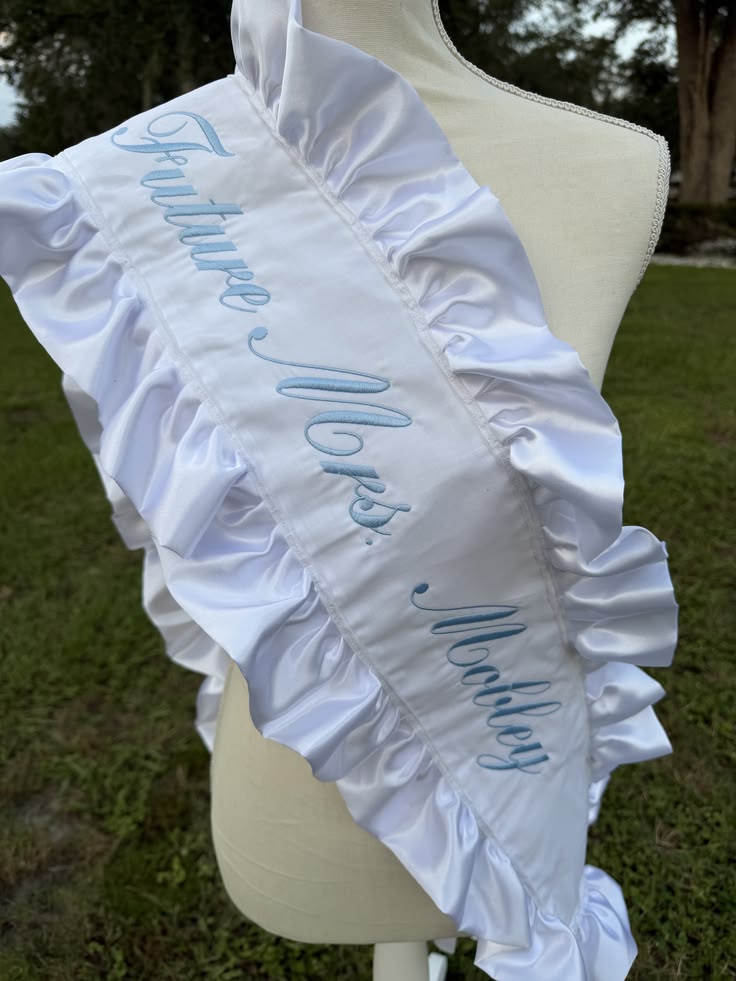
A bridal sash has to look good in photographs.
It’s worn all day, so the fabric, width and finish matter.
Satin, silky fabrics and simple ribbons are common choices, and some brides like a soft color that matches their flowers.
Unlike graduation stoles, which follow a school date and standard colors, sashes follow the wedding’s style.
A bride may want her title and wedding date, bridesmaids may want their roles, and a bridal shower might call for something playful.
Lettering can be embroidered, appliquéd or stitched in decorative thread.
Ask for the dress color so the lettering stands out.
Think about how the sash fastens.
Back ties, a hook or a hidden closure each change the look, so measure with comfort and the dress in mind.
Many customers will order for the whole bridal party, so make one design and just change the names.
This kind of made-to-order work is common among the best sewing products to sell on Etsy.
18. Personalized Library Bags
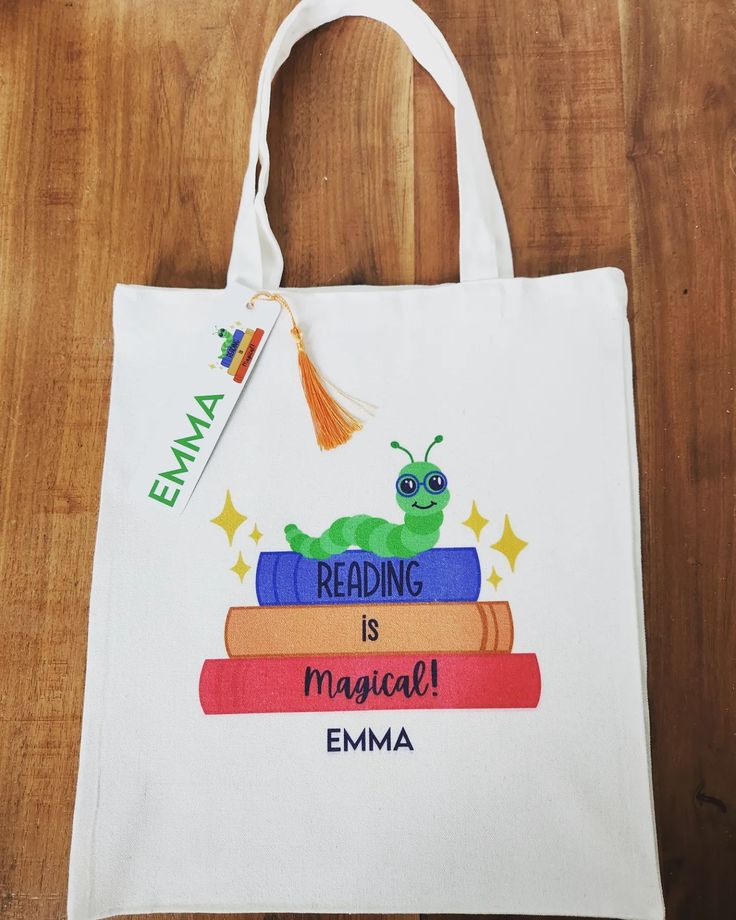
Library day is a small routine in many schools, and the bag has to survive it.
It gets dropped, sat on and stuffed full of books.
That makes a good library bag more about toughness than style, which is what separates it from a laptop sleeve, where an exact fit is the main concern.
Canvas or heavy cotton works well. Add extra stitching where the handles join the bag, since heavy books pull hard there.
A size that holds a few picture books and some paperwork is usually enough, and a small pocket can hold a library card or reading log.
A child might want their name with a favorite animal print.
A teacher might order matching bags for a class, and an adult book club might prefer a book-themed fabric.
A few prints in one standard size keep ordering simple.
If you’re thinking about turning projects like this into a steady shop, our guide to things to sew and sell for a successful small business may help.
19. Sewn Prayer Shawls
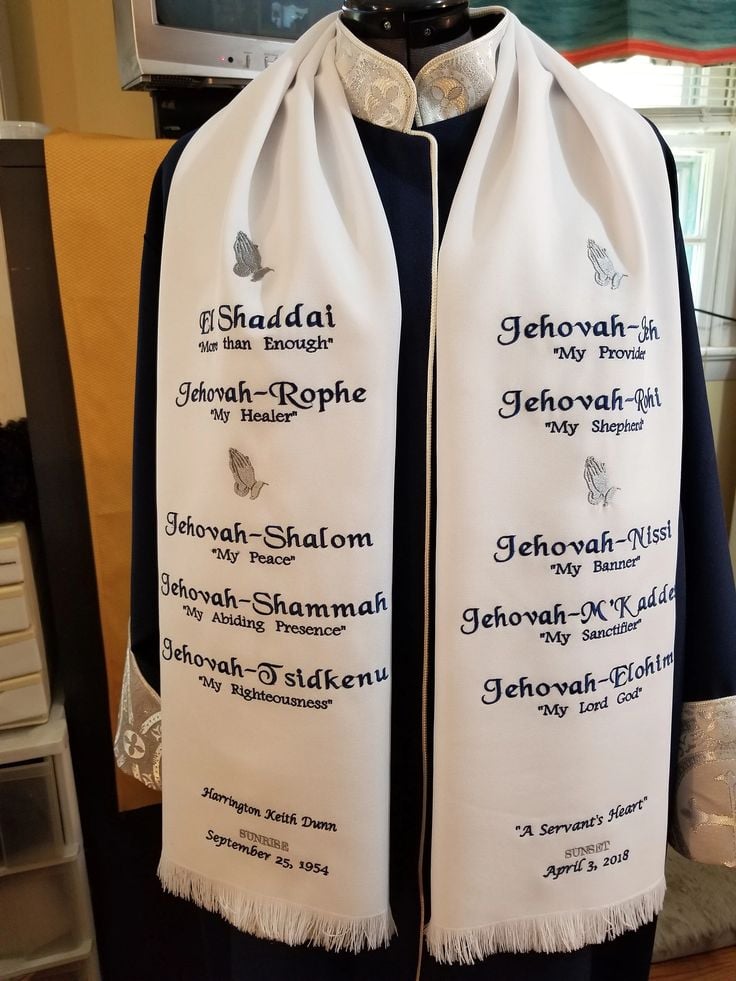
A sewn prayer shawl is not the same as a knitted or crocheted one.
It’s made from woven fabric that is cut and stitched into a wrap, so borders, hems and decorative stitching give it shape.
This is a piece people use in prayer, so treat the work with respect.
Ask customers what they need rather than guessing.
Traditions differ in size, color, fabric and finishing, and you shouldn’t assume everyone shares the same expectations.
Some people want a light, soft wrap for quiet reflection, while others have a particular design in mind.
Comfort matters too. Choose fabric that drapes well and feels pleasant on the skin, and think about length and width so it sits easily across the shoulders.
A border can add detail, and a name or short message can be embroidered on an edge or corner.
Some customers may order one for a milestone birthday or a new beginning. Be clear in your listing about what you can and can’t make.
20. Personalized Baby Blankets
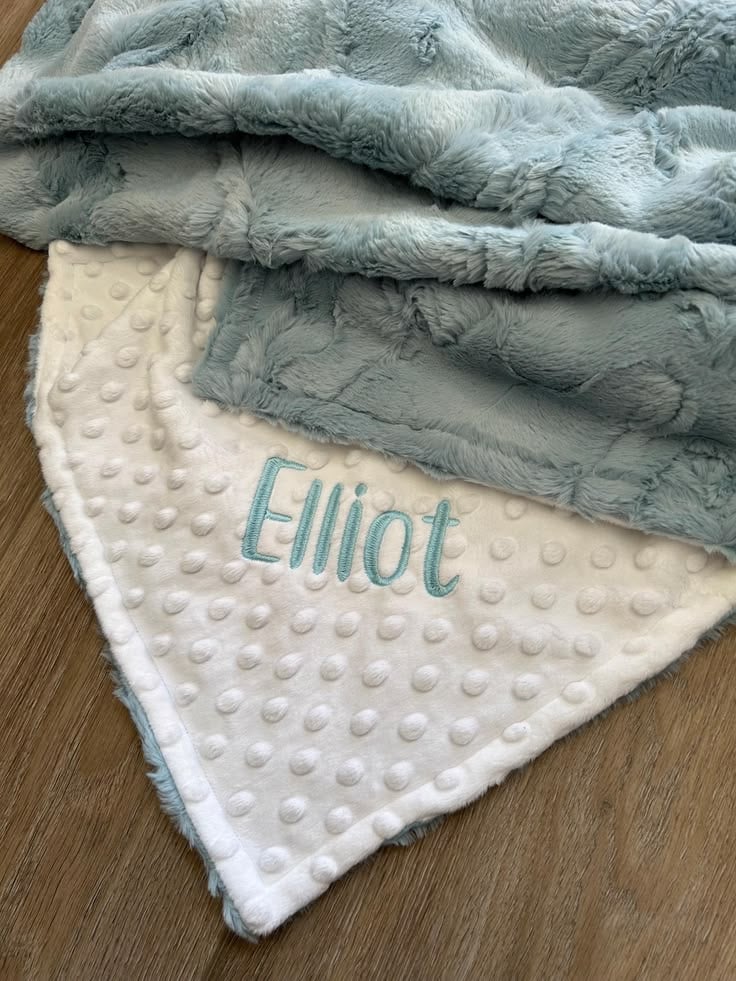
A baby blanket is the item families tend to keep.
It might go into a keepsake box, be handed to a younger sibling or come out again years later.
That’s what separates it from a stroller blanket, which is made for daily outings.
Since it’s a keepsake, the design can go further.
A border in a contrasting fabric, a name in one corner, a birth date or a small applique shape all add detail.
Parents may want colors that match a nursery, and gift buyers might choose a theme like woodland animals or stars.
Soft fabrics and safe construction matter.
Choose gentle, washable materials, keep stitching firm and avoid buttons or loose decorations.
Two sizes are usually enough to start, and a small bib in the same fabric can turn one blanket into a gift set.
If you’d like to see where baby items fit among other personalized Etsy products, our list of Etsy sewing ideas that actually sell is a good place to look.
21. Monogrammed Tote Bags
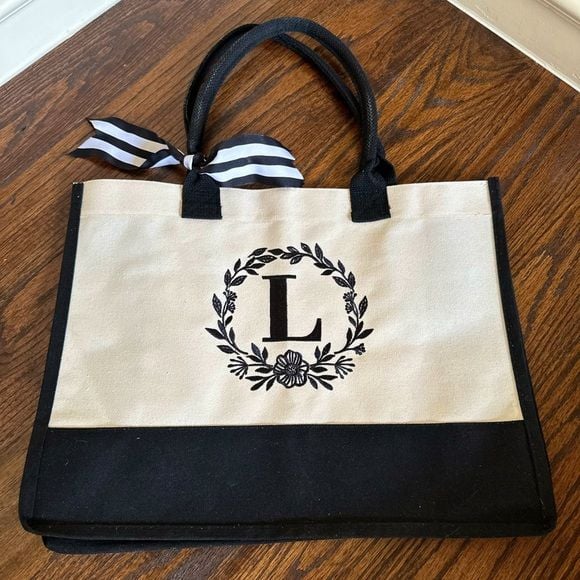
Totes are everywhere, so a monogrammed tote has to feel like part of a clear collection rather than just another bag.
With makeup bag sets, matching sizes build the look.
With totes, your fabric range, handle styles and stitching are what make the shop stand out.
Think about how the bag will be used. A shopping tote needs strong handles.
A work tote might need an inside pocket and a zipper.
A school tote benefits from a flat bottom, and a travel tote from a lining that wipes clean.
Pick two or three sizes and give each a signature design.
Customers can pick initials, a name or a small embroidered motif.
A matching pouch or keyring fob adds variety.
Because the base design stays the same, personalization is the only thing that changes, which makes totes one of the easier personalized sewing products to sell online.
For more on building a shop around products like this, see sewing business ideas you can start from home.
Final Thoughts on Personalized Sewing Products to Sell Online
What makes these products special is the personal detail.
A name, a date, a photograph, a short message or a favorite color turns ordinary fabric into something that belongs to one person.
That’s what customers are really choosing, and it’s what you can offer through careful stitching and clear communication.
When you decide which Personalized Sewing Products to Sell Online to start with, choose ones that match your current skills.
If you’re comfortable with straight seams, begin with banners or totes. If you enjoy embroidery, try pillowcases or patches.
Pick a few customization options you can do well every time, and write them down so each order runs smoothly.
Starting small lets you improve as you go. Choose one product and make a sample this week.