Looking for No- Pattern Sewing Projects to make and Sell that skip the paper pattern altogether?
Not every sewing product needs a commercial pattern.
Plenty of useful handmade items start with a tape measure, a few rectangles of fabric, and a clear idea of how the finished piece will be used.
If you enjoy sewing but would rather not buy, print, and tape together pattern sheets, No- Pattern Sewing Projects to make and Sell can give you a practical place to start.
This list covers home accessories, travel essentials, event décor, and protective covers that rely on simple shapes and straightforward construction.
Pattern-free does not mean careless, though. Accurate measuring, sensible fabric choices, and neat finishing still decide whether a product looks polished enough to sell.
If you are newer to selling, you may also like this roundup of easy things to sew and sell for beginners before choosing where to begin.
What Makes These No- Pattern Sewing Projects to make and Sell Practical
Sewing without a commercial pattern works when a shape is simple enough to describe with measurements. Rectangles, squares, and long panels cover most of this list.
Some items, like bookmarks and drawstring bags, need little more than measuring and hemming.
Others, such as crate pads, pillow protectors, and quilts, call for careful dimensions, layered materials, or a homemade paper template.
Wash and press your fabric before cutting, check that corners are square, and sew a test sample before making a batch.
Large items also use plenty of fabric, so work out your material costs before you list anything.
Pattern-Free Sewing Projects to Start With
1. Sleeping Bag Liners
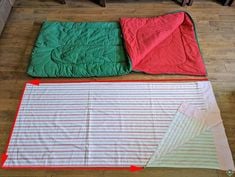
A sleeping bag liner is a fabric sleeve that sits inside a sleeping bag, adding a washable layer and a little extra comfort.
It works without a commercial pattern because the shape is based on the bag itself.
Lay the sleeping bag flat, measure its length and width, then cut two matching panels with seam allowance added.
Sew along the sides and bottom, leave one end open, and hem the opening neatly so it feels comfortable against the skin.
Accurate measurements matter because sleeping bags come as rectangles, mummy shapes, and everything in between, so you may want to offer a few standard sizes.
Cotton and flannel feel soft and wash easily, while lighter fabrics usually pack smaller. Fabric weight changes how bulky the liner feels in a backpack, so describe it honestly.
Campers, backpackers, and travelers staying in hostels are natural buyers, especially if you roll each liner with a small matching carry bag.
2. Bed Runners
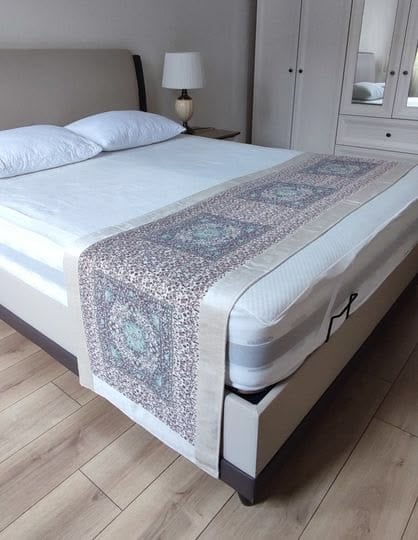
A bed runner is a long fabric strip laid across the foot of a bed to add color and texture.
Because it is just a rectangle, you can skip the pattern and work from measurements.
Measure the bed, decide how far the runner should hang over each side, and choose a width that looks balanced against the mattress.
Hem all four edges, or add batting and simple quilting lines for a plumper look.
Straight, even hems matter here, since a crooked edge is easy to spot on a long, plain shape.
Homeowners, interior decorators, and people furnishing guest rooms may all want a runner that suits a specific color scheme.
Matching pillow covers turn one runner into a bedroom set, which is a nice way to present it in your shop.
If you are building a larger collection, this guide to handmade sewing products to sell online shows how coordinated items can work together.
3. Aisle Runners
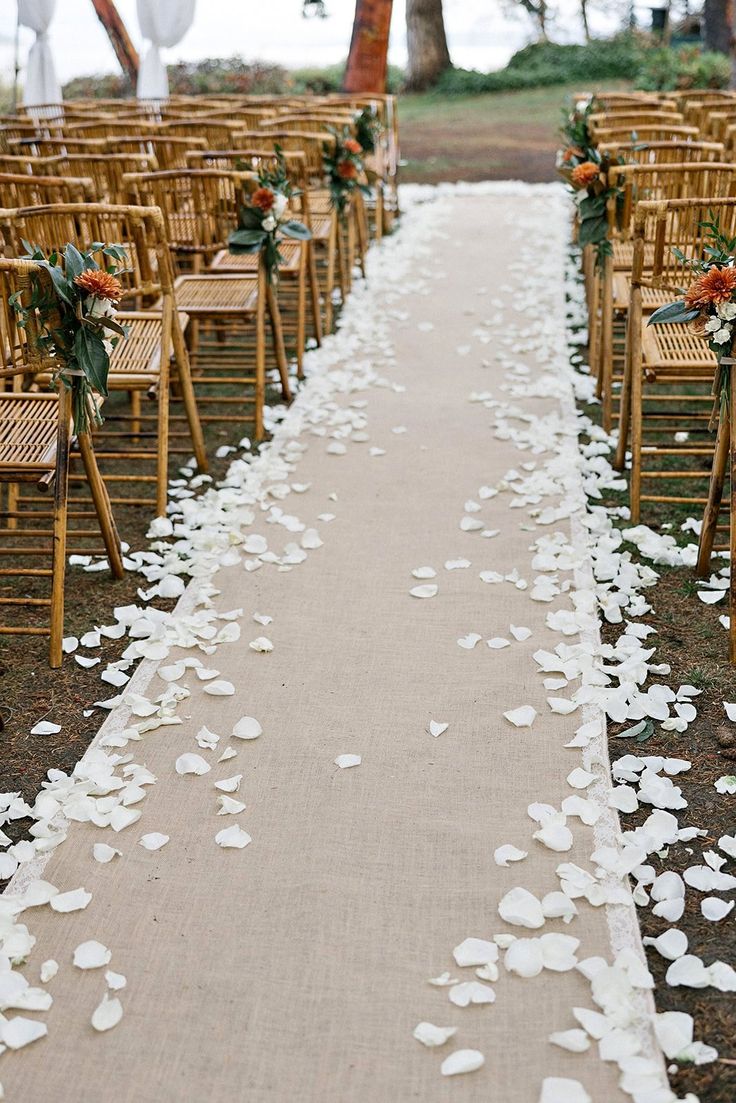
Aisle runners are one of the most striking event pieces you can make from plain fabric.
They suit No- Pattern Sewing Projects to make and Sell because the whole design is a long, straight panel.
Measure the aisle, cut the fabric to the length a client asks for, join widths with flat seams if the fabric is narrow, and hem every edge.
Wedding planners, event decorators, venues, and couples are the likely buyers, and custom lengths, colors, and simple decorative borders give you room to personalize.
Safety deserves real attention. A runner should lie flat, resist bunching, and be secured so nobody trips on it.
Tape or weights suited to the floor surface may help, but check each venue’s rules first.
Not every fabric works in every venue, so ask about the floor type and if the space is indoors or outdoors before choosing material.
4. Drawstring Gift Bags
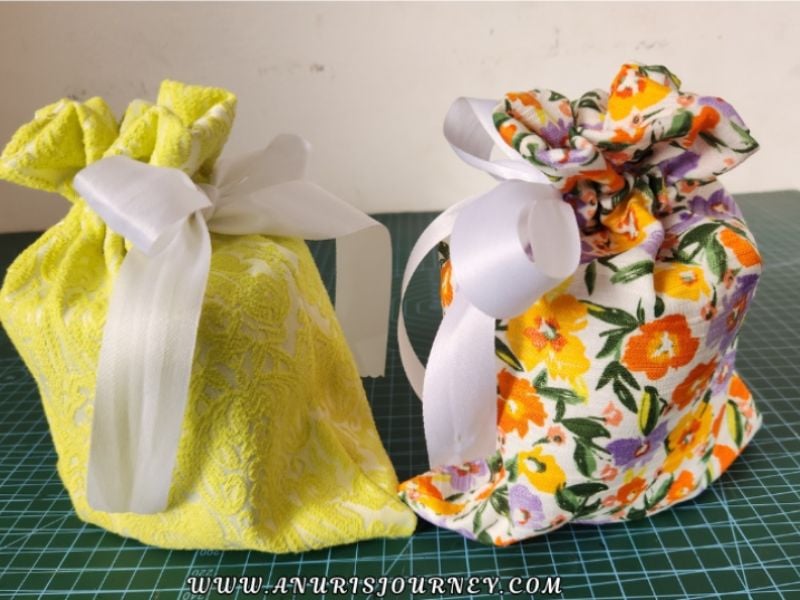
A drawstring gift bag is a rectangle folded in half, with a channel along the top for a cord or ribbon.
That simple structure is why you never need a separate pattern for each size.
Decide the finished width and height, add allowance for the seams and the channel, cut, sew the side seams, and thread the ties through.
Finish the raw edges inside the bag so the seams hold up better to repeated use.
Small, medium, and large bags can come from the same method, and prints can follow the seasons, from holiday collections to wedding favor sets.
Buyers might include people wrapping birthday gifts, wedding hosts, and small business owners who want reusable packaging.
Because the sewing is repetitive, it also suits batch production, which is covered in this list of sewing products you can make in bulk and sell.
5. Arch Drapes
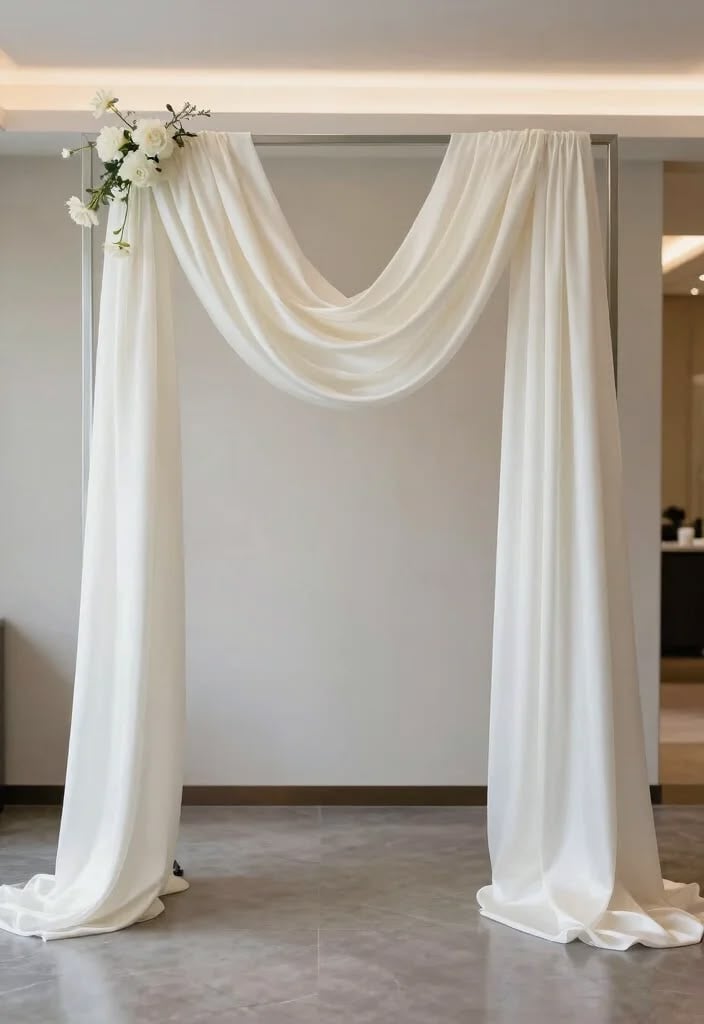
Draped fabric can soften a wedding arch, frame a ceremony, or create a photo backdrop.
Sellers can skip the pattern by working from the arch’s height and width and deciding how much fabric should hang and pool.
The panels themselves are long lengths of fabric with hemmed edges, and the look comes from gathering, swagging, or tying the fabric.
Sheer fabrics create soft folds, while heavier ones hang with more weight.
A tall arch can swallow a lot of material, so measure carefully and expect to use more yardage than you first imagine.
Event planners, wedding decorators, and photographers may all be interested, especially if you offer a few color options.
Be clear that drapes are decorative, not structural, and that they need secure installation.
Fabric that looks lovely indoors may not suit wind, rain, or hot sun, so match the material to the setting.
6. Keyboard Dust Covers
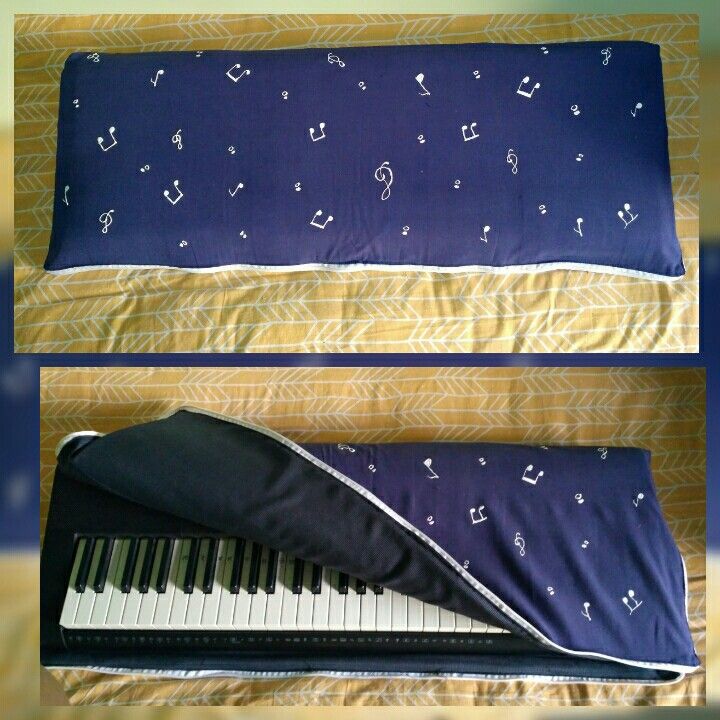
Keyboard dust covers are a simple protective accessory for desks, workstations, and music studios.
Start by measuring the keyboard’s length, width, and height, then add allowance so the cover drops over it without strain.
The cover is essentially a shallow box made from a top panel and side panels, or one wide rectangle with squared corners.
Straight seams and a neat hem are enough, and an optional lining adds body.
Make a few sizes for compact computer keyboards, full-size ones, and the longer keyboards that musicians use.
Computer users, pianists, and home studio owners are the obvious buyers.
Say plainly that the cover should come off before the keyboard is used and should never block vents or interfere with equipment.
If you like practical items like this, you will find more in this collection of handmade sewing projects people actually buy.
7. Dog Crate Pads
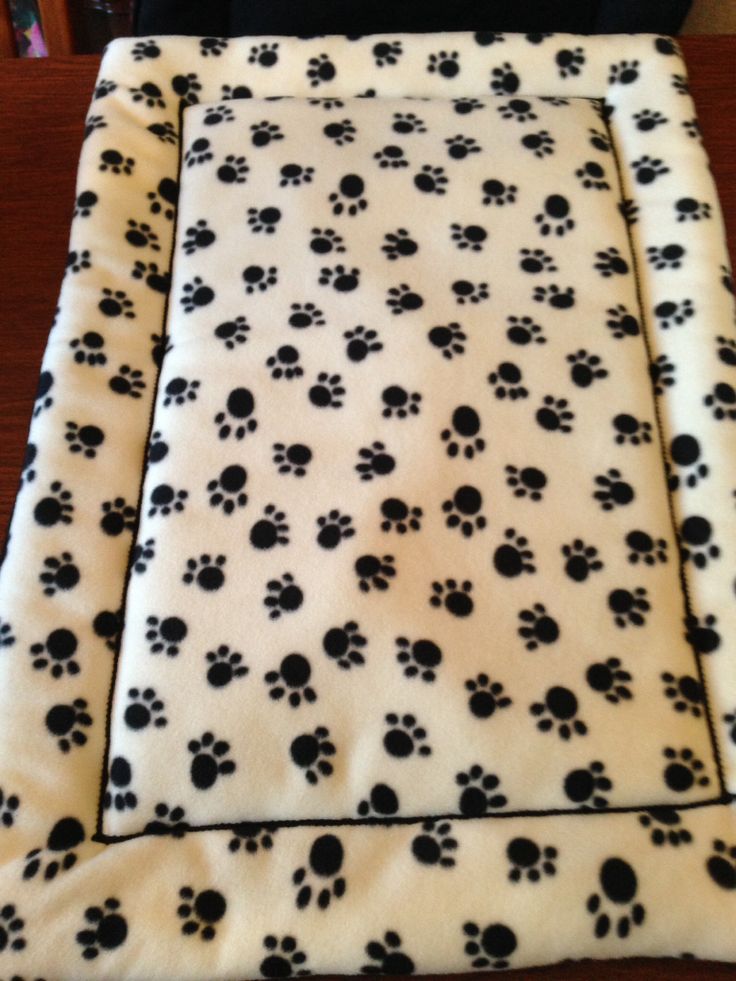
A crate pad gives a dog a softer place to lie down, and the shape is usually just a rectangle.
That makes it a good fit for No- Pattern Sewing Projects to make and Sell, since you only need the crate’s base measurements.
Cut a top and bottom panel, layer them around suitable filling, and stitch the layers together, adding quilting lines to keep the filling from shifting.
A removable cover with a zipper or envelope back makes washing easier.
Choose durable, washable fabric and strong seams, since pads get plenty of wear.
The pad has to fit the crate without large gaps and without getting in the way of safe crate use.
Dogs differ in size and habits, so avoid promising that one design suits them all.
Dog owners and pet gift buyers are the main audience, and listing the crate sizes each pad fits will help them choose.
8. Beach Mats
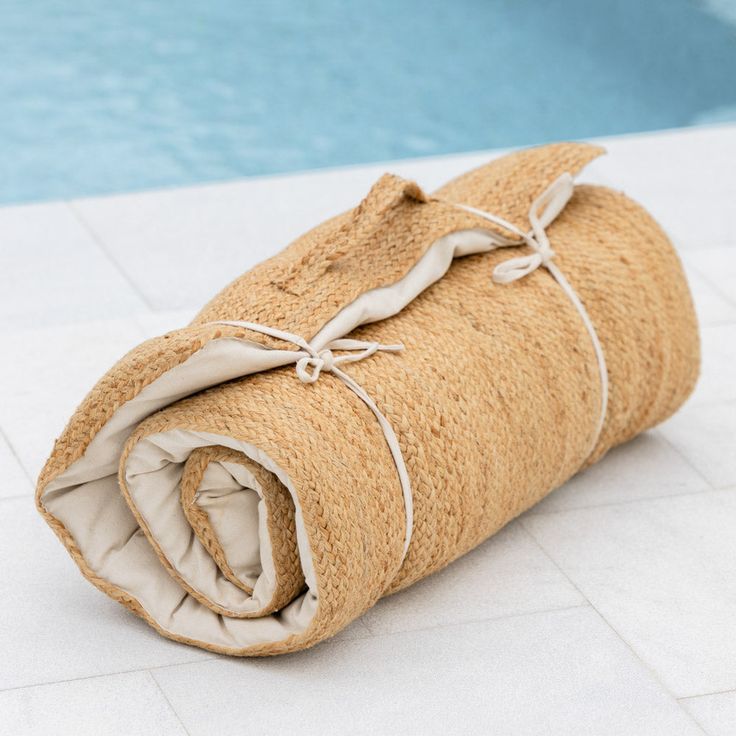
Beach mats give people a defined spot to sit, lounge, or spread out a picnic.
Measure the size you want, cut a top panel and a matching backing, and sew the layers together with hems or binding.
There is no complicated shape to draft, only a flat rectangle that can fold into a small bundle.
Lightweight fabrics fold smaller, while sturdier ones hold up better to rough ground.
Think about the backing too, since a fabric that suits sand may not suit a rocky park.
Carrying straps, sewn from the same fabric, make a mat easier to bring along, and a few sizes let you serve couples and bigger families.
Beachgoers, picnic fans, and travel gift shoppers may all be interested.
Keep the mat easy to clean and store, and skip waterproof claims unless the materials truly offer that.
9. Fabric Bookmarks
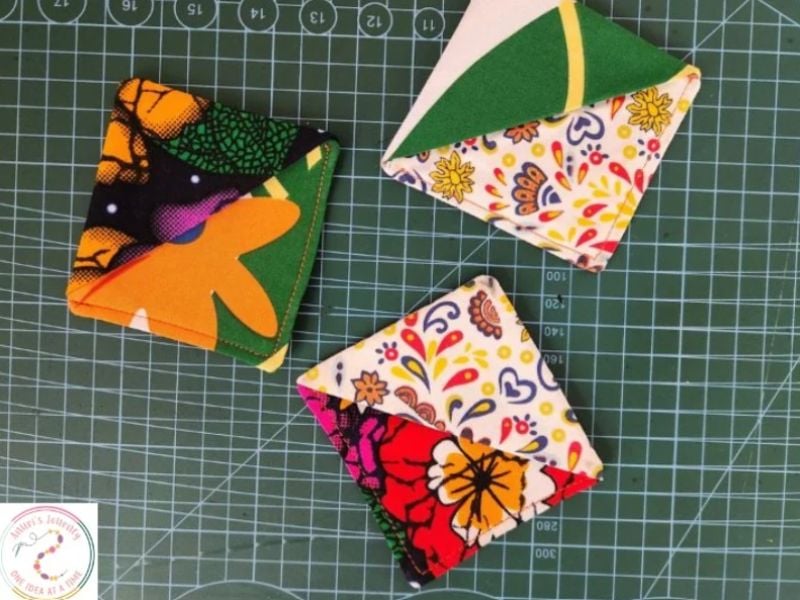
Bookmarks use so little fabric that they are a handy way to turn scraps into something sellable.
Cut strips or rectangles to one consistent size, fuse on a light layer of interfacing for firmness, then topstitch around the edge.
Topstitching simply means sewing a visible line close to the edge, and here it doubles as the finish.
No pattern is needed because there are no curves to fit, only straight cuts and tidy corners.
Prints, colors, and small personal details like initials can appeal to readers, teachers, and gift buyers.
Themed collections, such as cottage florals or bold geometrics, and small gift sets of three or four bookmarks give shoppers a reason to buy more than one.
Small projects can also support a side income, and this list of things to sew and sell for extra money has more low-cost ideas.
10. Cloth Napkins
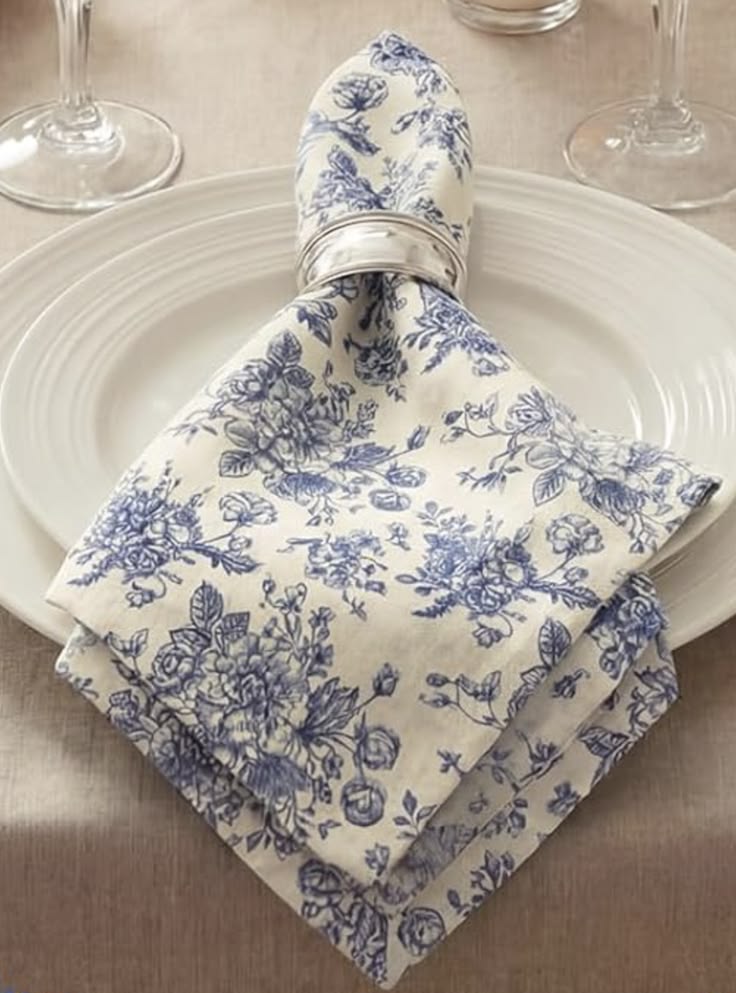
Cloth napkins are squares of fabric, which is why you can make them with a ruler and an iron instead of a pattern.
Decide on the finished size, add extra on every side for the hems, and cut.
Then fold each edge over twice, press it flat, and stitch around the napkin.
Pressing the folds first is what makes the corners sharp and the hems even.
A mitered corner, where the hem is folded at an angle, gives a neat diagonal finish.
Cotton and linen blends are easy to wash and iron.
Medium weights drape well on a lap, while very thin fabric can feel flimsy.
Home cooks, hosts, and people planning weddings or holiday dinners might all buy them.
Selling them in sets of four or six, tied with twine, makes a ready gift.
Check that every square is cut truly square, since a small error shows on a small piece.
11. Wall Tapestries
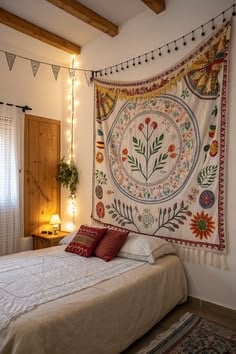
A wall tapestry is a large piece of fabric hung for decoration, and it gives you plenty of room to be creative.
It earns a place among No- Pattern Sewing Projects to make and Sell because the size and design are entirely yours to decide.
Measure the finished size you want, add allowance for hems, and sew a sleeve or loops along the top edge.
A sleeve is just a folded tube of fabric that a rod or dowel slides through.
From there, prints, appliqué, or layered fabric shapes add the visual interest.
Dorm residents, people redecorating bedrooms or living rooms, and creative-space owners are possible buyers.
Make sure the hanging method can safely carry the finished weight, especially for larger or heavily layered designs.
If you plan to list décor online, this round-up of sewing projects that sell well on Etsy is worth a look.
12. Sink Skirts
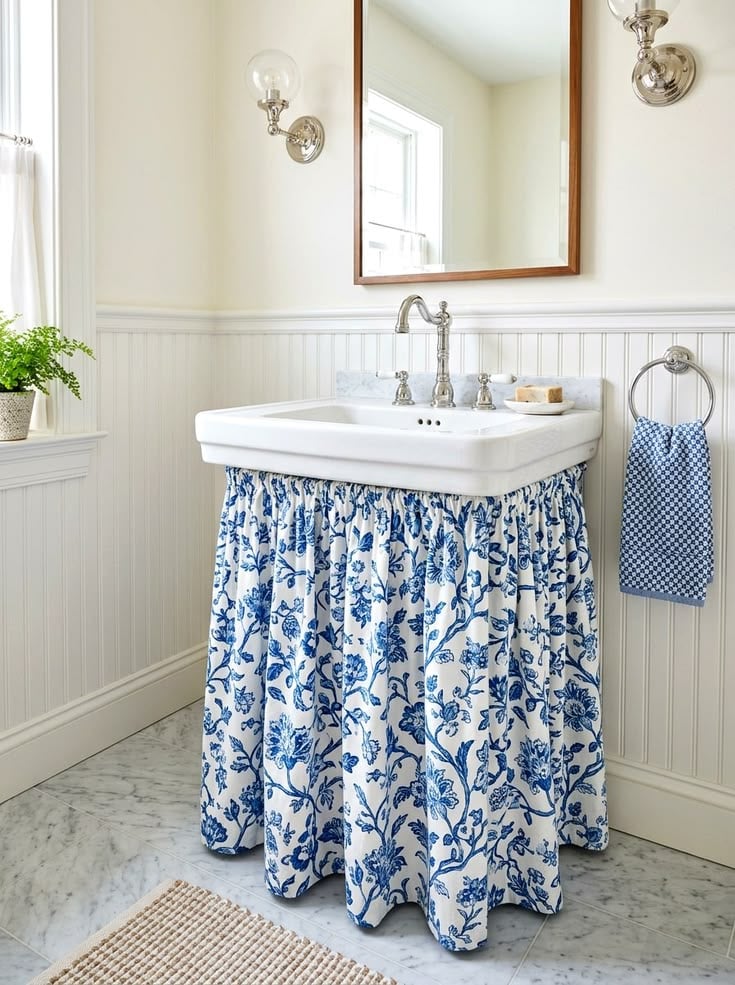
A sink skirt hides the area under a sink behind a gathered or flat fabric panel, which can soften the look of a kitchen, laundry room, or bathroom.
Measure the sink’s width and the drop from the rim to the floor or cabinet base.
Because the skirt is a long panel, you cut to those numbers, double the width if you want fullness, and hem the edges.
Ties, hook-and-loop tape, or a tension rod channel can hold it in place.
Homeowners and people decorating rentals may like it as a no-remodel way to hide cleaning supplies and clutter.
Think about moisture before choosing fabric, since a damp cabinet area calls for materials that dry well and can be washed.
Keep the skirt clear of plumbing, heat sources, and anything that needs regular access.
Add a note about this in your listing so buyers know what to expect.
13. Stadium Blankets
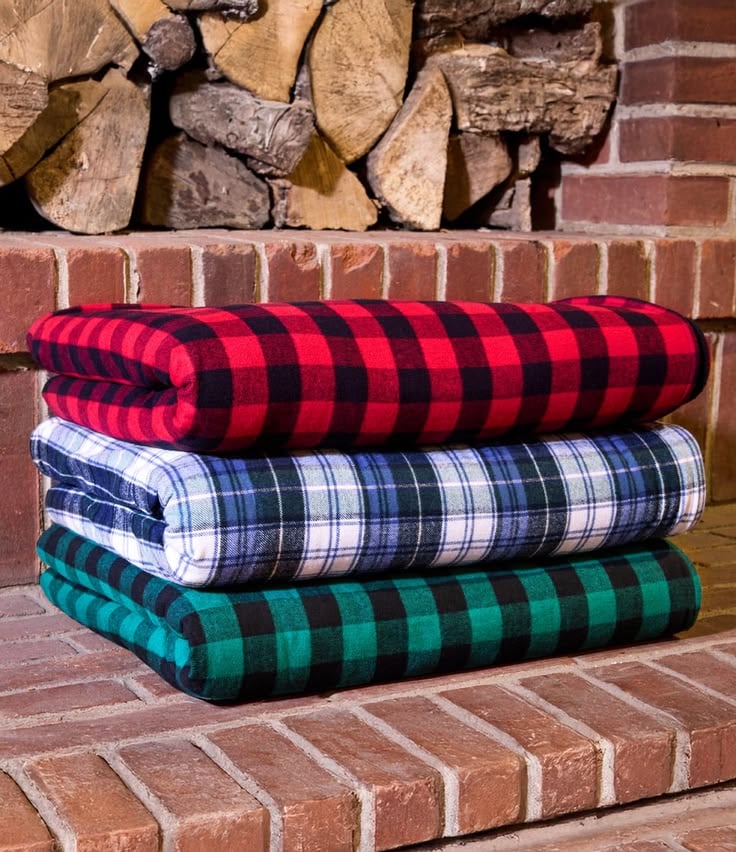
Stadium blankets are made to be carried to games, outdoor concerts, and any seat that gets chilly.
A plain rectangle is all you need, cut to size and finished with hems, binding, or a backing fabric.
Fleece is soft and its cut edges do not fray, while layered fabrics can add weight.
Team-color-inspired designs and personalized names appeal to fans, but avoid using protected team logos without permission.
Sports fans, families, and gift buyers are the natural audience.
Because blankets get carried around, think about portability and easy care as you pick fabric and size.
A sewn-on carrying strap or a matching storage pouch can be offered as an optional extra.
Warmth depends on the fabric and layers you choose, so describe the blanket honestly.
If you are picking projects with broader appeal, this collection of profitable sewing projects to make and sell may help.
14. Painting Drop Cloths
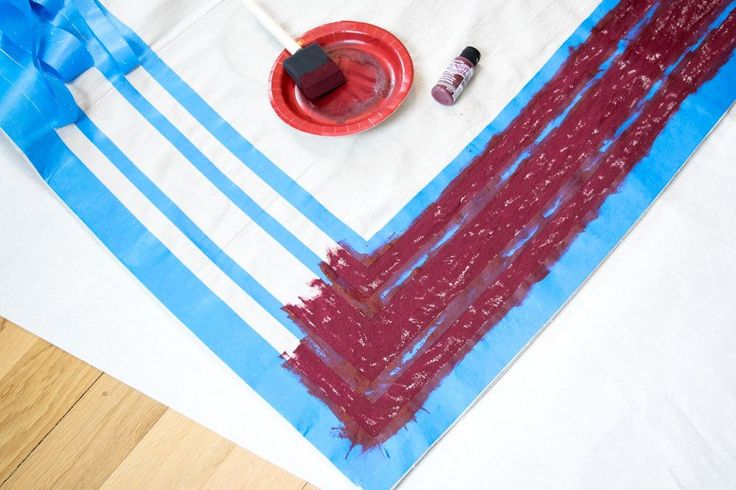
A drop cloth covers floors and furniture while someone paints, crafts, or tackles a home improvement job.
Nothing about it needs a pattern, because it is simply a large panel measured, cut, and hemmed.
If your fabric is narrower than the size you want, join two or more lengths with strong flat seams.
Heavier cotton canvas-type fabrics tend to hold up better to repeated use, and washable options appeal to buyers who reuse them.
Painters, craft studios, and DIY homeowners may all need different dimensions, so a small, medium, and large range makes sense.
Be upfront about the level of protection.
Ordinary sewn fabric is not waterproof or stain-proof unless the materials truly offer those properties, and paint can soak through.
Reinforce the seams and hems, since a cloth that gets dragged, folded, and shaken out takes a lot of stress.
15. Outdoor Curtains
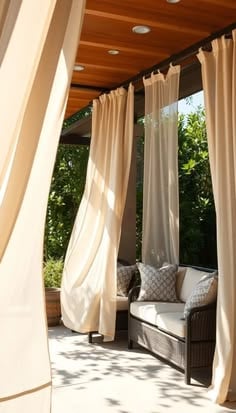
Outdoor curtains turn patios, porches, and pergolas into more private, shaded, or comfortable spaces.
They belong with No- Pattern Sewing Projects to make and Sell because each panel is a long rectangle sized to the space.
Measure the opening and the drop, cut the panels, hem the sides and bottom, and add a rod channel or tabs at the top.
Offering several lengths and colors lets customers match their furniture and trim.
Fabric matters more than usual with this project.
Choose materials made for outdoor use, and remember that sunlight, moisture, and weather affect how long any fabric lasts.
Do not promise that ordinary fabric will cope with every climate.
Homeowners, decorators, and people creating outdoor living areas are the likely buyers.
For more ideas you can make at your kitchen table, see these things to sew and sell from home.
16. Furniture Dust Sheets
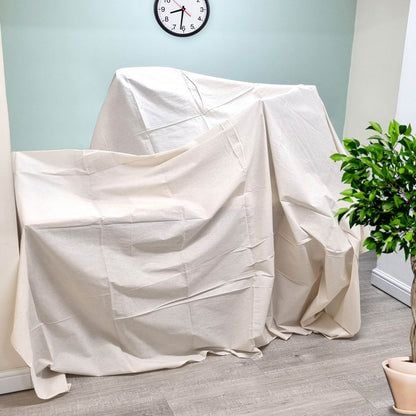
Dust sheets cover sofas, chairs, and tables while a room is being painted, a house is closed up, or items are in storage.
They are loose covers rather than tailored ones, which is why simple panels work.
Measure the piece at its widest, longest, and tallest points, then add extra for draping or tucking.
Join panels with flat seams if needed, hem the edges, and consider ties for pieces that need to stay put.
Mid-weight washable fabrics are practical, though lighter ones are easier to fold and store.
Homeowners, storage customers, movers, and anyone protecting furniture between uses could be buyers.
Armchairs, wingbacks, and sectionals have awkward shapes, so measure more carefully and be willing to make custom sizes.
Make it clear in your listing that a dust sheet is a loose protective cover, not a fitted upholstery slipcover.
17. Pillow Protectors
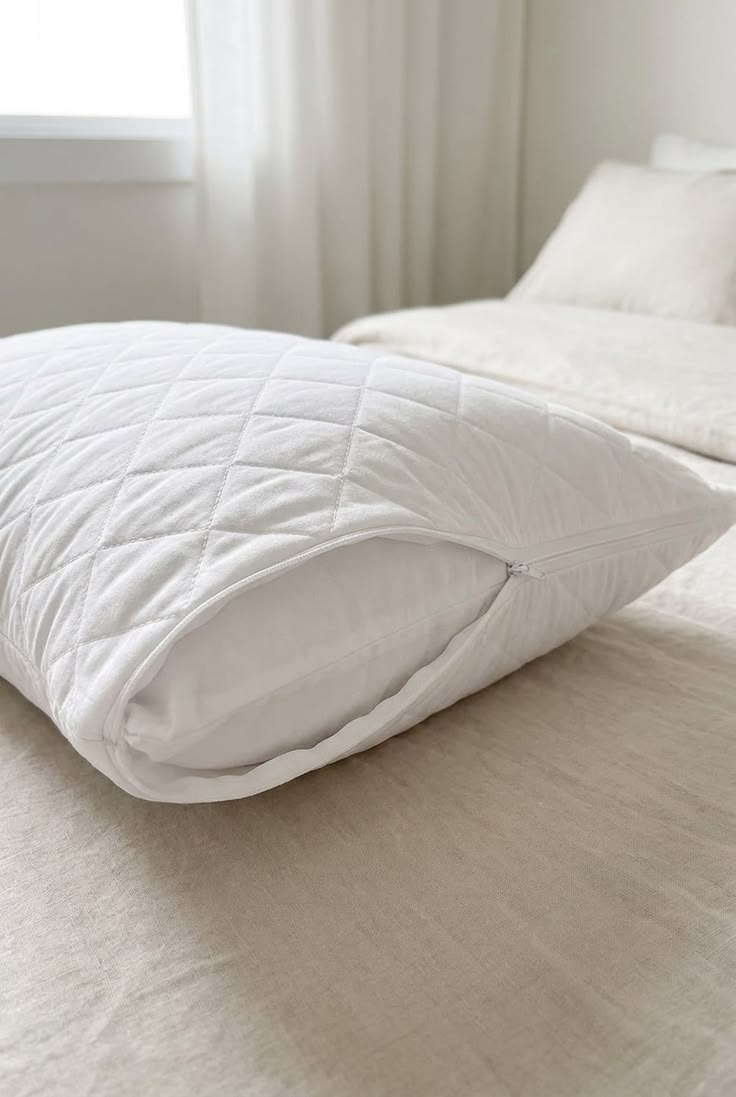
A pillow protector is a thin fabric case that goes over a pillow, under the regular pillowcase.
Since it is basically a rectangle sized to the pillow, you can make it from measurements alone.
Measure the pillow, allow for seams, and choose an envelope closure (an overlapping back panel) or a zipper.
Breathable, washable cotton is a sensible starting point, and you can offer standard, queen, and king sizes. Be honest about what you are selling.
A basic fabric protector is not the same as a specialized waterproof or allergen-resistant product, and you should not claim protection that the materials and construction cannot support.
Homeowners, guesthouse owners, and bedding shoppers may be interested, particularly if sold alongside matching pillowcases.
If you want to build a bedding line like this into a shop, this guide to things to sew and sell for a successful small business may help.
18. Washable Pee Pads
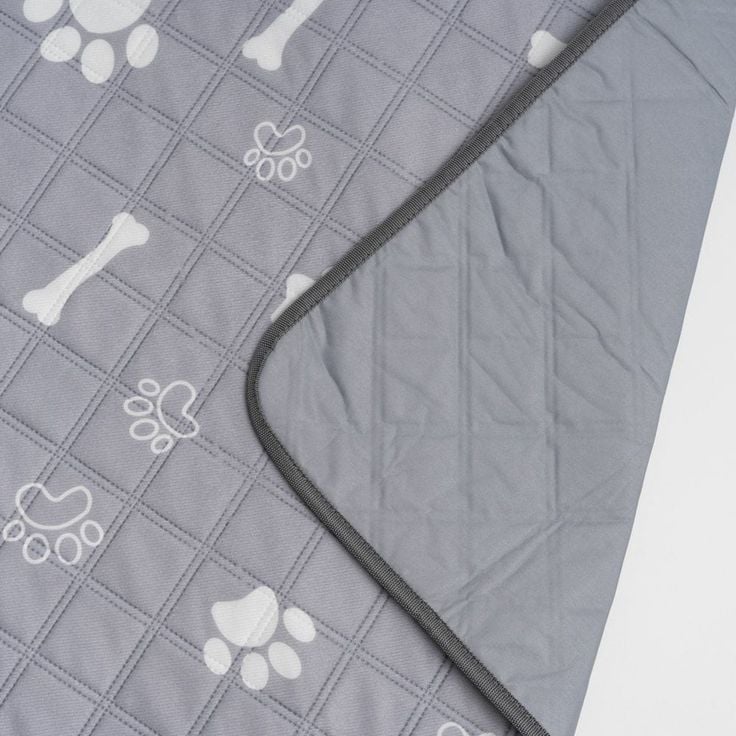
Reusable pee pads are layered, absorbent mats used mainly for pets, such as puppies or dogs in training.
The shape is a plain rectangle or square, so you measure, cut, and layer rather than draft a pattern.
A typical build stacks a soft top fabric, one or more absorbent layers, and a backing, all quilted together with stitching and finished edges.
This is more demanding than a simple hem, because the materials must match the job.
Absorbency, leak resistance, washing, and drying all need testing before you sell.
Thick layers can take a long time to dry, and some backings may not tolerate hot washes.
Offer a few sizes and give clear care instructions.
Pet owners are the clearest audience, but do not make medical claims or imply that ordinary fabric layers guarantee leak protection.
19. Travel Blankets
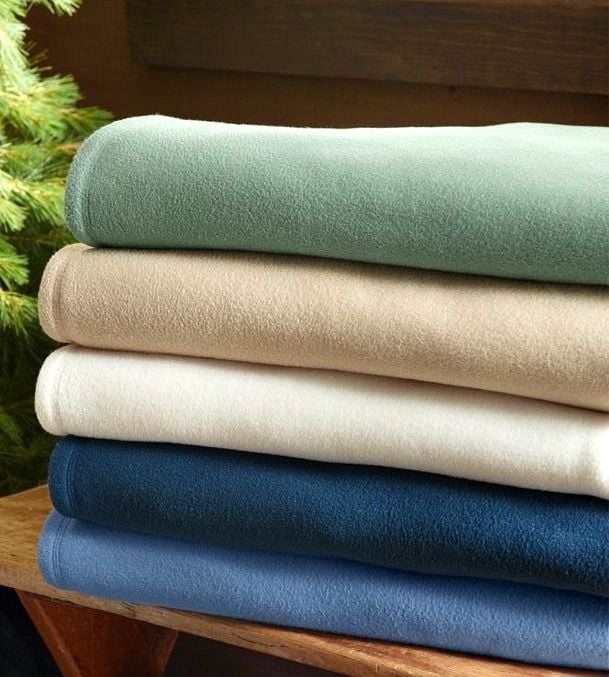
A travel blanket is a compact comfort item for flights, road trips, camping, and daily commutes.
It fits neatly into No- Pattern Sewing Projects to make and Sell because it is a measured rectangle with hemmed edges.
You can keep it to a single layer or add a second fabric for more body.
Size and fabric weight decide how portable the finished blanket is, so a smaller, lighter blanket suits a carry-on bag better than a large, thick one.
A carrying strap or a small pouch, sewn from matching fabric, keeps it tidy when folded.
Travelers, commuters, and gift shoppers are the likely buyers.
Coordinated accessories, such as a pouch and a matching eye mask, could turn one blanket into a small travel collection.
Keep the construction simple so each piece stays neat and consistent.
20. Camping Quilts
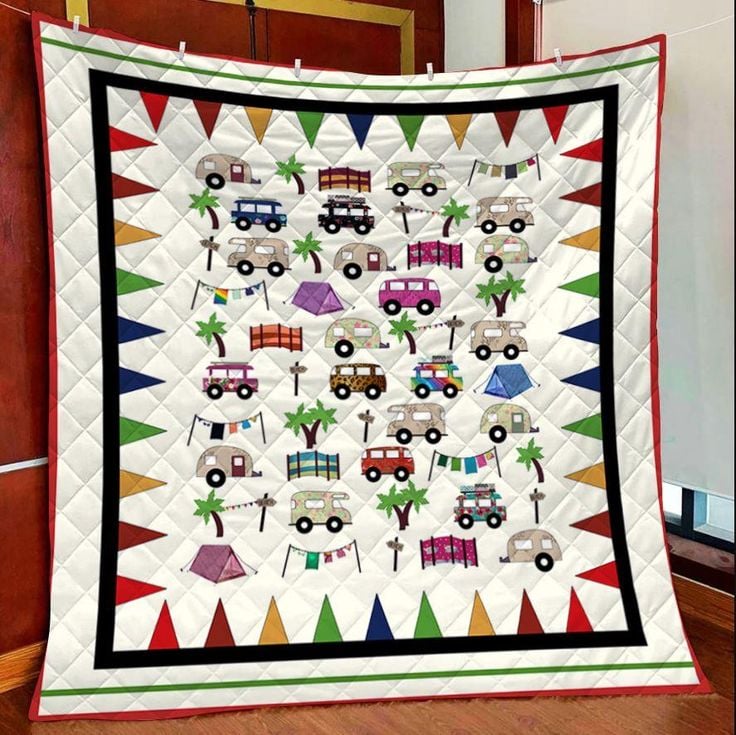
A camping quilt is a light layered cover for campers who want something extra on a cool night.
It needs no commercial pattern because the shape is a rectangle: two fabric panels with batting or other suitable insulation between them.
You measure, cut the layers, pin them together, and stitch quilting lines to hold the filling in place.
Size, warmth, and weight are the main choices, and a lighter quilt packs smaller while a thicker one feels warmer.
Durable fabric helps, and a compact storage sack keeps it easy to carry.
Campers, hikers, and outdoor gift buyers may like the idea of a handmade layer.
Be realistic, though: warmth depends on the materials and construction, and a basic handmade quilt is not meant for extreme weather or as a replacement for specialized sleeping equipment.
For other higher-value ideas, browse these high-profit sewing projects to make and sell.
21. Floor Cushions
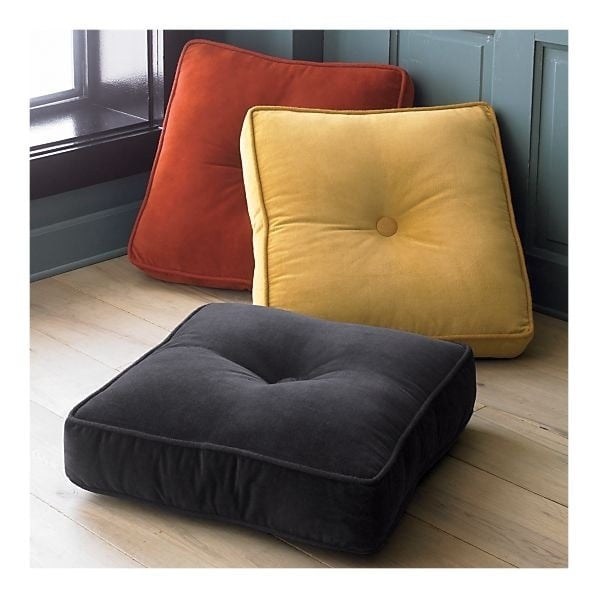
Floor cushions give reading corners, playrooms, and meditation spaces a relaxed place to sit.
They are essentially oversized pillow covers, so squares or rectangles measured to your chosen dimensions are enough.
Cut a front and back, add a zipper or overlapping closure, and fill the finished cover with a suitable stuffing or insert.
A removable cover makes cleaning simpler, and durable fabrics cope better with daily use.
Because floor cushions take more weight and movement than a sofa pillow, strong seams matter.
So does enough filling, since an underfilled cushion goes flat and looks sloppy.
Large sizes also use a good amount of fabric and stuffing, so cost them carefully.
Families, students, and people furnishing informal seating areas are the likely buyers, and coordinated colors let them build a set.
Describe it as a comfortable seat, and avoid orthopedic or back-support claims.
22. Pillow Covers
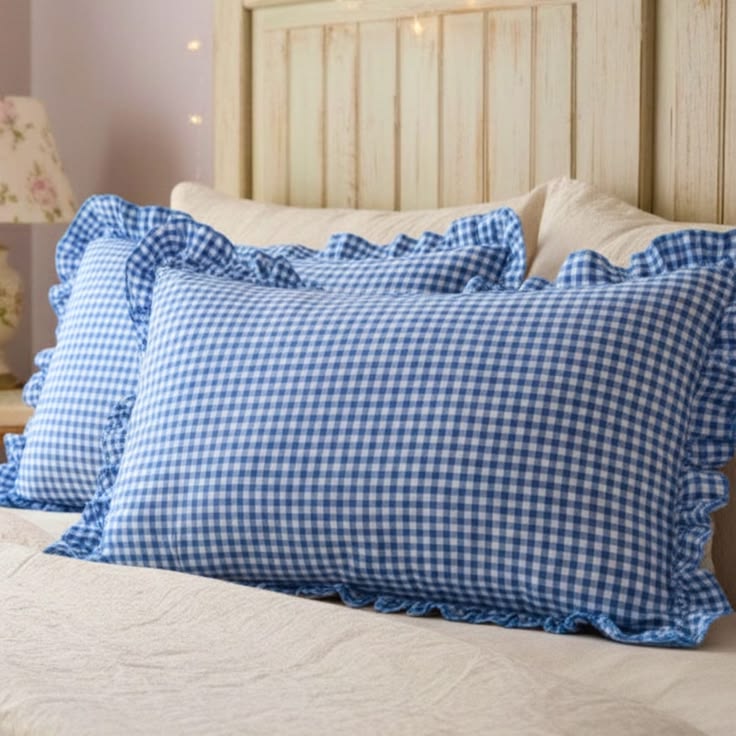
Pillow covers are the project that proves how much can come from a few basic fabric shapes.
They are also one of the most flexible entries on this list of No- Pattern Sewing Projects to make and Sell.
Measure an existing pillow insert, then cut panels that include seam allowance and leave the finished cover just snug enough.
Choose an envelope back, a flap, or a zipper, depending on the look and the level of finish you want.
That one construction adapts to any pillow size, covering square, lumbar, and oversized styles. Seasonal prints, personalized details, and coordinated sets can turn plain covers into a home décor collection.
Homeowners, gift buyers, and décor enthusiasts are the likely customers.
What sets good covers apart is accurate sizing, straight seams, and closures that look neat from every angle.
Final Thoughts
Making useful products without relying on commercial patterns is appealing because the tools are simple: a tape measure, a few good fabrics, and a clear idea of the finished piece.
Start with the projects that match your current skills, sewing machine, and fabric supply, rather than trying everything at once.
Careful measuring, suitable fabric, neat seams, and thoughtful finishing are what make handmade products look professional, whatever their size.
That is true for every one of these No- Pattern Sewing Projects to make and Sell, from a small bookmark to a large floor cushion.
Take your time, test your samples, and describe each product honestly.
With steady practice, simple sewing skills can become products customers may genuinely enjoy using.