When my children first started bringing home schoolwork, I quickly realized that the kitchen table was not always the best place for homework. Between snack time, family meals, and everyday activities, it became hard for them to focus. That was when I started looking for smart kids desk ideas that could give them their own special place to learn, draw, read, and create. Surprisingly, even a simple desk can make a huge difference in how a child feels about homework and creative projects.
I also learned that children love having a space that belongs to them. When they have a desk designed for their needs, they often feel more excited about sitting down to color, practice writing, or work on school assignments. In fact, many children see their desk as a mini workstation where they can explore their ideas and show off their creativity. Because of that, choosing the right desk setup becomes more important than many parents realize.
If you are looking for smart kids desk ideas for homework and creativity, you have come to the right place. Whether you have a large playroom, a shared bedroom, or a tiny corner to work with, these ideas can help you create a space where your child can learn, imagine, and grow. If you’re planning a full room refresh, you may also love these kids room makeover ideas that deliver a huge transformation. Best of all, many of these desk ideas combine function and fun, which means children actually enjoy using them.
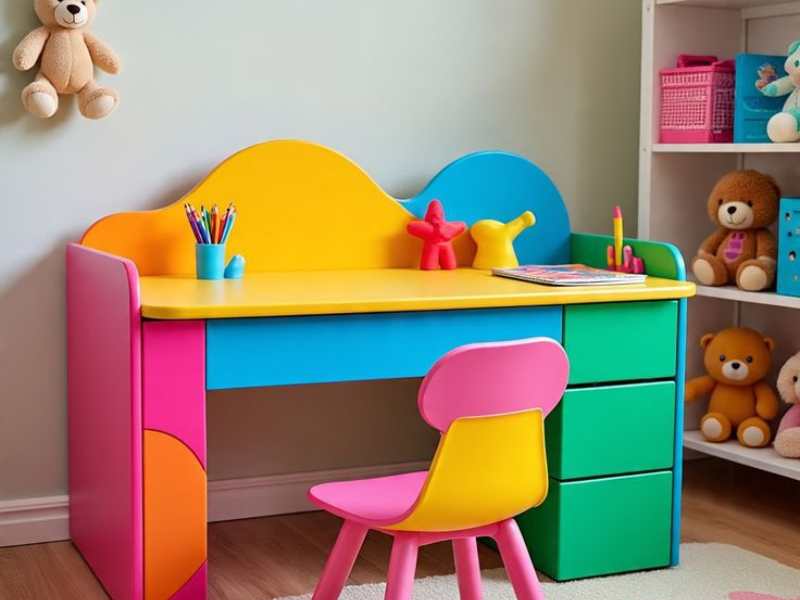
If you are looking for smart kids desk ideas for homework and creativity, you have come to the right place. Whether you have a large playroom, a shared bedroom, or a tiny corner to work with, these ideas can help you create a space where your child can learn, imagine, and grow. Best of all, many of these desk ideas combine function and fun, which means children actually enjoy using them.
1. Create a Window Desk for Natural Light
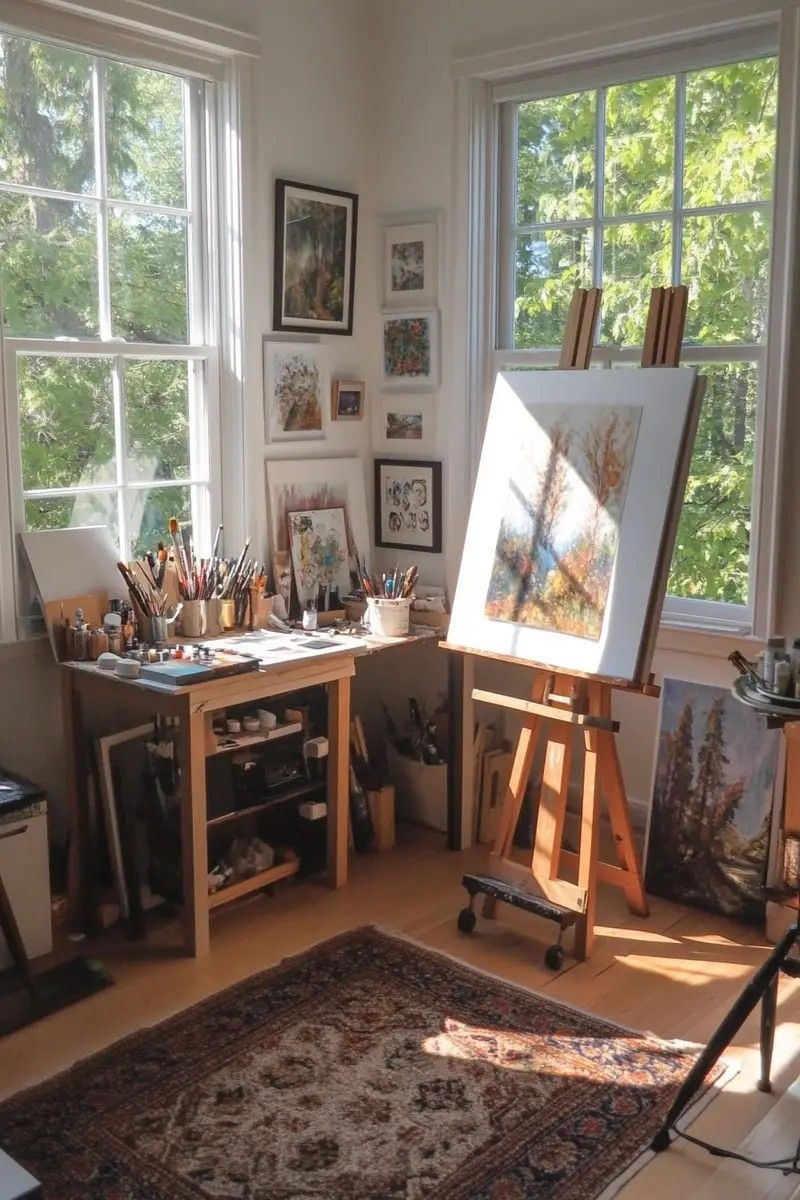
A desk placed near a window can completely change how a workspace feels.
Children often enjoy looking outside while taking short breaks from homework or drawing projects. Natural light also helps the area feel bright, cheerful, and welcoming.
Additionally, a window desk creates an inspiring environment that encourages focus and creativity. Place a small plant, pencil holder, and a few favorite books nearby to make the space feel even more inviting.
The result is a simple yet effective workspace that children love spending time in. To make the area even more inviting, consider adding one of these kids room rug ideas that add warmth and personality beneath the desk.
2. Choose a Desk with Built-In Storage
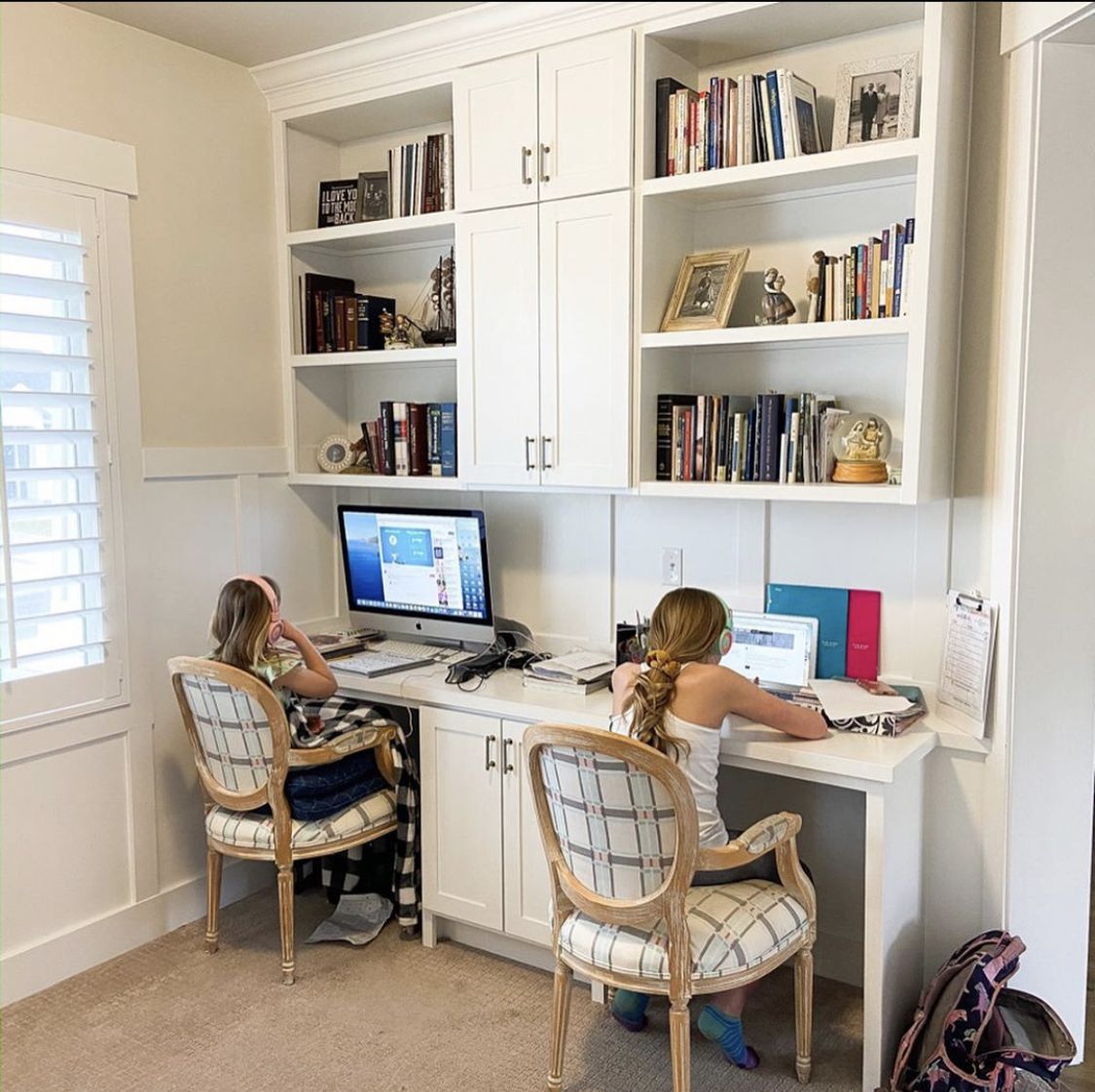
One of the smartest kids desk ideas involves choosing furniture that works harder.
A desk with built-in drawers, shelves, or cubbies helps keep supplies organized and easy to reach. Crayons, pencils, notebooks, scissors, and craft materials all have a designated place.
Additionally, organized storage reduces clutter and helps children develop good habits. Instead of searching for missing supplies, they can focus on learning and creating.
The workspace stays neat while providing everything they need within arm’s reach.
3. Add a Pegboard Above the Desk
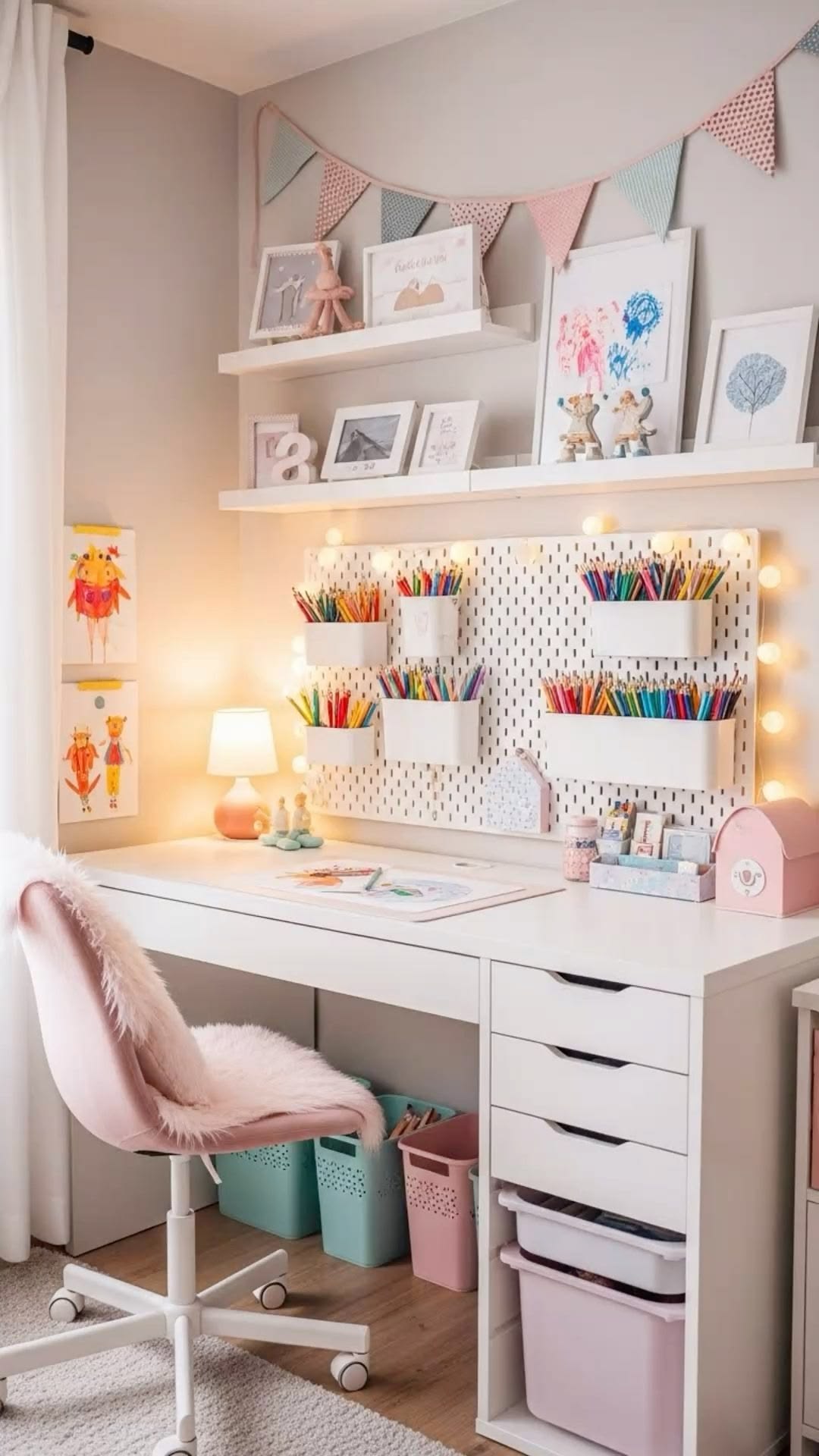
Pegboards offer an easy way to organize supplies while adding personality to the workspace.
Hang baskets, containers, hooks, and small shelves on the pegboard to hold art supplies, school materials, and favorite decorations.
Additionally, pegboards allow you to adjust the setup as your child grows and their needs change.
The desk area feels organized, colorful, and highly functional. Pegboards work especially well in creative spaces and pair perfectly with these creative art corner ideas for kids if your child loves crafting.
4. Create a Colorful Homework Station
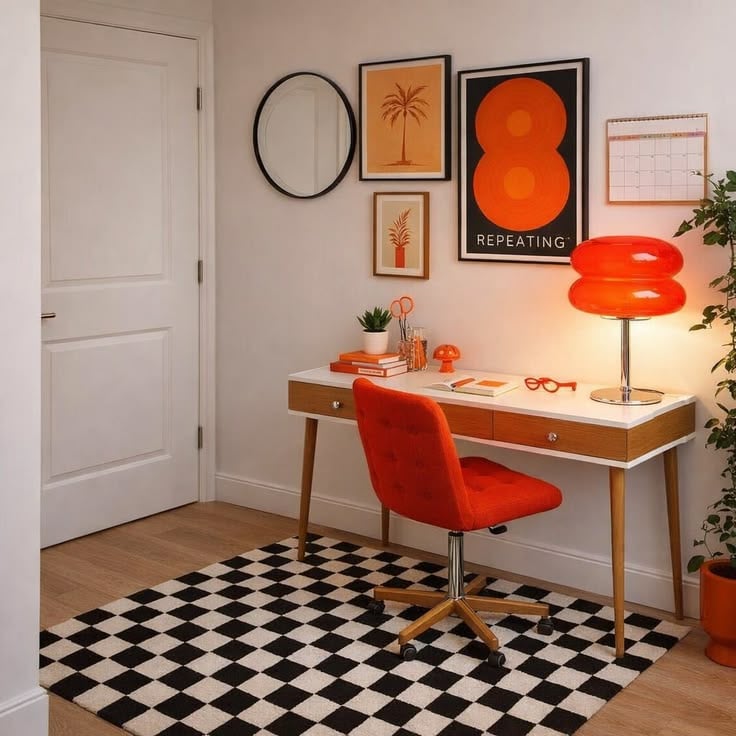
Children often respond positively to bright and cheerful spaces.
Use colorful organizers, fun desk accessories, and vibrant artwork to create a workspace that feels exciting rather than boring.
Additionally, colors can help define the area as a special place for learning and creativity.
The desk becomes a destination where children enjoy spending time every day.
5. Use Floating Shelves Above the Desk
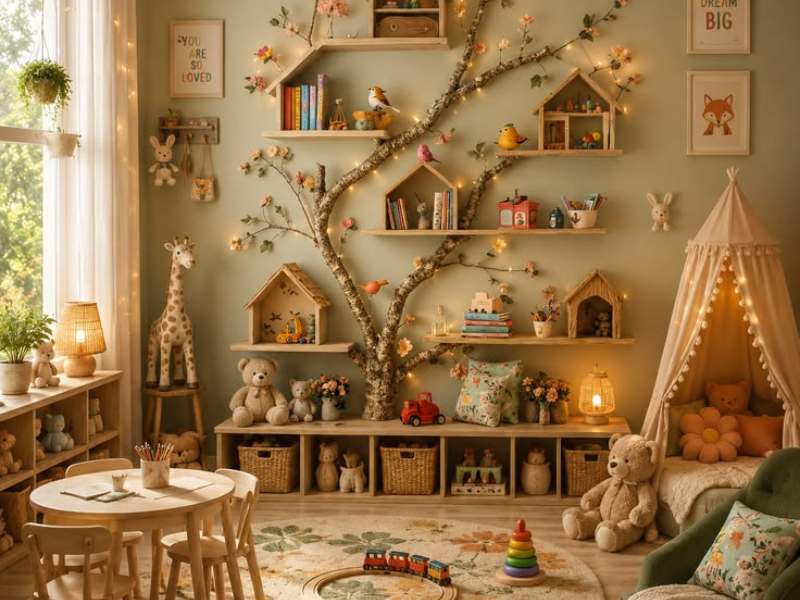
Floating shelves help maximize vertical space.
Install shelves above the desk to store books, display artwork, and organize supplies. This keeps the desktop clear while providing plenty of storage.
Additionally, shelves help small rooms feel more spacious because they use wall space efficiently.
The workspace stays tidy and functional without taking up extra floor space. Floating shelves can also complement these open shelf ideas for kids rooms that look organized and cute for even more storage inspiration.
6. Create a Shared Homework Desk
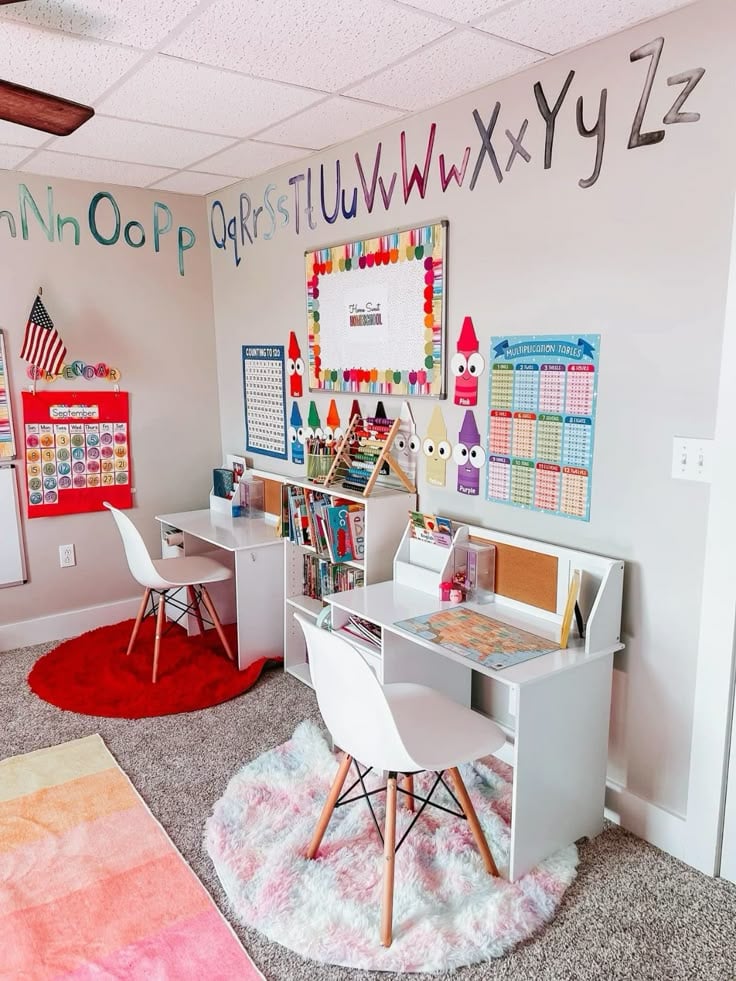
If siblings share a room, a long shared desk can work beautifully.
Each child gets their own section while still sharing the overall workspace. Add separate storage containers and personalized accessories to help define individual areas.
Additionally, shared desks encourage cooperation while making efficient use of available space.
The setup feels practical and organized for busy families. This setup works especially well in shared bedrooms. You’ll find more inspiration in these shared bedroom ideas for sisters that feel super stylish.
7. Add a Bulletin Board for Inspiration
A bulletin board turns an ordinary desk area into a creative hub.
Children can display artwork, school achievements, favorite photos, reminders, and inspirational quotes.
Additionally, changing the display regularly keeps the workspace fresh and exciting.
The board adds personality while helping children stay motivated.
8. Create an Art-Focused Desk Area
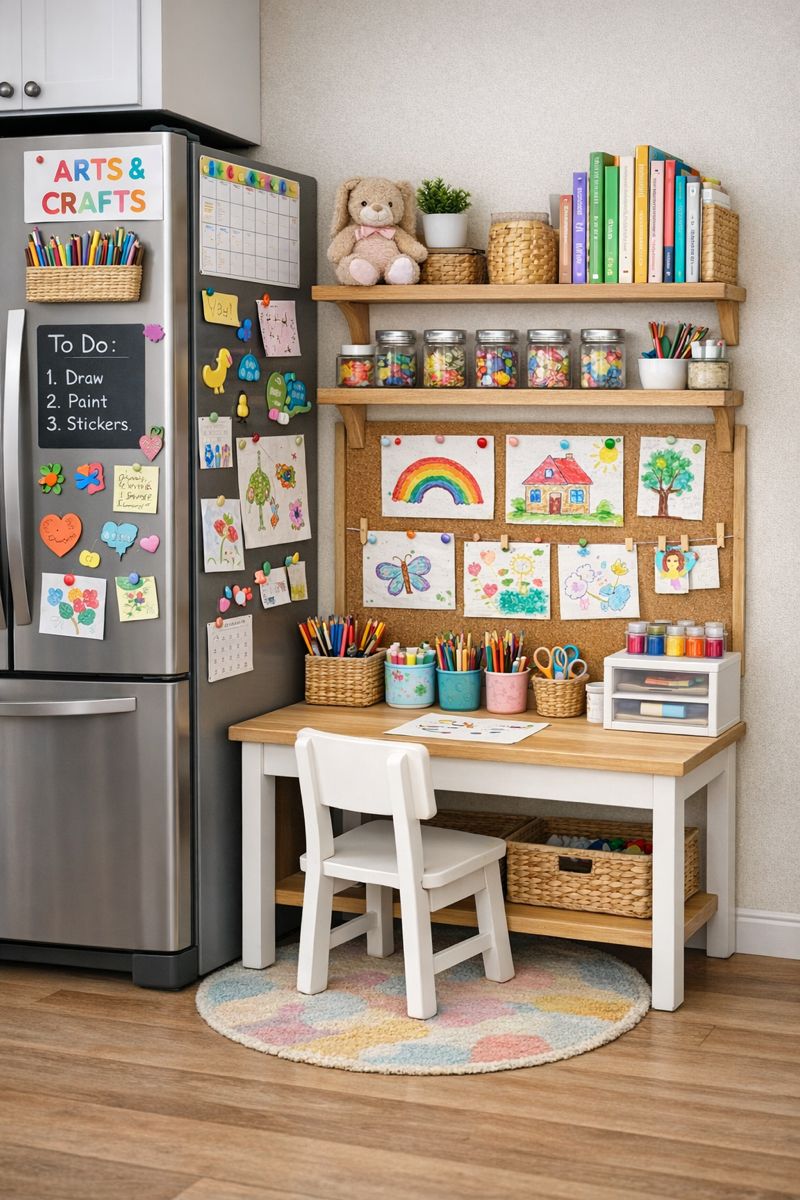
Some children spend more time drawing and creating than doing homework.
For these young artists, design a desk area specifically for creativity. Include plenty of storage for paper, markers, paint supplies, and sketchbooks.
Additionally, having a dedicated art space encourages creative expression and makes cleanup easier.
The desk becomes a place where imagination can thrive. If your child enjoys drawing and crafting, you’ll also love these DIY kids room decor ideas that look surprisingly professional.
9. Choose an Adjustable Desk
Children grow quickly.
An adjustable desk grows alongside them, making it a smart long-term investment. You can modify the height as your child gets taller, ensuring comfort for years to come.
Additionally, proper desk height helps support good posture during homework and creative activities.
The workspace remains comfortable and functional throughout different stages of childhood.
10. Create a Reading and Writing Corner
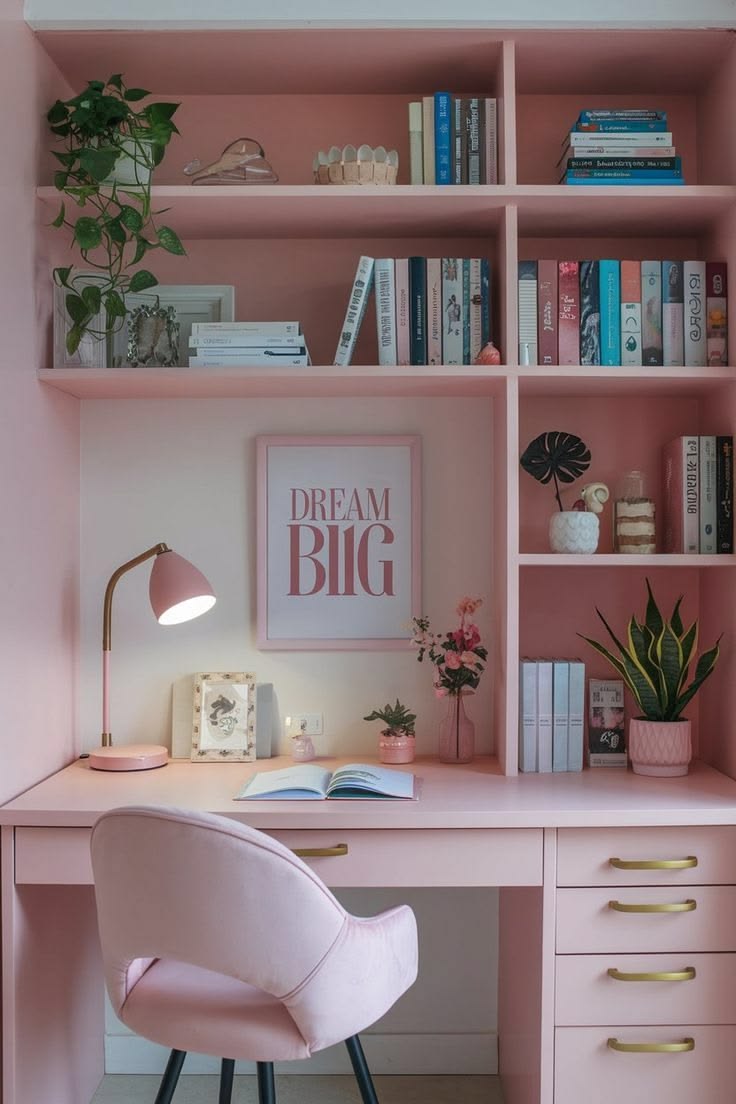
Combine a desk with a small bookshelf to create a reading-friendly workspace.
Children can easily access books while working on assignments or creative writing projects.
Additionally, keeping books nearby encourages reading throughout the day.
The setup supports both learning and imagination in one compact area.
11. Add Rolling Storage Carts
Rolling carts provide flexible storage that can move wherever needed.
Use them to organize art supplies, homework materials, and craft tools. When the project ends, simply roll the cart out of the way.
Additionally, rolling storage helps keep the workspace organized without requiring permanent furniture.
The desk area remains adaptable and clutter-free.
12. Use a Corner Desk
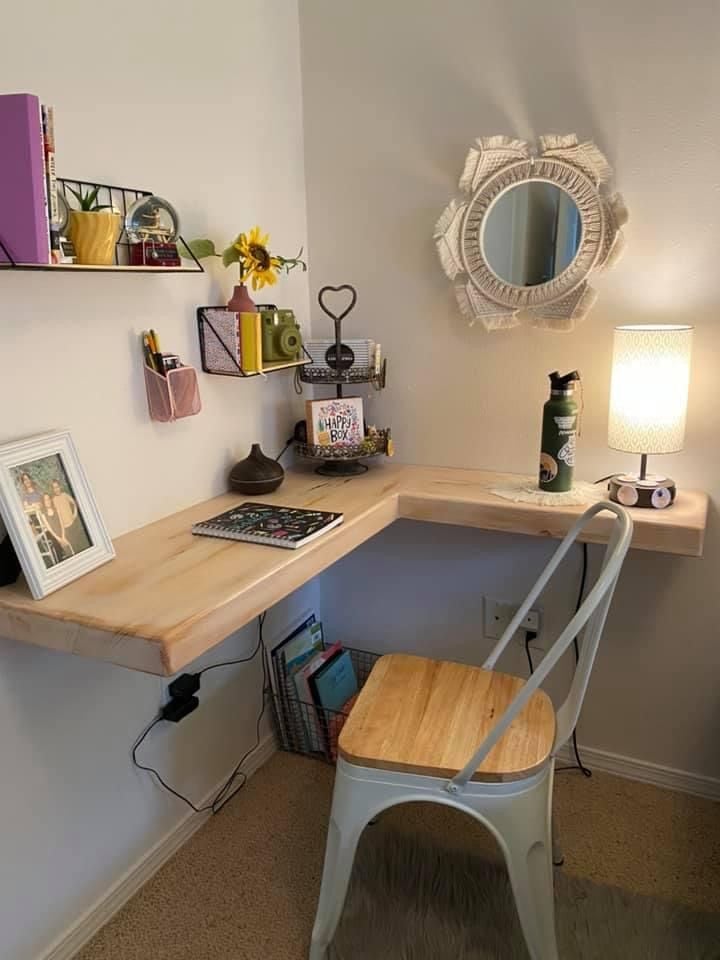
Corners often become wasted space in children’s rooms.
A corner desk transforms that unused area into a productive workstation. It provides plenty of surface area while preserving valuable floor space.
Additionally, corner desks create a cozy environment that helps children focus. Corner desks are especially useful in smaller spaces and pair beautifully with these tiny playroom ideas that make the most of every inch.
The room feels more organized and efficient.
13. Add Fun Labels to Storage Containers
Labels make organization easier and more enjoyable.
Use colorful labels with words or pictures to identify where supplies belong. Younger children especially benefit from visual labels.
Additionally, labels encourage independence because children can easily find and return items on their own.
The workspace stays organized with less effort.
14. Create a Science Exploration Desk
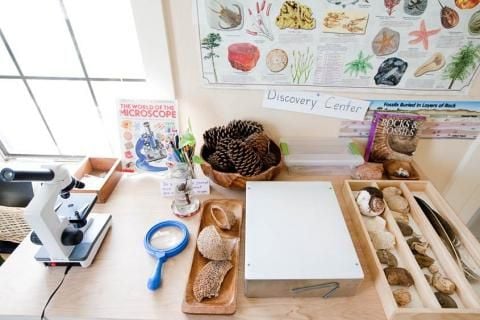
For children who love experiments and discovery, design a science-themed workspace.
Display nature collections, science books, magnifying glasses, and educational materials.
Additionally, the themed setup encourages curiosity and hands-on learning.
The desk becomes a place for exploration and discovery. Nature collections and discovery stations work wonderfully alongside these nature-inspired kids room ideas that feel peaceful.
15. Use Bright Task Lighting
Good lighting makes a big difference in any workspace.
Add a desk lamp that provides focused light for reading, writing, and crafting.
Additionally, proper lighting reduces eye strain and helps children stay comfortable during longer activities.
The workspace feels brighter, safer, and more inviting.
16. Create a Craft Supply Center
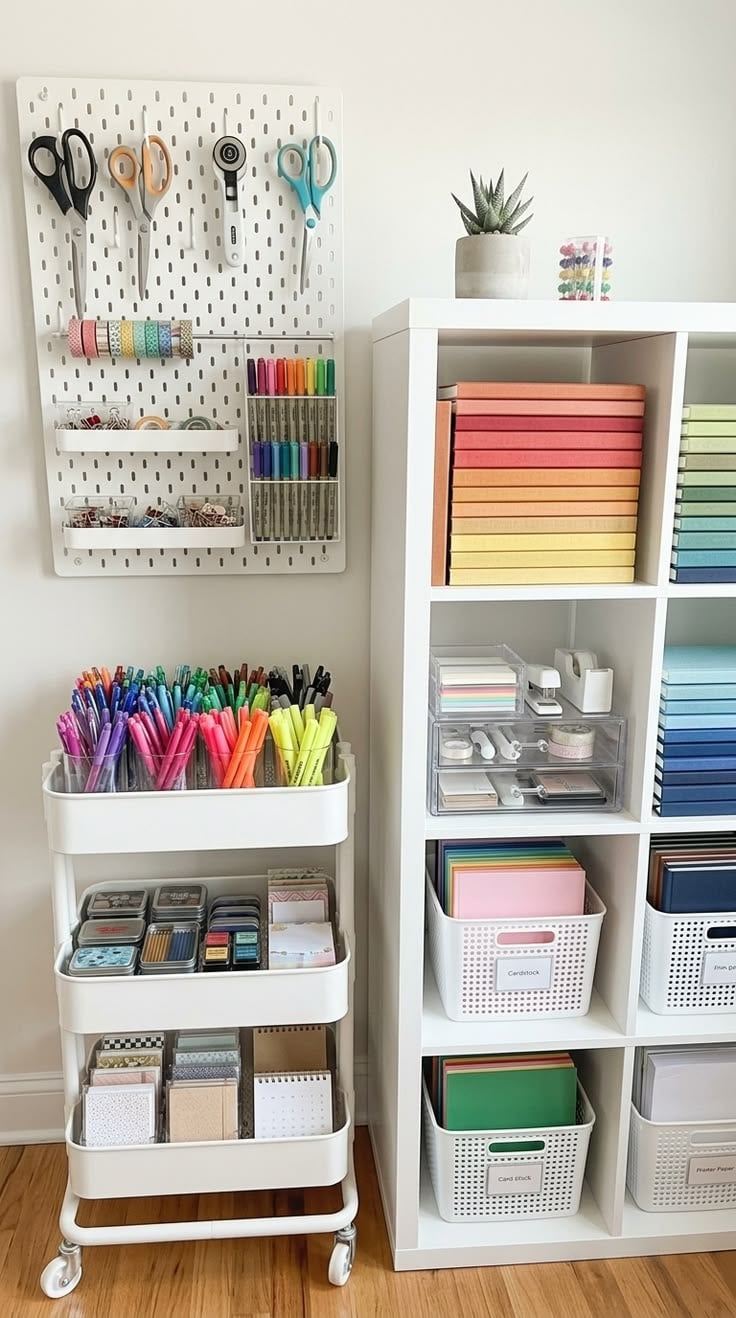
Turn the desk area into a complete crafting station.
Store scissors, glue, stickers, markers, paper, and other supplies within easy reach.
Additionally, organized craft storage makes it easier for children to start projects independently.
The desk becomes a creativity headquarters full of possibilities.
17. Add a Chalkboard or Whiteboard Wall
A chalkboard or whiteboard near the desk provides endless opportunities for creativity. Corner desks are especially useful in smaller spaces and pair beautifully with these tiny playroom ideas that make the most of every inch.
Children can practice spelling words, solve math problems, draw pictures, or brainstorm ideas.
Additionally, the interactive surface encourages learning through play.
The workspace becomes more dynamic and engaging.
18. Create a Minimalist Desk Setup
Some children focus better in simple environments. Nature collections and discovery stations work wonderfully alongside these nature-inspired kids room ideas that feel peaceful.
Choose a clean desk with limited decorations and organized storage. Keep only essential supplies visible.
Additionally, fewer distractions can help improve concentration during homework sessions.
The result feels calm, organized, and productive.
19. Design a Nature-Inspired Workspace
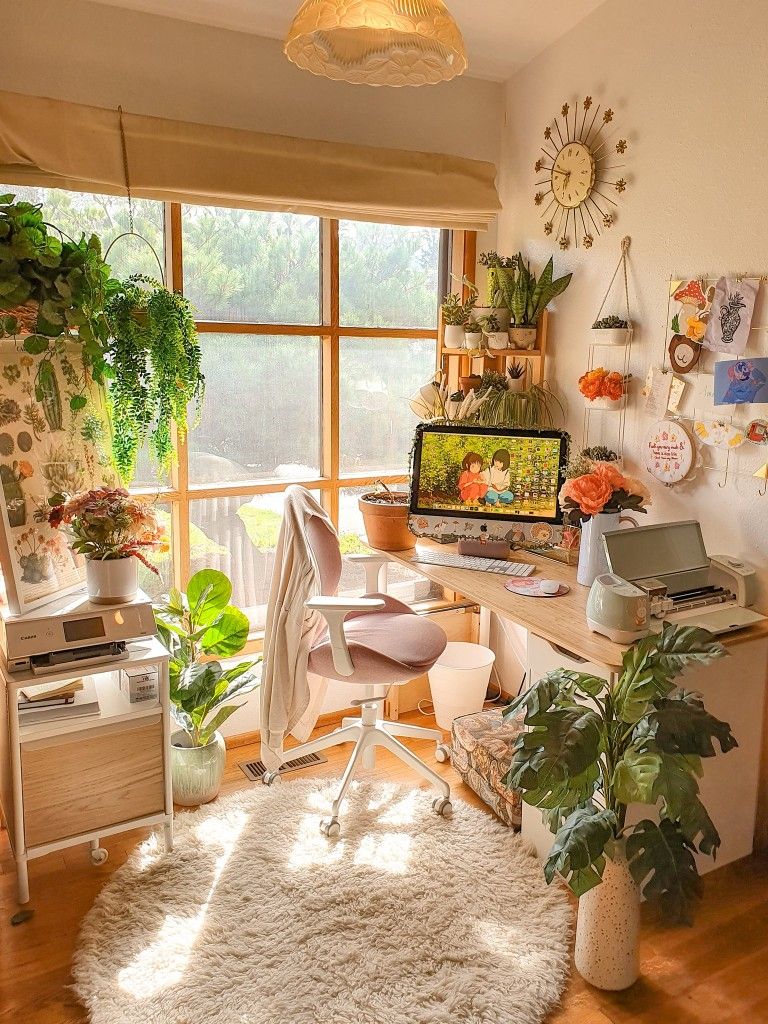
Bring elements of nature into the desk area. Natural materials and calming colors also feature heavily in these Scandinavian kids room ideas that feel clean and cozy.
Add plants, natural wood finishes, nature-themed artwork, and earthy colors.
Additionally, nature-inspired spaces often feel calming and relaxing.
The workspace supports both focus and creativity.
20. Use Color-Coded Organization Systems
Assign different colors to different subjects or activities.
For example, blue can represent math, green can represent science, and yellow can represent art.
Additionally, color coding helps children locate materials quickly and stay organized.
The system makes daily tasks easier to manage.
21. Create a Homework Command Center
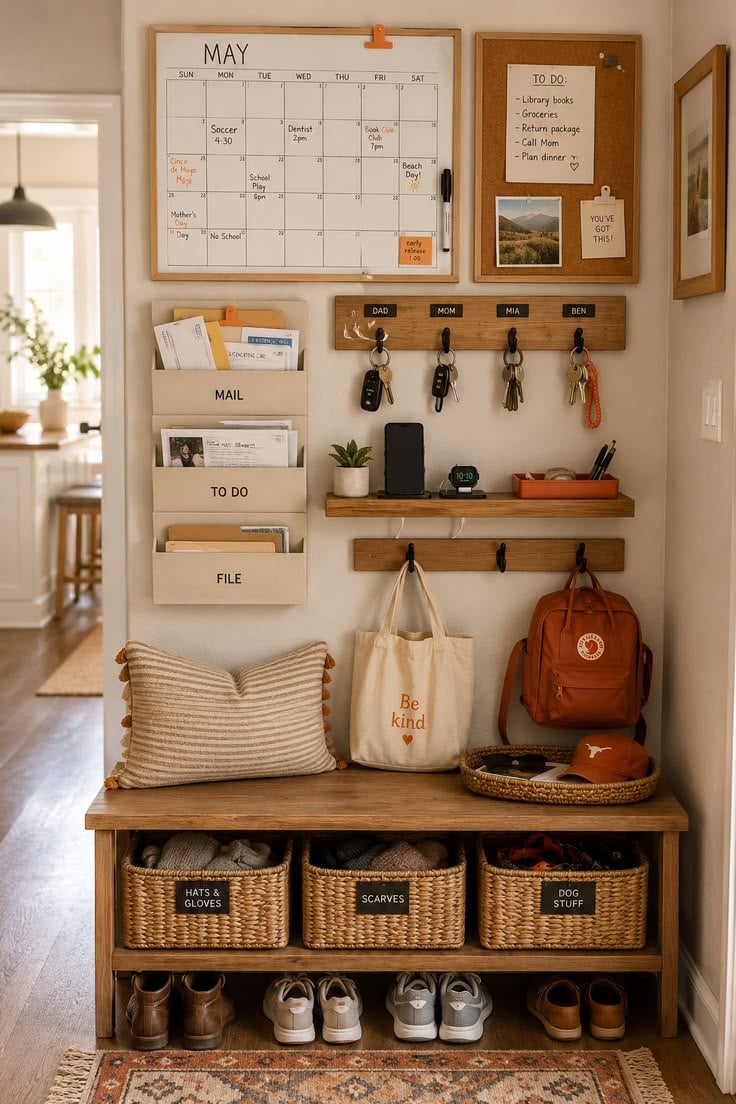
A homework command center keeps everything organized in one place.
Include calendars, assignment trackers, supply storage, and reference materials.
Additionally, centralizing important items helps children stay on top of responsibilities.
The workspace feels structured and efficient.
22. Add Display Space for Artwork
Children love seeing their creations displayed proudly. Displaying children’s creations is one of the easiest ways to personalize a room. You’ll find more inspiration in these DIY kids room decor ideas that look surprisingly professional.
Install a small gallery wall or artwork display area near the desk.
Additionally, displaying artwork boosts confidence and encourages continued creativity.
The desk area feels personal and inspiring.
23. Use Stackable Storage Solutions
Stackable containers maximize storage without consuming extra floor space.
Use them for school supplies, craft materials, and special projects.
Additionally, stackable systems can expand as storage needs grow.
The workspace stays organized and flexible.
24. Create a Technology-Friendly Desk
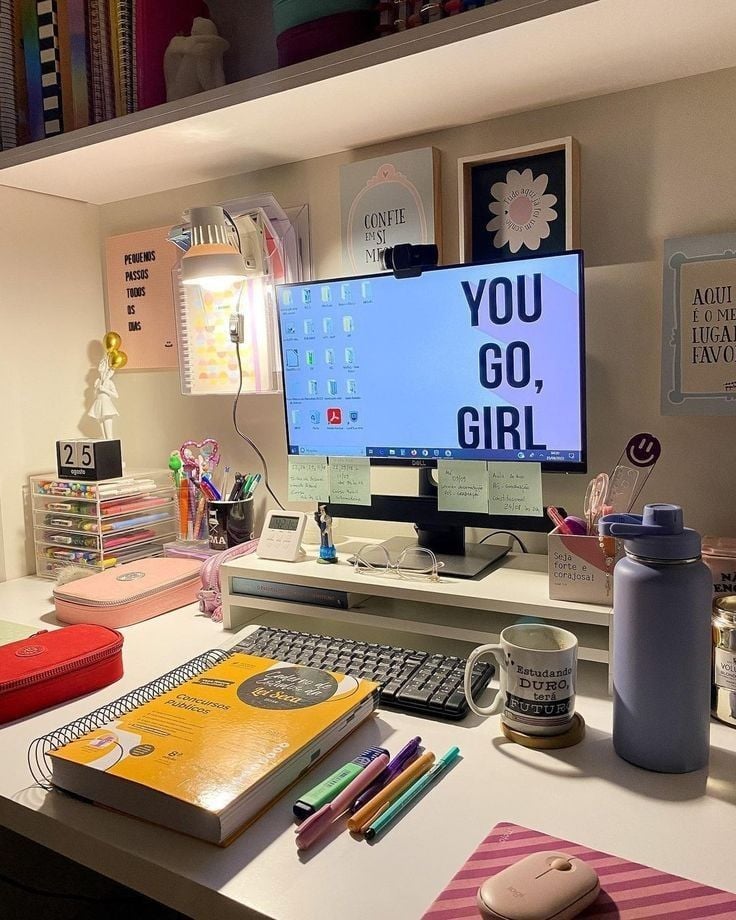
Older children often need computers or tablets for schoolwork.
Design the desk with cable management, charging stations, and organized technology storage.
Additionally, keeping technology organized reduces distractions and clutter.
The setup feels modern and practical.
25. Add Comfortable Seating
Even the best desk needs a comfortable chair.
Choose seating that supports good posture while remaining comfortable for extended use.
Additionally, comfortable seating helps children stay focused longer.
The workspace becomes a place where they actually enjoy spending time.
26. Create a Maker Space
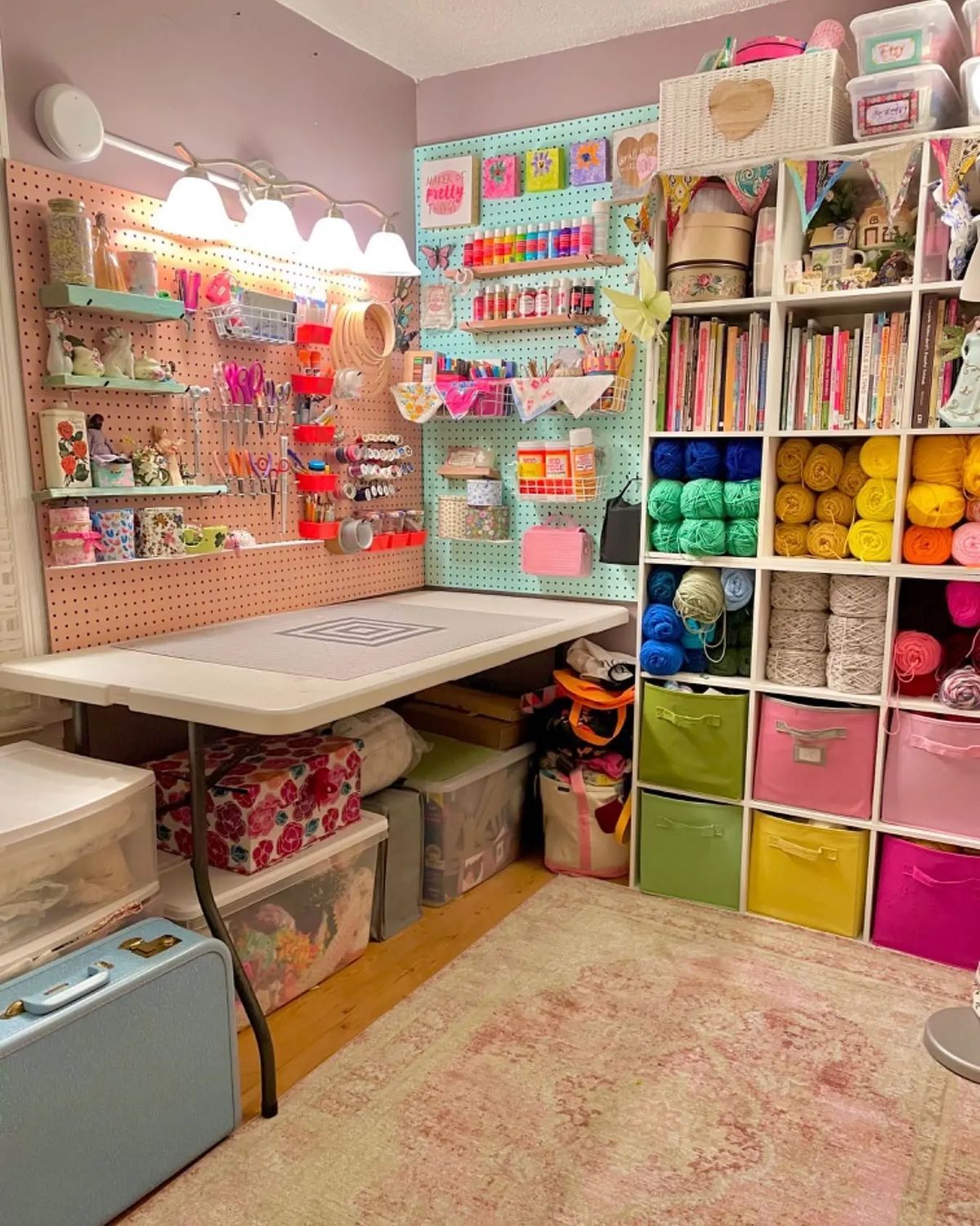
Maker spaces encourage hands-on creativity.
Include building materials, crafting tools, and project storage.
Additionally, children can experiment, invent, and solve problems in a dedicated creative environment.
The desk becomes a launchpad for innovation.
27. Add Personal Decorative Touches
Personalization helps children feel connected to their workspace.
Display favorite photos, artwork, collectibles, or inspirational decorations.
Additionally, personalized spaces feel more inviting and meaningful.
The desk reflects the child’s unique personality.
28. Design a Small-Space Desk Nook
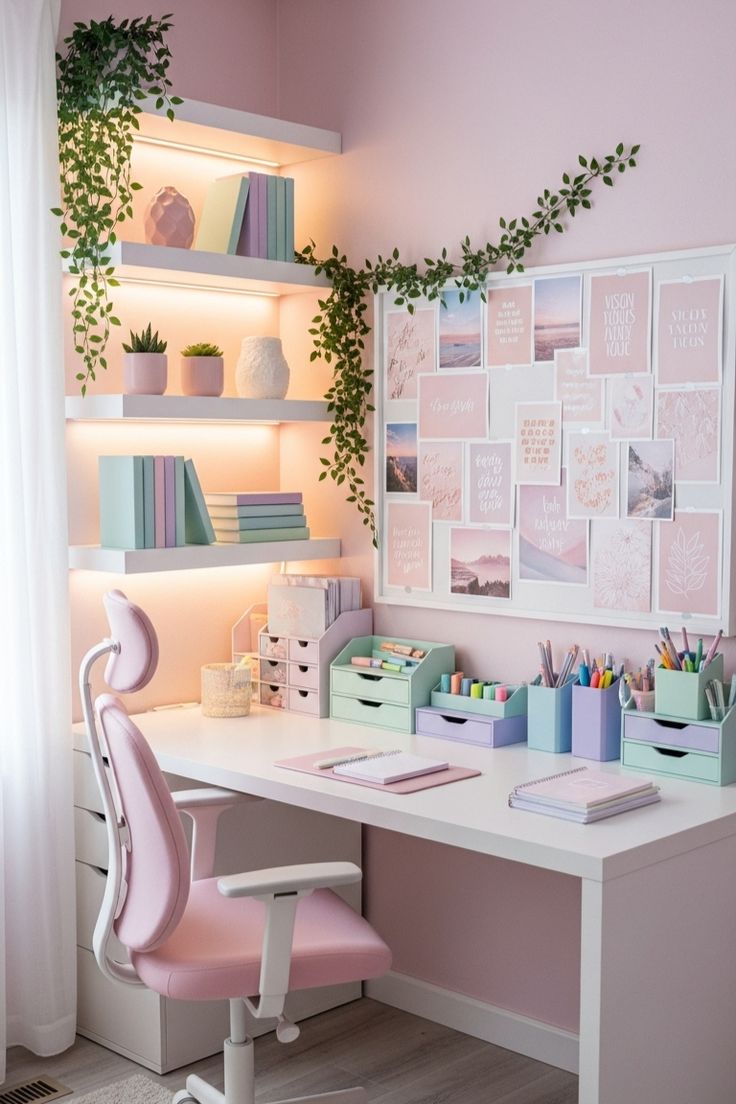
Even tiny spaces can support productive work areas. Small workstations pair perfectly with space-saving solutions like these loft bed ideas for kids rooms that save tons of space.
Use compact furniture and vertical storage to create a functional desk nook.
Additionally, small spaces often feel cozy and easier to maintain.
The setup proves that you do not need a large room to create an effective workspace.
29. Create a Flexible Learning and Creativity Hub
The ultimate kids desk combines homework, reading, art, and creative activities in one space.
Include adaptable storage, comfortable seating, good lighting, and inspiring decorations.
Additionally, flexible workspaces can evolve as children’s interests and needs change.
The result is a desk area that supports learning, creativity, and growth for years to come.
Final Thoughts
These smart kids desk ideas show that a workspace can be both practical and inspiring. Whether your child loves reading, drawing, crafting, science, or schoolwork, the right desk setup can help them stay organized while encouraging creativity. By combining storage, comfort, personalization, and thoughtful design, you can create a space where homework feels easier and imagination has room to grow. Every child deserves a desk that helps them learn, create, and dream big.
The right desk setup also works best when it complements the overall room design. For additional inspiration, explore these whimsical kids bedroom ideas that spark imagination and these cottagecore kids room ideas that feel straight out of Pinterest.