Space has a way of capturing kids’ imaginations completely. The idea that planets, stars, and galaxies stretch out endlessly in every direction is enough to fill young minds with wonder and curiosity.
And the great thing about space as a learning theme is that it works for every age.
Toddlers love the colours and the stars. Older kids dive deep into the science and the facts. And every age in between finds something completely fascinating to explore. And if you have been doing some brilliant homeschool activities lately, go check out 17 Homeschool Activities That Keep Learning Exciting because space themed learning fits so perfectly into a homeschool week that covers science, art, and creative writing all at once.
So let us blast off into these 29 space activities that future astronauts are going to absolutely love.
1. Build a Rocket Ship
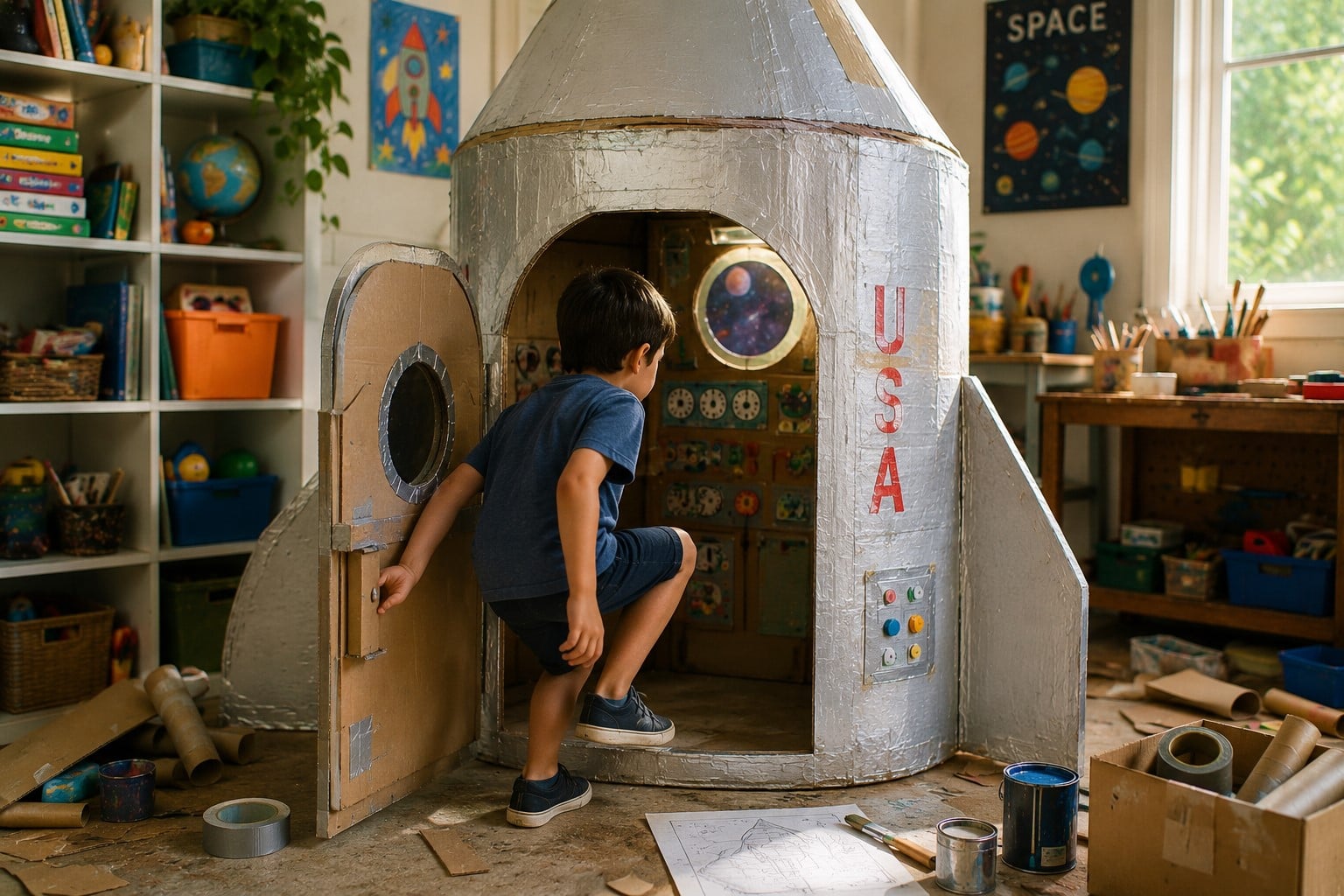
Use cardboard boxes, tubes, and paint to build a life sized rocket ship. Paint it silver and add control panel details inside using bottle caps, buttons, and drawn dials. Let kids climb in and blast off to wherever their imagination takes them.
A cardboard rocket ship is one of those magical play installations that kids return to for weeks.
Once it is built it becomes the centre of every space adventure they have. They count down, they blast off, they land on imaginary planets, and they return home as heroes. The building process itself is brilliant engineering play that takes a whole afternoon and every minute of it is genuinely enjoyable.
So save those big cardboard boxes and start collecting tubes because this project is absolutely worth every bit of effort.
For more wonderful large scale creative project ideas that create this kind of lasting imaginative play, go explore 35 Summer Art Projects for Kids That Deserve a Spot on the Fridge because those projects combine that same big ambitious creative energy with results that kids are genuinely proud of.
2. Planet Painting
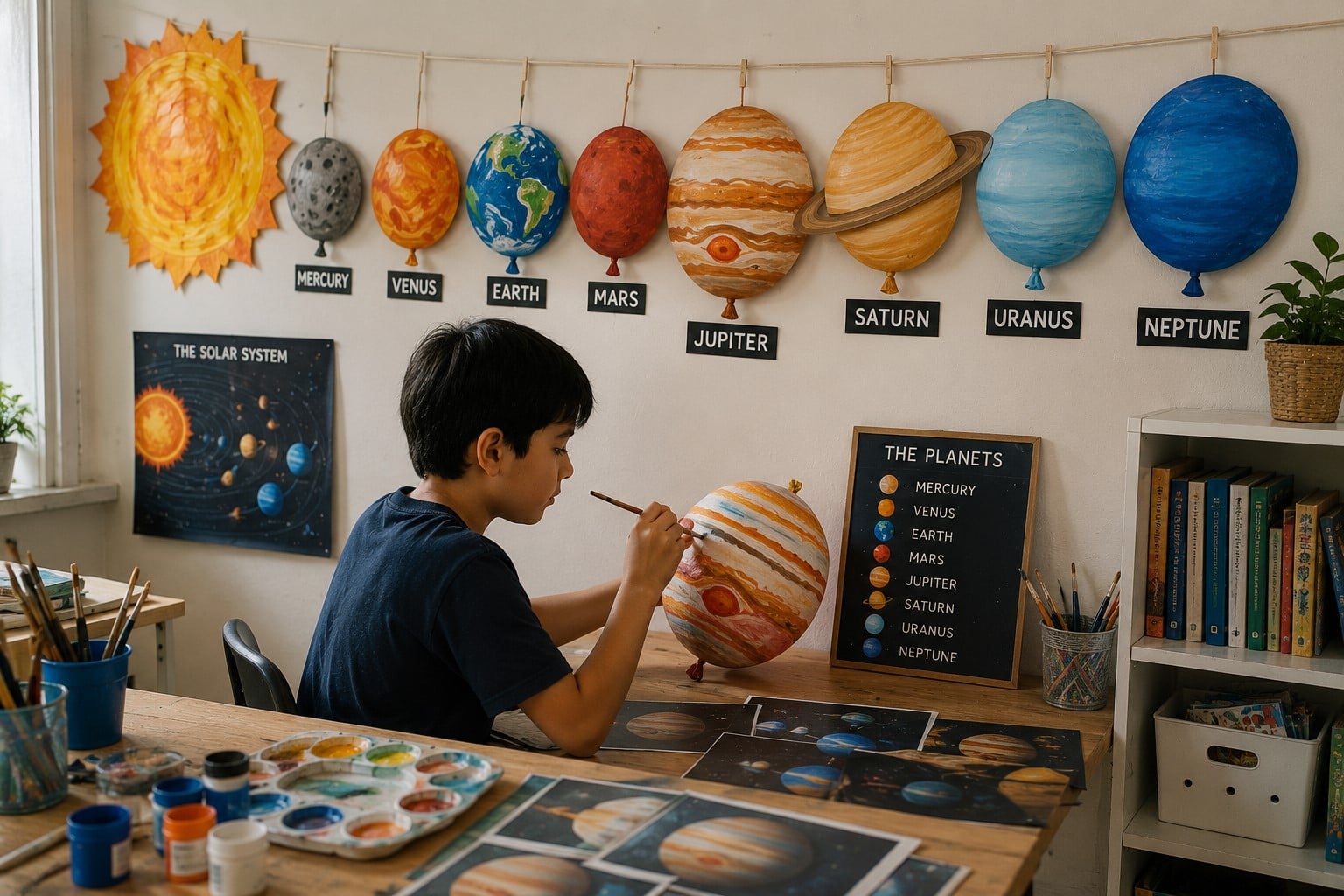
Paint all eight planets of the solar system using balloons as guides for size and shape. Research the colours and surface features of each planet before painting. Display them in order from the sun across a wall or a string.
Planet painting teaches science and art simultaneously in the most beautiful way.
Kids who research their planets before painting them absorb a remarkable amount of scientific information through the process of trying to replicate what they see.
Jupiter’s red spot, Saturn’s rings, Neptune’s deep blue surface. Each detail they include is a piece of knowledge that sticks because they chose to paint it themselves.
3. Stargazing Night
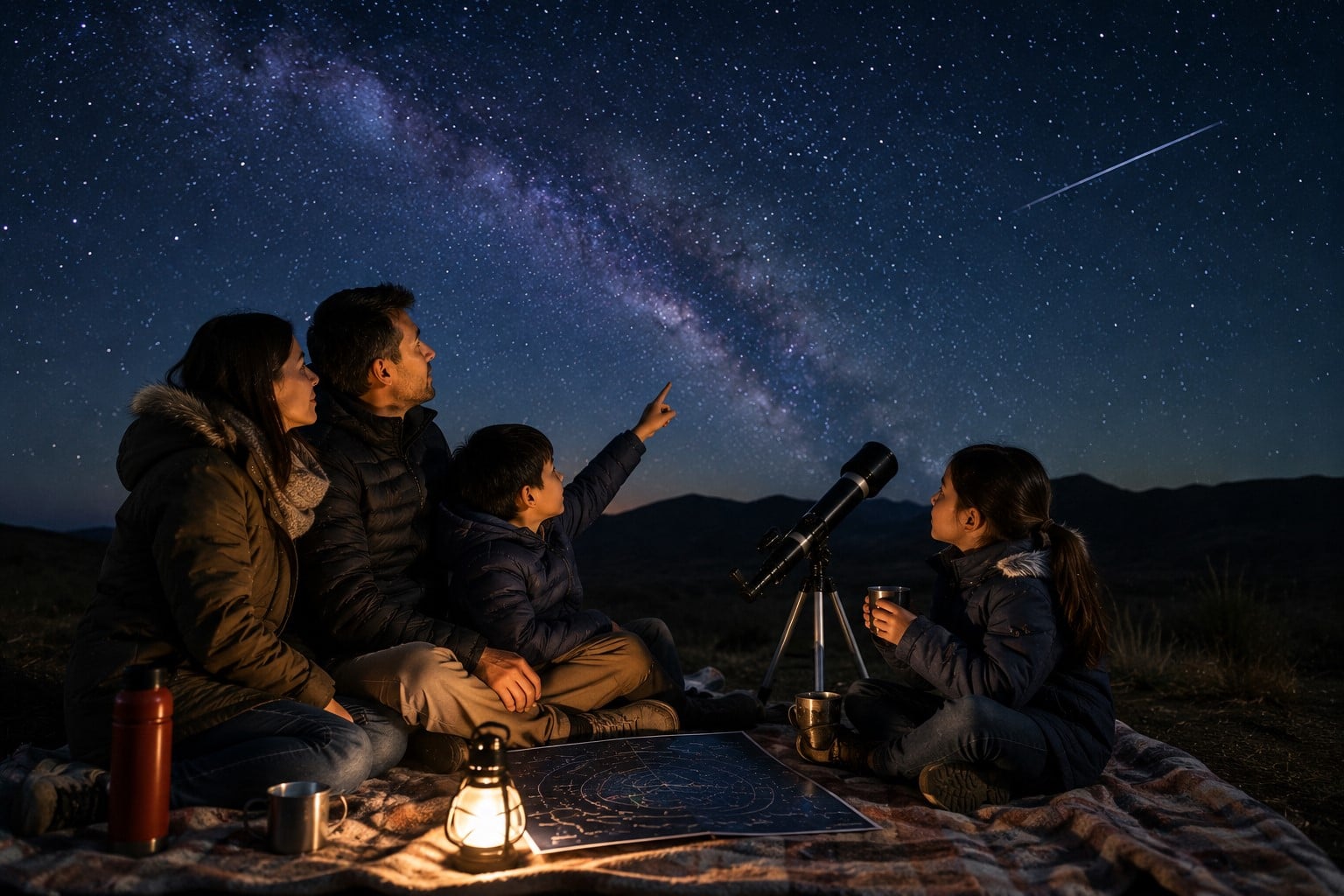
On a clear night head outside with a blanket and a star map. Identify constellations, find planets, and watch for satellites crossing overhead. Bring hot chocolate and stay out until everyone is ready to come inside.
Stargazing is one of those experiences that creates genuine wonder in kids of every age.
The vastness of what they see above them prompts questions that no textbook can fully answer. Let those questions sit and wonder together rather than rushing to explain everything immediately.
That shared sense of awe and mystery is one of the most valuable things you can give a curious child.
Go check out 23 Quiet Activities for Kids for Peaceful Afternoons at Home for more wonderful calm and wonder filled activity ideas that create this same quality of deep peaceful engagement in curious and imaginative children.
4. Space Sensory Bin
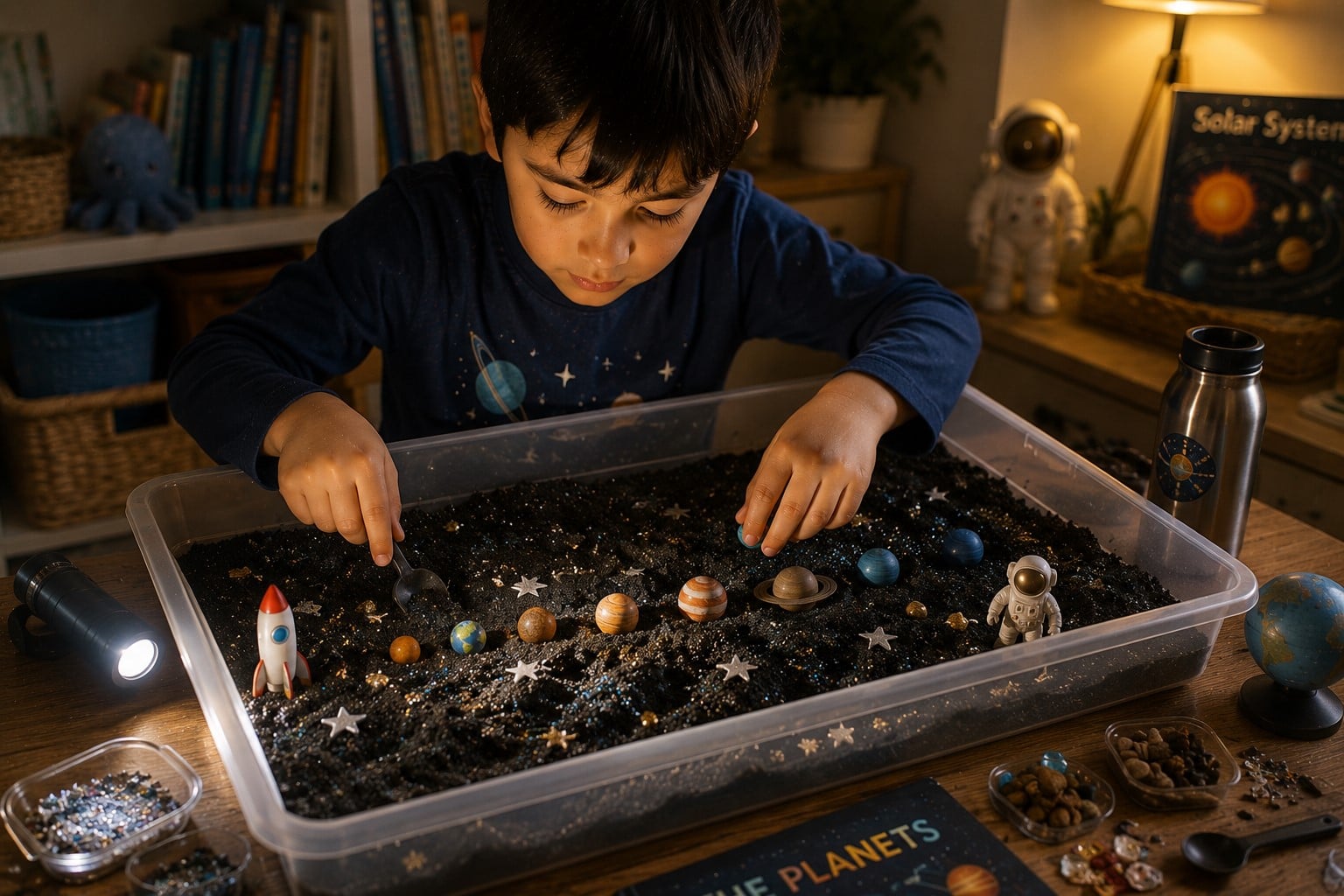
Fill a bin with black rice or black kinetic sand. Add small planet figures, star shaped beads, silver glitter, and tiny rocket toys. Let kids explore and play freely.
Space sensory bins are deeply absorbing for younger children especially.
The dark base material creates a brilliant space like backdrop for all the elements buried and scattered within it. Kids dig for planets, arrange them in order, and create space adventures with the small figures.
Add a small torch so kids can shine light across the dark surface for an extra magical effect.
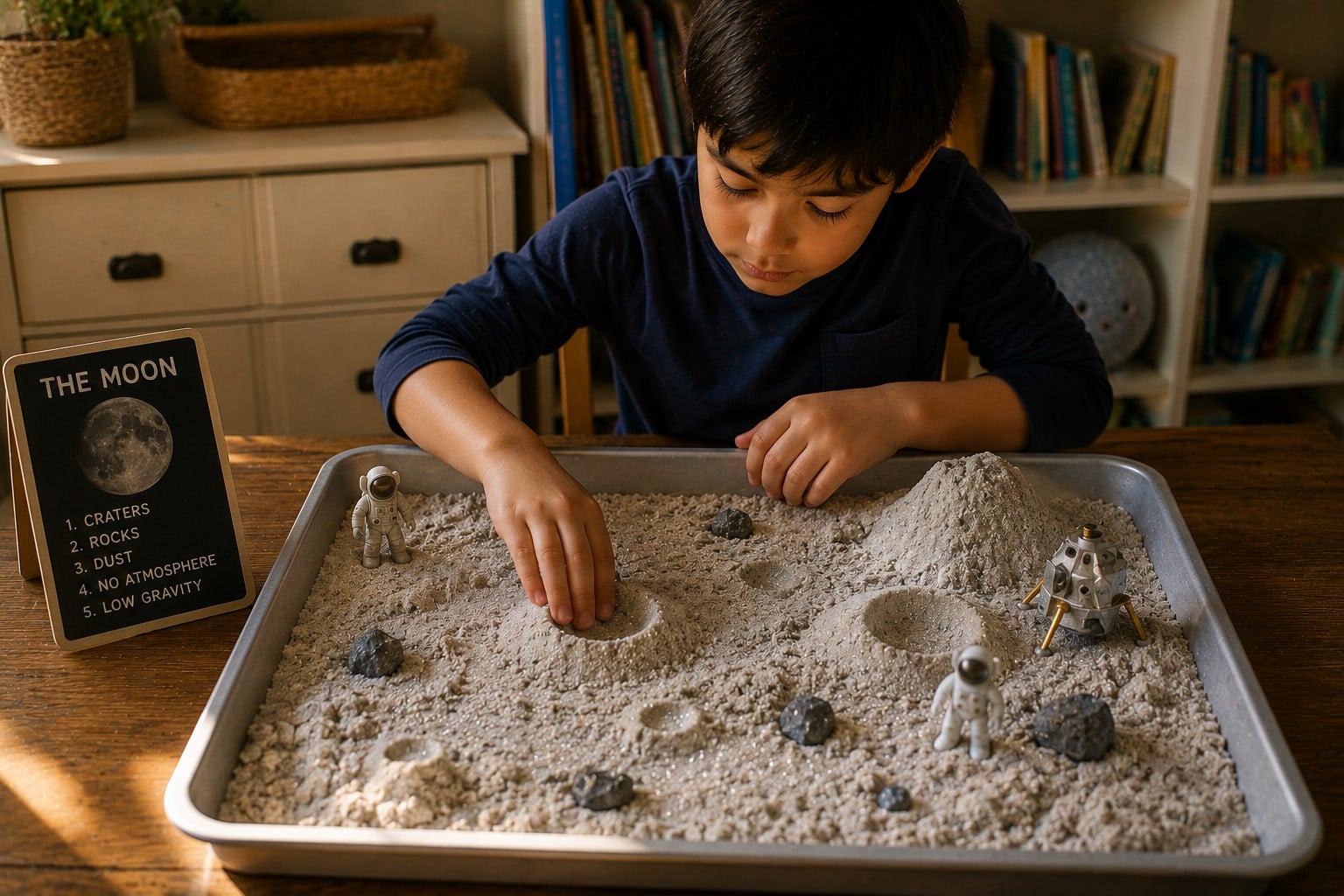
5. Moon Sand Exploration
Mix moon sand using eight cups of plain sand and one cup of cornflour. Add a little silver glitter for sparkle. Let kids mould craters, mountains, and moon landscapes in a tray.
Moon sand has a beautiful crumbly texture that holds its shape when pressed and falls apart when touched gently.
Kids find the texture endlessly fascinating and they can play with it for a really long time. Talk about what the surface of the moon is really like while they play.
Craters from meteor impacts, extreme temperatures, no atmosphere. The conversation flows naturally when hands are busy with something tactile and interesting.
For more wonderful sensory exploration activities that combine physical play with genuine science learning, go explore 21 Daycare Activities That Keep Little Kids Happily Engaged because those sensory ideas work brilliantly as part of a space themed learning week.
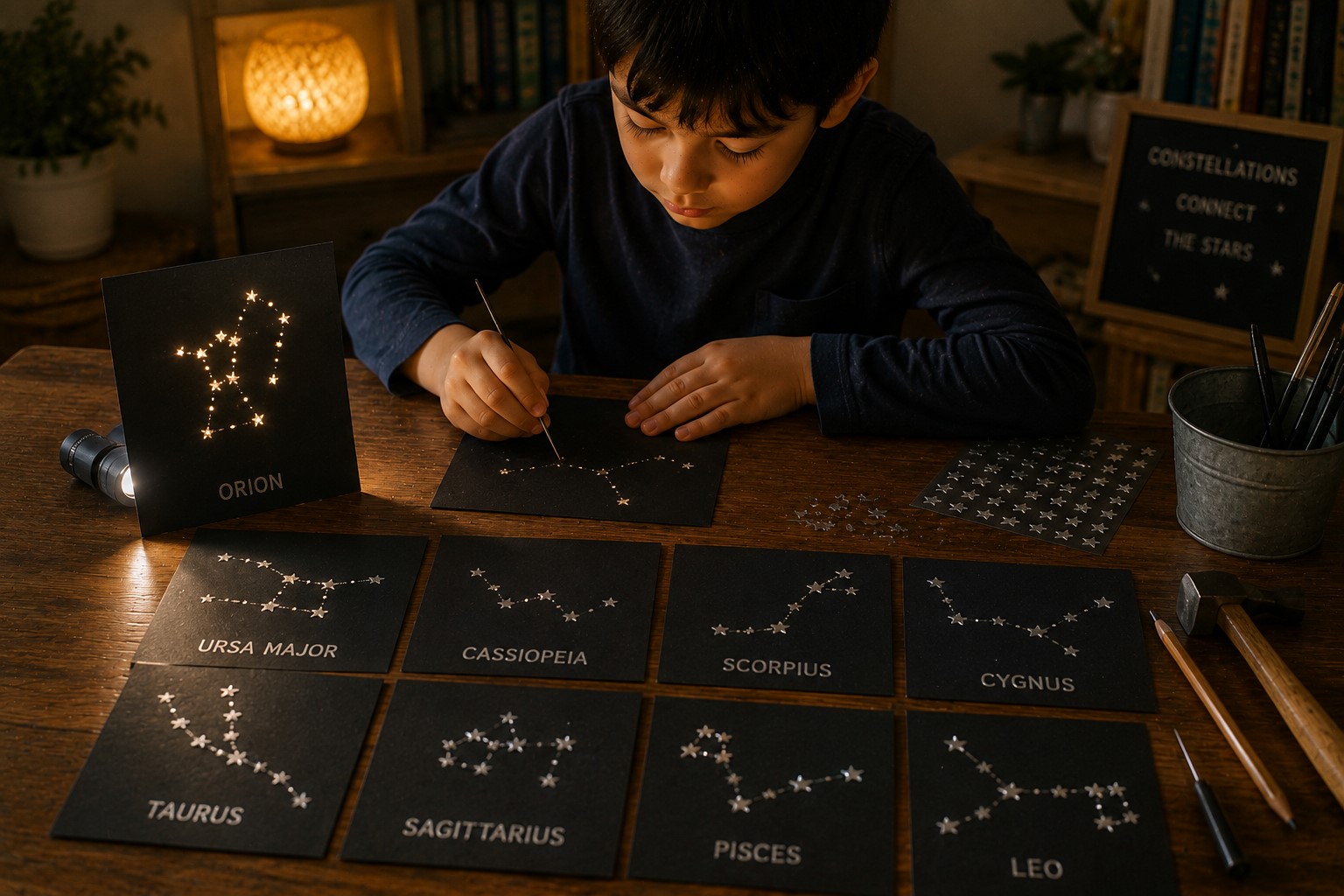
6. Constellation Craft
Poke holes in black card in the pattern of different constellations. Hold the card up to a light source and watch the stars appear. Or glue silver star stickers onto black paper in constellation patterns.
Constellation crafts are quick to make and genuinely beautiful to look at.
Kids who make their own constellation cards learn the patterns in a way that looking at a chart never achieves. The physical act of placing each star in the right position embeds the pattern in their memory.
Make a full set of the most famous constellations and use them as a reference guide during stargazing nights.
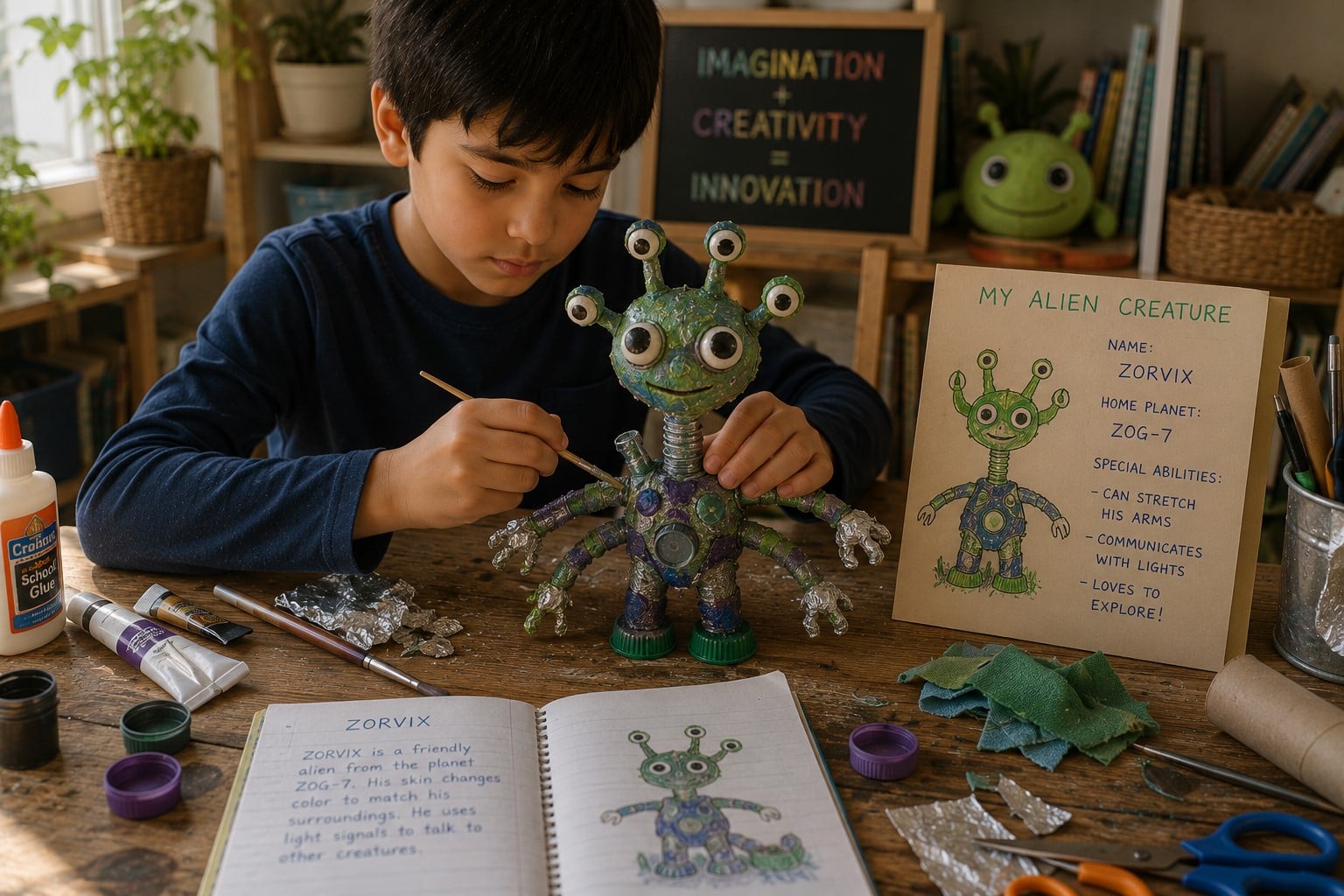
7. Alien Craft Making
Give kids clay, recycled materials, and craft supplies. Challenge them to design and build their own alien creature from another planet. Give the alien a name, a home planet, and three special abilities.
Alien craft making is wonderful for creative thinking and imaginative writing.
The designing and building process prompts kids to think about what kind of environment their alien lives in and how its body is adapted to survive there. That scientific thinking about adaptation and environment is genuinely sophisticated for the age and happens completely naturally through the play.
Go take a look at 19 Garden Activities for Kids That Make Outdoor Time More Fun because that same scientific thinking about living things and their environments connects beautifully with space themed learning about life on other planets.
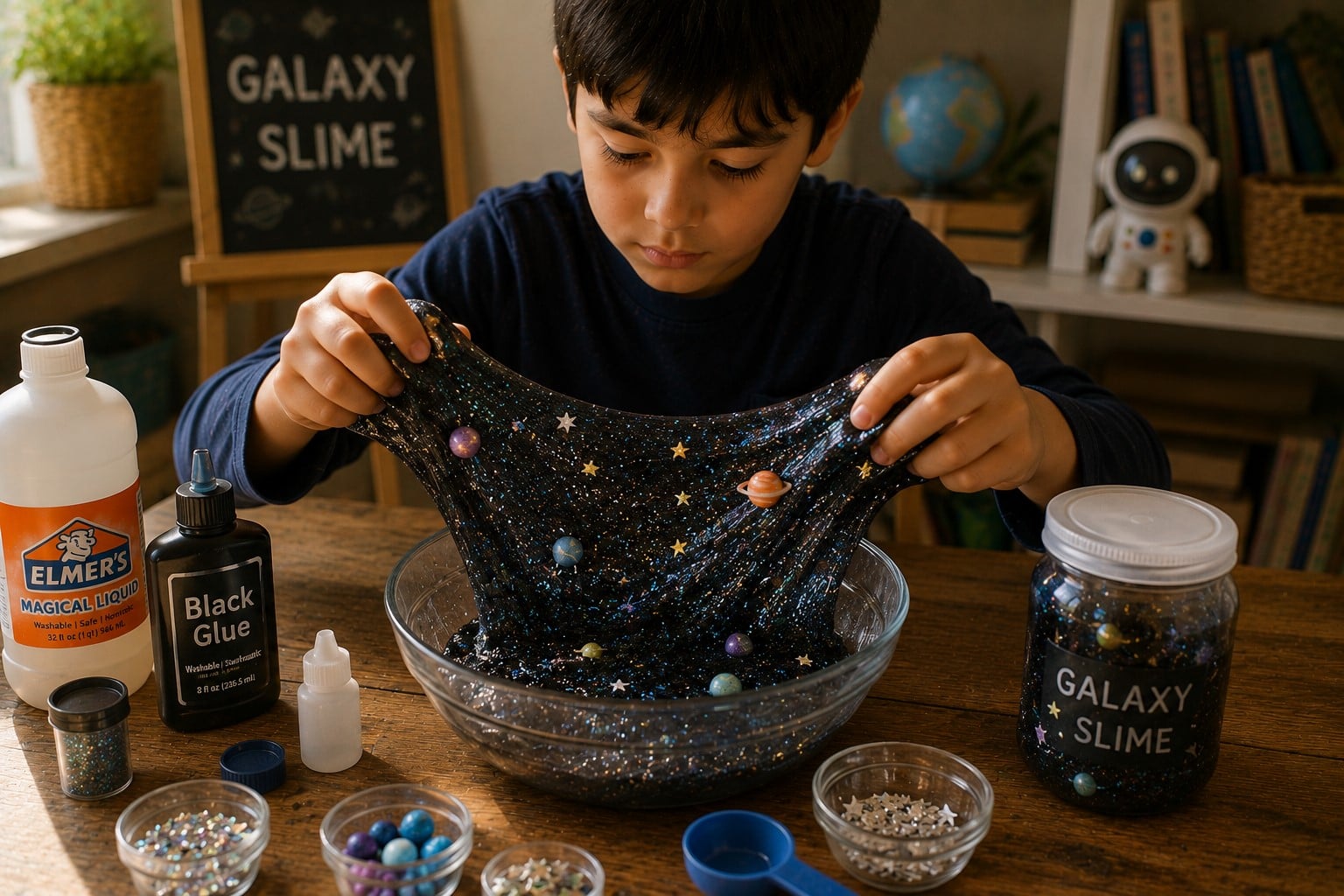
8. Space Slime
Make black slime with silver glitter mixed through it. Add small star beads and tiny planet figures as you mix. The finished slime looks like a handful of the galaxy itself.
Space slime is one of those crafts that kids find completely irresistible.
The combination of the satisfying slime texture with the beautiful galaxy appearance makes it both a sensory toy and a stunning display piece.
Kids can stretch it, pull it, and watch the glitter swirl through it for ages. Store it in a clear jar so the galaxy effect is visible when it is not being played with.
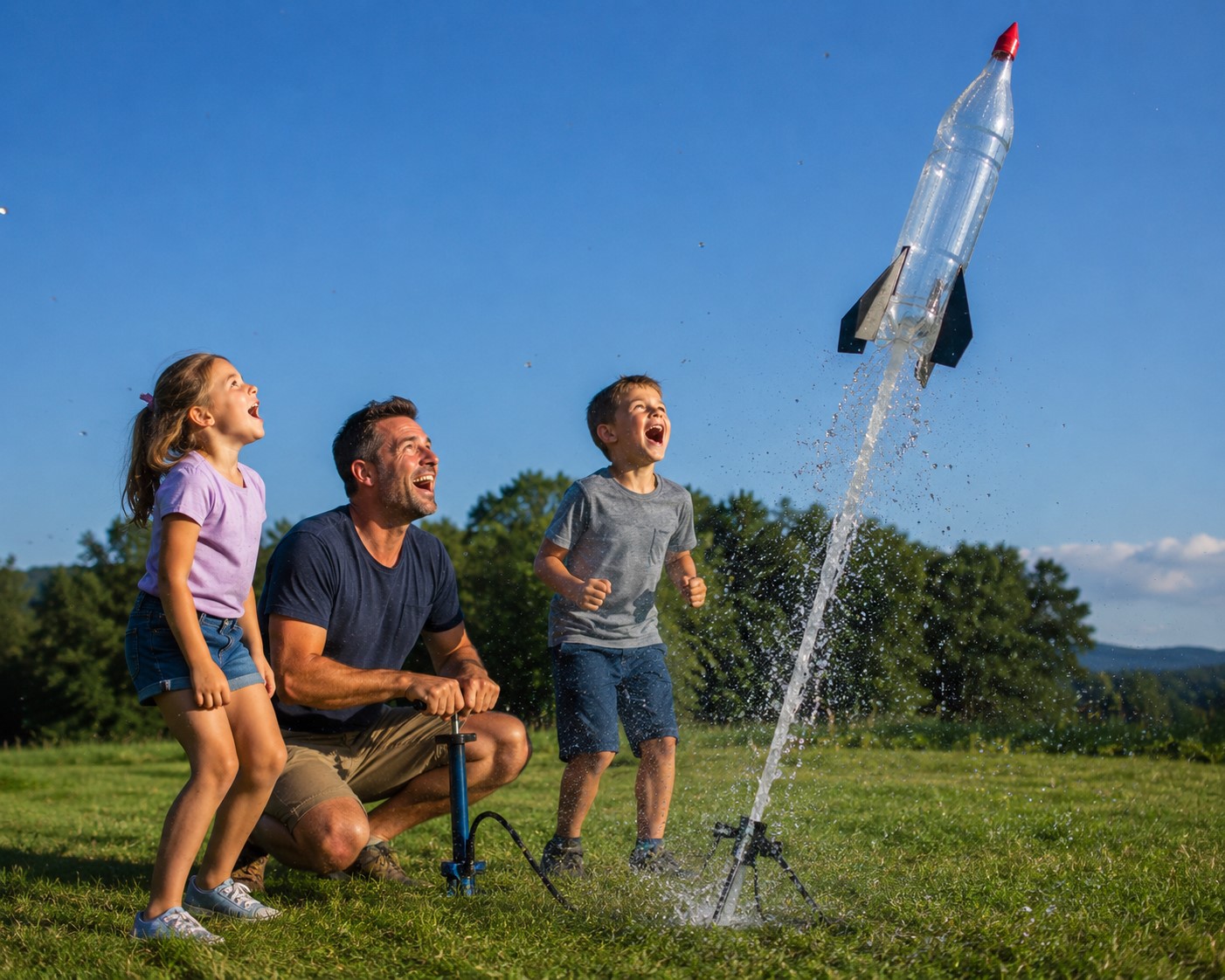
9. Rocket Launch Science
Make a simple bottle rocket using a plastic bottle, a cork, water, and a bike pump. Head outside to an open space. Pump air into the water filled bottle and watch it launch.
Bottle rockets never fail to create an absolutely spectacular moment of excitement.
The sudden launch, the arc through the air, and the landing create the kind of real world science demonstration that kids remember forever. Talk about thrust, air pressure, and Newton’s third law of motion in the simplest possible language while you set up the experiment. The science makes complete sense when they see it happen right in front of them.
For more brilliant science experiment ideas that create these kinds of spectacular and memorable moments, go check out 25 Planet Craft Ideas That Make Learning About Space Exciting because those projects combine hands on science with beautiful creative making in the most brilliant way.
10. Space Themed Obstacle Course
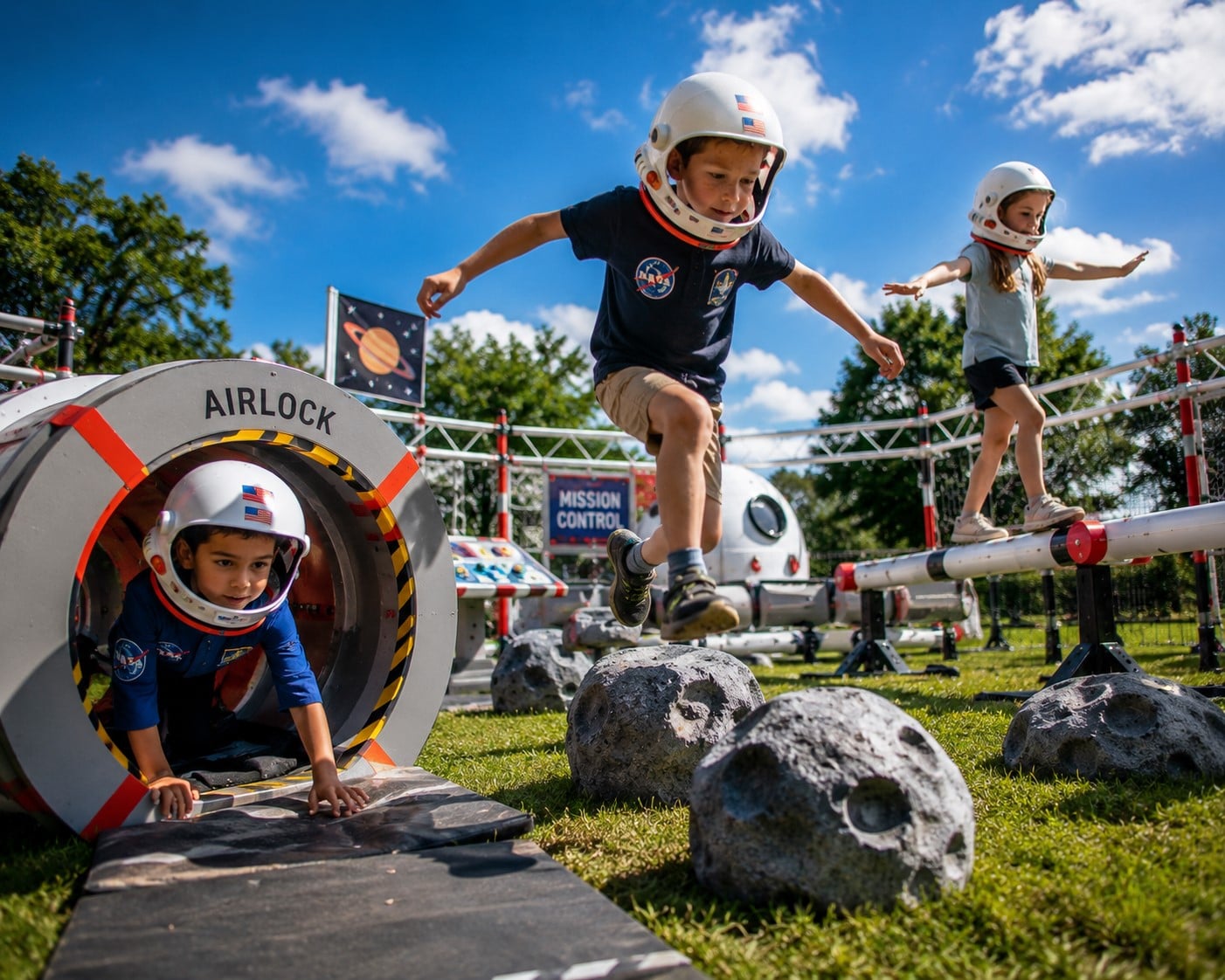
Design an obstacle course with a full space narrative. Crawl through the airlock tunnel. Jump between asteroid stepping stones. Walk the balance beam across the space station. Spin three times to simulate zero gravity.
A space themed obstacle course combines physical activity with imaginative play perfectly.
Kids who are not always motivated by plain physical challenges become completely fired up when there is a space adventure story attached to every element. They run faster, try harder, and stay engaged much longer because they are not just completing a course. They are surviving a mission in outer space.
11. Galaxy Watercolour Art
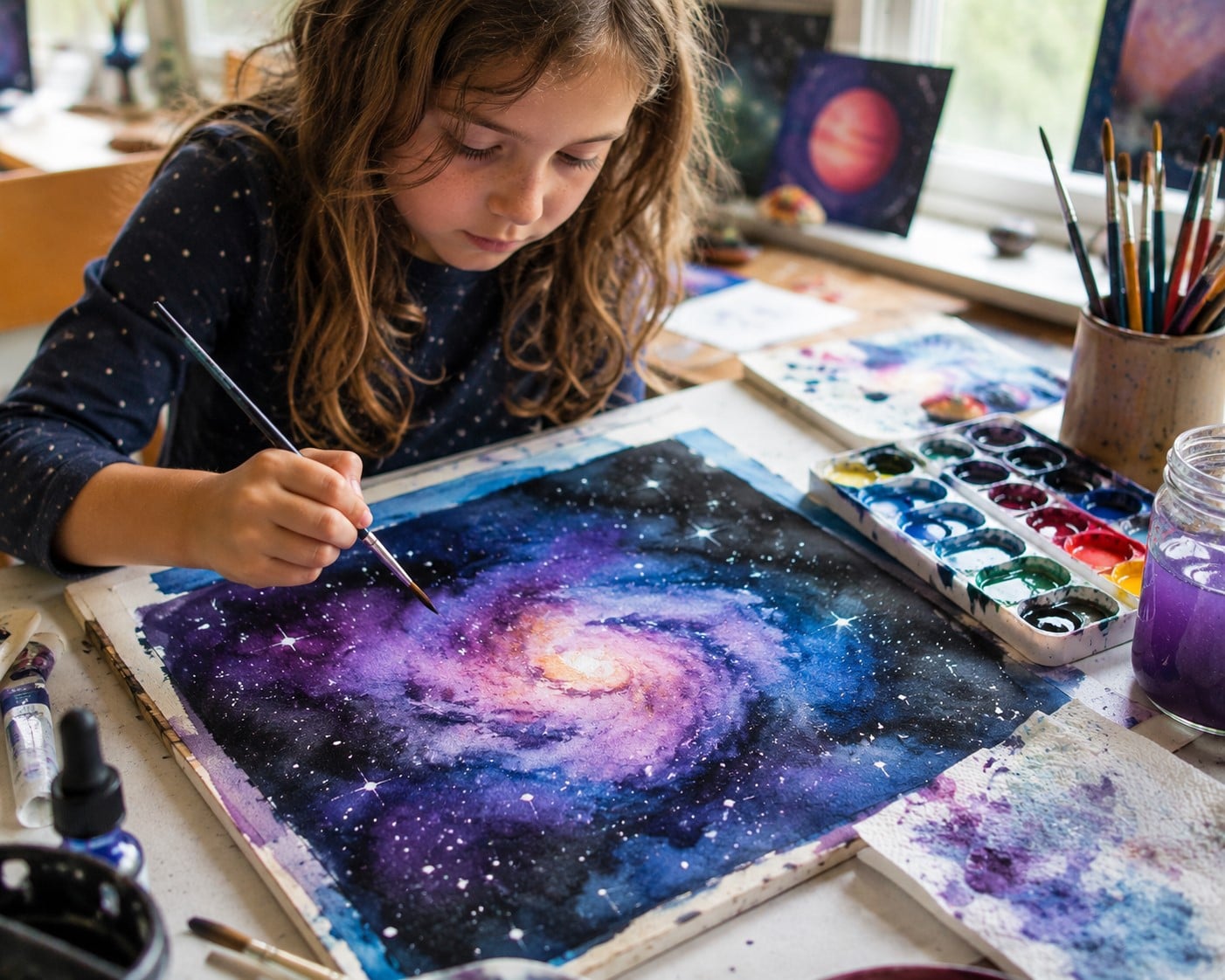
Wet a piece of watercolour paper completely. Drop deep blue, purple, and black paint across the wet surface and let it bleed and blend freely. Add tiny white dots with a toothbrush flick for stars. Let dry completely.
Galaxy watercolour art is honestly one of the most breathtaking things kids can make.
The wet on wet technique creates beautiful organic blending that looks genuinely professional. The toothbrush star spatter is deeply satisfying and creates a realistic starfield effect.
Every single galaxy painting is completely unique because the wet paint moves differently every time. These look absolutely stunning framed and displayed.
Go explore 21 Water Activities for Kids That Make Summer Extra Fun for more wonderful water based art and activity ideas that use that same beautiful fluid and unpredictable quality that makes galaxy painting so magical.
12. Space Journaling
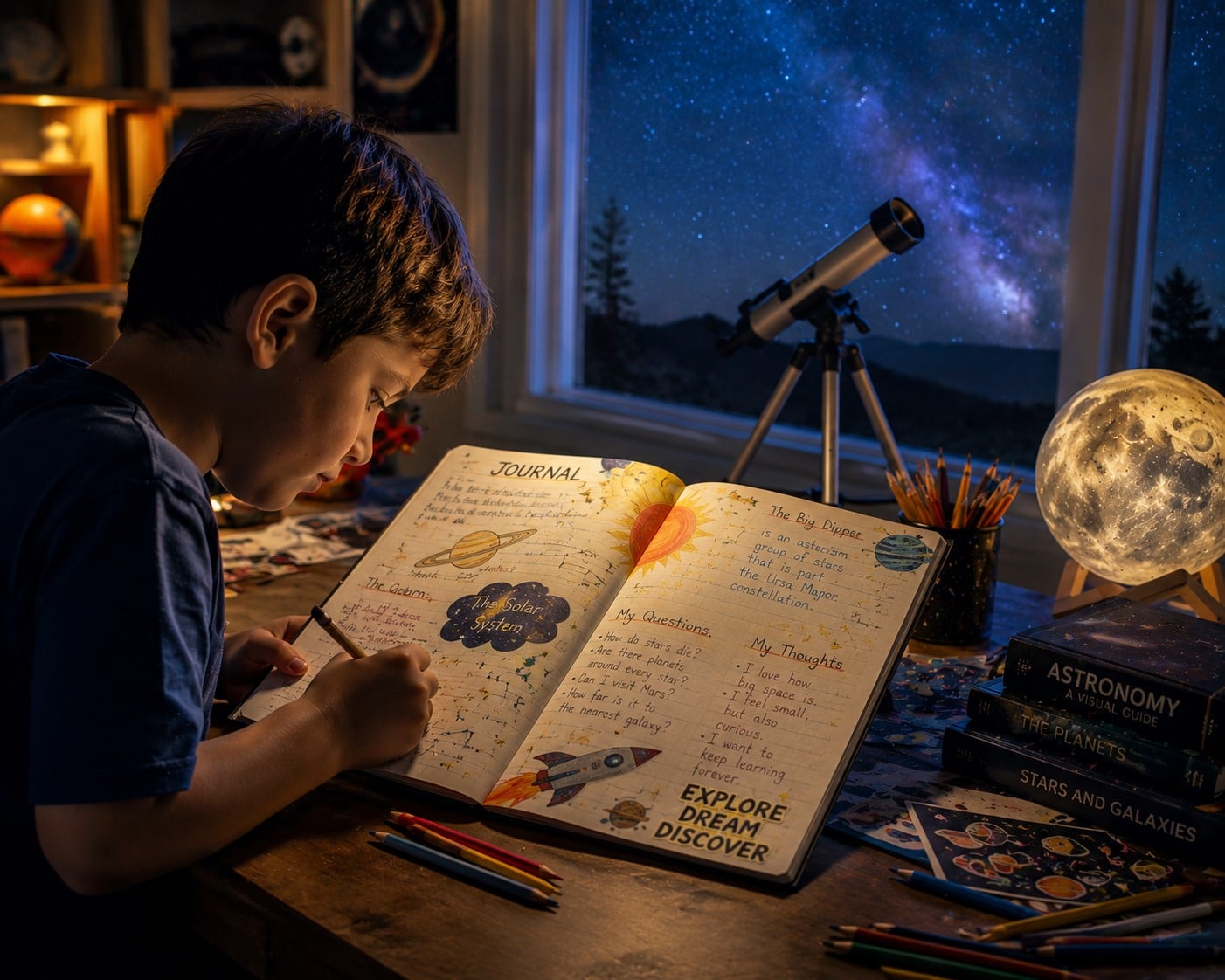
Give each child a special space journal. Write and draw in it after every space activity, every stargazing session, and every documentary watched. Include facts learned, questions wondered, and feelings felt.
Space journals become genuinely treasured records of a learning journey.
Kids look back at earlier entries and see how their knowledge and understanding has grown. The questions section is particularly valuable because it shows kids that not knowing something is the beginning of learning rather than a failure.
Keep the journals going for a whole term or a whole year for a really impressive and meaningful record.
13. Astronaut Training Course
Design a series of physical challenges that astronauts might train for. Balance challenges for weightlessness training. Breathing exercises for oxygen rationing. Strength challenges for spacewalk preparation.
Astronaut training courses turn fitness activities into a purposeful and exciting mission.
Kids throw themselves into physical challenges with much more commitment when there is a narrative reason behind each activity. Frame every exercise as essential preparation for their upcoming space mission. Keep a training log where kids record their progress and improvement over multiple sessions.
For more brilliant physical challenge ideas that combine movement with imaginative narrative, go check out 31 Forest School Activities for Kids That Encourage Outdoor Play because those outdoor physical challenges connect beautifully with astronaut training themed homeschool activities.
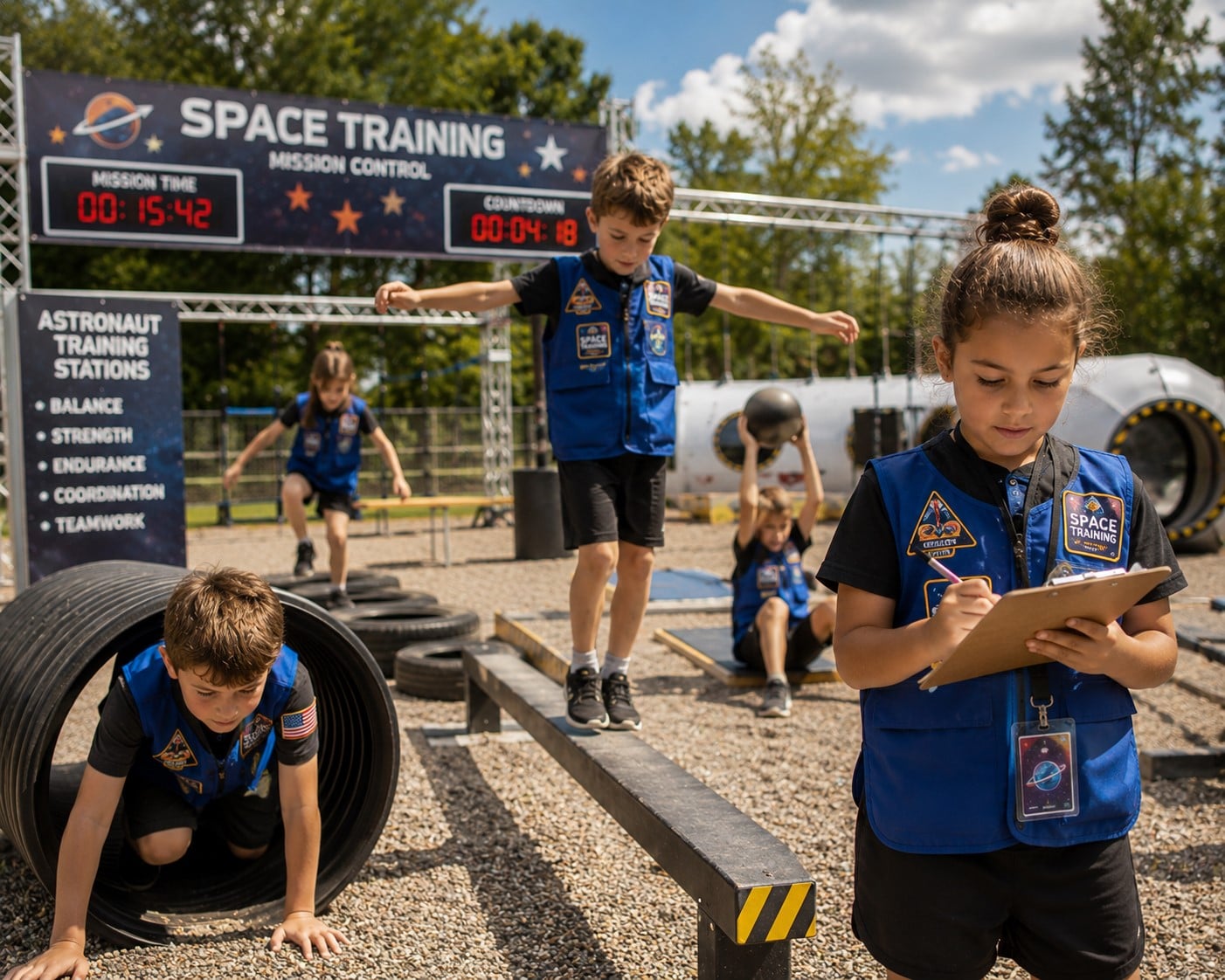
14. Solar System Mobile
Cut planet shapes from card in the correct relative sizes. Paint each one accurately. Hang them from a wooden dowel or a branch in the correct order from the sun using different lengths of thread.
A solar system mobile is one of the most beautiful and educational decorations a child’s bedroom can have.
The making process requires research into sizes, colours, and distances that embeds real scientific knowledge. The finished mobile moves gently in air currents and creates a constant visual reminder of the solar system’s structure.
Kids who make their own solar system mobile always know the planets in order from that point forward.
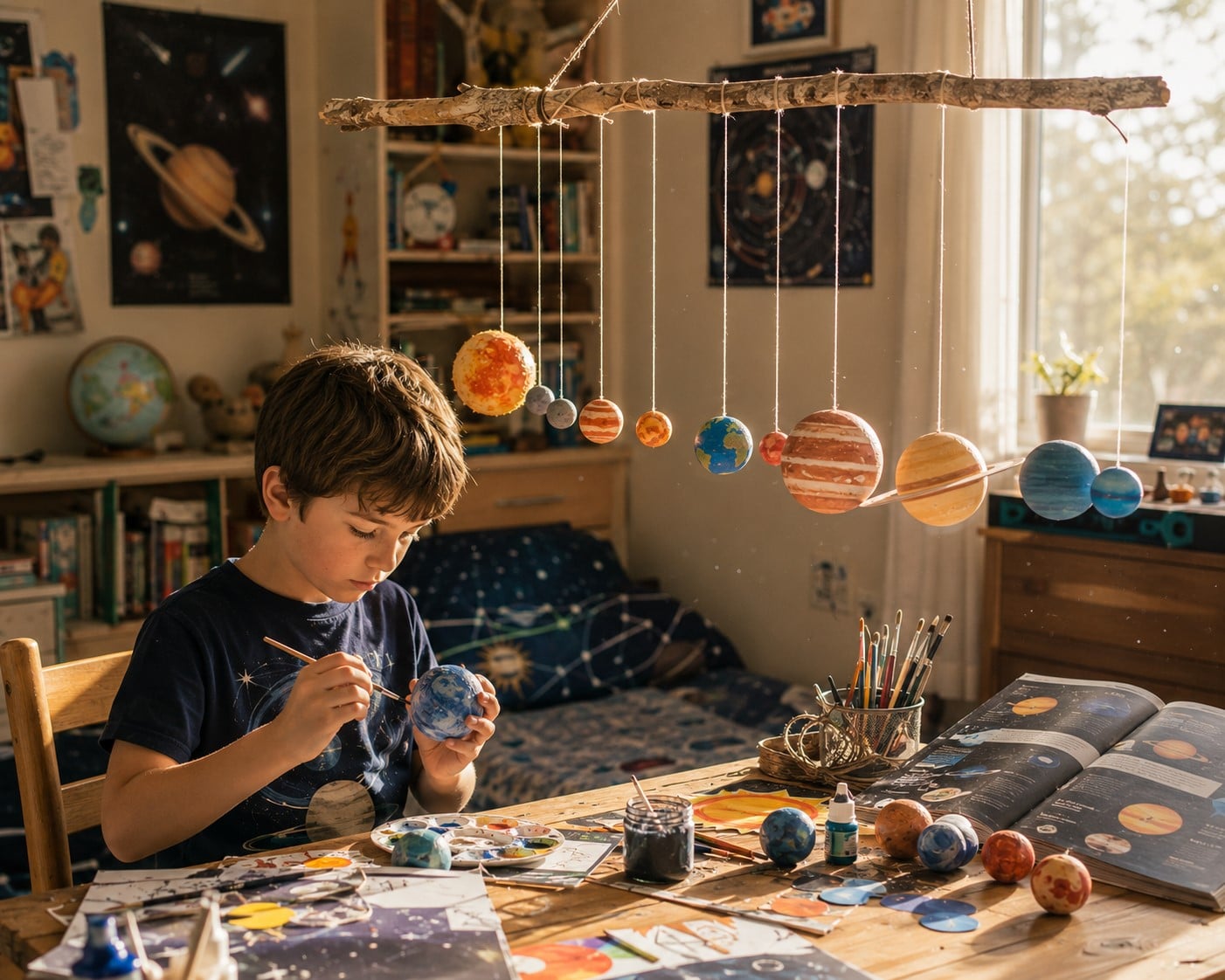
15. Space Themed Story Writing
Give kids a space story starter and let them write or dictate where it goes. The astronaut opened the hatch and saw something nobody had ever seen before. Or the signal from deep space turned out to be a message and it said something extraordinary.
Space story writing sparks some of the most creative and ambitious writing kids ever produce.
The freedom of space as a setting removes all the familiar constraints and opens up unlimited imaginative possibilities. Kids who struggle to write about everyday subjects often produce their best work when the setting is as boundless and extraordinary as outer space. Share the stories aloud and celebrate every single one.
For more brilliant creative writing and storytelling ideas that unlock kids imaginations in this same powerful way, go take a look at 37 Nature Activities for Kids That Feel Like Pure Adventure because that same sense of adventure and wonder that drives space stories drives nature stories just as powerfully.
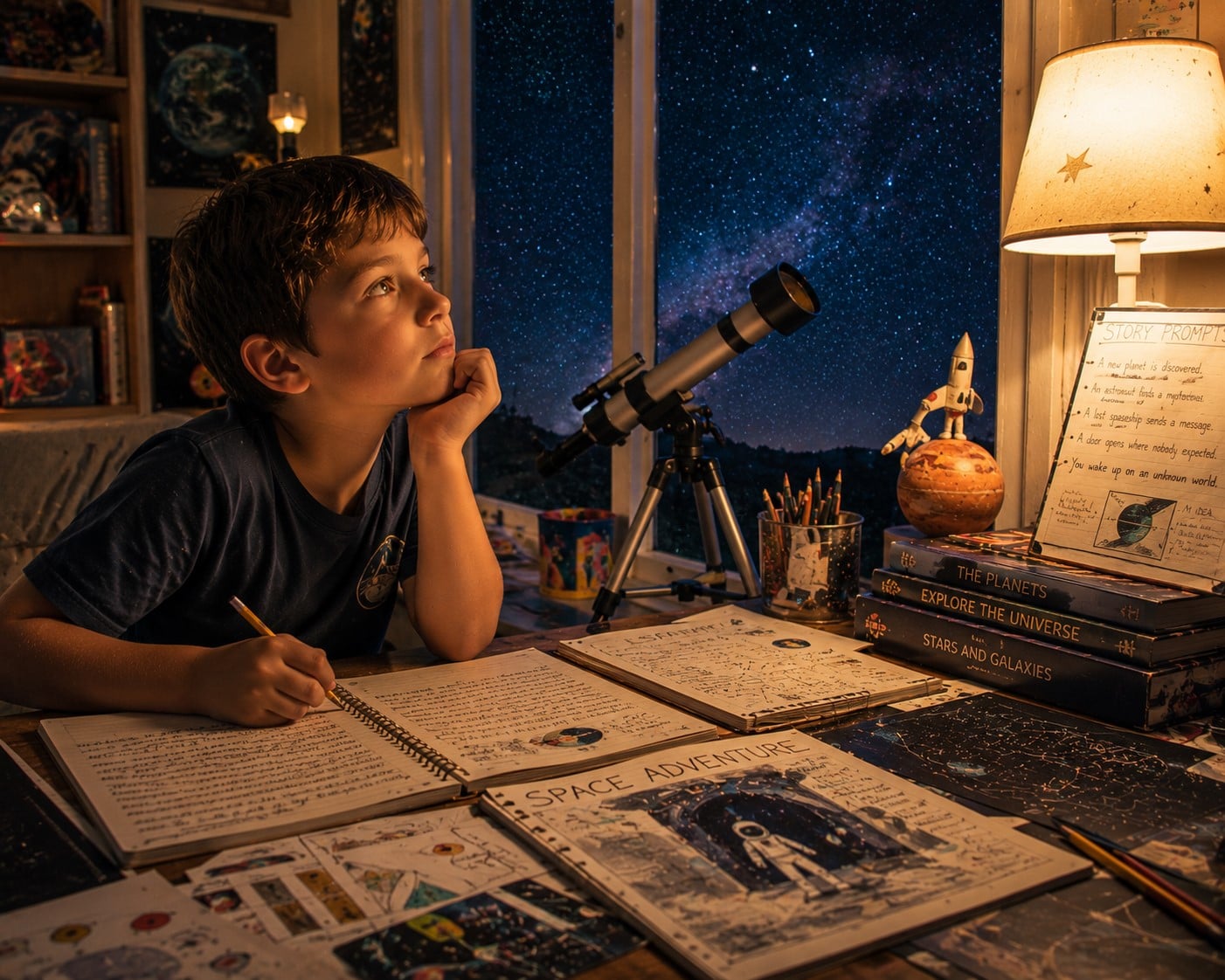
16. Planetarium Visit or Virtual Tour
Visit a local planetarium if one is accessible. If not use one of the many free virtual planetarium programmes available online. Lie back and watch the stars and planets move across the ceiling or screen.
Planetarium experiences create a sense of scale that nothing else can replicate.
The feeling of being surrounded by the universe creates a genuine emotional response in kids that motivates deeper learning. Even a virtual planetarium experience on a large screen in a darkened room is genuinely powerful.
Follow the visit with a discussion and a drawing session to consolidate what was seen and felt.
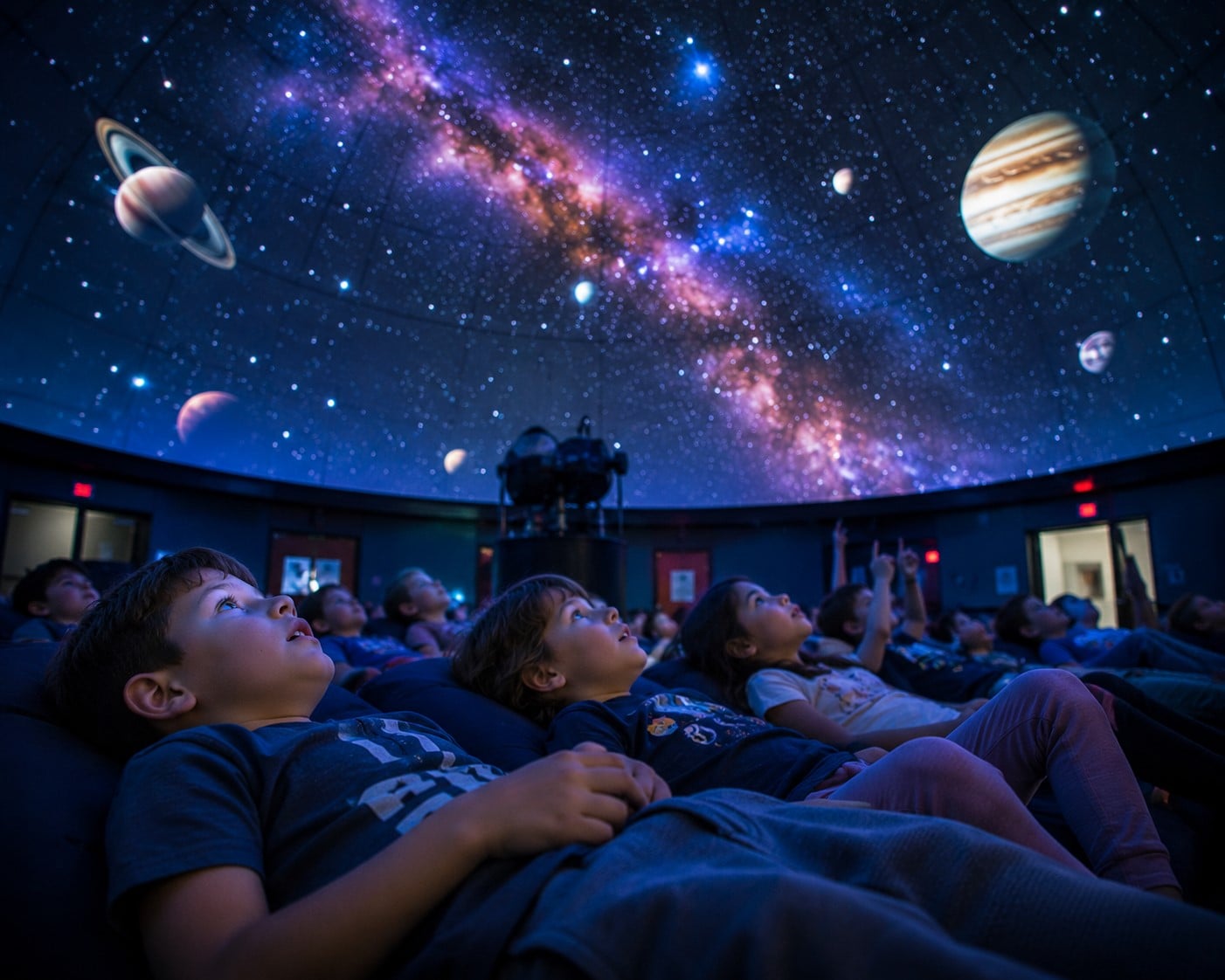
17. Moon Phase Tracker
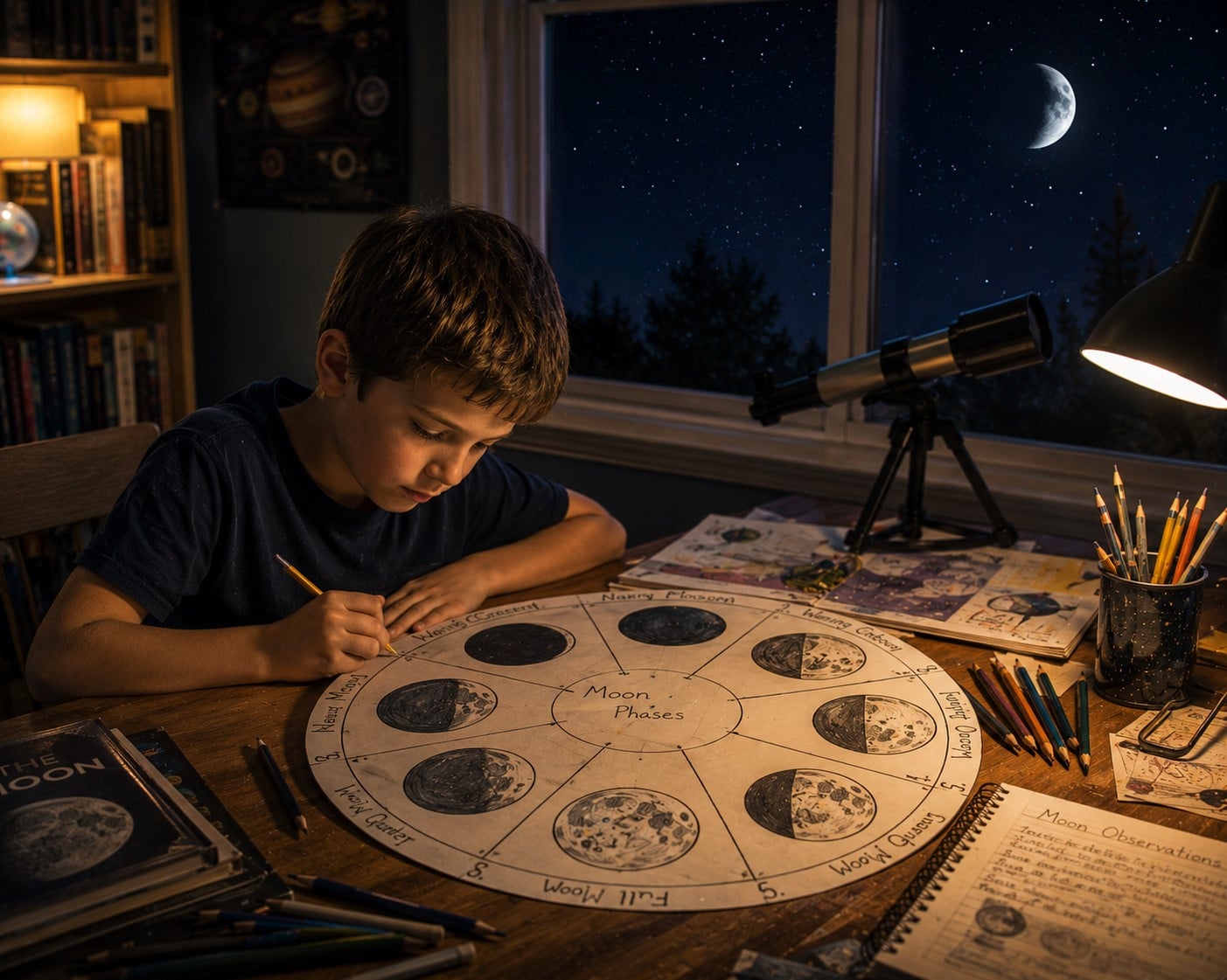
Make a moon phase tracker using a circular piece of card divided into eight sections. Each night observe the moon and draw what you see in the corresponding section. Track a full lunar cycle over a month.
Moon phase tracking is one of the most satisfying long term science projects kids can do.
The gradual change from new moon to full moon and back again becomes visible and meaningful when they have drawn each phase themselves.
Kids who track the moon develop a real intuitive understanding of the lunar cycle that reading about it never creates. Display the completed tracker prominently as a genuine scientific record.
18. Space Themed Cooking
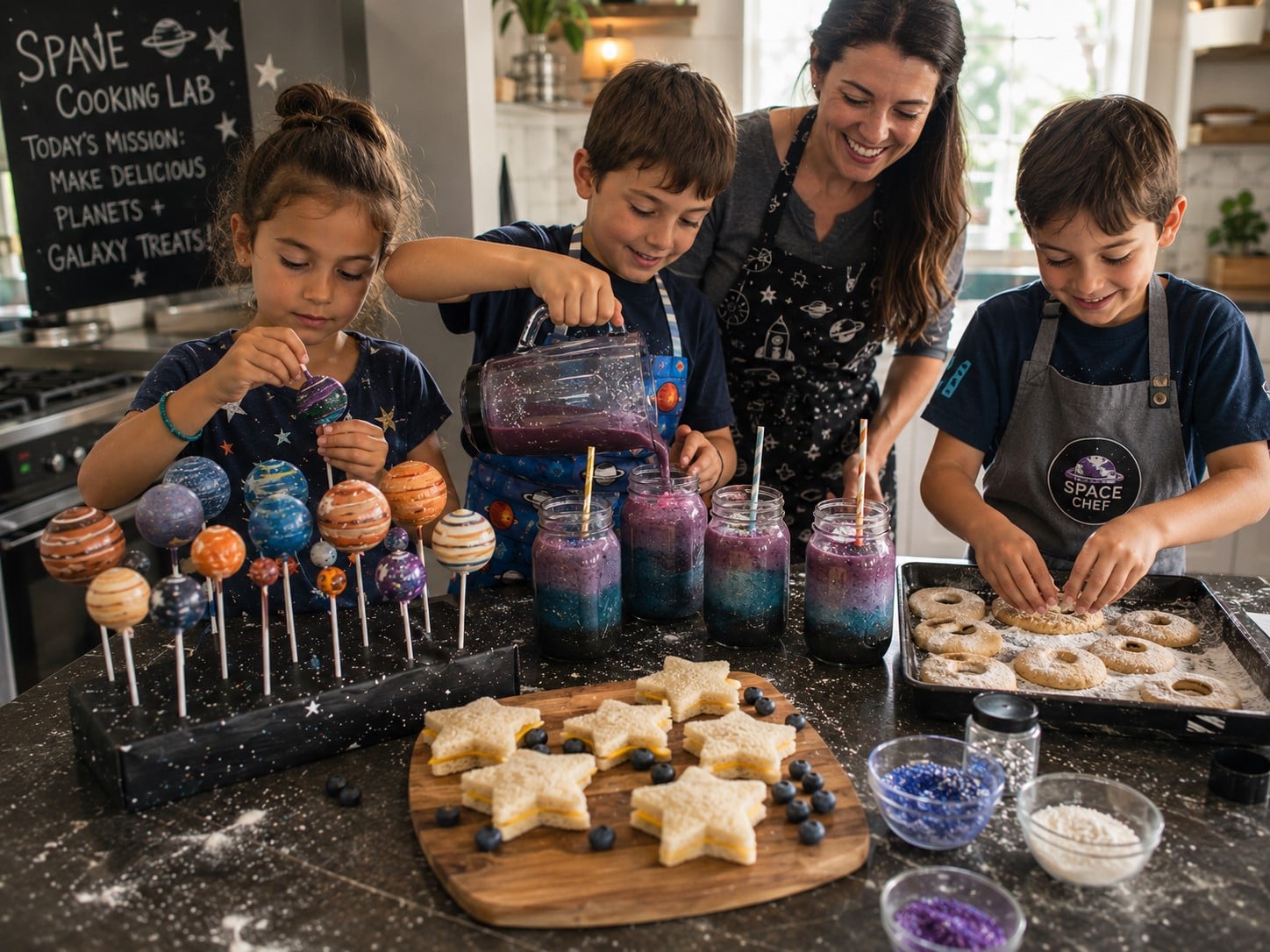
Make space themed food together. Planet cake pops in different sizes and colours. Galaxy smoothies with layered purple and blue. Star shaped sandwiches. Moon crater cookies with a thumb pressed centre.
Space themed cooking combines food science with creative presentation in the most delicious way.
Kids take enormous pride in food that looks as amazing as it tastes. The process of making each themed item involves real cooking skills, colour mixing, shaping, and decorating that build confidence and capability in the kitchen.
And eating a galaxy smoothie or a planet cake pop after a day of space learning feels like the most fitting and celebratory ending possible.
19. Rocket Ship Design Challenge
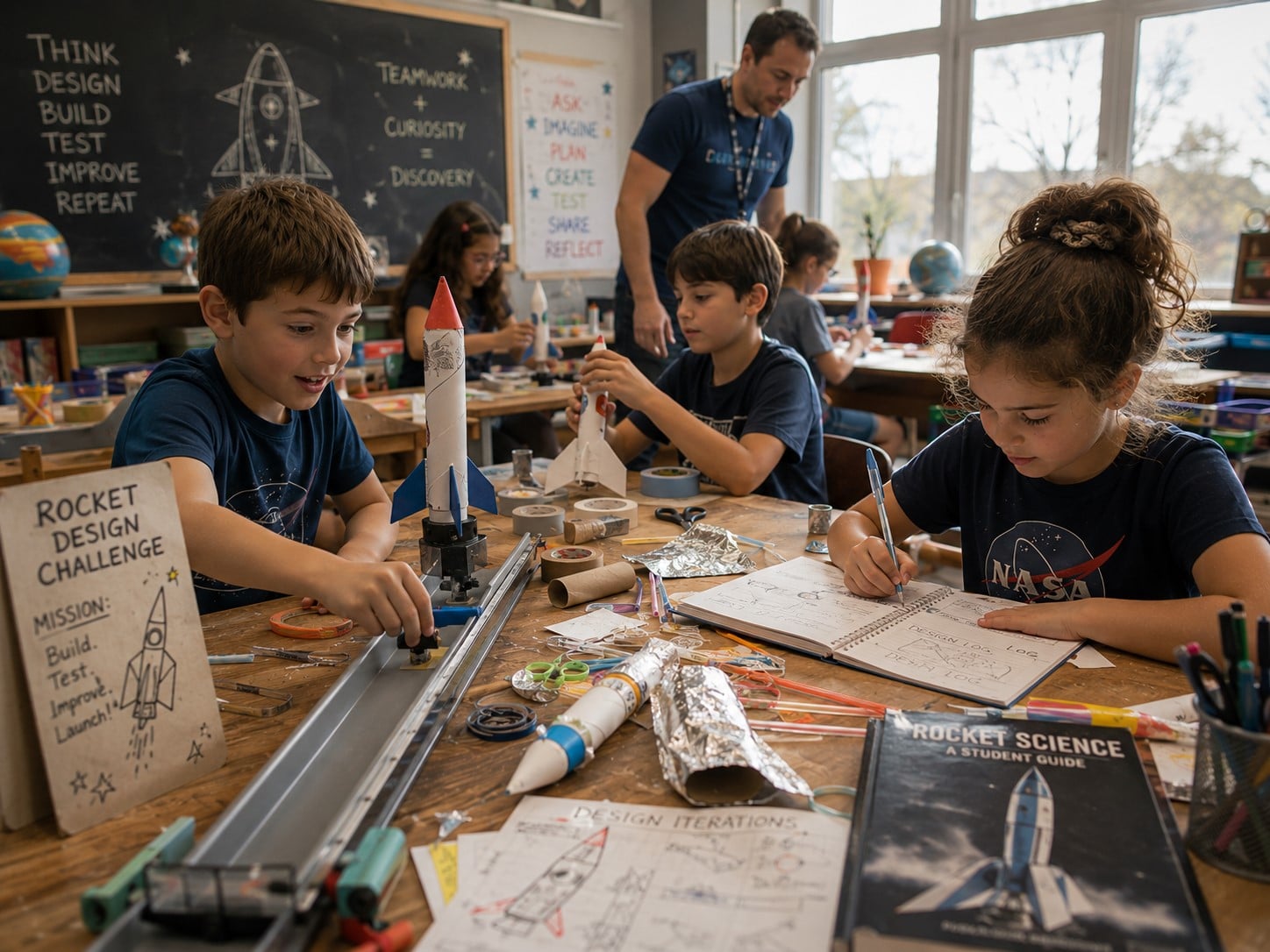
Challenge kids to design the best rocket ship they can using only a set of provided materials. Paper, card, tape, foil, straws, and rubber bands. Test each design by seeing how far it travels when launched.
Design challenges develop engineering thinking, creativity, and resilience simultaneously.
Kids whose first design does not perform well learn to analyse, adjust, and improve. That iterative design process is exactly how real engineers work and experiencing it firsthand is genuinely powerful. Keep testing and improving across multiple sessions for a really deep and sustained engineering learning experience.
For more brilliant engineering and design challenge ideas that develop these same skills in creative and engaging ways, go explore 22 Shark Craft Ideas That Are Surprisingly Easy to Make because those making projects involve the same kind of planning, building, and creative problem solving that great engineering challenges require.
20. Space Dictionary
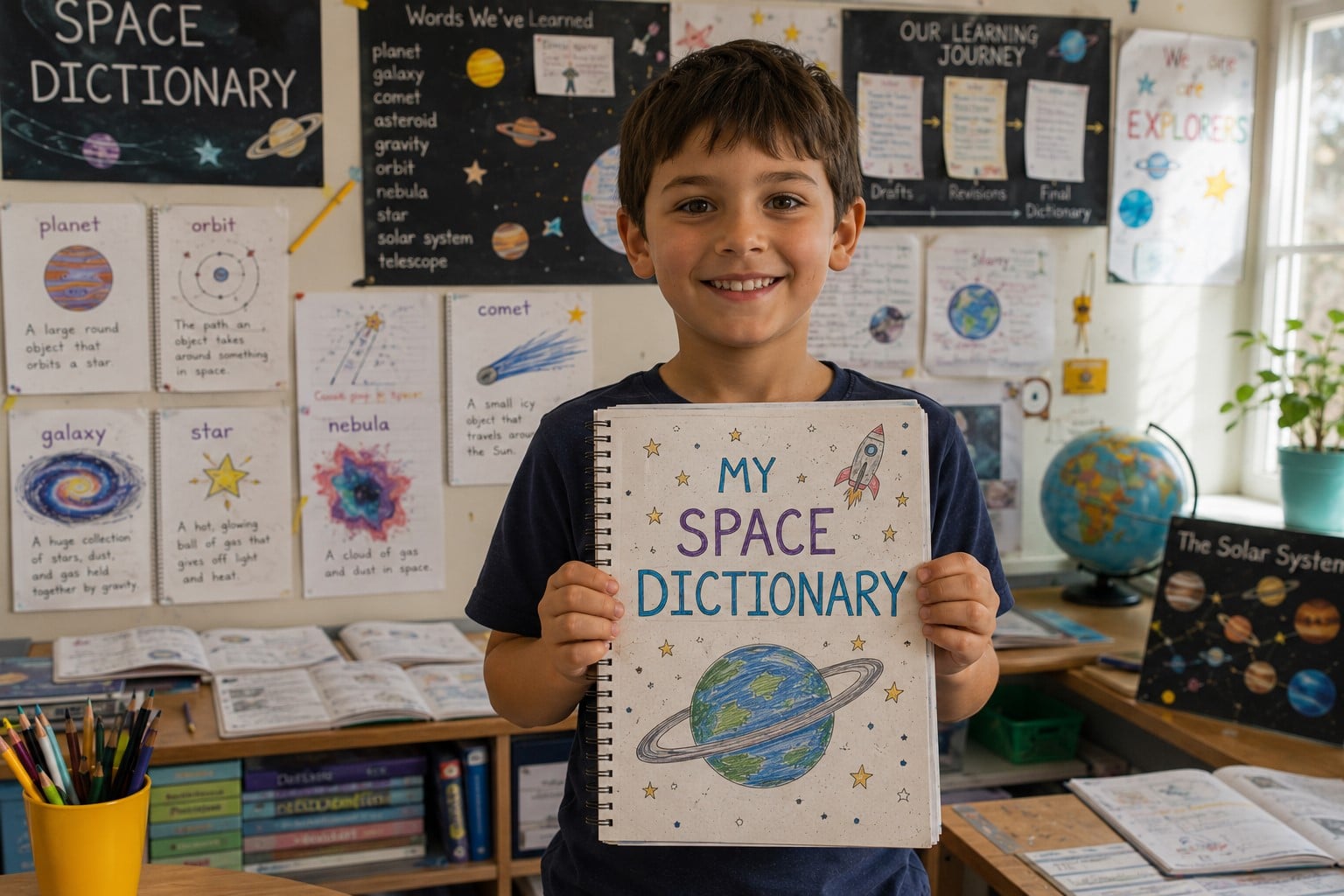
Create a personal space dictionary together. Write one space word per page with a definition in your own words and an illustration. Start with words you already know and keep adding new ones as you learn them.
A personal space dictionary is a brilliant vocabulary and literacy activity.
Writing definitions in their own words requires kids to genuinely understand each term rather than just copy it. The illustrations embed the meaning visually. And the growing dictionary becomes a resource they are proud to use and reference.
By the end of a space unit a well kept dictionary contains genuinely impressive scientific vocabulary.
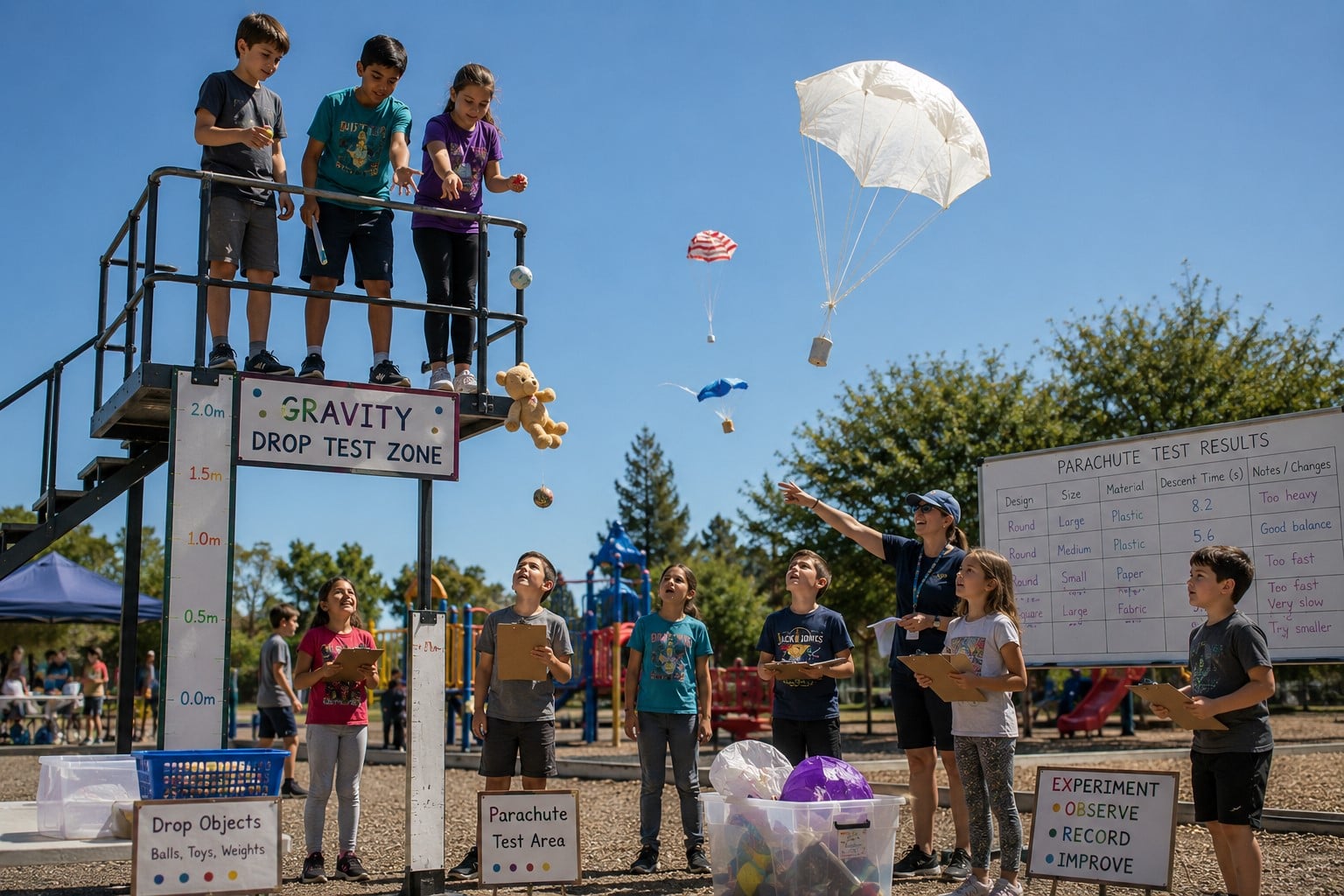
21. Gravity Experiments
Drop different objects from the same height and observe how they fall. Experiment with parachutes attached to different weights. Try to make the slowest possible descent to the ground.
Gravity experiments are consistently fascinating for kids because the results are often surprising.
The parachute experiments in particular generate genuine scientific thinking as kids adjust size, shape, and weight to achieve slower and slower descents.
Talk about how gravity works on different planets and what it would feel like to jump on the moon. That imaginative extension of real science is where the deepest engagement happens.
Go take a look at 19 Garden Activities for Kids That Make Outdoor Time More Fun for more brilliant outdoor science experiment ideas that use the same simple materials and the same genuine scientific curiosity that makes gravity experiments so engaging and memorable.
22. Space Themed Art Gallery
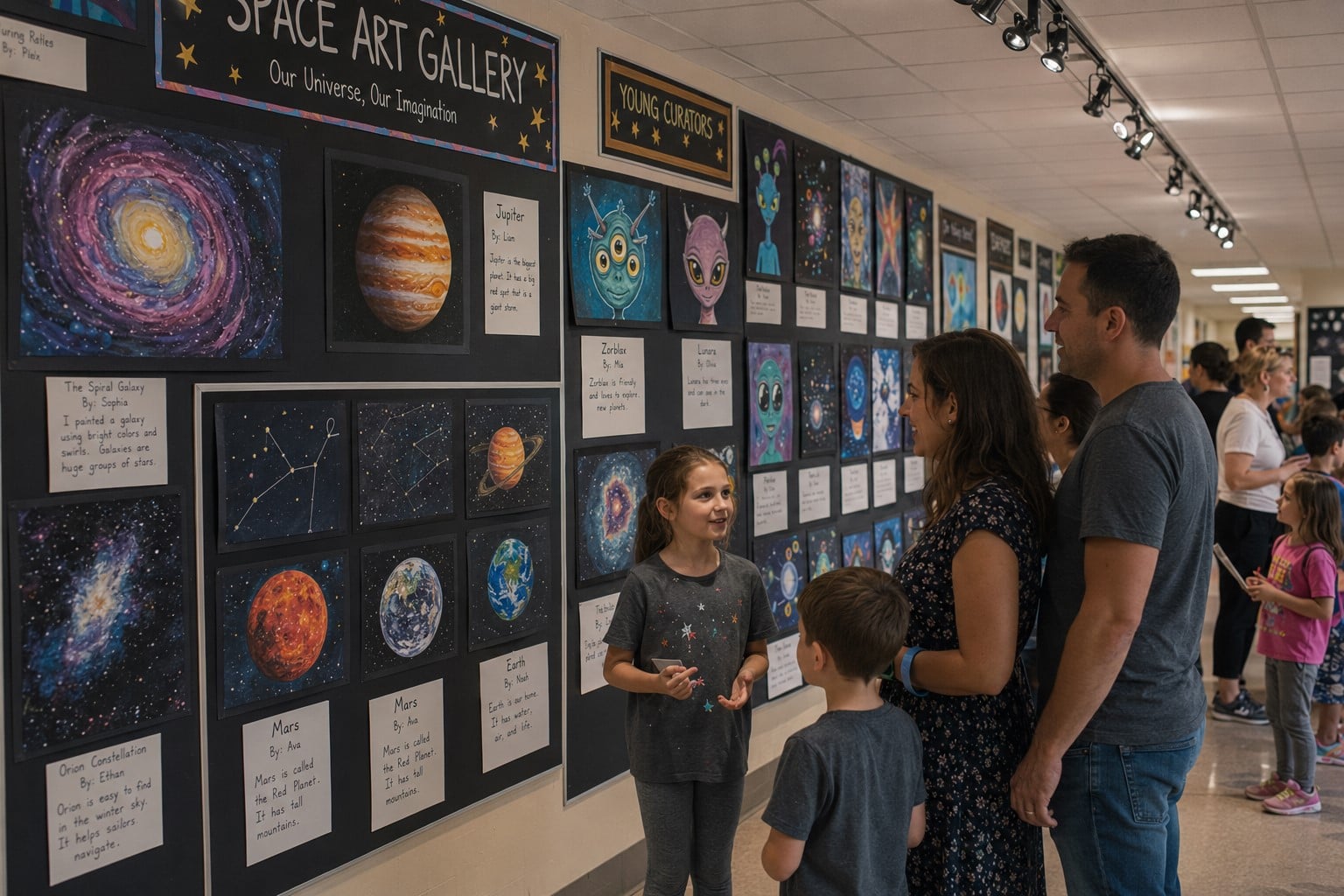
Over several sessions create a collection of space themed artworks. Galaxy paintings, planet prints, constellation cards, and alien portraits. Display them together as a formal space art gallery with labels and descriptions.
Creating a gallery gives a collection of individual artworks a sense of context and importance.
Kids who curate their own gallery learn to think about presentation, sequence, and explanation. Writing the gallery labels requires them to articulate what they made and why in clear and considered language.
Invite family members to visit the gallery for a really lovely moment of celebration and sharing.
23. Space Yoga
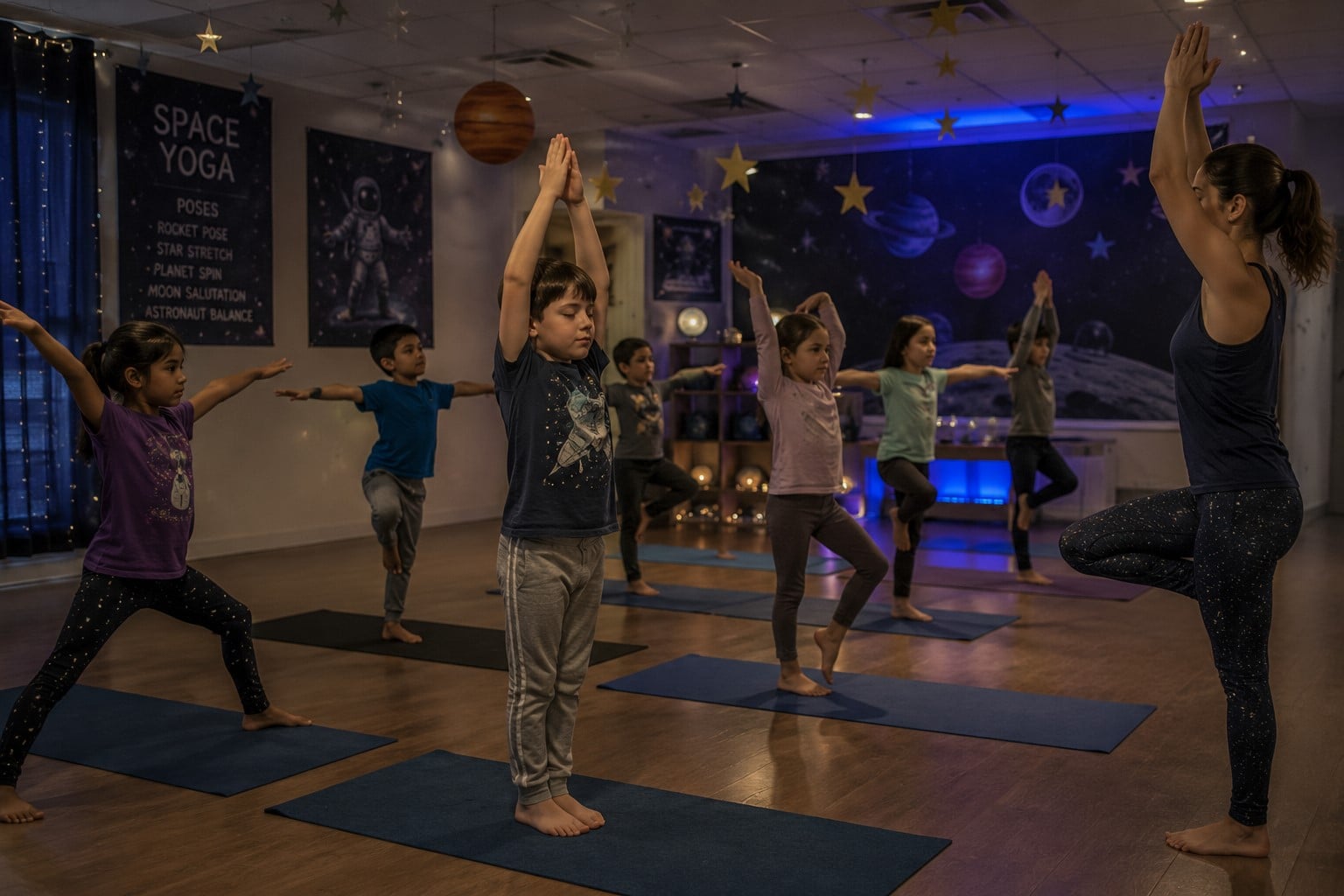
Create a space themed yoga sequence. Rocket pose, planet spin, star stretch, moon salutation, astronaut balance, and shooting star flow. Make up names and movements together.
Space yoga combines physical movement with imaginative storytelling in a beautifully calming way.
The naming of each pose connects physical shapes to space concepts in a memorable and embodied way. Kids remember the poses because they remember the space story attached to each one.
Use space yoga as a calm down activity at the end of a busy space learning day to bring energy levels gently back to earth.
For more wonderful calm movement and yoga ideas that bring energy down gently and peacefully, go check out 21 Ladybug Craft Ideas That Are Bright Cute and Fun because those gentle and beautiful craft activities create the same quality of calm focused engagement after an active and exciting learning day.
24. Telescope Exploration
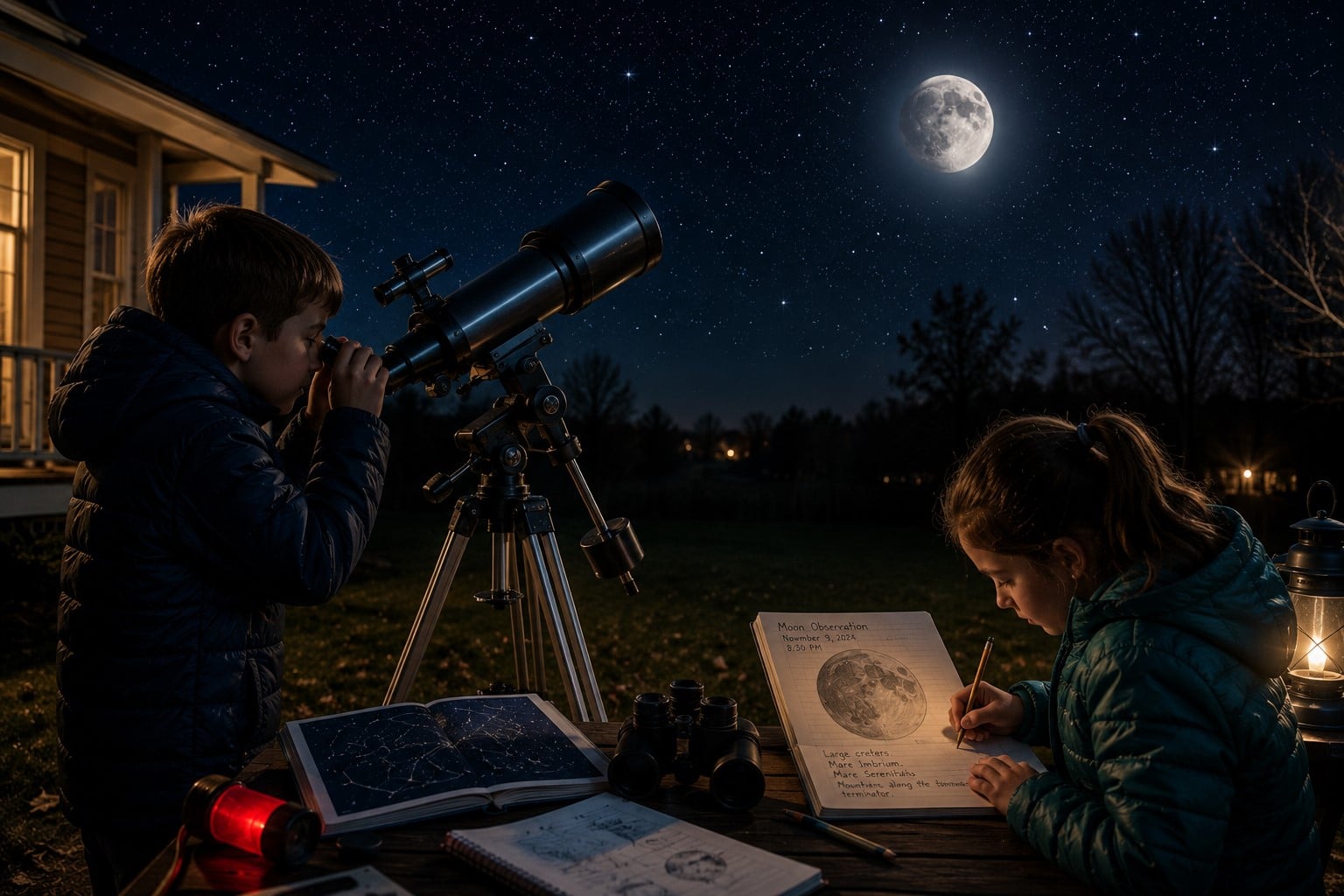
If you have access to a telescope use it to observe the moon, planets, and stars. If not use binoculars for a closer look at the night sky. Draw exactly what you see through the lens.
Looking through a lens at the night sky changes everything for a child.
The moon suddenly has craters and mountains. Stars suddenly have colour. Planets become real round objects rather than dots.
That moment of seeing something with your own eyes rather than in a book or on a screen creates a genuine and lasting shift in how a child understands space. It is one of those experiences worth going out of your way to create.
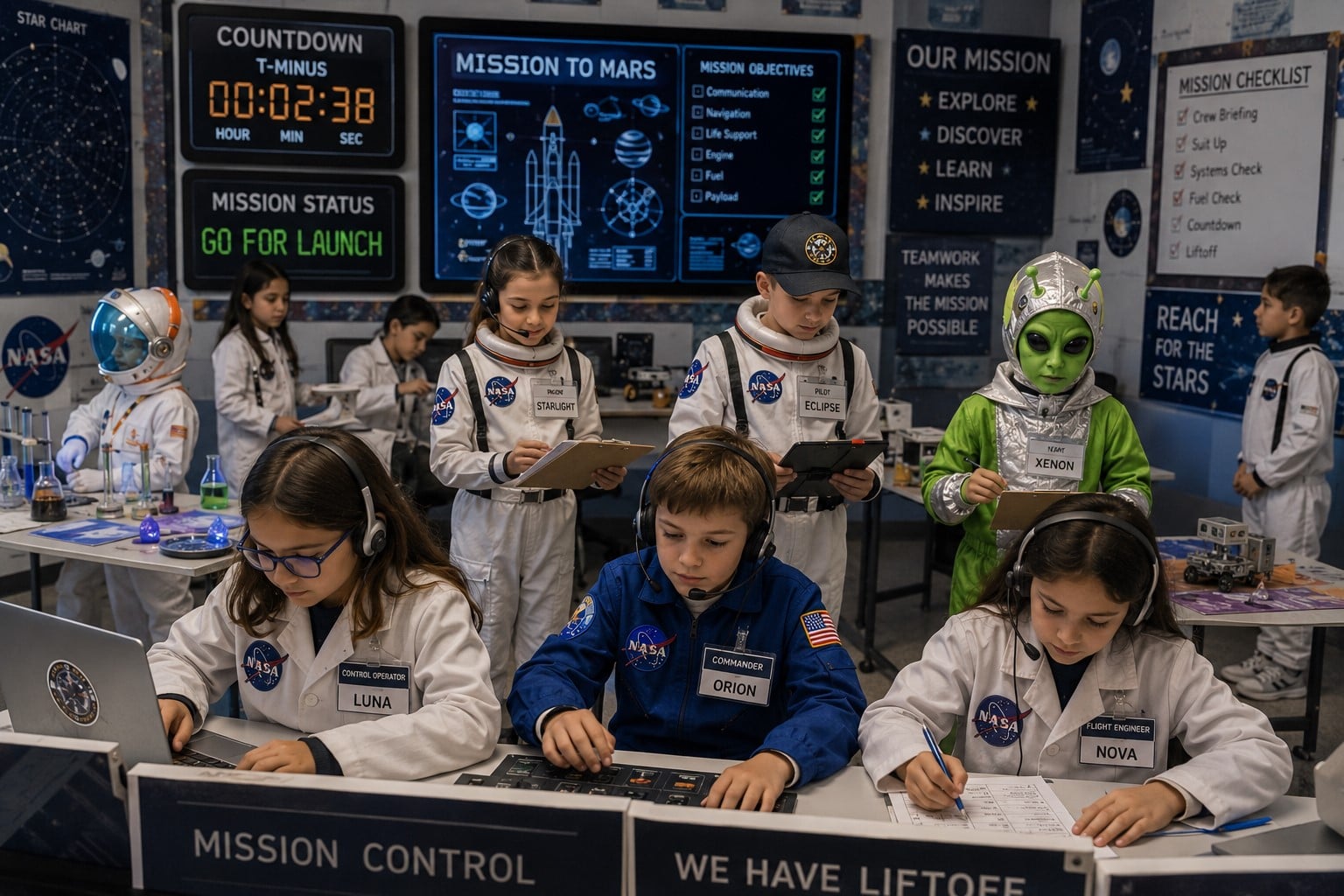
25. Space Themed Dress Up Day
Spend a whole day dressed as astronauts, aliens, or mission control scientists. Stay in character for learning activities, meals, and outdoor play. Give everyone a space name and a mission role.
Space dress up days create a completely immersive learning environment.
Kids who are in costume approach their learning activities with a completely different level of commitment and enthusiasm. They are not just doing a space experiment. They are a real astronaut conducting a real mission.
That identity shift is enormously powerful for engagement and for the depth of learning that results.
Go explore 17 Octopus Craft Ideas Kids Will Want to Make Again and Again for more wonderful themed craft and creative activity ideas that bring the same total immersion quality to themed learning days at home.
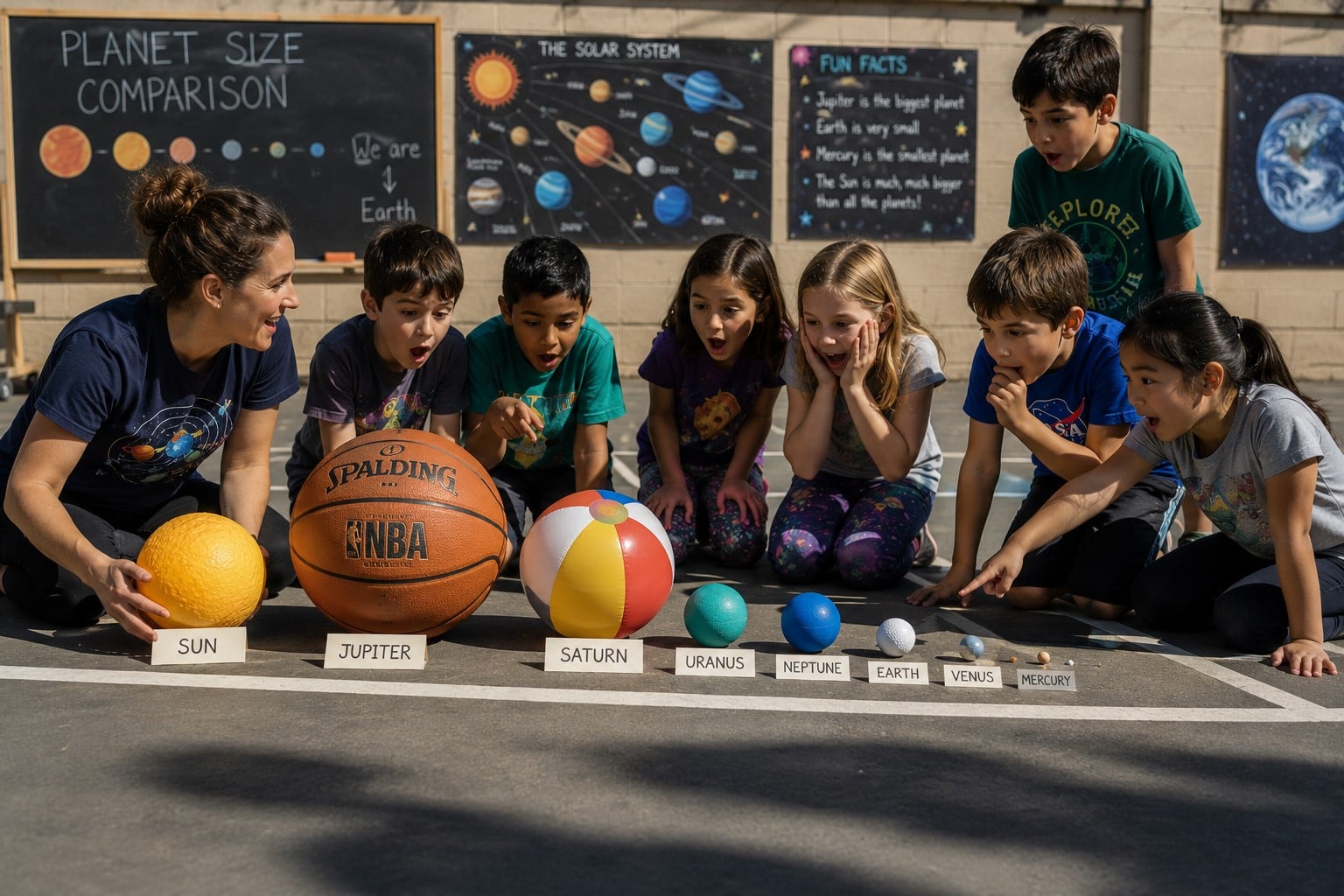
26. Planet Size Comparison Activity
Use different sized balls and fruits to represent the planets in their relative sizes. A basketball for Jupiter, a golf ball for Earth, a peppercorn for Mercury. Line them up and talk about the scale.
Planet size comparison activities make the abstract concept of planetary scale suddenly and completely real.
Kids are genuinely shocked by how much bigger Jupiter is than Earth and how small Earth looks next to the sun. That visceral understanding of scale cannot come from numbers on a page.
It only comes from holding the objects and seeing the comparison with your own eyes. This simple activity consistently creates moments of genuine wonder and surprise.
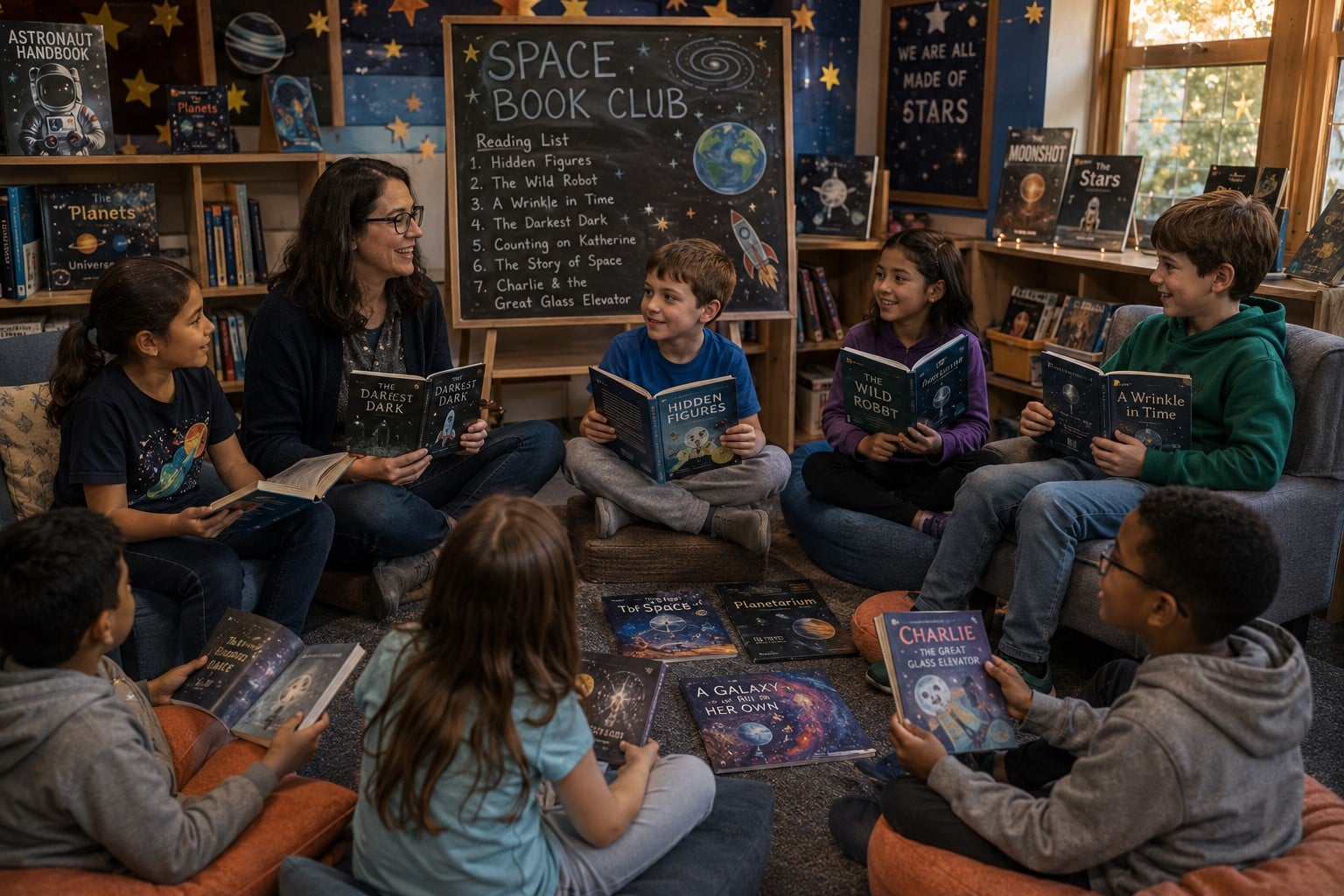
27. Space Themed Book Club
Choose space themed books and read them together over several weeks. Fiction and nonfiction mixed together works brilliantly. Discuss each book in a simple relaxed book club format where everyone shares their thoughts.
A space themed book club combines literacy with science content in a really rich and enjoyable way.
Kids who discuss books develop much stronger comprehension and critical thinking than those who just read silently. The combination of fiction and nonfiction titles means imagination and fact feed each other continuously throughout the reading experience. Keep a book list and let kids add their own recommendations as the club progresses.
For more brilliant book based and literacy focused learning activity ideas, go check out 21 Jellyfish Craft Ideas That Look Colorful and Magical because combining themed craft making with themed reading creates the most complete and immersive learning experience possible.
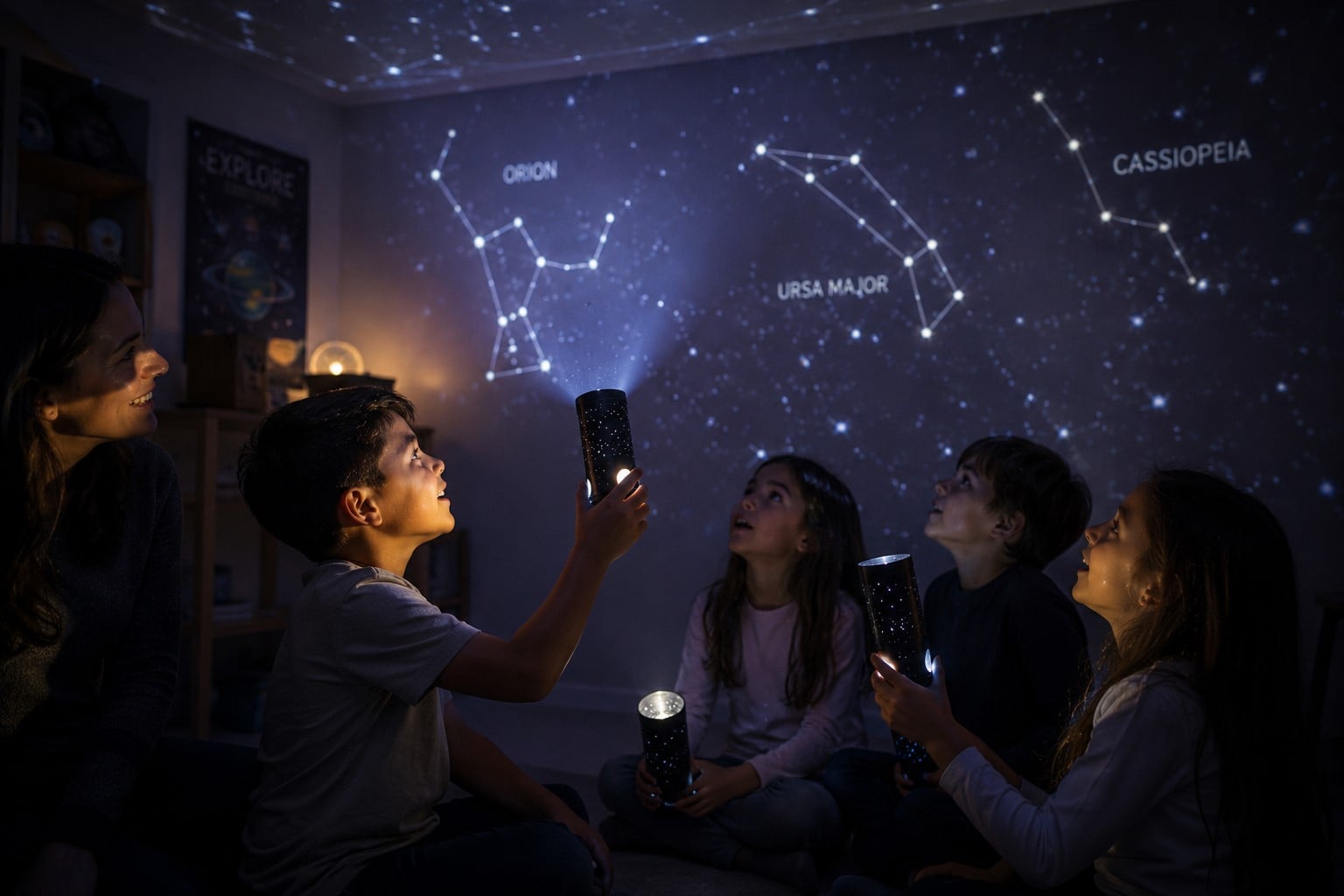
28. Build a Constellation Projector
Make a simple constellation projector using a toilet roll tube and a piece of black card. Poke holes in the card in a constellation pattern. Tape the card over one end of the tube. Shine a torch through the other end in a dark room.
Constellation projectors create beautiful projected star patterns on walls and ceilings.
Kids who make their own projector and then see their constellation appear on the ceiling experience a moment of genuine magic and scientific achievement.
Make one for each major constellation and put on a constellation show in a darkened room. That show becomes one of those memorable homeschool moments that kids talk about for years.
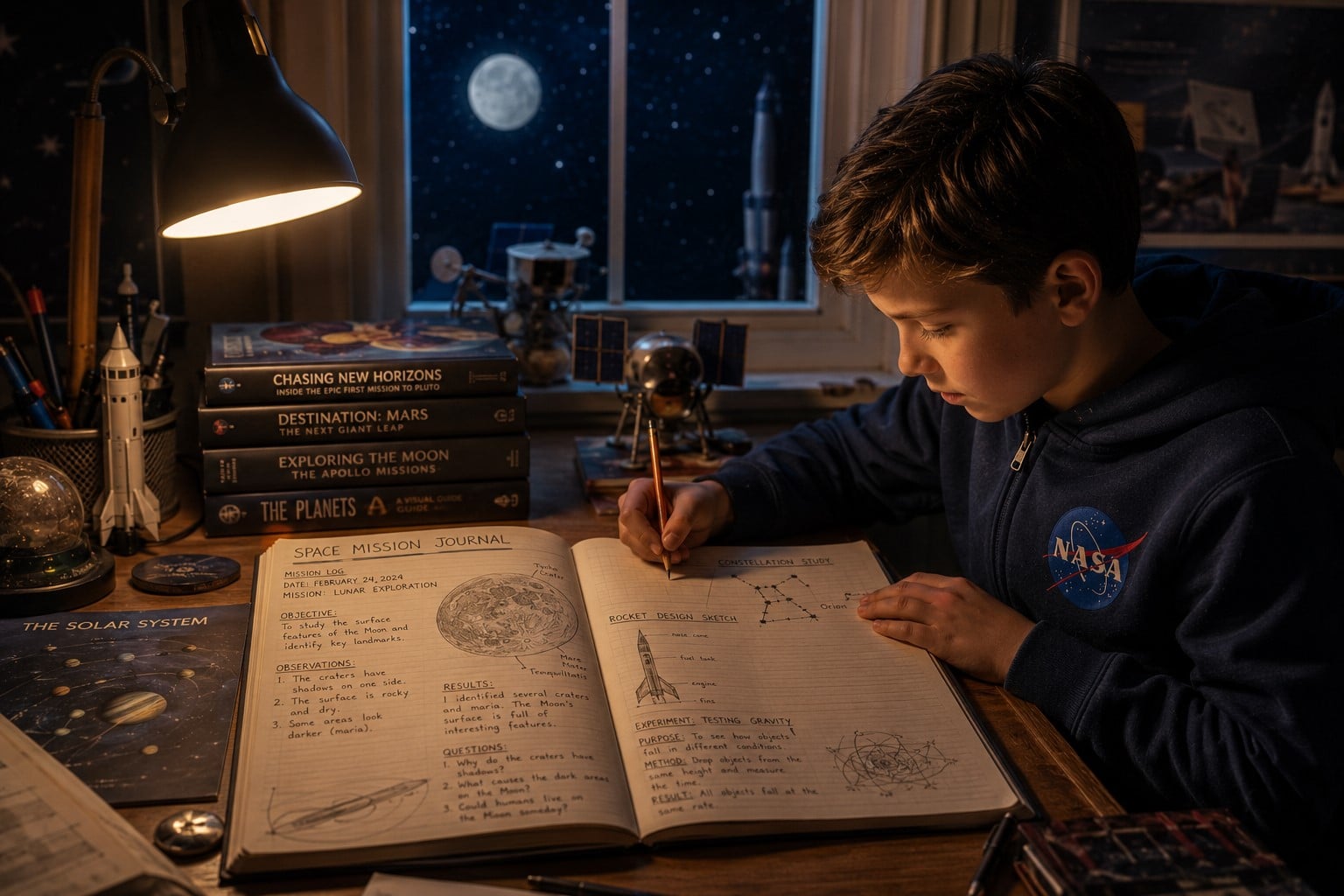
29. Space Mission Journal
Give each child a mission journal at the start of a space themed learning unit. Record every activity as a mission log entry. Date each entry, describe the mission objective, record results, and note questions for further investigation.
Mission journals frame the entire learning unit as a single ongoing adventure.
Kids who keep mission journals develop real scientific recording habits that serve them throughout their education. The journal also creates a complete record of everything learned during the unit.
Reading back through a completed mission journal at the end of a space unit is always a moment of genuine pride and satisfaction for both kids and parents.
Final Thoughts
Space is one of those subjects that never runs out of things to explore, discover, and wonder about.
Every activity on this list opens a door to more questions, more curiosity, and more learning. And that is exactly the point. The goal is not to teach kids everything there is to know about space. The goal is to make them fall in love with the questions that space asks.
So start with the activities that excite your child the most and let their curiosity lead the way from there.
And when you are ready to add even more creative and colourful making into your space themed learning, go check out 19 Snake Craft Ideas Kids Will Think Are Super Cool because mixing themed craft activities into your learning days keeps the creativity and the curiosity firing on all cylinders every single day.