There is something that happens to kids when you take them into a forest or a woodland space. People breathe differently. Move differently. Slow down and start noticing things they would never notice anywhere else. A beetle crossing a log. The way light filters through leaves. The sound of wind moving through branches above their heads.
Forest school is built on that magic.
It is not about structured lessons or ticking boxes. It is about giving kids regular meaningful time outdoors in a natural space and watching what happens when you trust them to explore, discover, and learn at their own pace. And if you have been exploring planet crafts and space themed learning lately, go check out 25 Planet Craft Ideas That Make Learning About Space Exciting because bringing that same sense of wonder and discovery to the natural world around you creates the most complete and balanced learning experience imaginable.
So let us get into these 31 forest school activities that encourage outdoor play in the most brilliant ways.
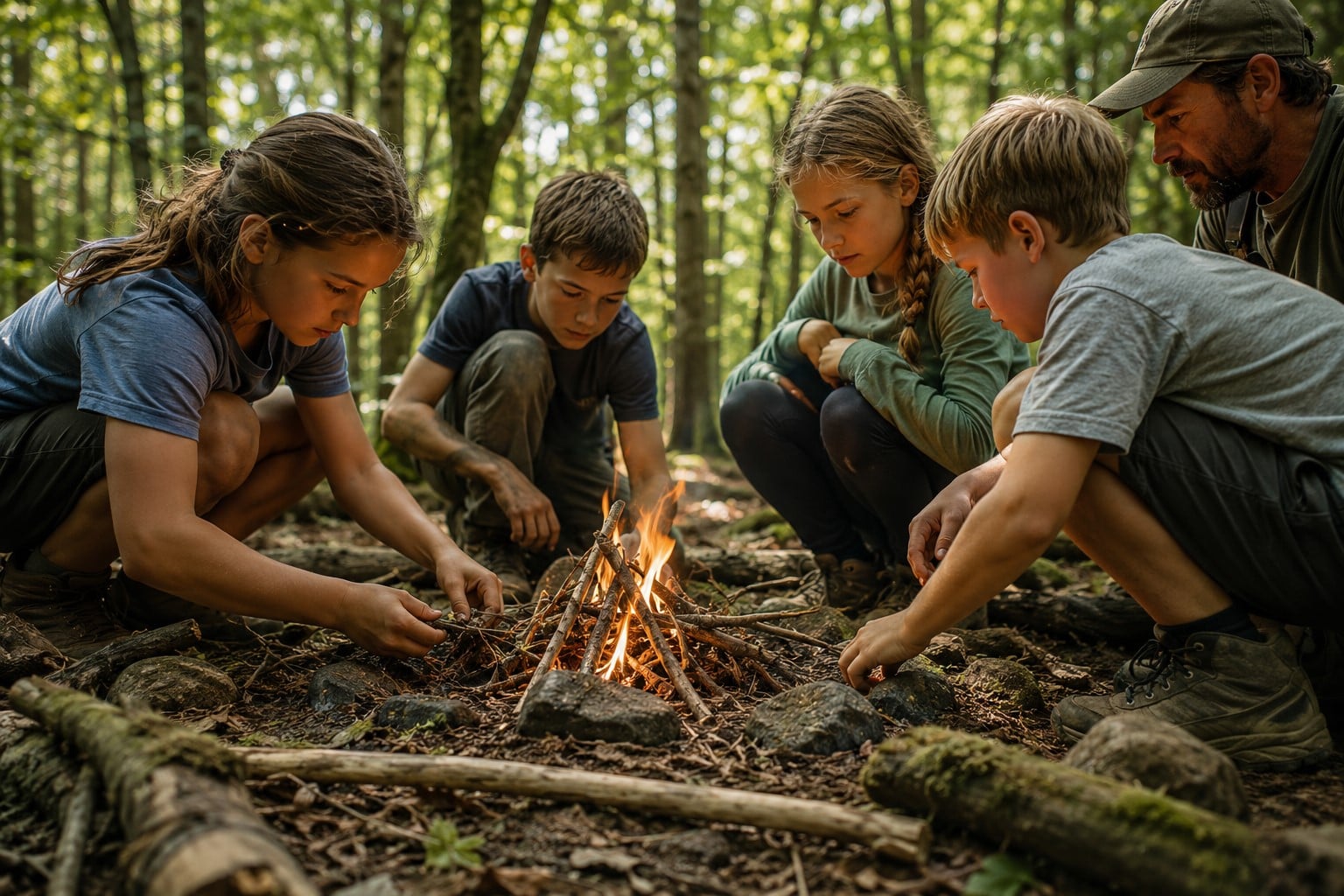
1. Fire Building and Tending
Teach kids how to build a safe fire using a proper fire triangle structure. Start with tinder, add kindling, and build up to larger sticks. Teach them to tend the fire carefully and safely.
Fire building is one of the most powerful forest school activities because it builds genuine real world skills.
Kids who learn to build a fire develop focus, patience, and a deep respect for natural forces. The process of getting a fire going from scratch using natural materials is genuinely challenging and the sense of achievement when the first flame takes hold is absolutely extraordinary. Always supervise closely and establish clear safety rules before beginning.
For more wonderful outdoor adventure activities that build real skills and genuine confidence in kids, go check out 27 Movement Activities for Kids That Burn Energy Fast because combining physical outdoor challenges with forest school sessions creates the most complete and brilliant outdoor learning day.
2. Natural Den Building
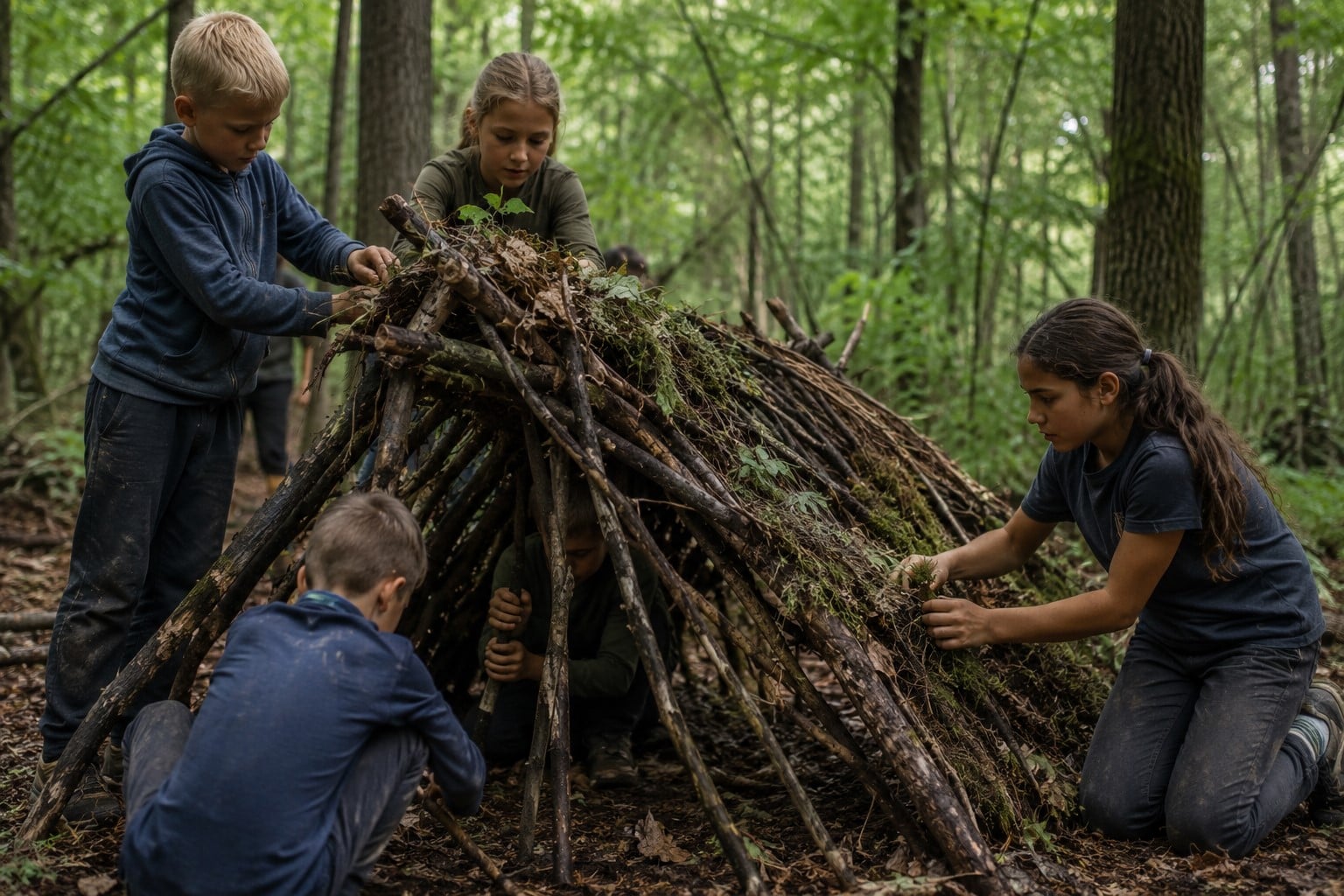
Gather sticks, branches, leaves, and natural materials. Build a den or shelter that could genuinely protect against wind and rain. Test it by getting inside during a light shower.
Den building is one of the most universally loved forest school activities and for very good reason.
The engineering involved in building a structure that actually works is genuinely sophisticated. Kids work out load bearing principles, waterproofing angles, and structural stability through their own experimentation and failure.
The sense of pride when a den stands strong and keeps the rain out is one of the most powerful feelings a child can experience outdoors.
3. Mud Kitchen Play
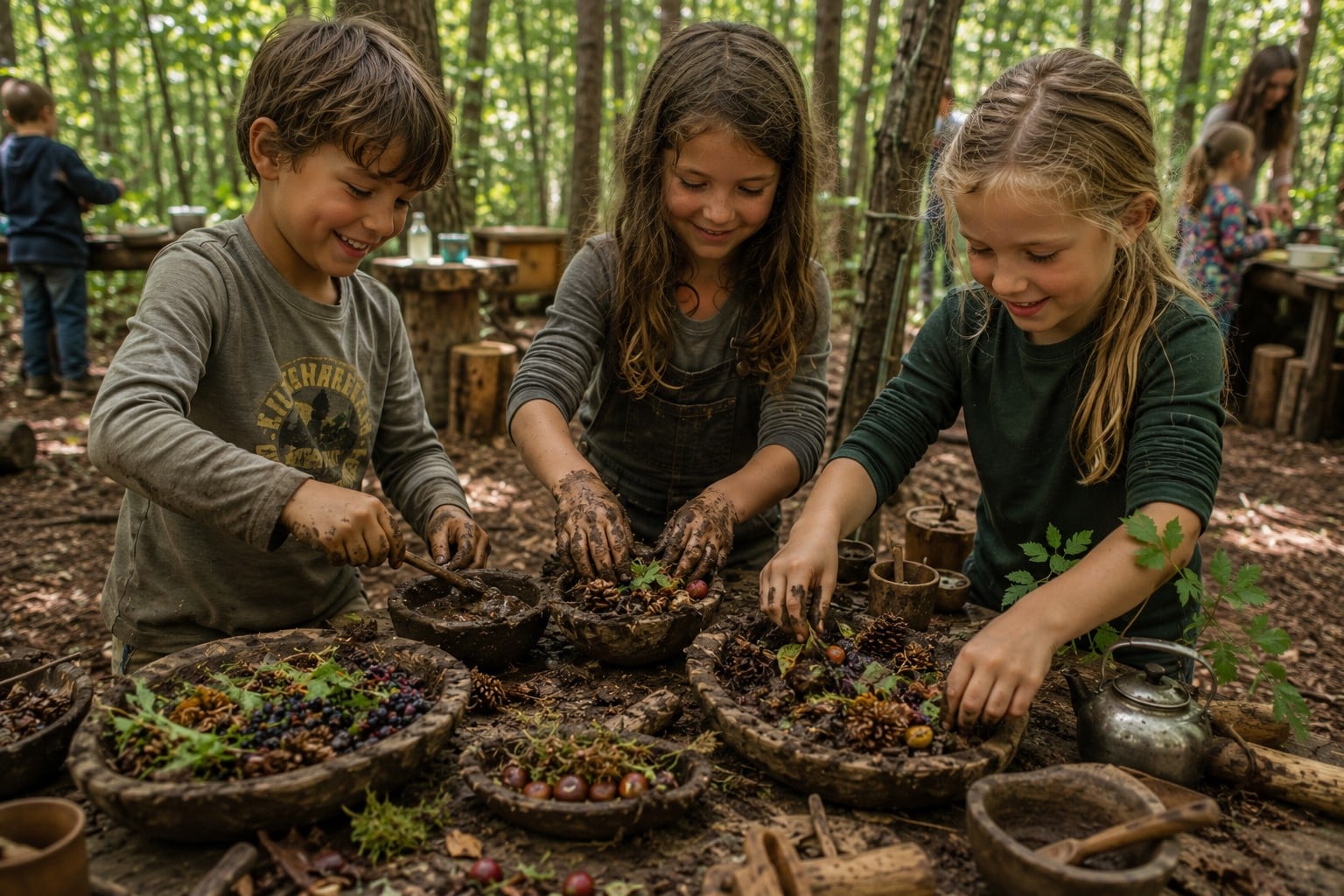
Set up a forest mud kitchen using fallen logs as surfaces and natural containers as pots. Collect water from a stream or bring it in a bucket. Use mud, leaves, berries, and natural ingredients to cook elaborate imaginary meals.
Mud kitchen play in a genuine natural setting is so much richer than mud kitchen play in a back garden.
The variety of natural ingredients available in a woodland space is extraordinary. Different coloured muds, different textured leaves, seed pods, acorns, bark pieces.
Kids create menus, restaurants, and elaborate cooking scenarios that last for hours. The sensory experience of really good woodland mud is genuinely wonderful for children of all ages.
Go explore 29 Farm Animal Craft Ideas That Bring the Barnyard to Life for more wonderful outdoor sensory and imaginative play ideas that bring the natural world into children’s creative play in the most joyful and meaningful ways.
4. Tree Identification Walk
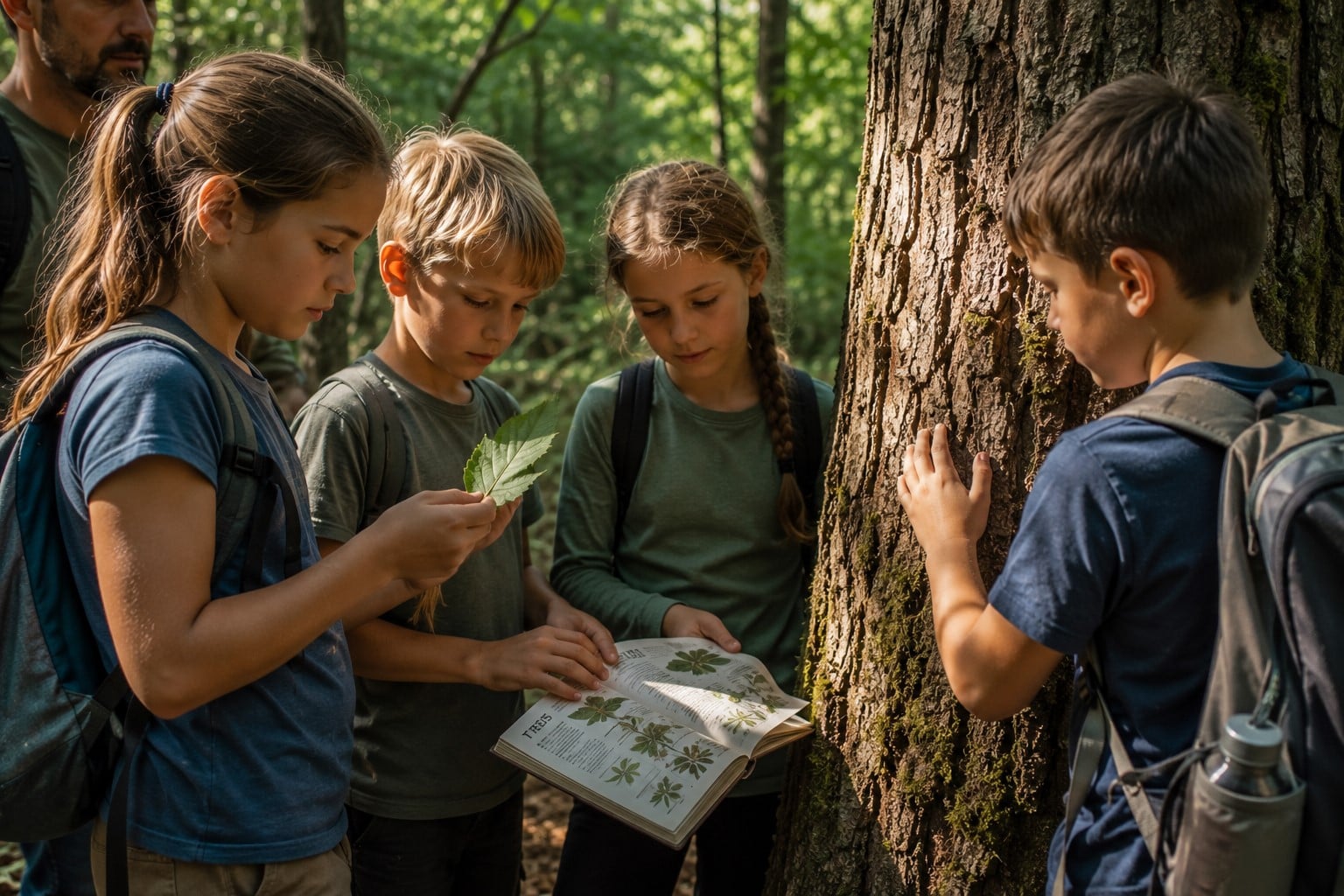
Head out with a simple tree identification guide. Challenge kids to identify as many different tree species as possible using leaf shape, bark texture, and overall form as clues.
Tree identification walks build observation skills and natural world knowledge simultaneously.
Kids who learn to identify trees develop a relationship with the landscape around them that changes how they see and experience outdoor spaces forever. Start with five common local species and build up gradually.
Keep a running list of identified trees across multiple visits and celebrate each new identification with genuine enthusiasm.
5. Natural Art Making
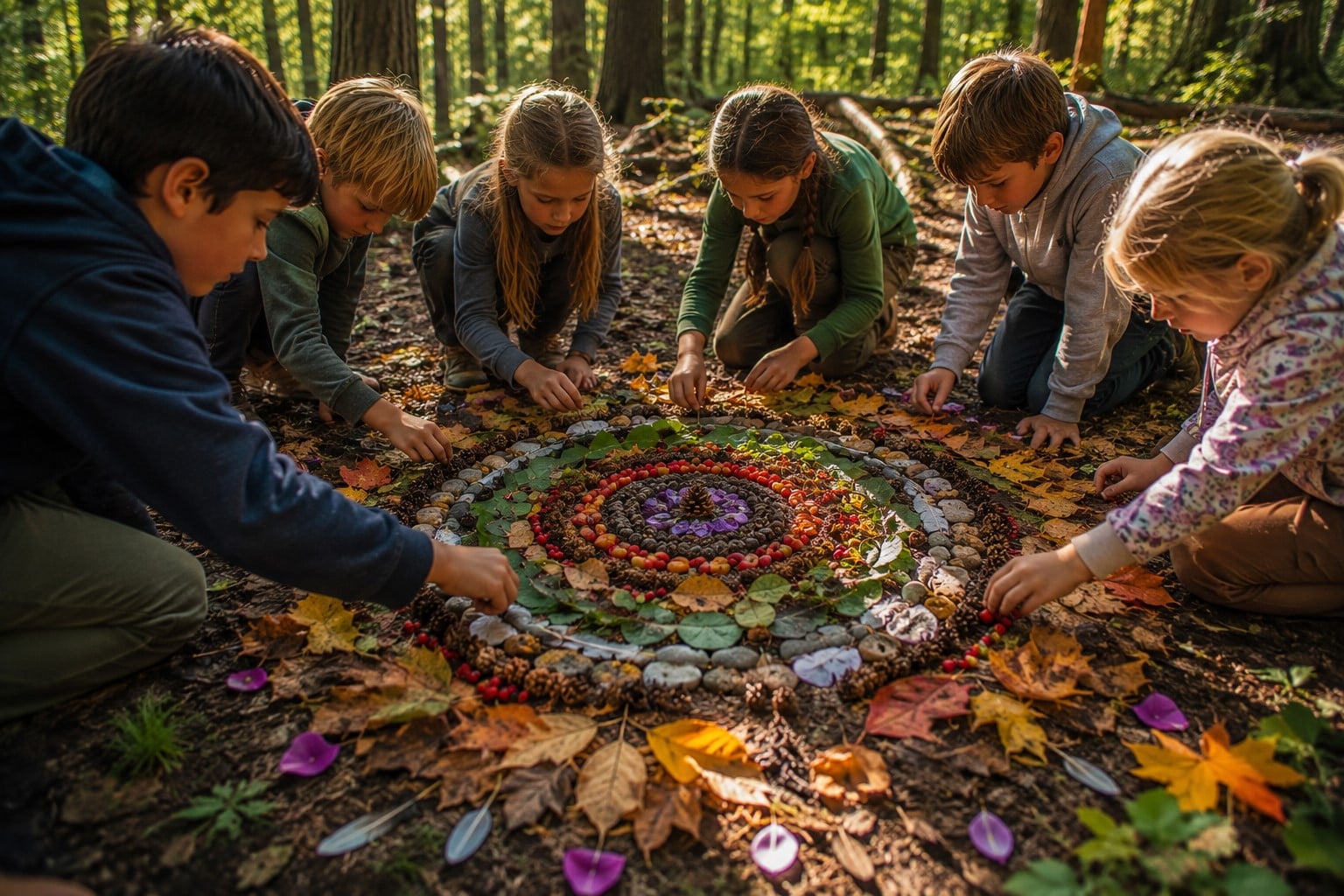
Collect fallen leaves, petals, seeds, berries, and stones. Create pictures, patterns, and sculptures using only natural materials found on the ground. Leave the artwork in the forest when finished.
Natural art making in a forest setting is completely different from nature art made indoors.
The abundance and variety of natural materials available in a woodland space gives kids far more creative options than a collection brought from home ever could. The temporary nature of the artwork, left behind in the forest when you leave, adds a beautiful philosophy to the activity.
Making something beautiful knowing it will not last teaches real wisdom about creativity and impermanence.
6. Minibeast Hunt
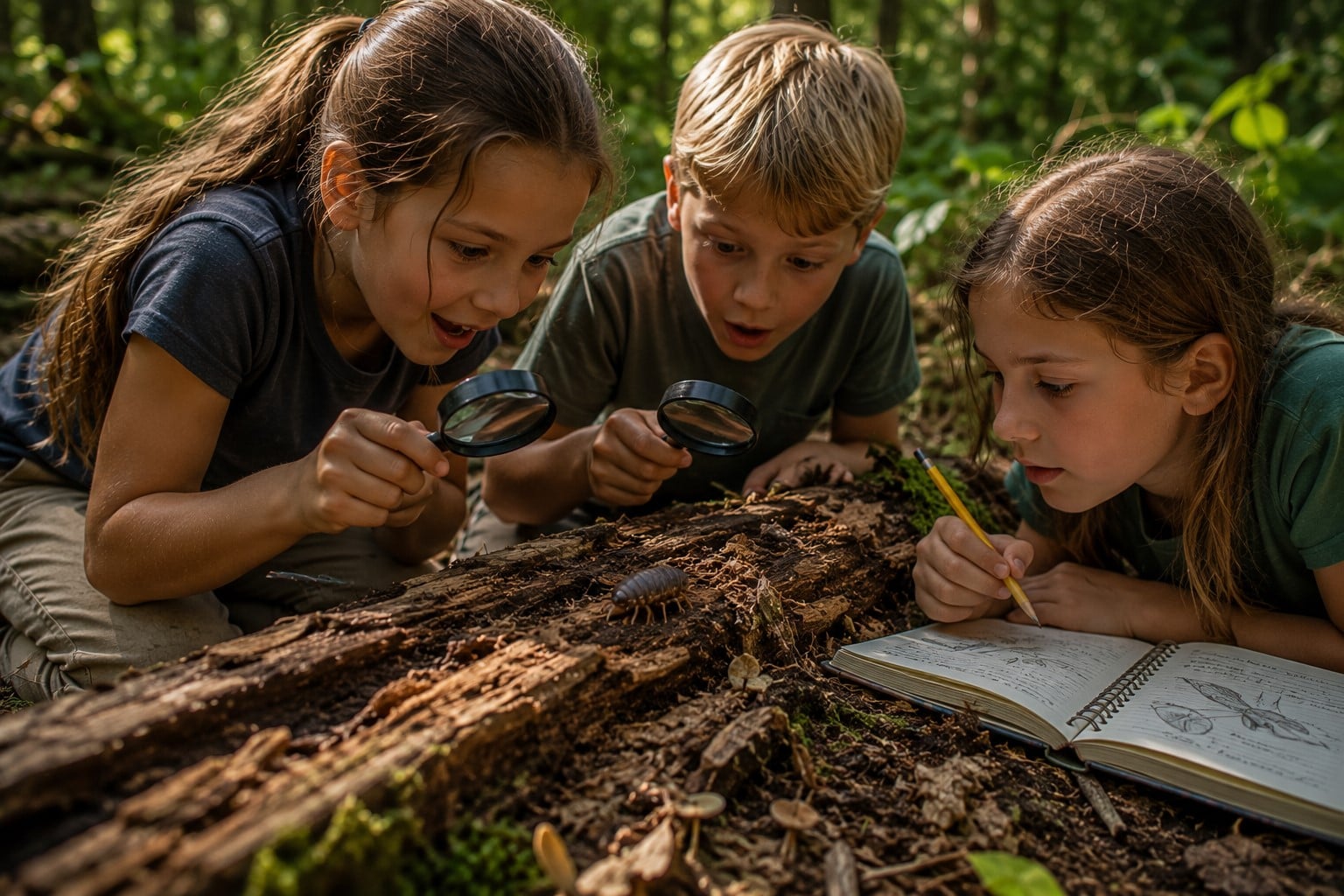
Give each child a magnifying glass and a simple identification sheet. Turn over logs, look under stones, examine bark and leaf litter. Identify every minibeast found and record them in a nature journal.
Minibeast hunts are consistently one of the most popular forest school activities with kids of every age.
The discovery of a woodlouse, a millipede, or a beetle under a log is genuinely exciting every single time. Kids who learn to look carefully at the tiny world beneath their feet develop a sense of ecological awareness that shapes how they interact with the natural world throughout their whole lives. Always return logs and stones carefully to their original position after looking.
For more wonderful nature observation and discovery activities that build this same deep connection to the natural world, go explore 19 Rainbow Crafts for Kids That Brighten Any Rainy Day because those activities celebrate the beauty of the natural world in the most colourful and creative ways.
7. Water Play in Natural Settings
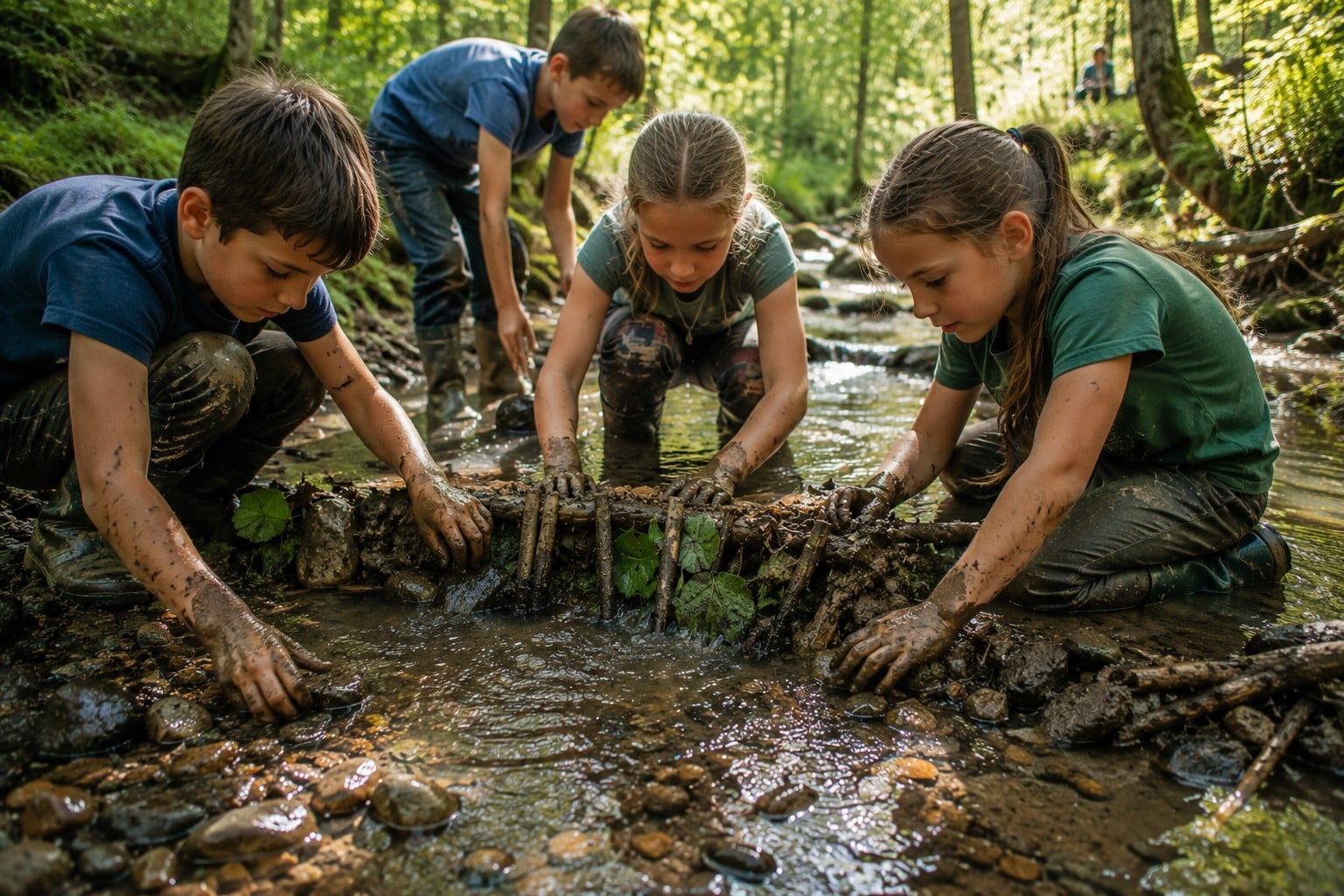
Find a stream, a puddle, or a natural water source. Let kids dam it with sticks and stones, float leaf boats, redirect the flow, and explore how water moves through a natural landscape.
Water play in a natural setting is completely different from water play in a paddling pool or a sink.
The unpredictability of natural water, the varied textures of stream beds, and the engineering challenge of actually changing water flow makes this a genuinely sophisticated play experience.
Kids who play in natural water develop a real understanding of how water behaves in the landscape. They also get wonderfully muddy and completely happy.
8. Foraging Walk
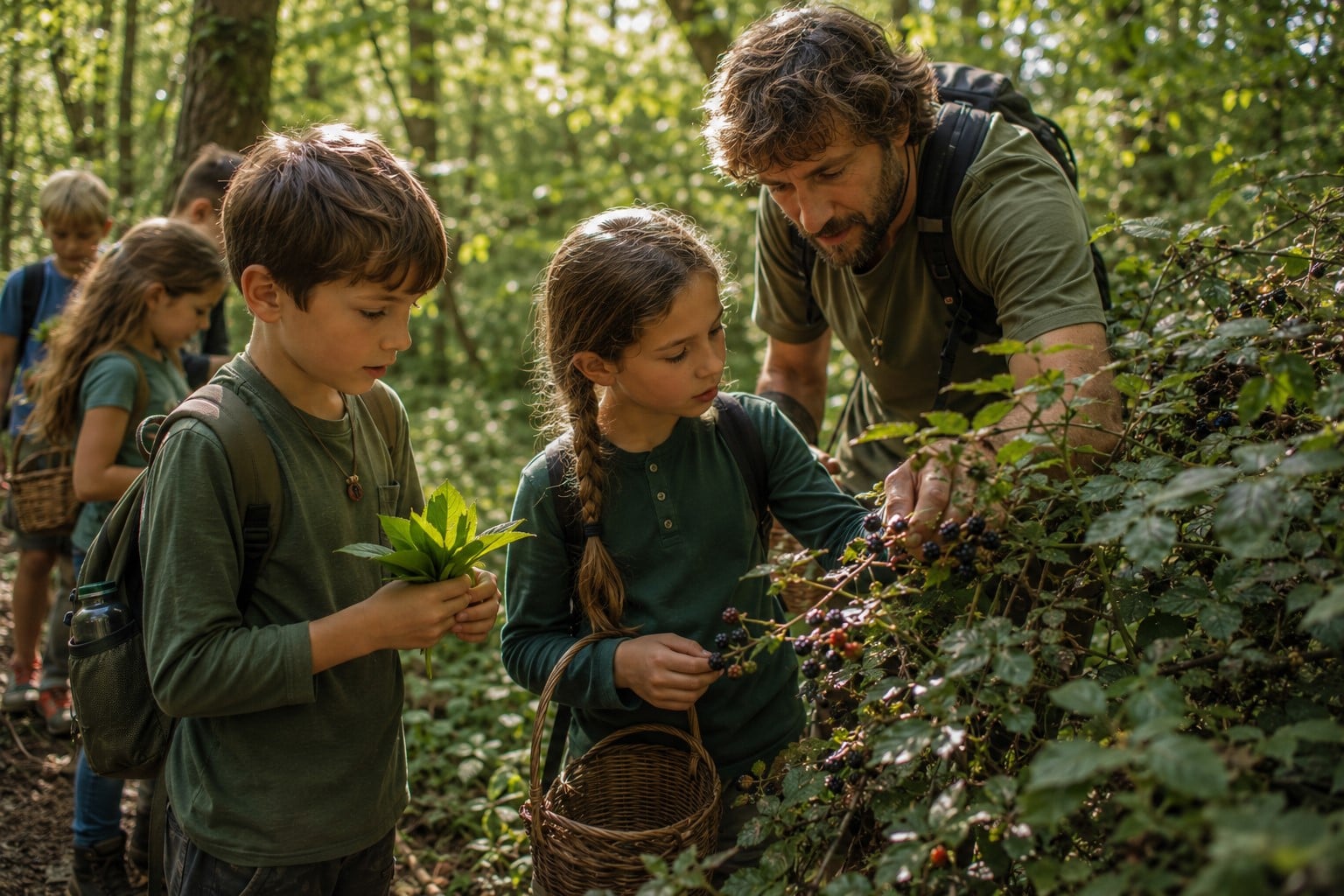
Learn to identify a few safe, easily recognisable edible plants in your local area. Wild garlic, blackberries, elderflower, and wood sorrel are good starting points depending on the season and location.
Foraging teaches kids that food comes from the natural world and not just from supermarkets.
That connection between nature and nourishment is genuinely important and increasingly rare. Taste what you find together and talk about how people throughout history relied on this knowledge to survive.
Always use a reliable identification guide and never eat anything unless you are completely certain of identification. Safety is always the absolute priority.
Go check out 31 Dinosaur Craft Ideas for Kids That Feel Roarsome because those themed activity ideas show how connecting learning to real world exploration creates the kind of deep and lasting knowledge that kids carry with them for years.
9. Tracking and Observation
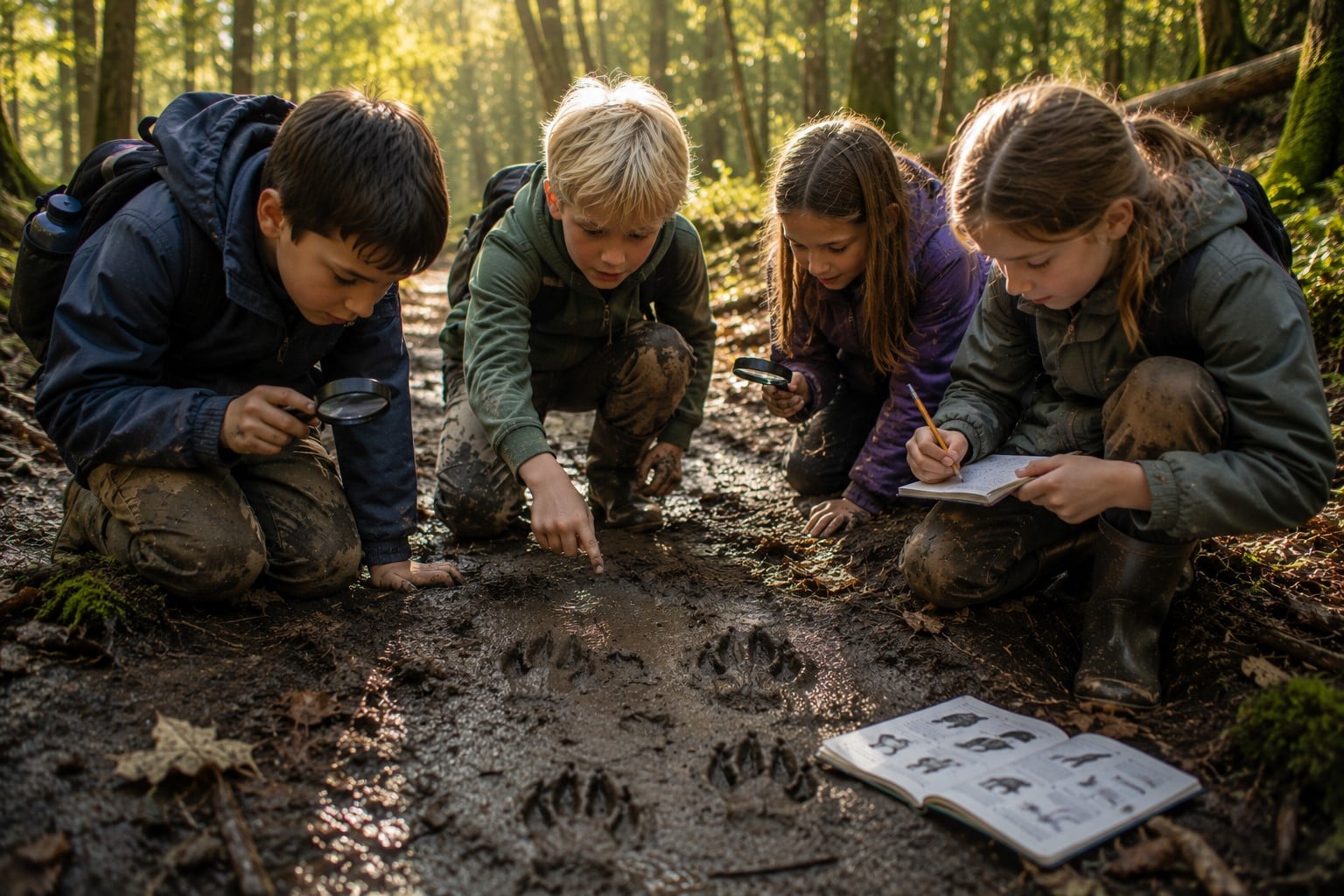
Look for evidence of wildlife in the forest. Footprints in mud, scratch marks on bark, feathers, fur on fences, holes in the ground, and half eaten pine cones all tell stories about what animals live there.
Wildlife tracking builds observation skills and ecological understanding in the most natural way.
Kids who learn to read the signs left by animals in a landscape develop a completely different relationship with outdoor spaces.
They start to see the forest as a living community of creatures rather than just a collection of trees. Keep a tracking journal where each visit’s discoveries are recorded and built on over time.
10. Natural Weaving
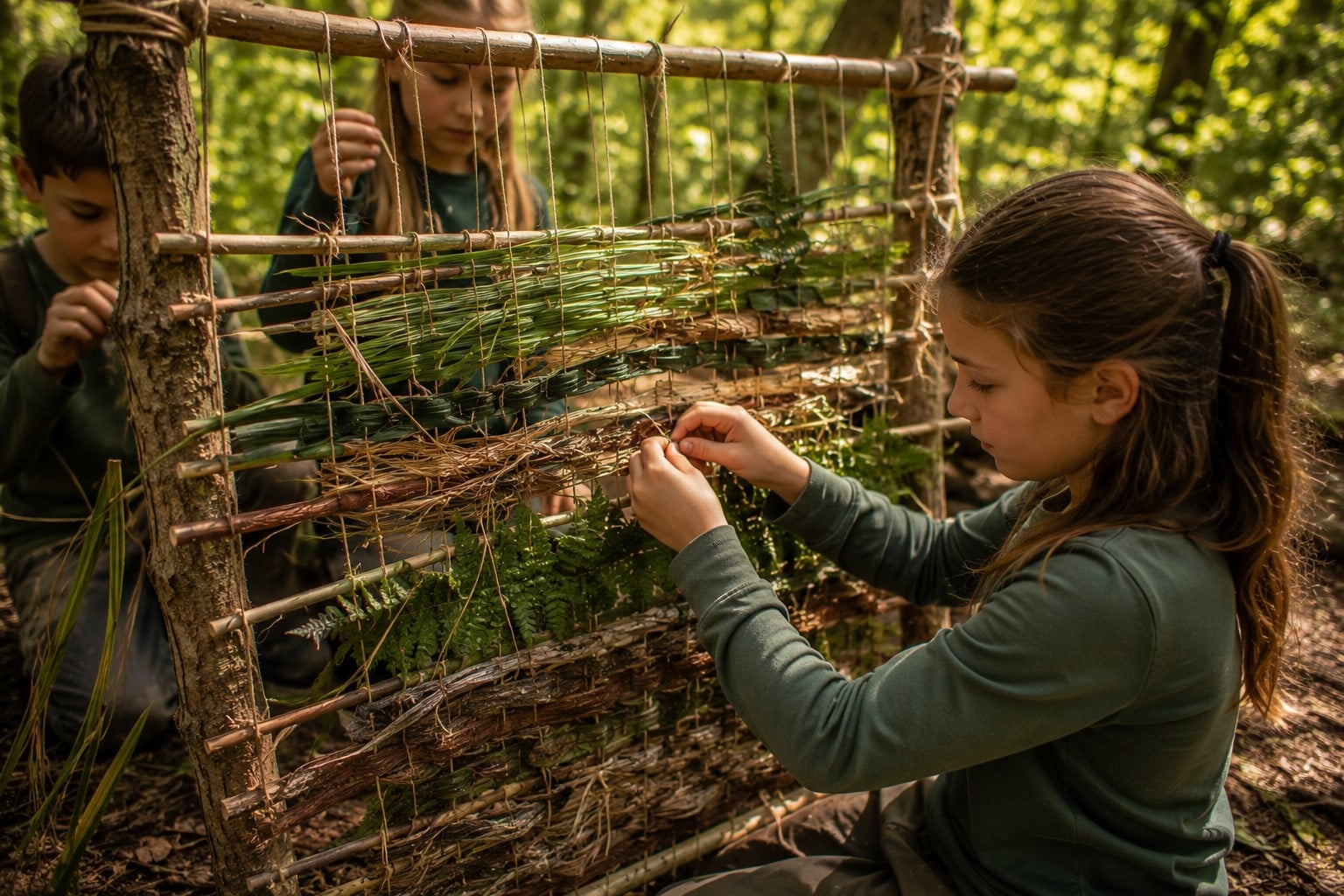
Tie horizontal sticks between two upright posts or tree trunks to create a simple loom. Weave long grass, ferns, strips of bark, and plant stems over and under through the horizontal sticks.
Natural weaving connects kids to one of the oldest human crafts in the most direct and satisfying way.
The process of selecting and weaving natural materials develops fine motor skills and an appreciation for the variety of textures available in the natural world. The finished woven piece left hanging between the trees looks beautiful and completely at home in the woodland setting. This activity generates real quiet focus in kids who are sometimes hard to settle.
For more wonderful weaving and natural material craft ideas that create this same quality of deep focused engagement, go check out 17 Caterpillar Craft Ideas That Are Almost Too Cute to Make because those craft projects use natural materials in equally creative and beautiful ways.
11. Clay Work With Natural Materials
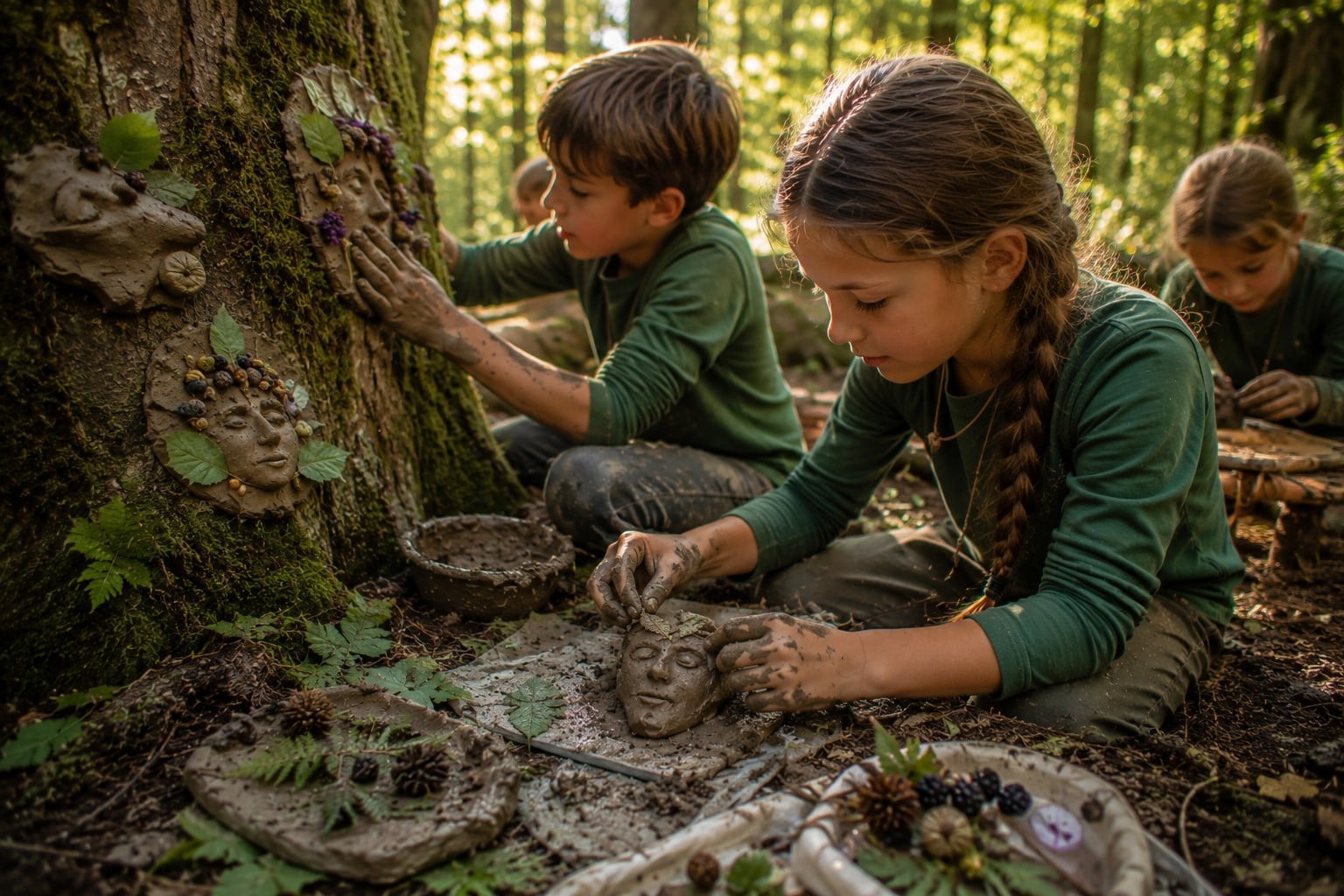
Dig clay from a riverbank or bring air dry clay to the forest. Use it to create sculptures, faces pressed onto tree bark, and small vessels. Decorate with pressed leaves, seeds, and berries.
Working with clay in a natural setting feels completely different from working with clay indoors.
The connection between the clay and the earth it came from gives the activity a really grounded quality. Kids press bark textures, leaf patterns, and seed pods into their clay work to create pieces that feel genuinely connected to the forest.
Leaving clay faces pressed onto trees creates a magical forest spirit quality that kids find completely enchanting.
12. Shelter Building Challenge
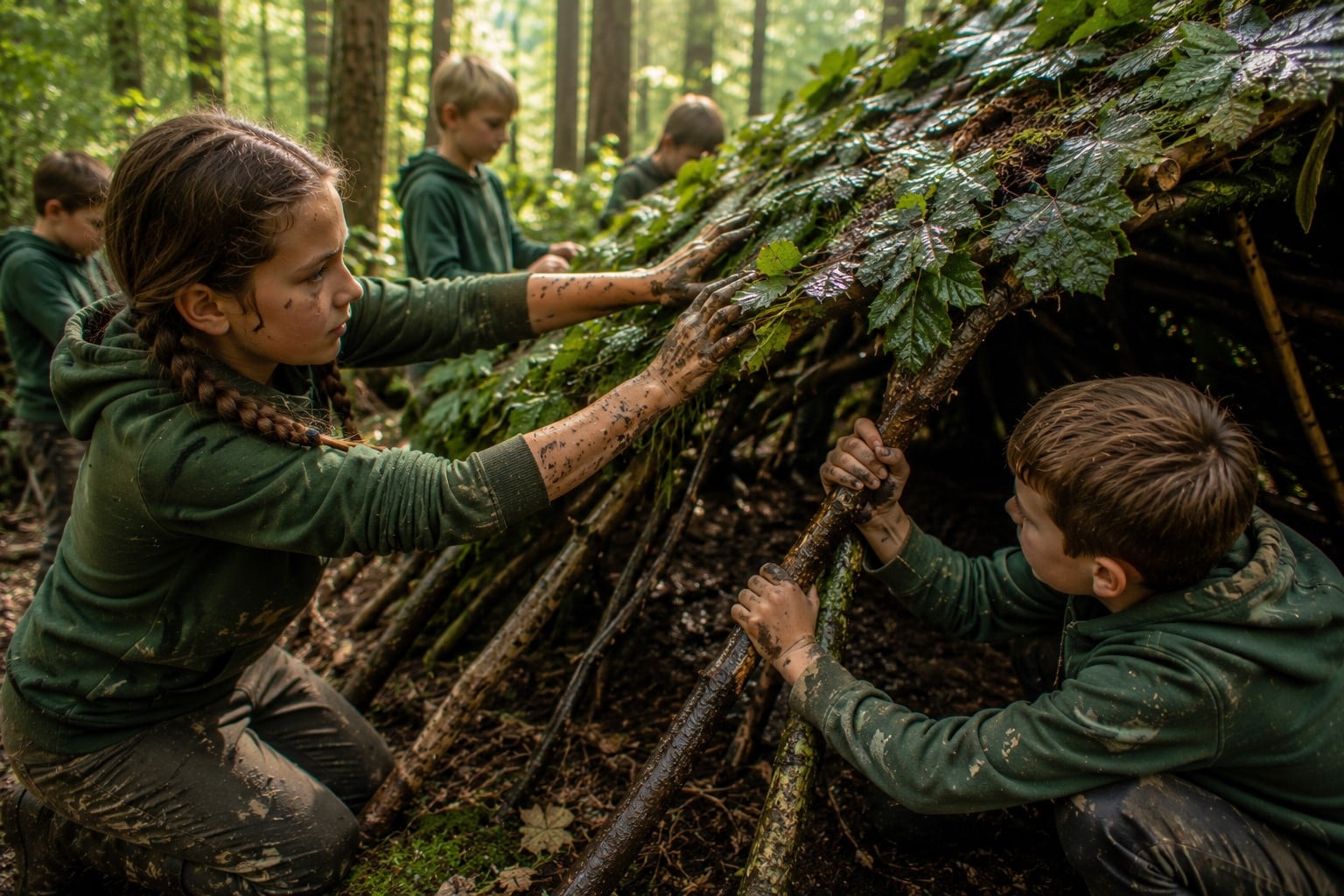
Set a timer and challenge kids to build the most weatherproof shelter they can using only natural materials found in the forest. Test each shelter with a watering can to see how waterproof it really is.
Adding a timed challenge and a genuine test to shelter building raises the engagement level significantly.
Kids work with real purpose and urgency when they know their shelter will be tested. The testing moment is always brilliant whether the shelter passes or leaks dramatically. Both outcomes generate valuable learning conversations about what worked, what did not, and what would be done differently next time.
For more wonderful timed challenge and engineering activity ideas that generate this same quality of purposeful excited engagement, go check out 29 Fun Sleepover Activities Your Kids Will Never Forget because those ideas bring that same spirit of adventure and challenge to indoor settings too.
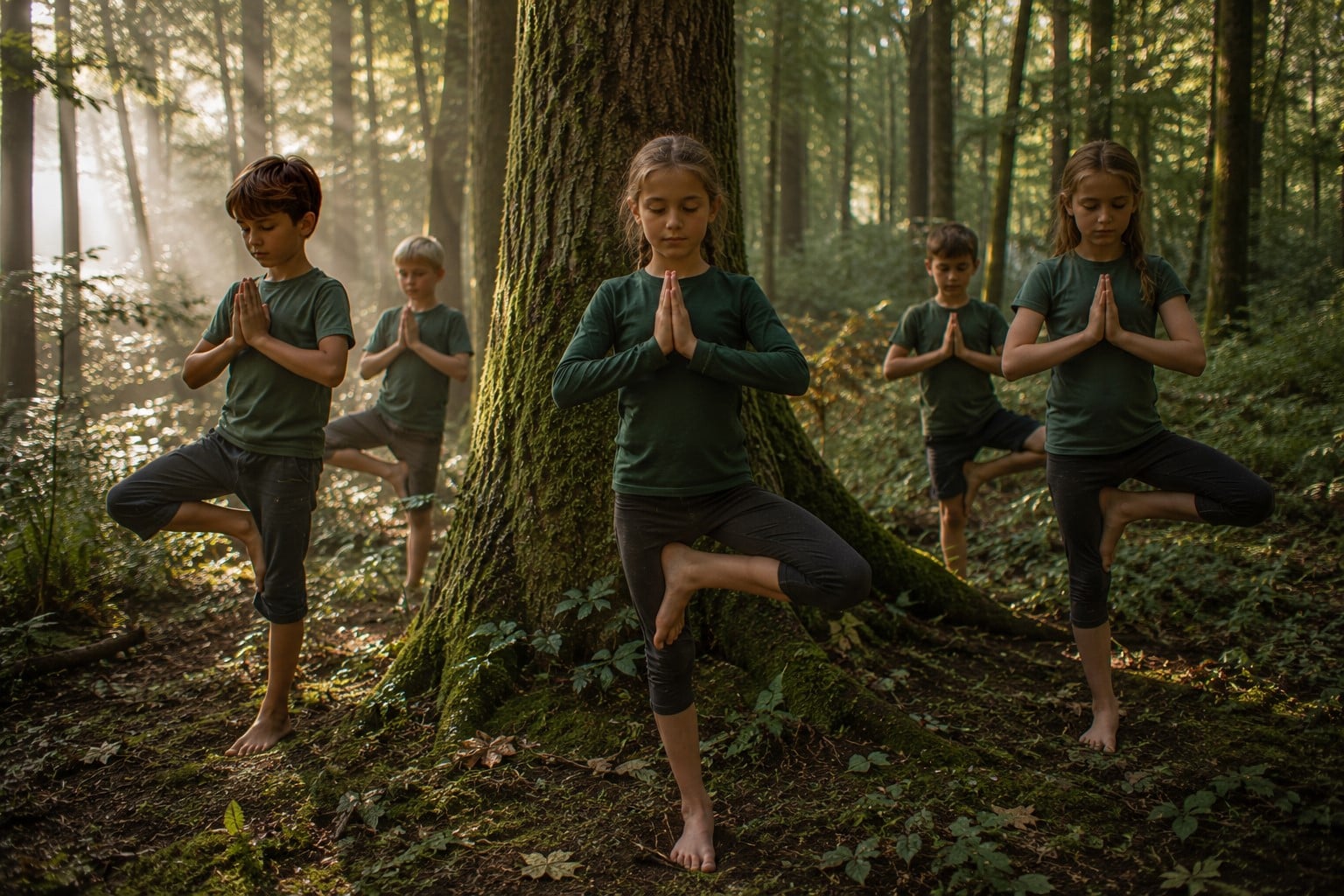
13. Forest Yoga and Mindfulness
Lead kids through a simple yoga and mindfulness session in the forest. Tree pose among real trees. Log balance walks. Deep breathing while listening to the sounds of the woodland around them.
Forest yoga is genuinely different from indoor yoga because the natural setting amplifies every mindful moment.
The sounds of birds, rustling leaves, and distant water create a natural backdrop that deepens the calming effect of every breath and every pose.
Kids who practise mindfulness in natural settings develop a lifelong tool for stress management that they can access simply by going outside and paying attention. That is an incredibly valuable gift.
14. Stick Whittling
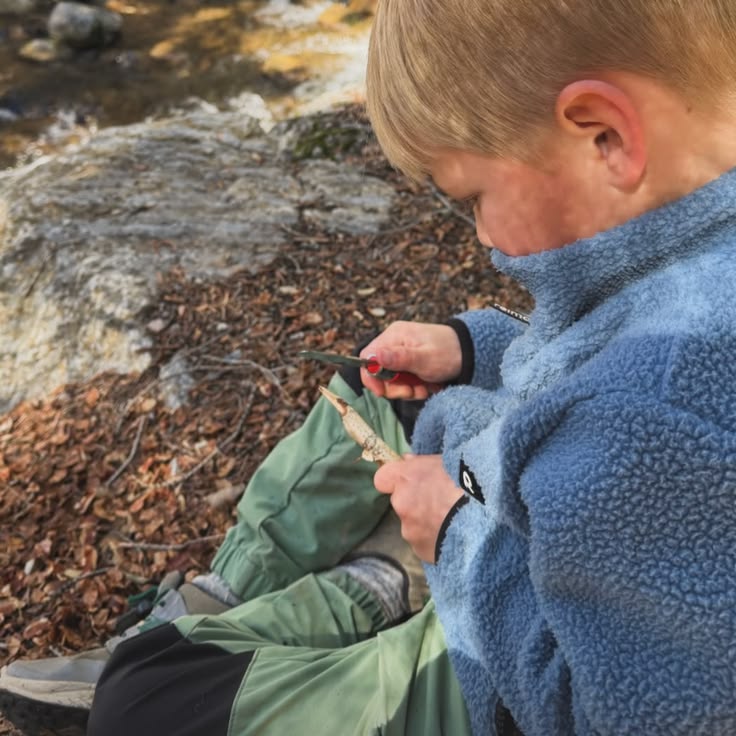
With proper supervision and age appropriate tools, teach older kids to whittle a simple point onto a stick. Start with soft wood and simple straight cuts. Work slowly and always cut away from the body.
Whittling is a traditional woodland skill that builds focus, patience, and real craft ability.
Kids who learn to whittle develop a deep respect for sharp tools and a genuine sense of competence with their hands.
The meditative quality of whittling is genuinely calming and kids who are usually restless often find unexpected stillness in this slow careful work. The finished whittled stick feels like a real achievement that kids carry home with enormous pride.
Go take a look at 27 Learning Activities for 3 Year Olds That Feel Like Playtime because that post shows how the best learning always happens when the activity feels meaningful and real to the child engaging with it.
15. Natural Instrument Making
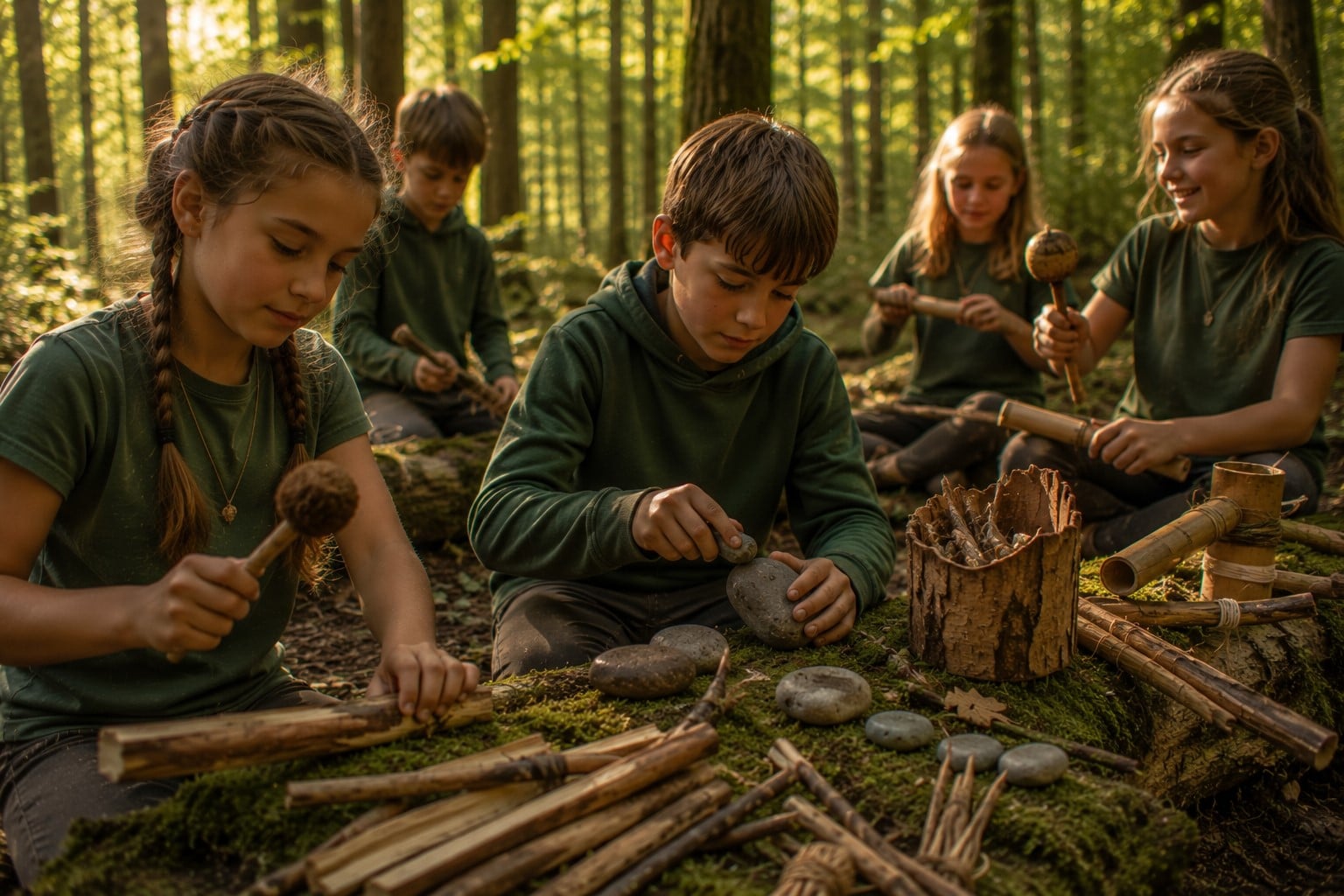
Collect hollow sticks, seed pod rattles, stretched bark strips, and stones of different sizes. Create simple musical instruments from completely natural materials and play them together.
Natural instrument making connects kids to the oldest form of human music making in a really direct and powerful way.
The discovery that a hollow stick makes a completely different sound from a solid one, or that different sized stones create different pitches when tapped, builds real scientific understanding of sound through genuine discovery.
The music making session that follows the instrument making is always wonderfully chaotic and joyful.
16. Barefoot Walking Trail
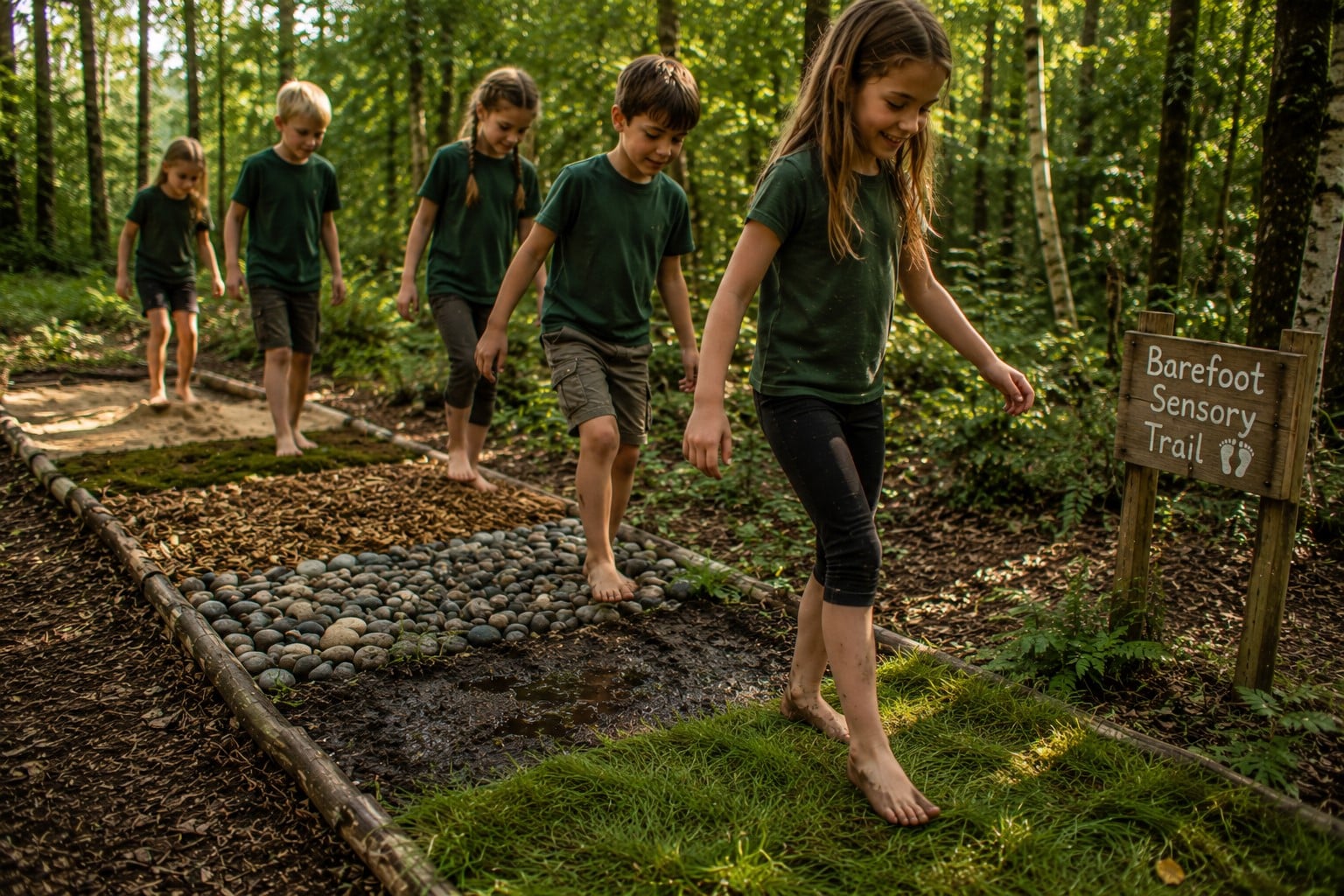
Create a sensory barefoot trail using different natural surfaces. Mud, grass, sand, pebbles, bark chips, moss, and smooth stones each placed in a different section of the trail.
Barefoot walking activates sensory pathways that are rarely stimulated in children who spend most of their time in shoes.
The variety of textures along the trail creates genuine sensory interest and the reactions kids have to different surfaces are always really entertaining to watch. Some surfaces they love, others make them giggle with disgust, and others create expressions of pure sensory delight. This simple activity does genuinely valuable sensory integration work.
For more wonderful sensory exploration ideas that tap into these same important developmental pathways, go explore 35 Minute to Win It Games for Kids That Bring Instant Laughter because those activities engage the body and the senses in ways that create lasting positive memories.
17. Forest Scavenger Hunt
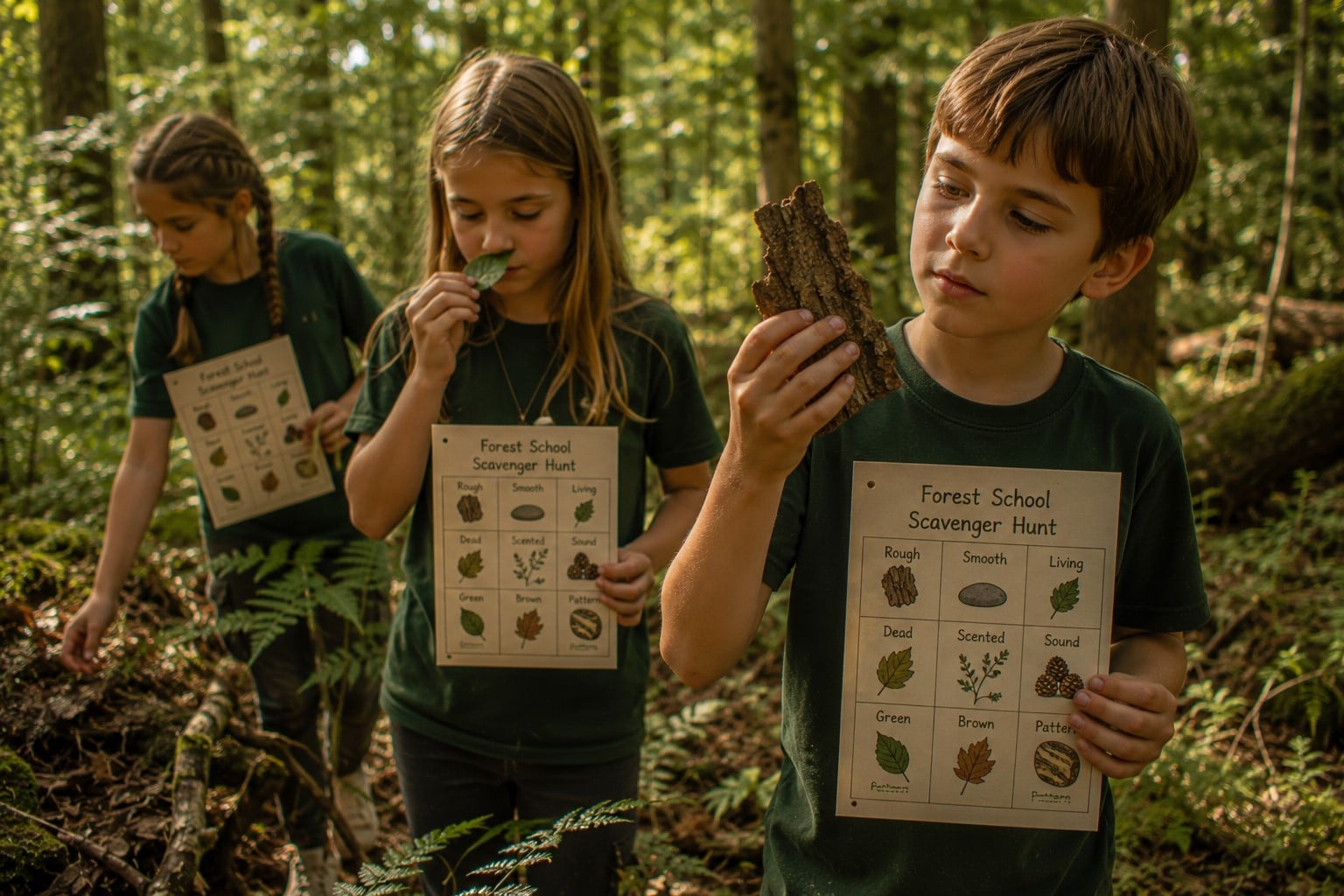
Create a detailed scavenger hunt list of natural items to find. Find something rough and something smooth, something living and something dead, an interesting scent, and an object that makes a sound when moved.
Category based scavenger hunts develop observation skills much more effectively than simple object lists.
Finding something rough forces kids to really examine and compare textures rather than just picking up any object and moving on. Finding something that makes a sound requires listening as well as looking.
These category challenges engage multiple senses and generate genuinely interesting conversations about the natural world.
18. Log Rolling and Invertebrate Study
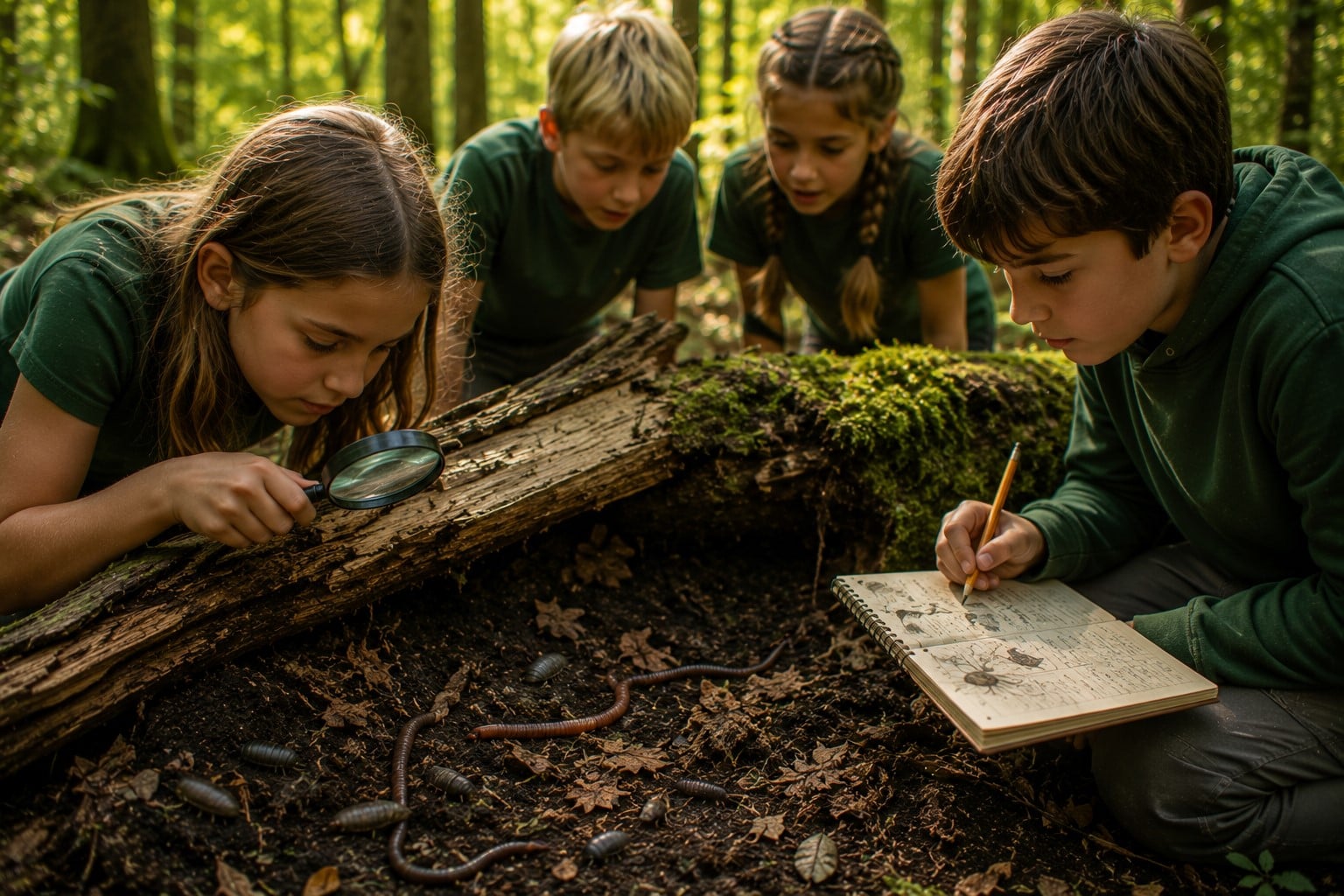
Find a large fallen log and roll it carefully to one side. Observe everything living underneath it. Sketch and identify the invertebrates found. Replace the log carefully in its original position.
The world under a log is one of the most exciting discoveries available in a forest setting.
Kids are always genuinely surprised by how much life exists in that dark hidden space. The careful study of what they find builds scientific observation and recording skills in the most authentic way possible.
The careful replacement of the log teaches environmental responsibility and respect for the creatures whose home it is.
Go check out 21 Calm Activities for Kids That Actually Work on Busy Days because those ideas show how some of the most deeply valuable activities are the quiet careful ones that require real attention and generate real wonder.
19. Natural Dye Making
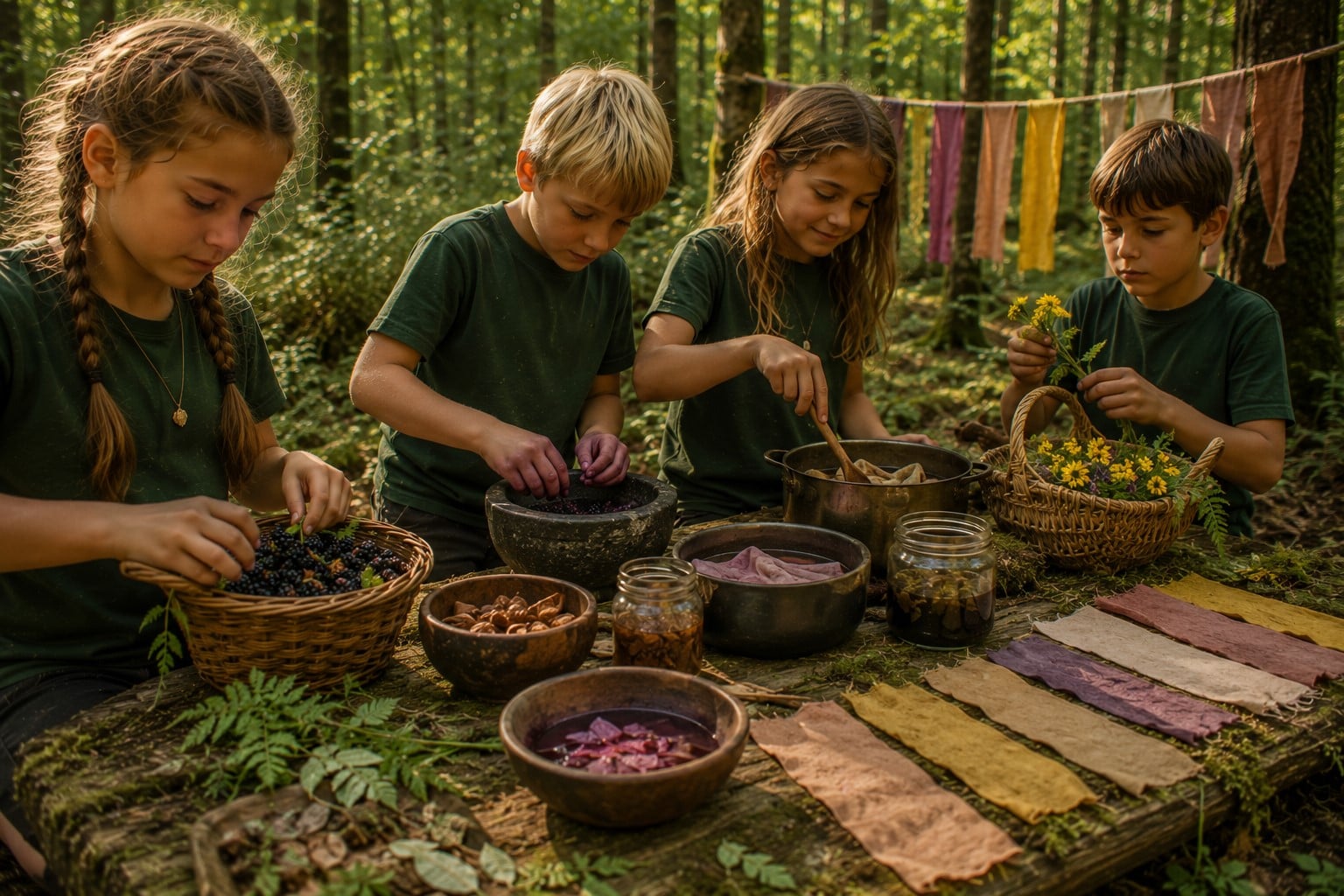
Collect berries, bark, leaves, and flowers that produce natural colour. Boil or crush them with water to create natural dyes. Use the dyes to colour fabric, paper, or wool.
Natural dye making connects kids to an ancient human technology in the most hands on way.
The discovery that blackberries make purple, walnut shells make brown, and dandelions make yellow creates genuine excitement and curiosity.
Kids start looking at every plant as a potential colour source which completely changes how they look at the natural world around them. The colours produced are always soft and beautiful with a quality that synthetic dyes simply cannot replicate.
20. Tree Climbing
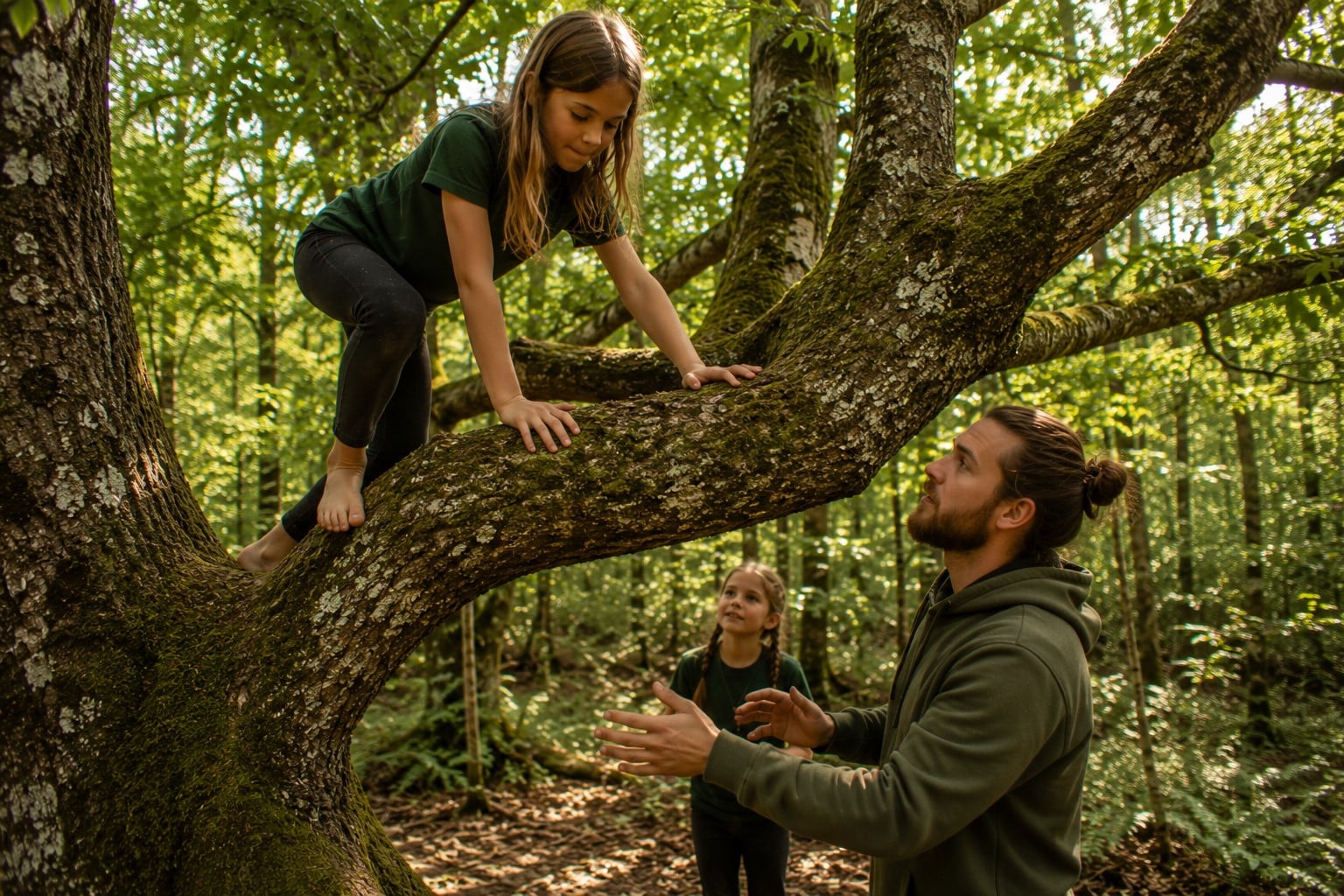
Find appropriate trees with low sturdy branches and let kids climb with supervision. Set clear height boundaries and teach safe climbing techniques. Encourage kids to go only as high as they feel comfortable.
Tree climbing is one of the most beneficial physical activities a child can do.
It builds upper body strength, grip, spatial awareness, and crucially the ability to assess and manage genuine risk in a real situation. Kids who learn to climb trees safely develop a sense of physical confidence and self trust that transfers to every other challenging situation in their lives. Never rush a child on a tree and always let them set their own pace.
For more wonderful physical confidence building activity ideas that develop real capability and self trust in kids, go explore 27 Obstacle Course Ideas for Kids You Should Recreate NOW because those activities build the same physical confidence in a slightly more controlled setting.
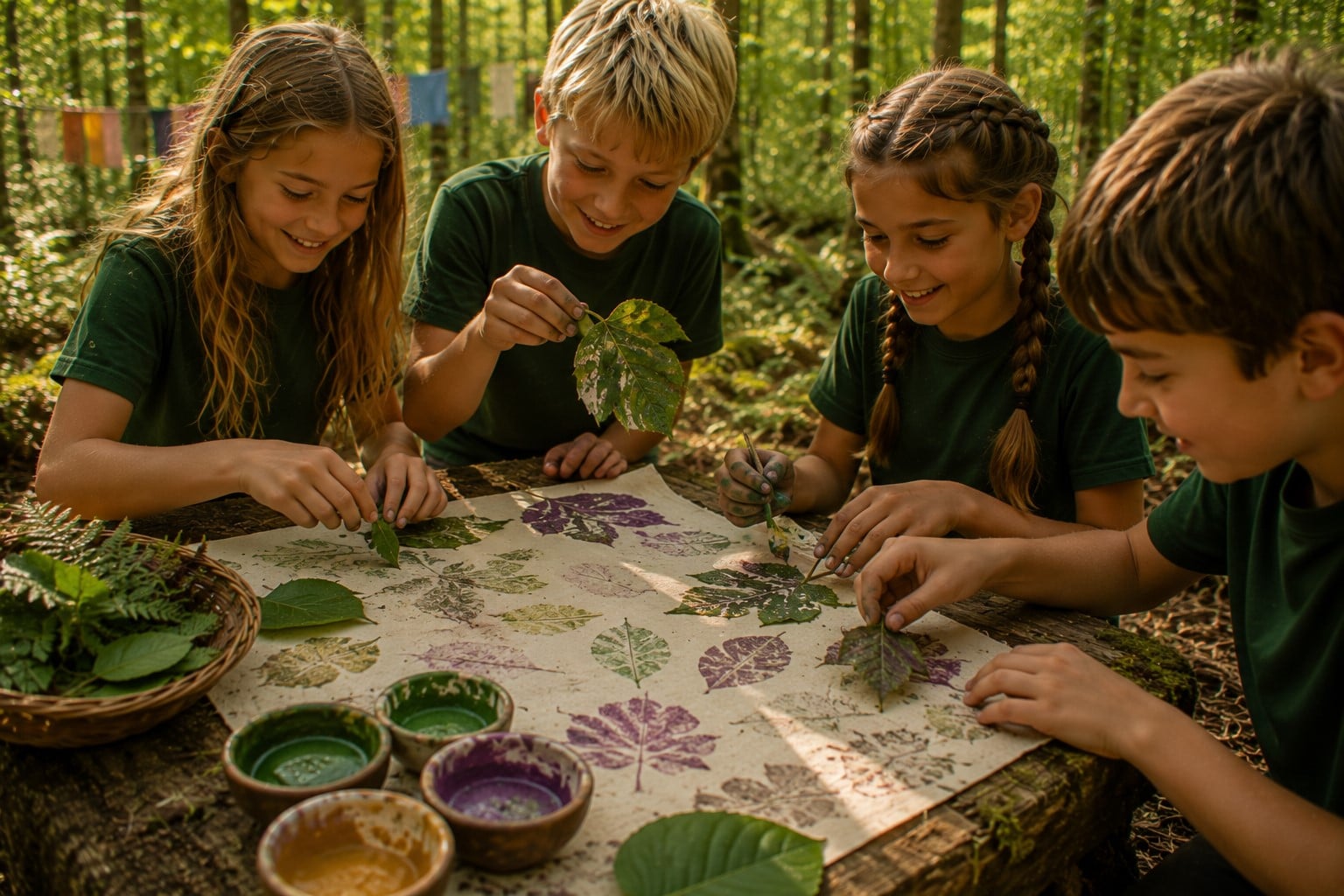
21. Leaf Printing on Fabric
Collect leaves with interesting shapes and vein patterns. Paint them on one side and press them firmly onto fabric pieces. Peel away to reveal beautiful botanical prints. Use heat to set the prints once dry.
Leaf printing on fabric connects art making to the natural world in a really direct and beautiful way.
The precision of the leaf vein patterns that transfer onto fabric always surprises kids with how detailed and professional the finished prints look. Use white or light coloured cotton fabric for the most vibrant results.
The finished printed fabric can be made into bunting, a simple bag, or a piece of display fabric that brings the forest home.
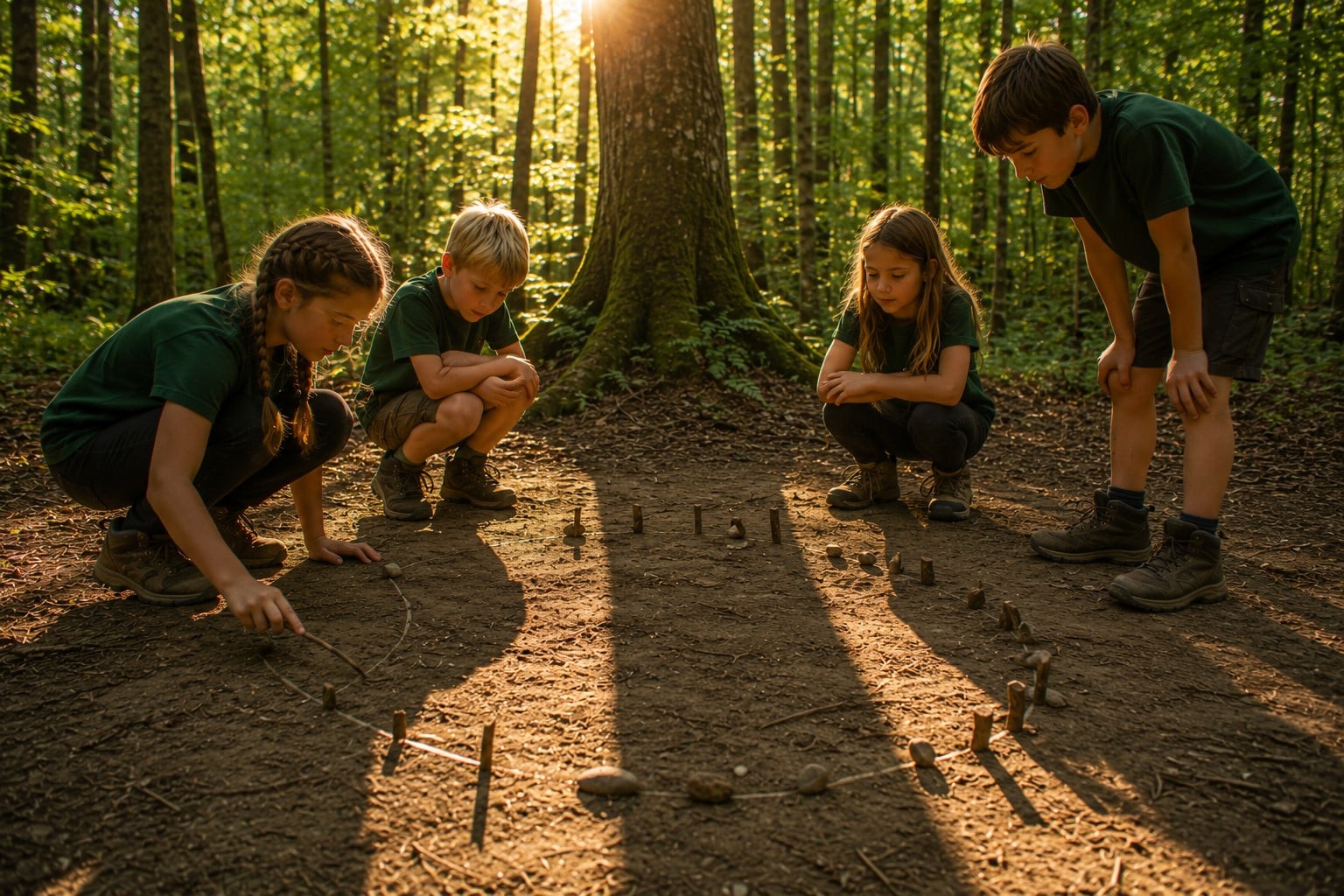
22. Shadow Play and Sun Tracking
On a sunny day, use sticks to mark the end of shadows at regular intervals throughout the day. Connect the marks to reveal the arc of the sun’s movement across the sky.
Shadow tracking is one of the most elegant and simple ways to teach kids about the rotation of the earth.
Kids who physically watch shadows move across a forest floor throughout a whole day develop an intuitive understanding of how the earth’s rotation creates the passage of time.
This activity requires patience and revisiting across a whole day which itself teaches valuable lessons about slow observation and scientific patience.
Go take a look at 23 Party Games for Kids That Everyone Will Be Talking About because those activities show how shared outdoor experiences create the kind of joyful connection between kids that is hard to replicate in any indoor setting.
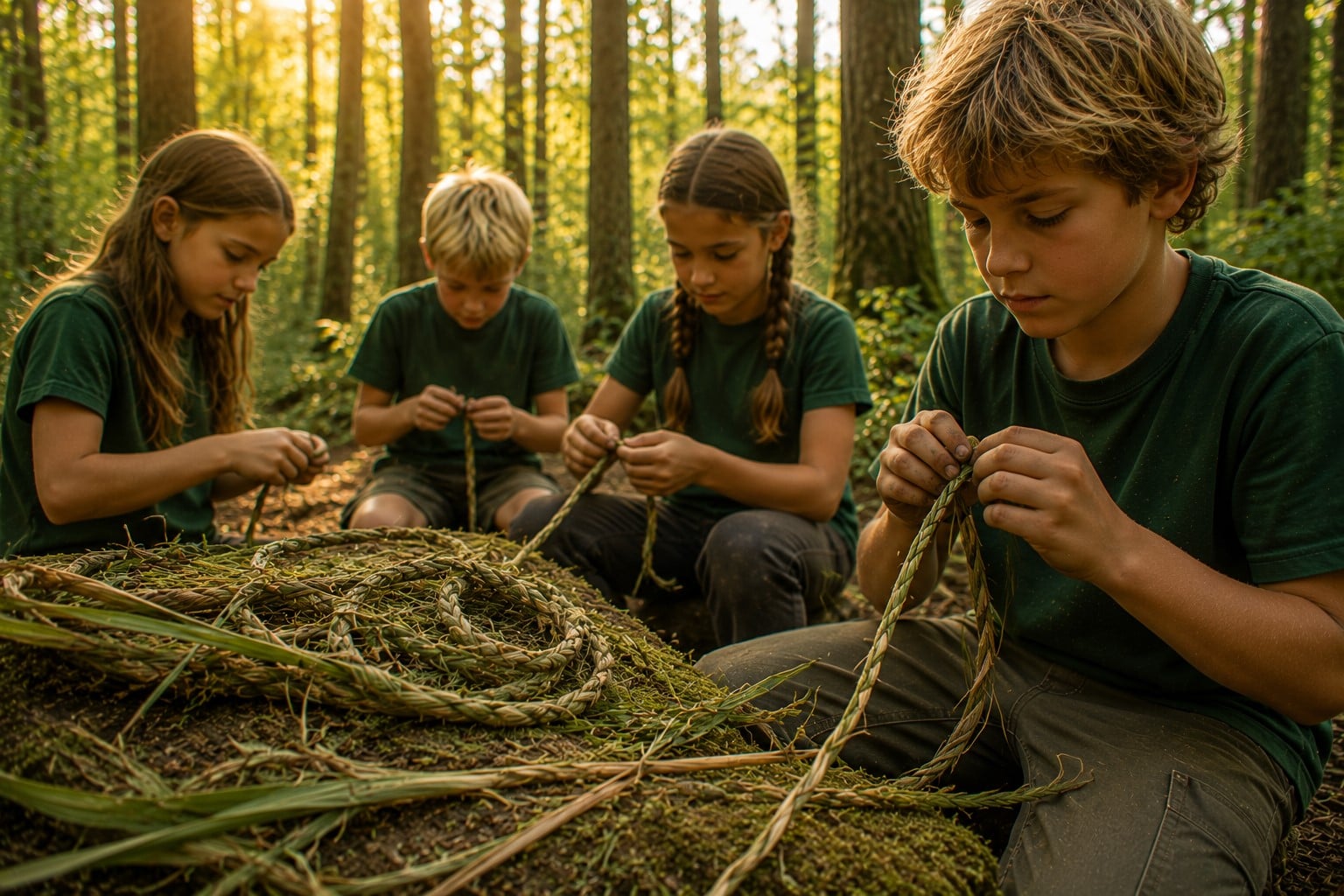
23. Natural Rope Making
Collect long fibrous plants like nettles, iris leaves, or long grass stems. Twist them together using a traditional rope making technique to create a short length of natural rope.
Natural rope making connects kids to a technology that humans have used for tens of thousands of years.
The physical process of twisting and plying natural fibres together is genuinely meditative and the finished rope is always surprisingly strong.
Kids are amazed that something as simple as twisted grass can support real weight. This discovery creates genuine respect for the ingenuity of people throughout human history.
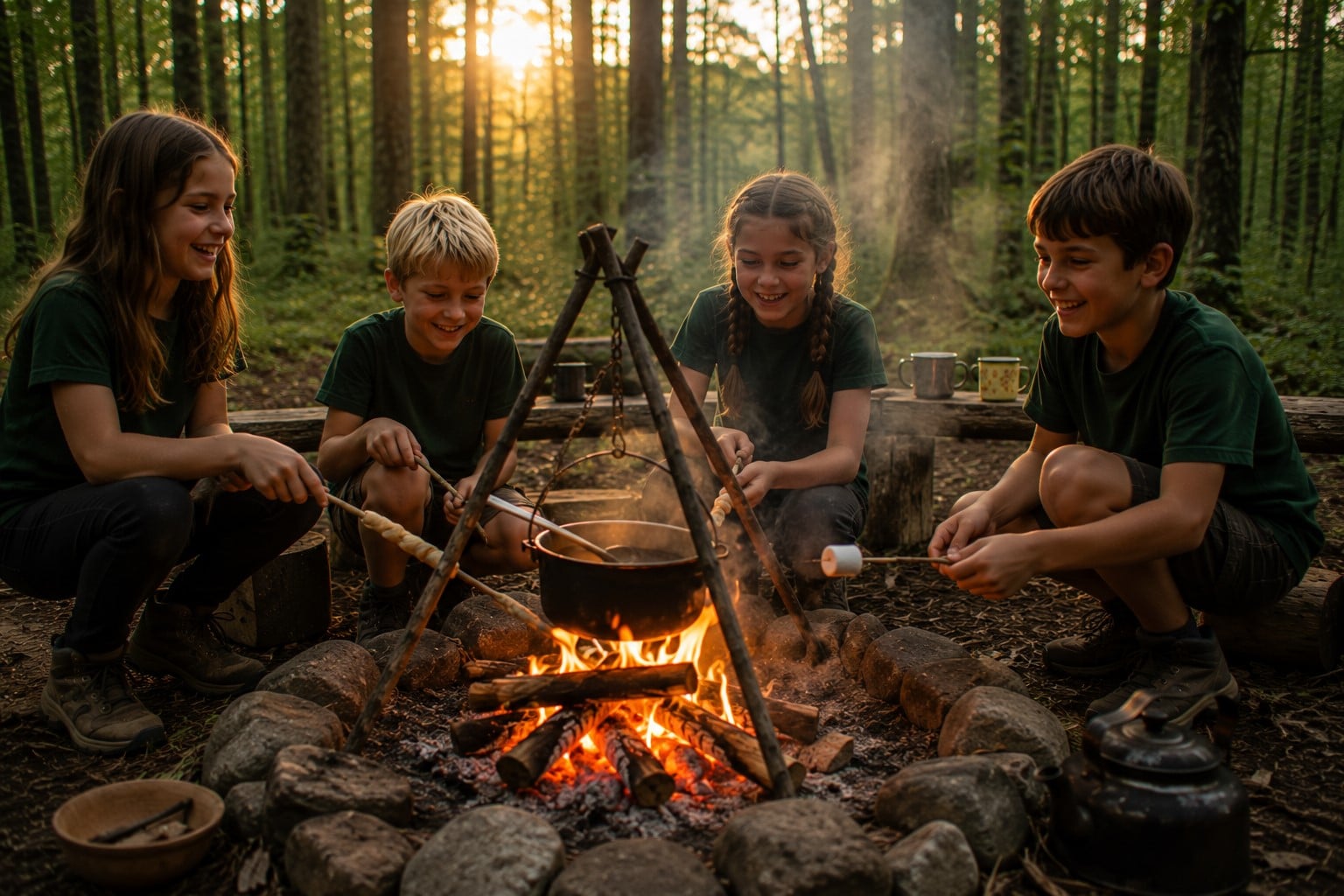
24. Campfire Cooking
Use the campfire built earlier in the session to cook simple food. Twist dough around sticks and cook over the fire. Toast marshmallows. Warm soup in a simple pot balanced on the fire.
Campfire cooking is honestly one of the most memorable experiences forest school can offer.
Food cooked over a fire that you built yourself in a forest tastes completely different from the same food cooked at home. Kids know it and they say so every single time. The combination of outdoor cooking, natural fire, and shared eating creates a communal experience that builds genuine bonds between everyone around the fire.
For more wonderful shared food and community building activity ideas, go check out 31 Screen-Free Activities for Kids Parents Will Love because those activities show how the most connecting experiences are always the ones that happen away from screens and in real shared physical space.
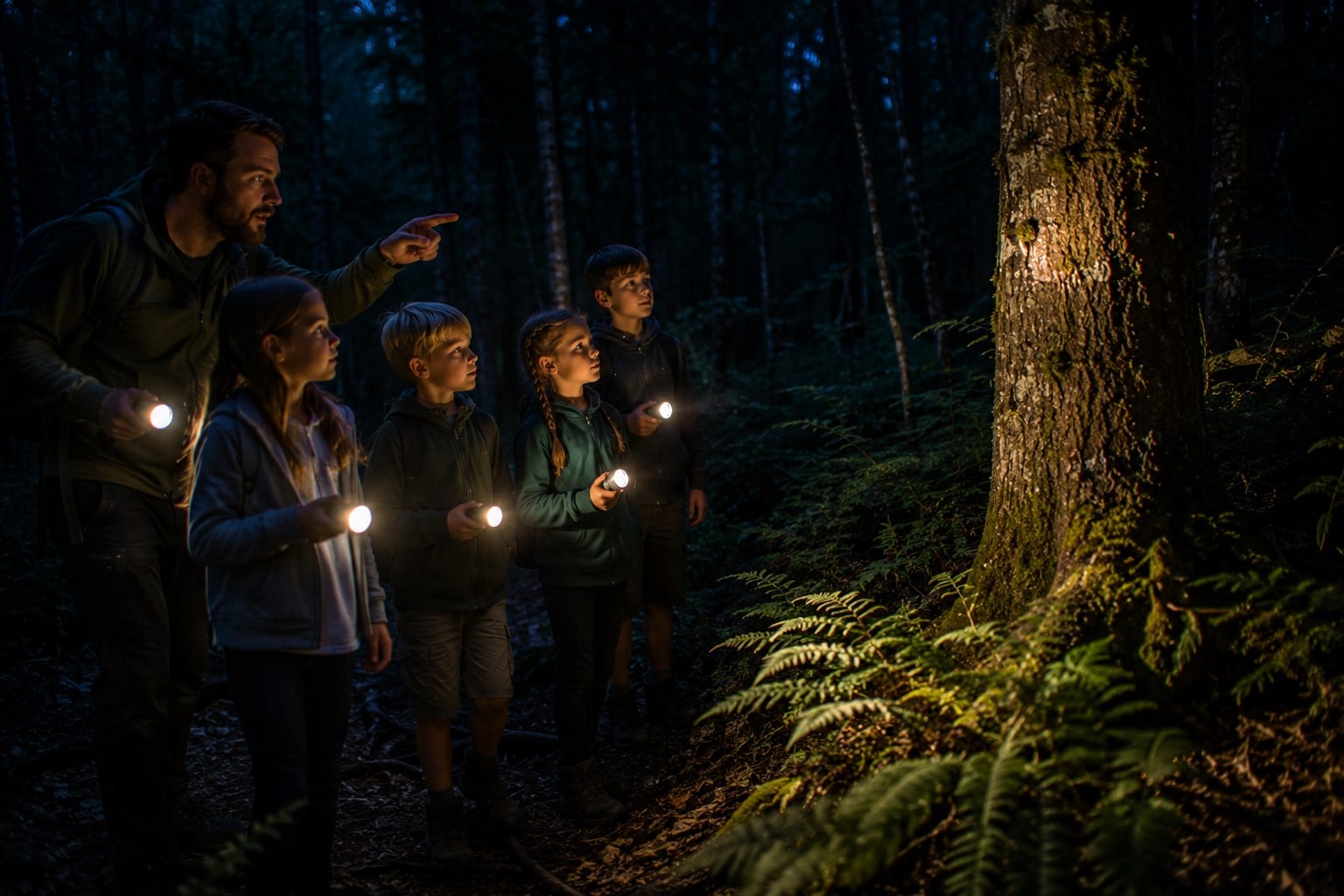
25. Night Walk
As dusk falls, head out into the woodland with torches. Listen for owls, look for bats, notice how different the forest feels and sounds in the dark. Move quietly and let the natural sounds surround you.
A night walk in a forest is one of the most powerful sensory experiences you can offer a child.
The sounds of the forest intensify as light fades. Smells become stronger. Movements in the undergrowth feel more mysterious and exciting.
Kids who experience the forest at night develop a sense of the natural world as a living breathing place that does not stop when humans go inside. That understanding is genuinely profound.
26. Whittled Spoon Making
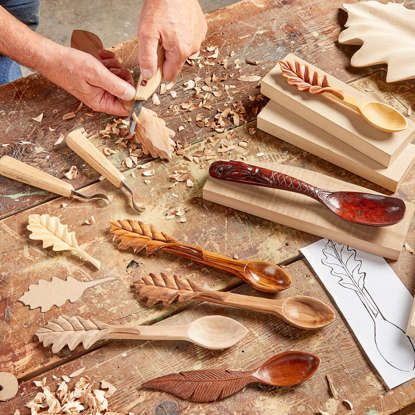
Using slightly more advanced whittling skills, attempt to carve a simple spoon from a suitable piece of soft wood. This takes time and patience but the finished result is genuinely beautiful and useful.
Whittled spoon making is a longer term project that spans multiple forest school sessions.
The gradual transformation of a rough piece of wood into a functional smooth spoon teaches kids about patience, persistence, and craft in the most direct way possible.
Kids who complete a whittled spoon genuinely treasure it and often use it at home. The connection between effort, skill, and a beautiful finished object is a lesson that lasts a lifetime.
For more wonderful patient and detailed making activities that build these same qualities of persistence and craft pride, go check out 17 Caterpillar Craft Ideas That Are Almost Too Cute to Make because those projects show how even simple making activities build real craft skills when approached with care and attention.
27. Forest Music Circle
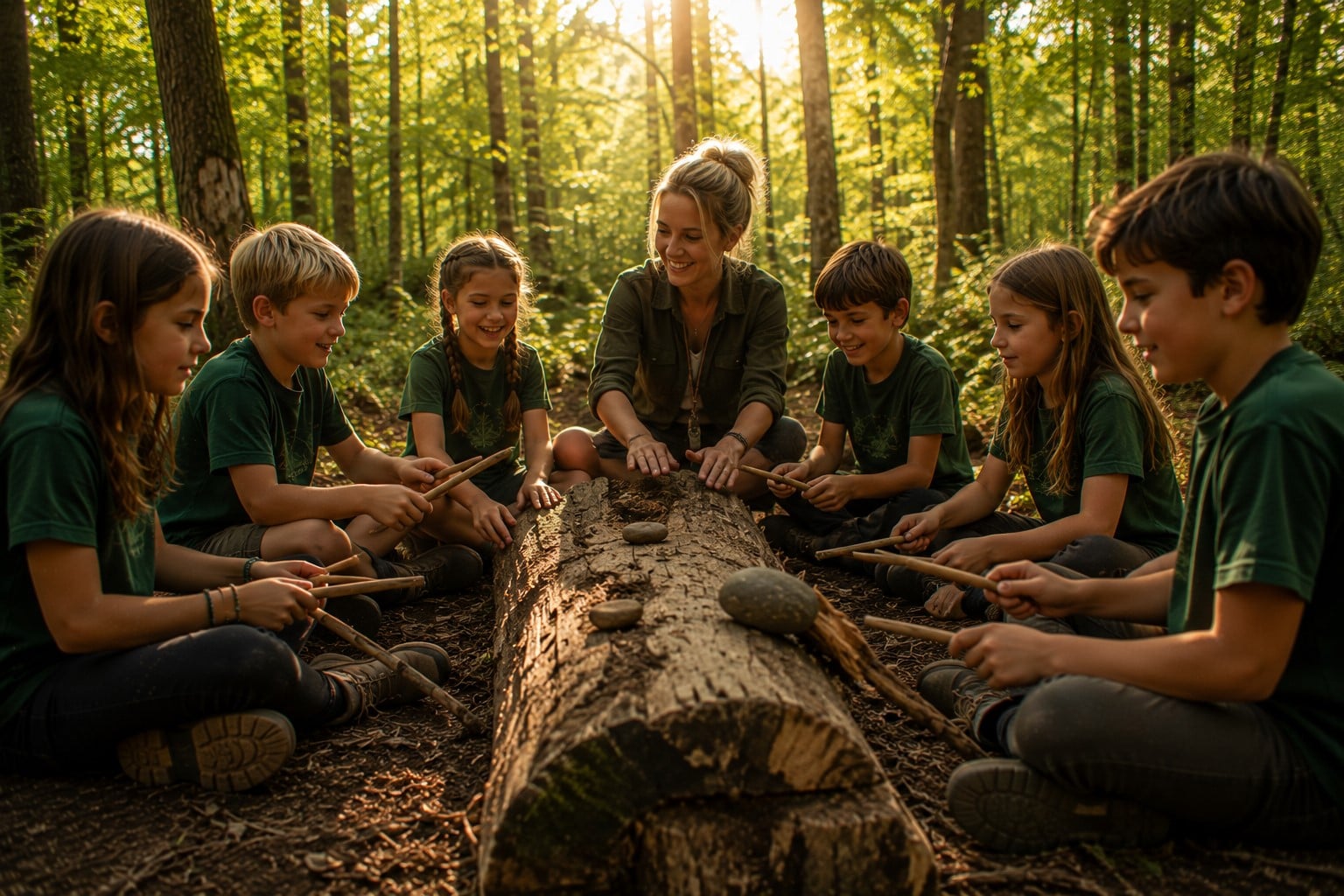
Sit in a circle in the forest. Pass a rhythm around the circle using sticks, stones, and hands on logs. Add layers of sound gradually until the whole group is playing together in a complex rhythm.
Forest music circles are deeply connecting and genuinely beautiful.
The acoustic quality of a woodland space amplifies natural percussion sounds in a really lovely way.
Starting with a simple rhythm and building it into something complex and layered gives kids a real experience of musical structure and collective creativity.
The sounds of sticks on logs blending with the sounds of the forest creates something genuinely magical.
28. Natural Painting Brushes
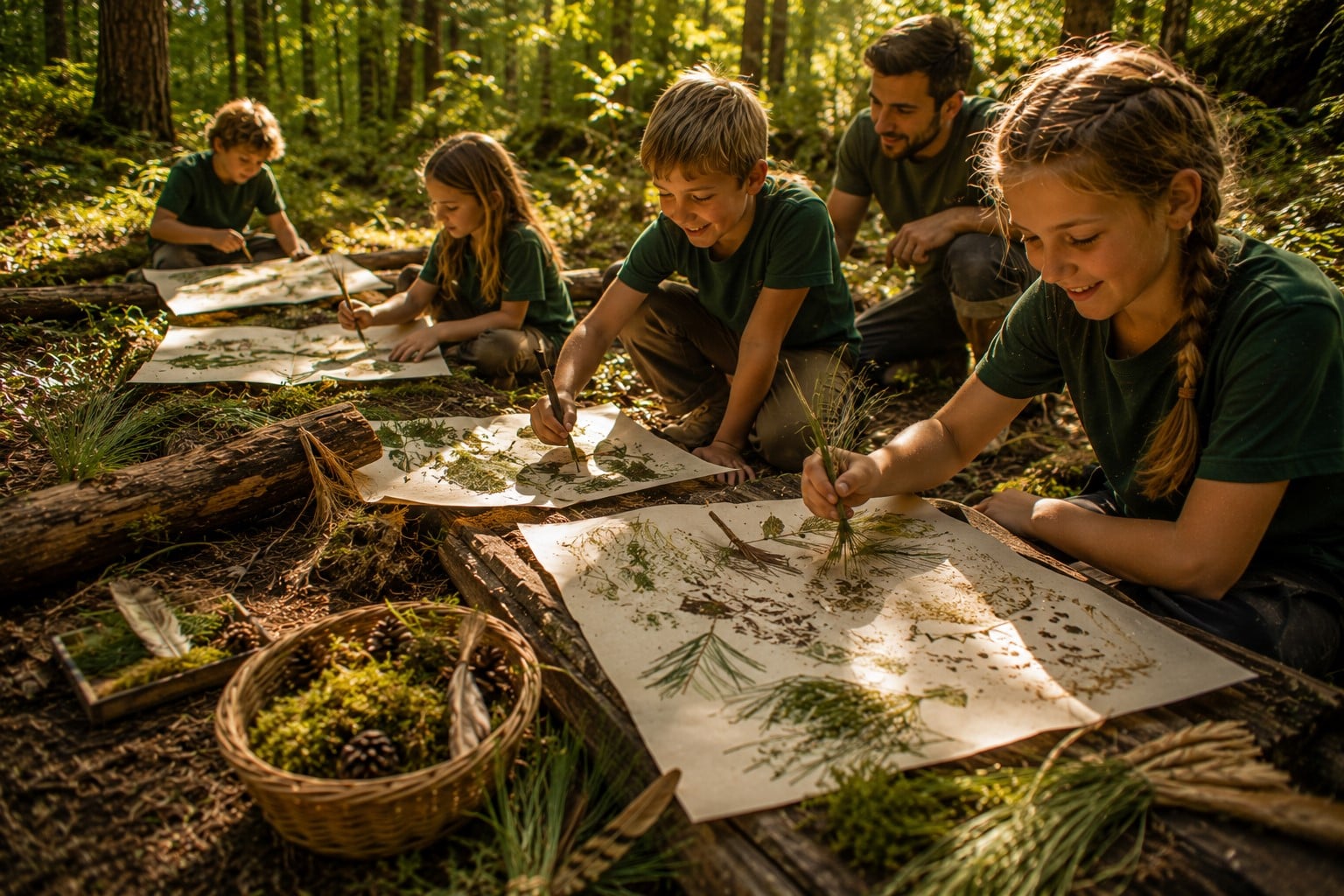
Collect different natural materials to use as painting tools. Pine branches for stippling. Feathers for fine lines. Moss for textured prints. Bundled grass for broad sweeping strokes.
Making and using natural painting tools changes how kids think about art making completely.
The variety of marks that different natural materials make is endlessly interesting and surprising. Kids discover that different tools create completely different qualities of line and texture.
This activity builds artistic awareness and a sense of creative experimentation that transfers beautifully to all their future art making.
Go explore 27 Zoo Animal Craft Ideas for Kids That Spark Creativity because those projects show how creative experimentation with unusual tools and materials leads to the most surprising and beautiful artistic results.
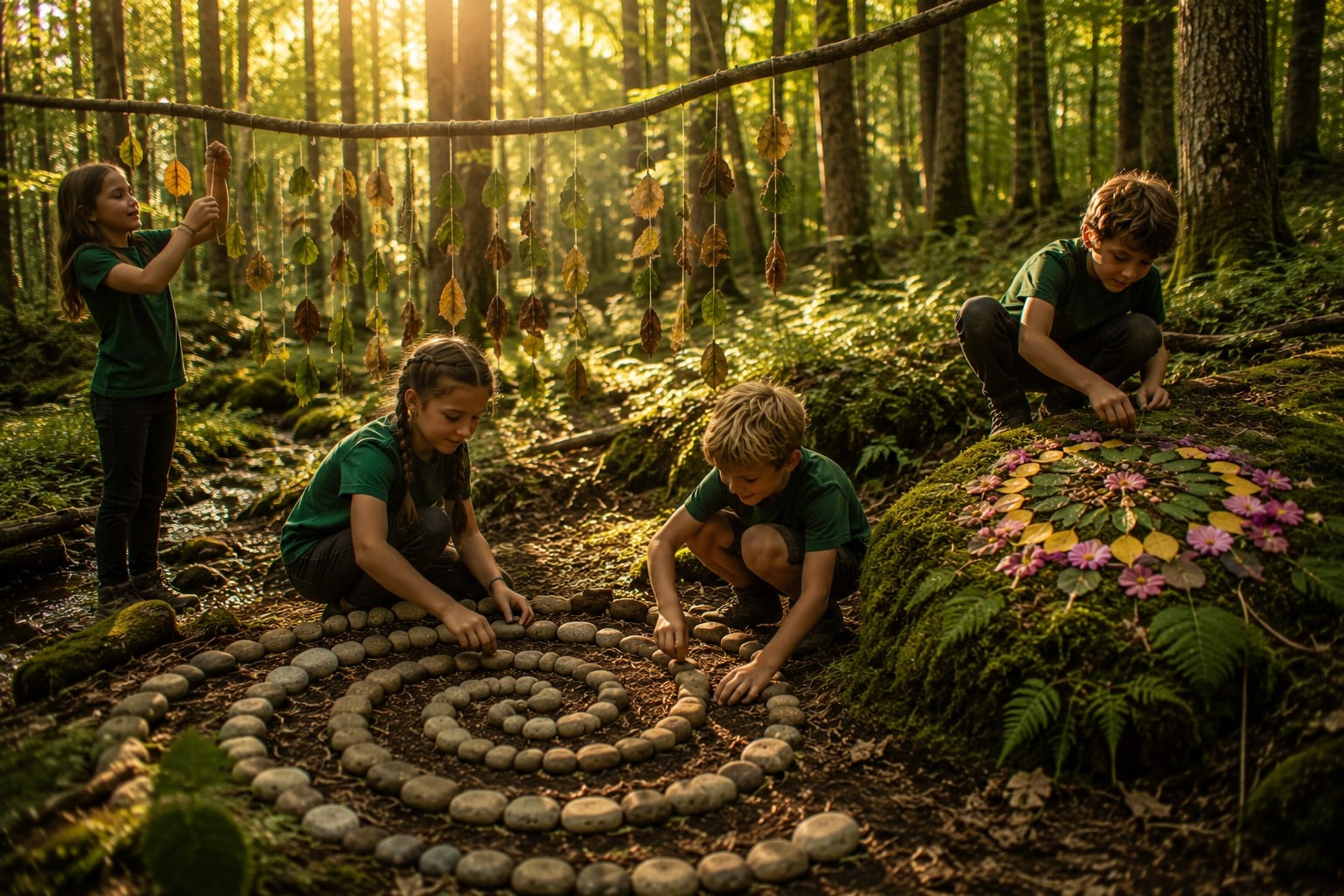
29. Wild Art Installation
Create a temporary art installation in the forest using natural materials. Arrange stones in a spiral. Hang leaves from branches on threads. Create a flower circle on a mossy bank.
Wild art installations connect kids to the tradition of land art and environmental sculpture.
The conversation about why we make art, what art is for, and how long art needs to last that naturally emerges from leaving a beautiful installation in the forest is genuinely profound.
Kids who make wild art develop an understanding of creativity as something that can happen anywhere and does not need to be permanent to be valuable and meaningful.
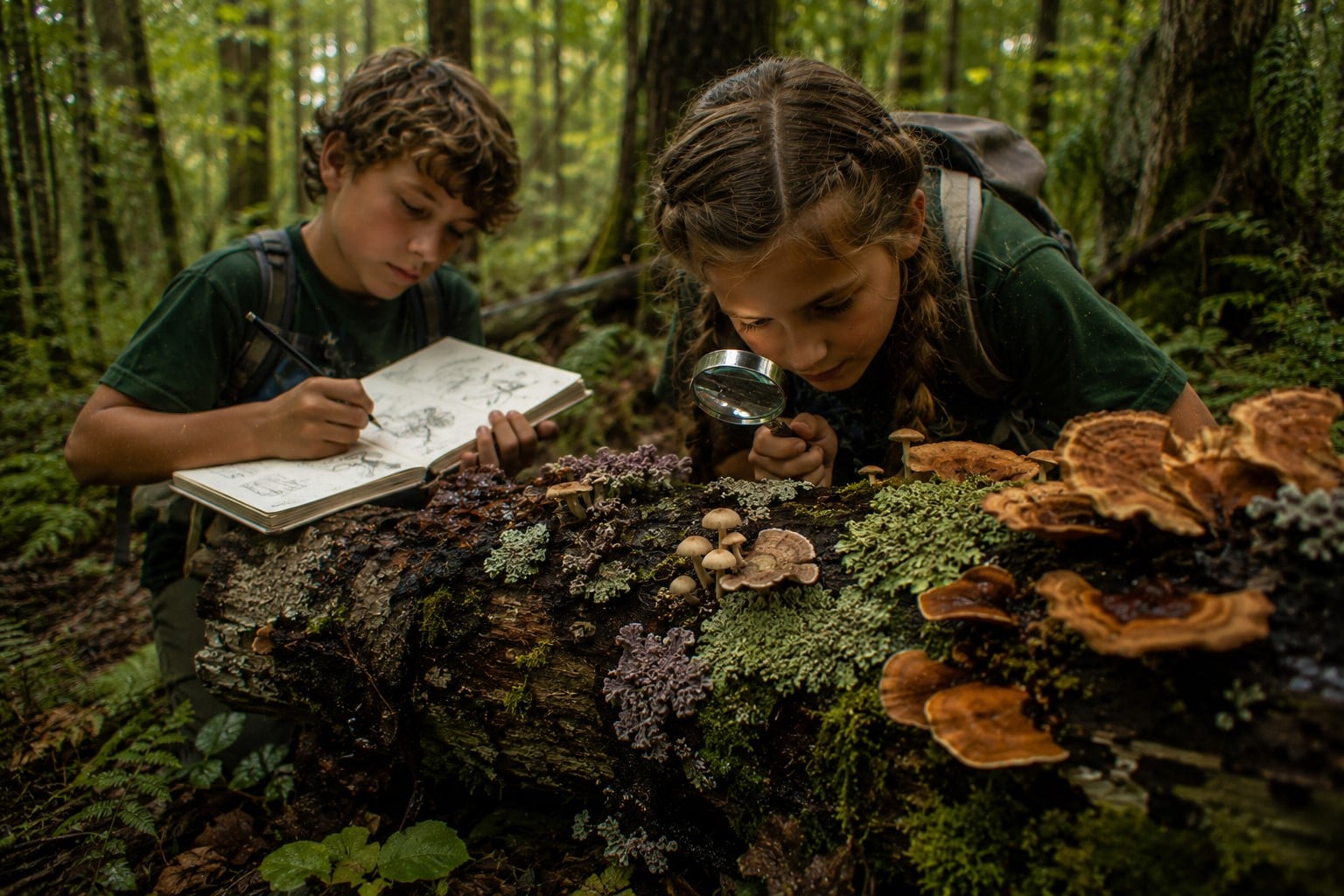
30. Fungi and Lichen Study
Look carefully at trees, logs, and the forest floor for different species of fungi and lichen. Sketch and observe each one carefully. Learn about the role of decomposers in the forest ecosystem.
Fungi and lichen study opens up a completely hidden world that most people walk past without noticing.
Kids who start looking for fungi and lichen find them absolutely everywhere once their eyes are tuned to see them. The extraordinary variety of forms, colours, and textures in woodland fungi is genuinely astonishing.
This study connects beautifully to conversations about decomposition, nutrient cycles, and how forests regenerate themselves over time.
For more wonderful nature observation and science learning activities, go check out 19 Letter P Activities for Preschool That Make Learning So Fun because that thematic approach to connecting observation with learning works brilliantly at every age and in every natural setting.
31. Reflective Sit Spot
End every forest school session with five minutes of silent sitting alone in a chosen spot. Listen, observe, and notice everything around you without talking or moving. Share observations afterwards.
The sit spot practice is one of the most powerful tools in the whole forest school approach.
Kids who practise regular sit spots develop a quality of attention and presence that is genuinely rare in the modern world. Over multiple visits to the same spot, kids begin to notice changes across sessions.
A bird that visits regularly. A plant that grows and flowers. These small ongoing observations build a real and lasting relationship with a specific piece of the natural world.
Final Thoughts
Forest school is not an activity. It is a relationship between children and the natural world that develops over time through regular meaningful outdoor experience.
Every activity on this list works best not as a one off event but as part of an ongoing outdoor programme where kids return to the same natural space repeatedly across different seasons and weather conditions.
The forest becomes a familiar and beloved place and that familiarity deepens every experience and every learning moment.
So find your local woodland, take your kids outside, and start building that relationship with the natural world that will serve them beautifully for the rest of their lives.
And when you are ready to bring some of that outdoor wonder and natural creativity back inside, go check out 23 Fish Craft Ideas for Kids That Are Perfect for Ocean Themes because those beautiful projects celebrate the natural world in the most colourful and creative ways imaginable.