Ready to make a 13th birthday sleepover more exciting? These sleepover ideas for 13 olds include creative crafts, clever challenges and activities for different interests.
Turning 13 brings a new mix of interests, opinions, and friendships. The jokes change, favourite activities shift, and spending time together becomes as much about shared memories as the activity itself.
A sleepover offers room for those friendships to grow, whether the girls are sharing stories they would not tell in a group chat, laughing over an inside joke, or trying something none of them has done before.
These 27 sleepover ideas for 13-year-olds offer ways to make the night feel personal, fun, and worth remembering.
When the conversation slows down, 21 Sleepover Games for Teens That Everyone Will Want to Play gives the group something fun to do together.
1. Create a Mini Escape Room With Household Clues
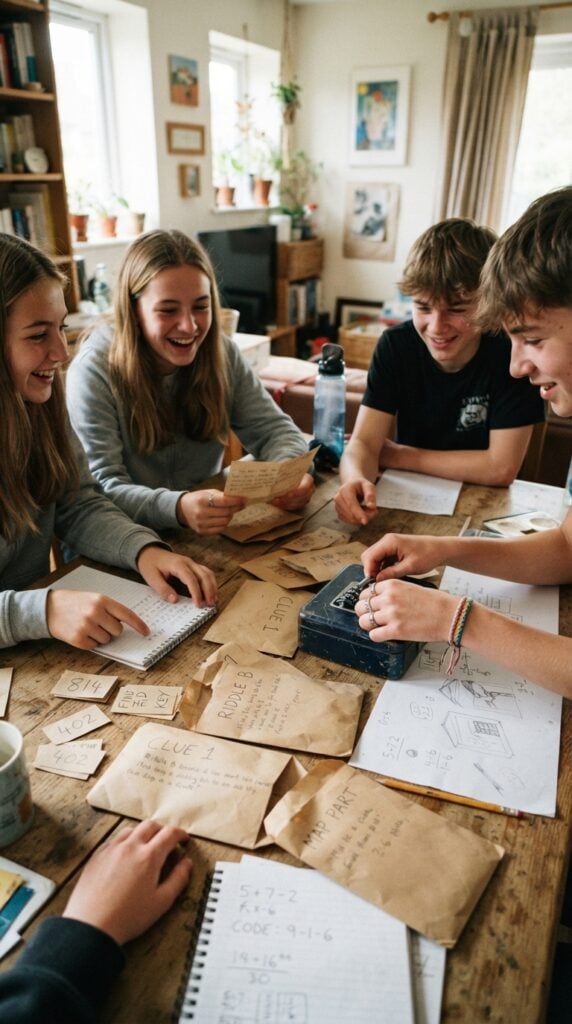
An escape room does not need locked doors, expensive props, or a rented venue. A living room can become the setting for a mystery that the group must solve before the timer runs out.
Choose a simple storyline, such as finding a missing birthday gift, recovering a stolen recipe, or discovering who left a mysterious note. Hide clues around the room that lead from one discovery to the next. For example, a note inside a book could point to a cushion, while a number written beneath it becomes part of the code needed to open a small box.
How to set it up:
- Write four to six clues on paper and decide the order in which they should be solved.
- Use ordinary household items, such as books, cushions, envelopes, a wall clock, or a jigsaw puzzle.
- Make each answer lead to the next clue, with the final one revealing the missing item or solving the mystery.
- Set a 20–30-minute time limit, but allow hints when the group gets stuck.
For a group of friends, let everyone contribute. One person can read the clues, another can search the room, and the others can work out the answers. Switch roles if you create a second mystery so that the same person does not direct the entire game.
What to prepare: Paper, pens, envelopes, household objects, and a small prize or treat for the final discovery.
Keep the challenge clever rather than frustrating. Test every clue before the sleepover, make sure the answers follow logically, and never hide anything near electrical outlets, sharp objects, or places where someone might climb to reach it.
Girls hosting friends at home can keep things relaxed with 23 Fun Sleepover Ideas for Girls at Home.
2. Solve a Made-Up Mystery From Evidence Cards
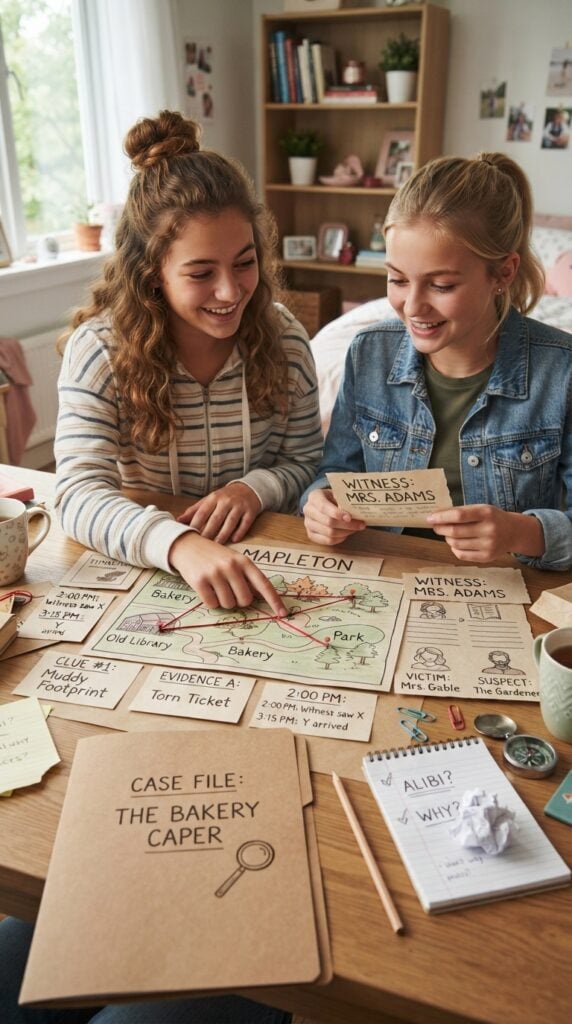
Not every sleepover game needs running around or competing for points. A mystery-solving game gives 13-year-olds a reason to compare ideas, question each other’s theories, and work together to uncover what happened.
Create a fictional case, such as a missing concert ticket, a vanished birthday cake, or a school trophy that disappeared before an event.
Prepare six to eight evidence cards containing witness statements, short messages, a timeline, and a few misleading details. The group must examine the clues and agree on who was responsible, what happened, and which evidence supports their conclusion.
How to play:
- Write the mystery on the first card, explaining what the group needs to solve.
- Hand out the evidence cards one at a time or spread them across a table.
- Let everyone read the information and share their theories before revealing another clue.
- Finish by asking the group to explain their solution using the evidence, rather than simply guessing the culprit.
For an extra challenge, include one detail that appears suspicious but has an innocent explanation. The group will need to reconsider its first theory instead of settling on the easiest answer.
What to prepare: Index cards or paper, pens, envelopes, and a fictional storyline.
This mystery game works well for a sleepover because it encourages conversation without requiring anyone to perform, dance, or be the centre of attention. Keep the case fictional and avoid using real friends’ secrets or personal messages as evidence.
Mix games, challenges and downtime with 30 Fun Sleepover Activities for Teens to Keep Everyone Entertained.
3. Play a Cooperative Strategy Game
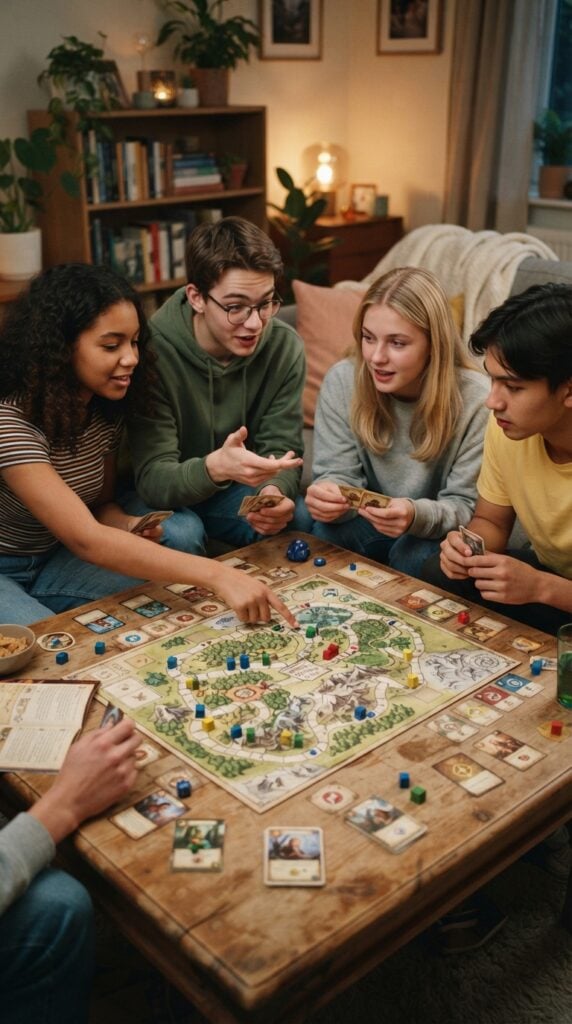
A cooperative strategy game gives the group a shared goal instead of making one person the winner and everyone else the competition. This can be a welcome change during a sleepover, especially when the friends enjoy solving problems together.
Choose a board game or card game where players must plan their moves, share information, and make decisions as a team.
The group might need to complete a mission before time runs out, collect particular items, or prevent a fictional disaster from happening.
Games such as Forbidden Island, The Crew, and Pandemic offer different levels of teamwork and strategic thinking, so check the age guidance and rules before choosing one.
How to make the game enjoyable:
- Explain the shared objective before starting, so everyone understands what the team is trying to achieve.
- Allow a few minutes for players to discuss their options before making important moves.
- Encourage everyone to contribute ideas, rather than letting one confident player make every decision.
- If the game is unfamiliar, play a short practice round before beginning the main challenge.
For a no-purchase alternative, create a simple rescue mission with paper cards. Write down resources such as food, water, blankets, and a flashlight, then give the group a fictional situation in which it must decide what to take and how to solve the problem with limited supplies.
What to prepare: A cooperative board game or card game, a table, and enough space for everyone to participate.
The aim is to reach the goal together, not to prove who is the smartest person in the room. That makes cooperative games useful for sleepover activities for 13-year-olds who enjoy planning, discussing possibilities, and making decisions as a group.
Boys who want a sleepover beyond movies and video games can try 25 Sleepover Ideas for Teen Boys They’ll Actually Enjoy.
4. Hold a Paper Bridge Engineering Challenge
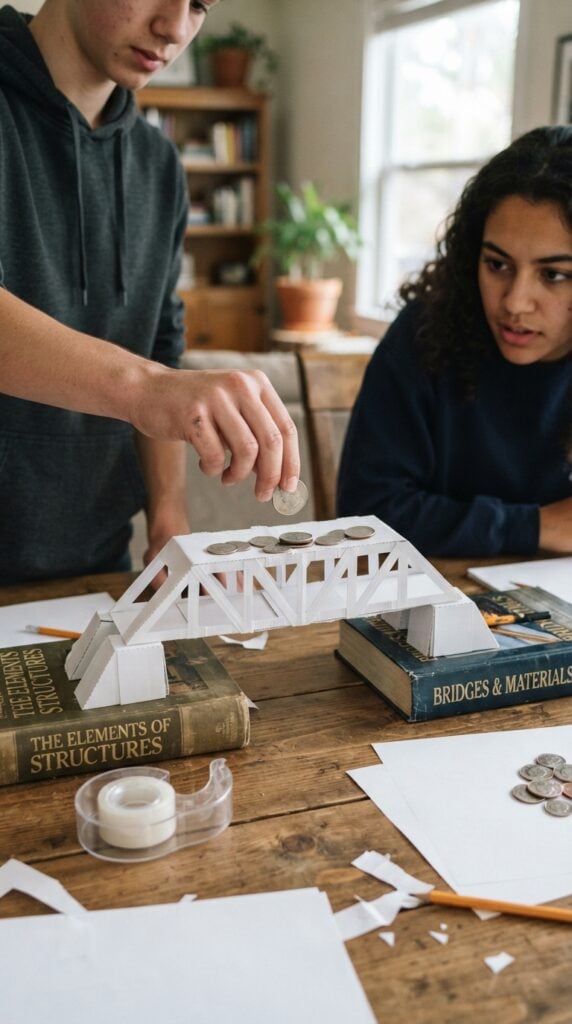
Can a few sheets of paper support a stack of coins without collapsing? Turn that question into a hands-on engineering challenge that lets the group test different designs and see which one holds the most weight.
Give each person the same materials, such as three sheets of paper, a little tape, and two sturdy books to serve as supports.
The task is to build a bridge across the gap between the books, then test its strength by placing coins on it one at a time. The winner is the person whose bridge supports the most coins before bending or collapsing.
How to run the challenge:
- Set the same distance between the two books for every attempt.
- Allow 10–15 minutes for designing and building.
- Try different paper shapes, including folded strips, triangular supports, and accordion folds.
- Add coins slowly, keeping them near the centre of the bridge, and count the total each design supports.
For another round, let everyone redesign their bridges using what they learned from the first test. This makes the activity more interesting than simply comparing the finished structures.
What to prepare: Paper, tape, two books, and a supply of coins or other small, uniform weights.
Among sleepover ideas for 13-year-olds, this one suits friends who enjoy practical challenges. Keep the testing area clear, and use lightweight materials rather than anything that could cause injury if the bridge gives way.
Give a girls’ night a fresh twist with 30 Sleepover Ideas for Teen Girls That Aren’t Boring.
5. Race to Complete a Puzzle Without Splitting Into Teams
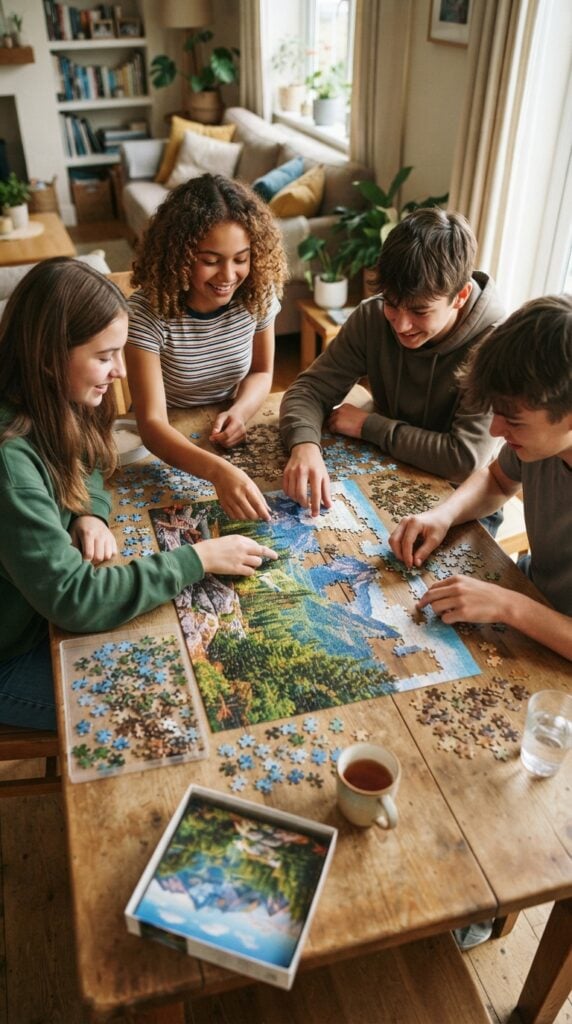
A jigsaw puzzle can become a group challenge without dividing the room into competing teams. The trick is to give everyone the same deadline and see how much the group can accomplish together.
Choose a puzzle with enough pieces to provide a challenge without taking the entire night. A puzzle of around 100–300 pieces may work well, depending on the group’s experience and how long you want to play. Spread the pieces across a table, set a 20-minute timer, and let everyone work on the same puzzle.
To keep the activity moving, introduce small challenges during the round:
- Spend the first three minutes finding and connecting the edge pieces.
- Ask everyone to locate pieces belonging to one colour or section.
- Switch places halfway through so nobody stays in the same corner of the puzzle.
- Take a final minute to see how many remaining pieces the group can fit.
The goal is to complete as much of the puzzle as possible before time runs out, not to rush so much that nobody enjoys the process. If the group finishes early, choose a harder puzzle or reduce the time for the next attempt.
What to prepare: A jigsaw puzzle, a flat table, and a timer.
This is one of those sleepover activities for 13-year-olds that works particularly well between louder games. Everyone can join in at their own pace, and there is no need to choose sides or keep track of individual scores.
Balance lively games with quieter activities using 31 Fun Sleepover Ideas for Teens They’ll Actually Love.
6. Make Friendship Bracelets With a Personal Code
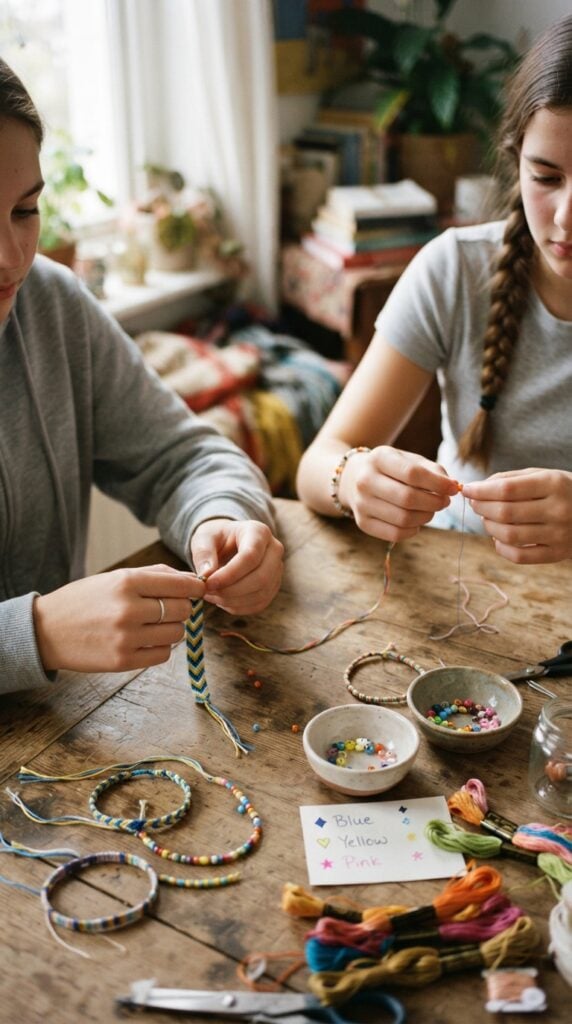
Friendship bracelets become more meaningful when the colours represent something shared between the people making them. Instead of copying the same pattern, let each person design a bracelet that carries a small message or memory.
Set out embroidery floss in several colours and agree on a simple colour code. For example, yellow could represent a funny memory, blue could stand for encouragement, and green could represent an interest everyone shares.
Each person can choose a combination that describes a friendship, an inside joke, or a happy moment without needing to explain it to the whole group.
How to make the bracelets:
- Cut several lengths of embroidery floss, leaving enough extra thread to tie the finished bracelet.
- Secure the threads to a clipboard or table with tape.
- Use a simple friendship bracelet pattern, such as alternating knots or a basic chevron.
- Arrange the colours according to the chosen code, then tie the ends securely.
- Write a small card explaining what the colours mean and give it to the person receiving the bracelet.
If intricate knotting feels too difficult, use beads and elastic cord instead. Letter beads can add initials or a short word, while coloured beads can carry the same personal meaning.
What to prepare: Embroidery floss or elastic cord, scissors, tape, beads if desired, and small cards.
This craft gives sleepover guests something personal to take home. It also works well as a quieter activity while everyone chats, listens to music, or takes a break from games. For safety, an adult should supervise scissors, and younger siblings should be kept away from small beads.
Add birthday touches to an overnight gathering with 27 Sleepover Birthday Party Ideas for Teens They’ll Love.
7. Build a Miniature Dream Room From Recycled Packaging
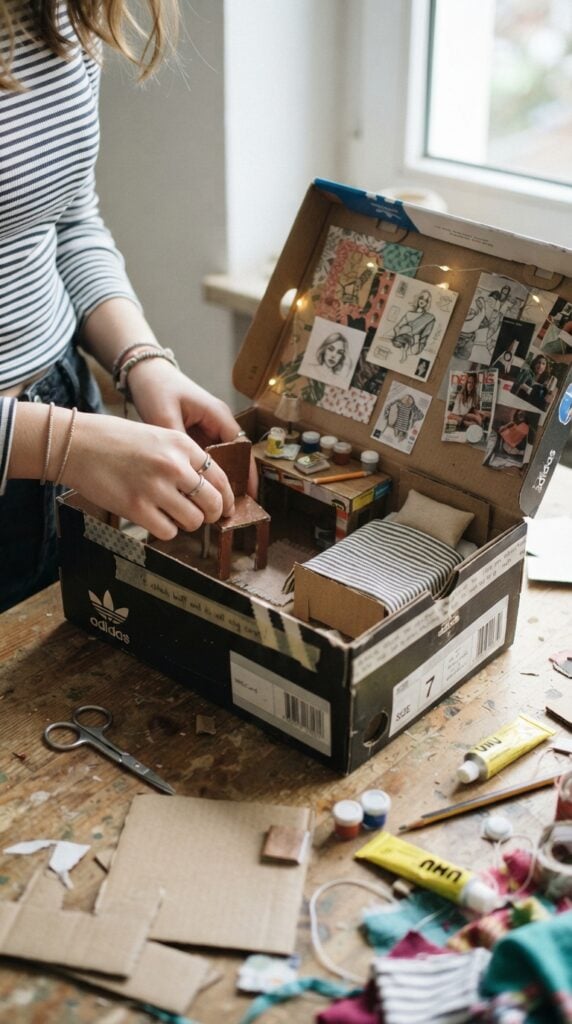
Give everyone a chance to design a room they would love to have, whether it is a cosy reading corner, a colourful gaming room, a fashion studio, or a bedroom with hidden storage. The challenge is to create a miniature version using packaging and other materials already available at home.
Collect small cardboard boxes, cereal cartons, paper scraps, fabric offcuts, bottle caps, and clean packaging.
A shoebox makes a useful room structure, while folded card can become a bed, desk, wardrobe, or bookshelf. Fabric scraps work well as rugs and curtains, and bottle caps can become stools or decorative tables.
How to set it up:
- Give each person a shoebox or a section of cardboard as the room’s base.
- Sketch a quick floor plan before cutting or attaching anything.
- Make furniture from folded card and small packaging pieces.
- Add details such as wallpaper, rugs, wall art, and miniature plants.
- Finish by giving everyone a minute to present their design and explain one feature they would love in a real room.
Set a materials limit to make the challenge more interesting. For example, each person may use only one shoebox, five pieces of scrap cardboard, and a small selection of decorative materials.
What to prepare: Clean cardboard packaging, paper, fabric scraps, glue, tape, markers, and child-safe scissors.
This activity suits teens who enjoy interior design, crafts, or personalising their spaces. Have an adult handle any cutting that requires a craft knife, and avoid packaging with sharp edges.
A sleepover is not the only way to celebrate. 33 Cool Birthday Party Ideas for Teens They’ll Actually Like offers other party styles.
8. Film a Stop-Motion Story With Everyday Objects
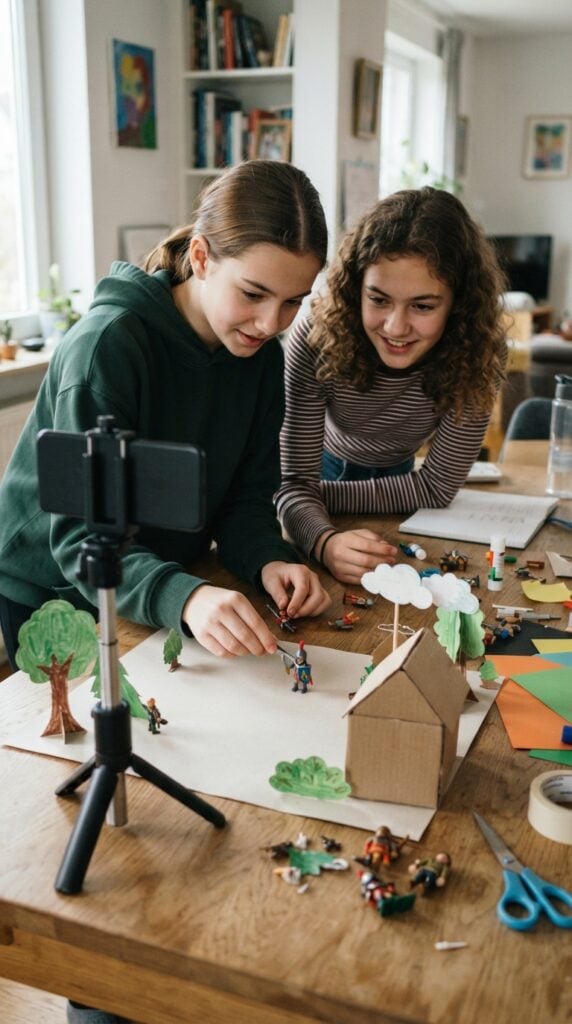
A phone camera and a few everyday objects are enough to create a short stop-motion film. The fun comes from making ordinary items appear to move on their own, one photograph at a time.
Choose a simple storyline, such as two pencils competing in a race, a sock searching for its missing pair, or a toy trying to escape a pile of books.
Arrange the objects against a plain background and take a photograph. Move each object a small distance, take another photograph, and continue until the story is complete. When the pictures are played in sequence, the objects appear to move.
How to make the film:
- Prop the phone against a stable object or use a small tripod to keep the camera still.
- Place the characters on a table with good lighting and a simple background.
- Take several photographs for each movement, changing the object’s position slightly each time.
- Add dialogue cards, paper scenery, or simple sound effects to help tell the story.
- Use a stop-motion app or video editor to arrange the photographs and adjust the playback speed.
Aim for a film lasting about 15–30 seconds for the first attempt. A short story is easier to finish than an elaborate production, and the group can always make a sequel.
What to prepare: A smartphone or tablet, small toys or stationery, paper scenery, and a stop-motion app if available.
Everyone can take a role, from moving the characters to creating props or recording sound effects. Ask permission before filming anyone’s face or sharing the finished video online.
Keep guests involved instead of leaving them wondering what comes next with 27 Birthday Party Activities for Teens That Keep Everyone Entertained.
9. Design a Magazine Cover About Your Group’s Interests
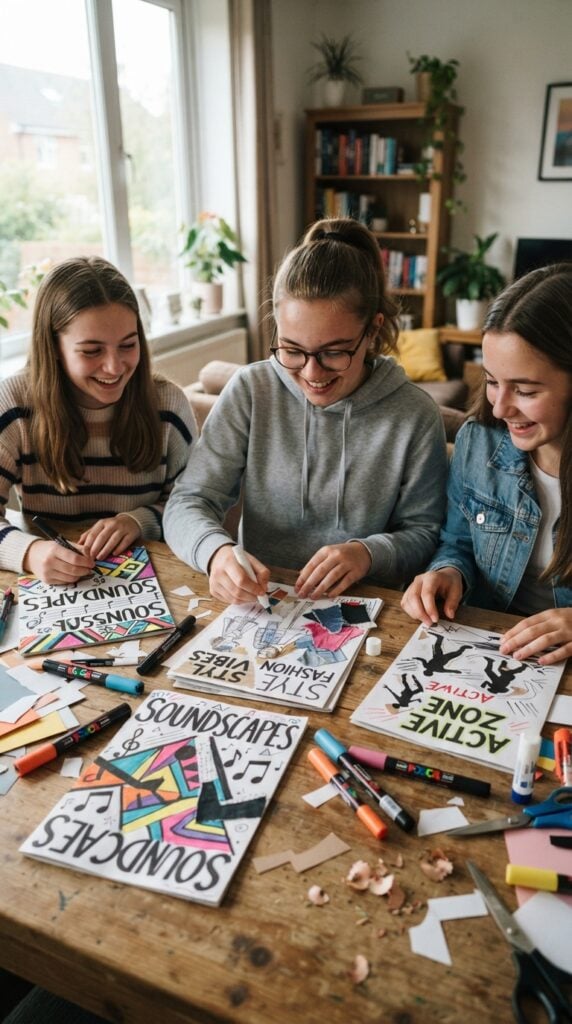
Turn a blank sheet of paper into the cover of a fictional magazine based on music, fashion, gaming, sport, books, or another interest the group enjoys. Each person can create an individual cover or collaborate on one magazine with different feature stories.
Start by choosing a magazine name, then sketch a bold title at the top of the page. Add a main illustration or photograph, several short headlines, and a small issue date. The cover lines could announce a fictional interview, a ranking of favourite songs, a guide to styling an outfit, or a list of games worth trying.
Ideas for the cover:
- Music magazine: “Five Songs That Belong on Every Road-Trip Playlist.”
- Fashion magazine: “Three Ways to Style One Favourite Jacket.”
- Gaming magazine: “The Challenge We Could Play All Weekend.”
- Friendship magazine: “Our Funniest Shared Memories.”
Use different lettering styles and headline sizes to make the cover look like a real publication. For a digital version, a design tool such as Canva can help with layouts, fonts, and graphics.
What to prepare: Paper or cardstock, pencils, markers, magazines for inspiration, scissors, glue, or a phone or tablet for digital design.
The finished covers can be displayed together as a mini magazine collection. Keep the headlines playful and positive, and use made-up names or illustrations rather than publishing anyone’s private information.
Turning 13 can be a chance to try a party that feels more grown-up. 29 Creative Birthday Ideas for a 13 Year Old has age-appropriate inspiration.
10. Make a Paper Fortune Teller With Funny Group Predictions
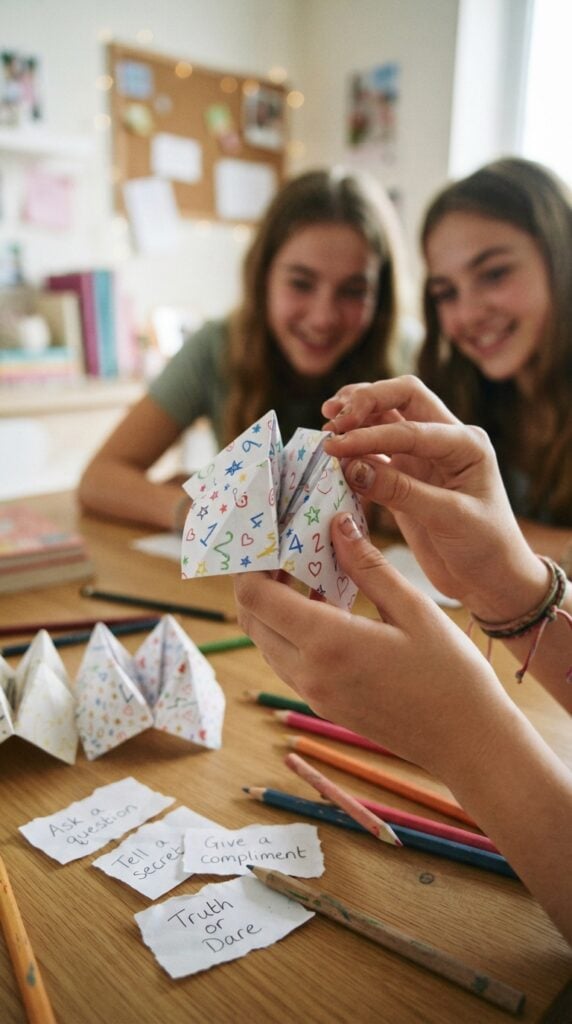
Remember those folded paper fortune tellers that open and close with a finger movement? Give the classic paper game a sleepover twist by filling it with amusing predictions, silly challenges, and imaginary future events.
Start with a square sheet of paper and fold it into a traditional fortune teller. Write colours on the outer flaps, numbers on the inner sections, and a prediction or prompt beneath each final flap.
The predictions should be light-hearted rather than personal or embarrassing. Try prompts such as:
- “You will become famous for inventing a very unusual snack.”
- “Your next shopping trip will involve the perfect pair of shoes.”
- “You will laugh so hard at a joke that nobody else understands.”
- “Your future pet will have a more dramatic personality than you.”
- “You will create a dance move that becomes an inside joke.”
How to play:
- Let each person choose a colour and number.
- Open and close the fortune teller according to the chosen number.
- Reveal the message beneath the selected flap and read it aloud.
- Take turns creating new predictions when the original messages run out.
For a creative variation, let each guest make a fortune teller with a different theme, such as imaginary careers, dream holidays, funny food inventions, or fictional celebrity predictions.
What to prepare: Square sheets of paper, coloured pens, and a few ideas to get everyone started.
This simple paper activity needs very little preparation and can be played almost anywhere. Keep the predictions fictional and kind so that the game remains funny without putting anyone on the spot.
Make a 16th birthday stand out with 25 Birthday Party Ideas for 16 Years Olds That Feel Special.
11. Set Up a Mini Pizza Design Station
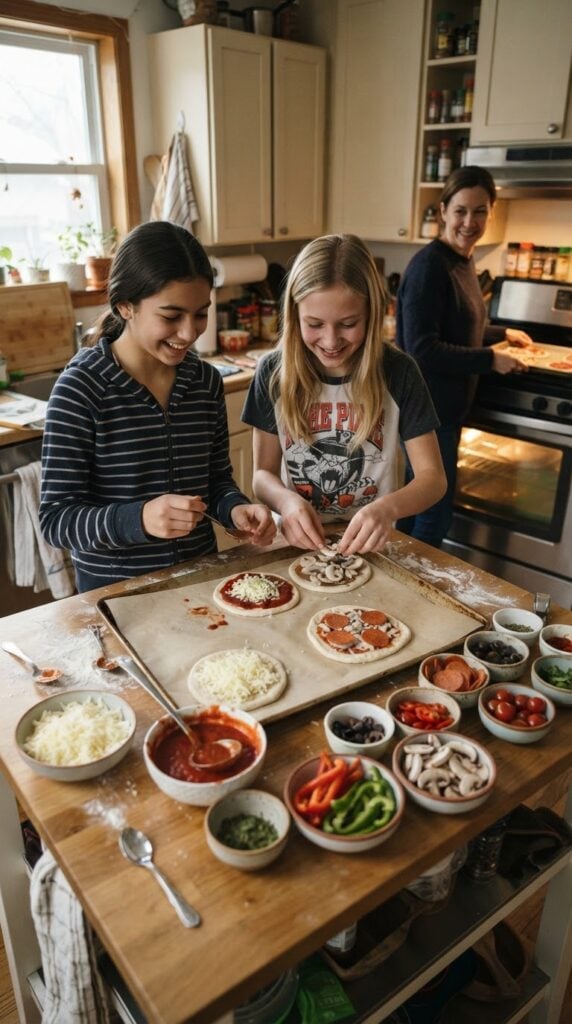
Let everyone build a personal pizza instead of ordering one large pizza with the same toppings for the whole group. This works especially well when friends have different food preferences and want to experiment with their own flavour combinations.
Use small pizza bases, English muffins, pita bread, or flatbreads to keep portions manageable. Set out tomato sauce, grated cheese, sweetcorn, sliced peppers, mushrooms, olives, and cooked toppings such as chicken.
Each person can create a pizza with a name and a theme, such as a rainbow pizza, a cheesy favourite, or a sweet-and-spicy combination.
How to organise the station:
- Place each topping in a separate bowl with a serving spoon.
- Give everyone a small base and a plate for assembling their pizza.
- Set a limit of four or five toppings per person to encourage thoughtful combinations.
- Have an adult check that the oven is ready and handle putting the pizzas in and taking them out.
- Let everyone rate their own creation for appearance, flavour, and originality after tasting.
For a more interesting challenge, give each person one required ingredient they must incorporate into their design. Keep the ingredients familiar enough that nobody feels pressured to eat something they dislike.
What to prepare: Mini pizza bases, sauce, cheese, selected toppings, baking trays, and plates.
Food allergies need attention before the ingredients are set out. Check with parents or guardians about dietary restrictions, keep allergen-containing foods separate, and use clean utensils to prevent cross-contact.
This makes the food station easier to manage and helps everyone enjoy the activity.
Late-night hunger is easier to handle when snacks are ready. 23 Easy Birthday Snacks for Teen has simple options.
12. Run a Cupcake Decoration Brief
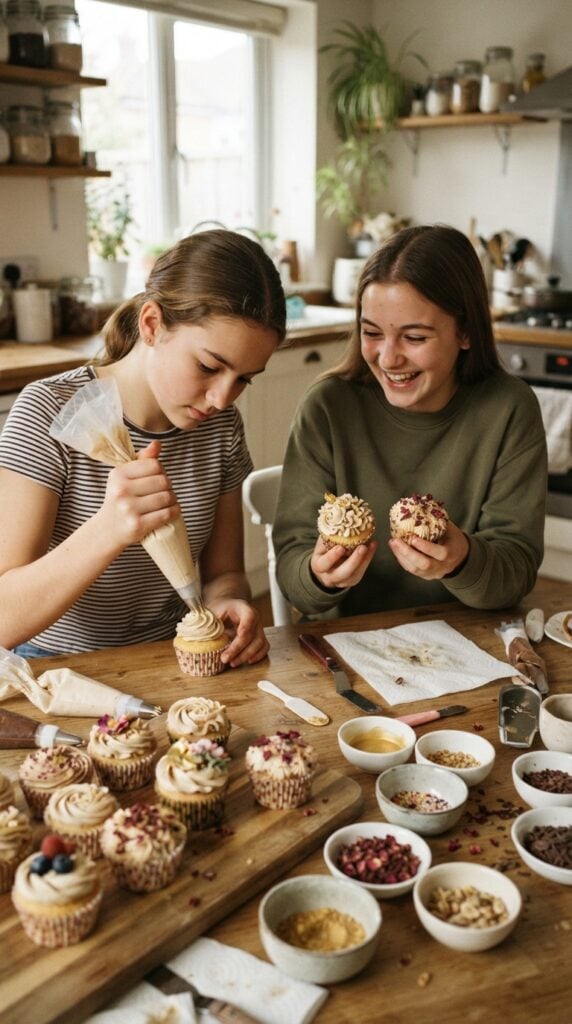
Cupcake decorating becomes more engaging when the group works from a theme rather than simply spreading icing and adding sprinkles. Give everyone the same basic cupcake and a creative brief, then see how differently each person interprets it.
Possible themes include a favourite film genre, a dream holiday, a colour combination, a birthday celebration, or an imaginary animal.
For example, a beach-themed cupcake might use blue icing, crushed biscuits for sand, and a small sugar decoration. A galaxy theme could use dark icing with contrasting edible sprinkles.
How to run the challenge:
- Provide one or two plain cupcakes per person.
- Set out a few icing colours, piping bags or small spatulas, and a selection of edible decorations.
- Announce the theme and give everyone 10–15 minutes to decorate.
- Invite each person to name their creation and explain the design.
- Let the group choose fun categories such as most colourful, most imaginative, or best interpretation of the theme.
There is no need to buy professional decorating equipment. A clean sandwich bag with a tiny corner cut off can work as a simple piping bag under adult supervision, while a spoon or butter knife can spread icing.
What to prepare: Plain cupcakes, icing, food colouring if needed, edible decorations, small plates, and wipes for cleaning up.
Choose edible decorations that are suitable for the guests’ ages, and avoid non-food items that could be mistaken for toppings. Check ingredient labels for allergies and dietary restrictions before baking or serving.
Among sleepover ideas for 13-year-olds, this activity is especially useful when you want something creative that also becomes part of the evening’s dessert.
When the group needs a break from games, 27 Birthday Party Activities for Teens That Keep Everyone Entertained offers more ways to fill the time
13. Assemble Personalised Snack Parfaits
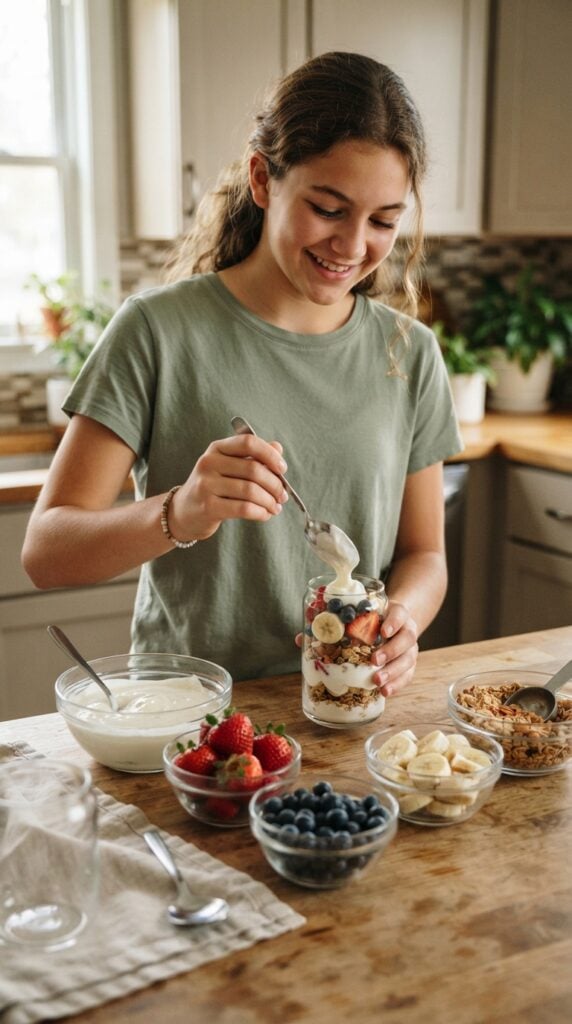
A snack parfait station gives everyone control over the ingredients and how much they want to eat. It also offers a lighter alternative to a table full of sweets, without making the activity feel like a formal cooking lesson.
Prepare a few layers to choose from, such as yoghurt, sliced bananas, strawberries, berries, granola, and crushed biscuits. Each guest can build a parfait in a clear cup or small bowl, alternating the layers to create different colours and textures.
How to set up the station:
- Wash and cut the fruit before guests arrive.
- Put each ingredient into a separate bowl with its own serving spoon.
- Start with yoghurt or another suitable base, then add fruit and a crunchy layer.
- Let everyone choose their own proportions instead of requiring an exact recipe.
- Give the finished parfait a name based on its colours, flavours, or an inside joke.
For a themed version, use red and white ingredients for a particular celebration, or challenge the group to create three distinct layers. Keep crunchy toppings separate until serving so they do not become soggy.
What to prepare: Small cups or bowls, yoghurt or a suitable alternative, fruit, granola or crushed biscuits, and spoons.
Keep yoghurt and cut fruit refrigerated until needed, and return perishable ingredients to the fridge promptly. Check for allergies and provide separate utensils where necessary. Guests who cannot eat dairy can use a suitable plant-based alternative.
Make the party space feel festive with 25 Cute Birthday Party Decoration Ideas for Teens.
14. Invent a Signature Mocktail for the Sleepover
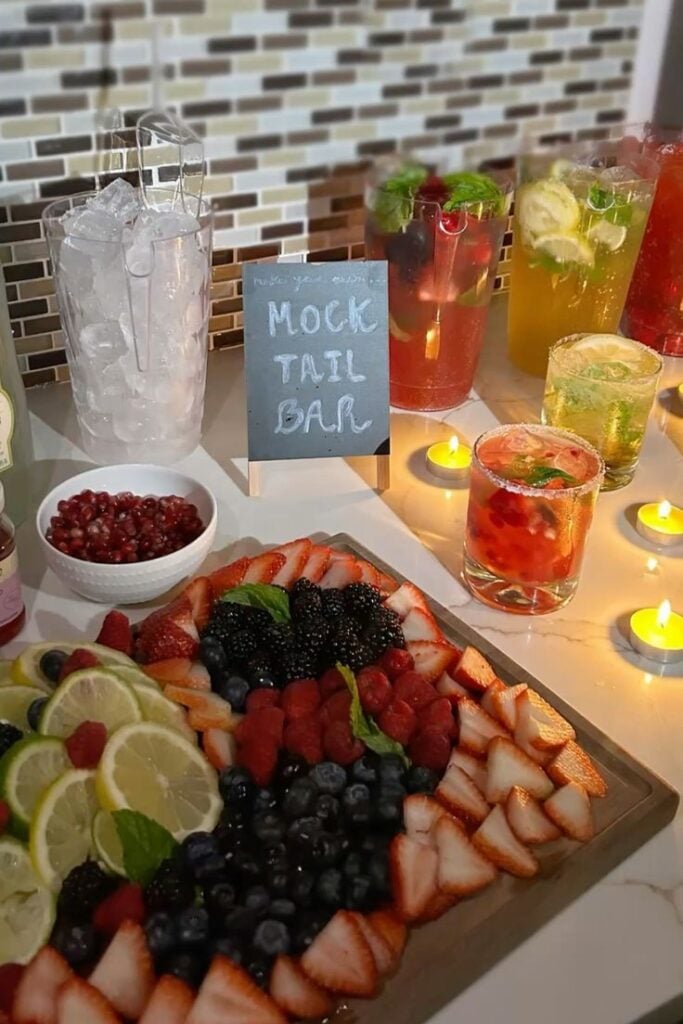
Photo credit: @ ams
Give the group a chance to invent a colourful, alcohol-free drink with its own name, flavour combination, and presentation.
Instead of following a recipe exactly, each person can experiment with a few ingredients and decide which combination deserves a place on the sleepover menu.
Set out a selection of fruit juices, sparkling water, lemonade, sliced citrus, berries, and mint. Guests can combine two or three flavours, adjust the sweetness, and serve their creations in clear cups with fruit garnishes.
How to create the drinks:
- Begin with a juice base, such as orange, pineapple, apple, or cranberry.
- Add a little sparkling water or lemonade for fizz.
- Taste the mixture before adding more juice or sweetness.
- Finish with a slice of fruit or a few berries.
- Give the drink a memorable name and write its ingredients on a small menu card.
For an extra challenge, announce a theme such as tropical holiday, sunset colours, or a drink inspired by a favourite fictional character. The group can vote on categories like best name, most colourful appearance, and most refreshing flavour.
What to prepare: Fruit juices, sparkling water, lemonade, fresh fruit, ice, cups, and straws if desired.
Check drink labels for caffeine and other ingredients you want to avoid, and do not use cocktail bitters or alcohol-containing mixers. Keep knives and any fruit-cutting tasks under appropriate adult supervision.
This is one of the more practical sleepover ideas for 13-year-olds because guests get to create something, taste their own combinations, and enjoy a special drink without complicated equipment or expensive ingredients.
For guests who arrive hungry, 25 Birthday Party Food Ideas for Teens Everyone Will Want covers more substantial party food.
15. Build a Playlist for Different Moments of the Night
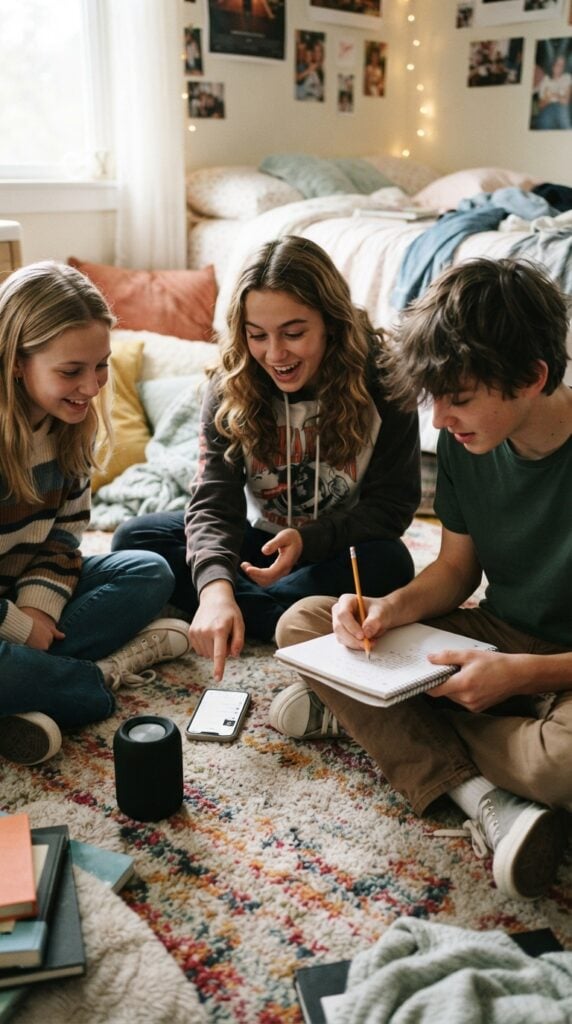
A playlist can do more than fill the room with background music. It can help set the mood for different parts of the sleepover, from getting everyone excited when guests arrive to creating a calmer atmosphere later in the evening.
Instead of asking everyone to suggest random songs, give the group a few playlist themes to work with. Each person can contribute two or three tracks, with a reason for choosing them.
Someone might pick a song associated with a funny memory, while another chooses a favourite dance track or a song everyone knows the chorus to.
Try creating these mini-playlists:
- Arrival playlist: Upbeat songs to play while everyone settles in.
- Dance-break playlist: Tracks with catchy beats for an impromptu dance session.
- Sing-along playlist: Familiar songs that several guests know.
- Wind-down playlist: Softer music for drawing, chatting, or getting ready for bed.
To keep the music fair, let each person take turns choosing a song rather than allowing one guest to control the queue. Agree on clean versions of songs where appropriate, and check that the volume is comfortable for everyone in the house.
What to prepare: A phone or tablet, a music streaming service, a speaker if available, and a shared list of song suggestions.
This activity also solves a practical problem: it prevents long arguments over what to play next. Save the playlist afterwards so the group can revisit the songs and memories from the night.
A coordinated setup can make the celebration feel extra special. 21 Aesthetic Birthday Party Ideas for Teen Girls offers visual inspiration.
16. Record a Private Radio Show
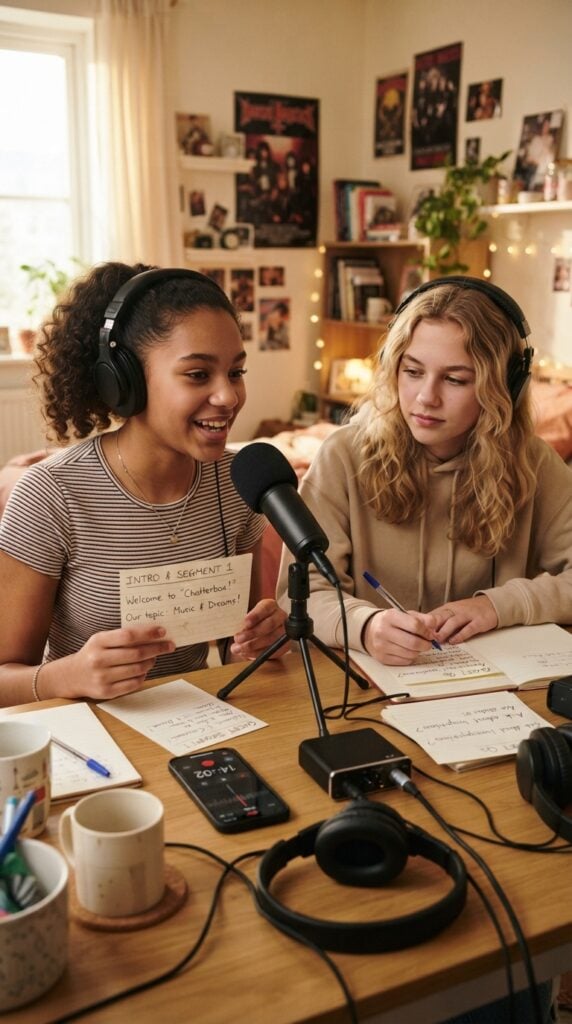
Give the group a pretend radio station for the evening. The aim is to create a short audio show with presenters, music introductions, interviews, and funny segments, without needing a microphone or recording studio.
Start by choosing a station name and dividing the show into short segments. One person might introduce the programme, another could present a fictional entertainment news bulletin, and someone else could host a quick interview or read out listener questions invented by the group.
A simple 10-minute show could include:
- Opening: Welcome listeners and introduce the station.
- Song of the moment: Explain why a particular song deserves a place on the playlist.
- Friendship interview: Ask light questions such as “Which fictional world would you visit for a day?”
- Made-up headlines: Report amusing, obviously fictional stories about imaginary events.
- Closing: Give a final message and sign off.
Use a phone’s voice recorder to capture the show. Do a short practice first, especially if the presenters are nervous about speaking. Brief notes can help everyone remember their parts without making the recording sound like a school presentation.
What to prepare: A smartphone or tablet with a voice recorder, a list of segment ideas, and optional paper cue cards.
Keep the recording private and make sure everyone agrees before recording their voice.
Do not share it in group chats or on social media without permission from everyone involved. Anyone who prefers not to speak can choose the music, write questions, or manage the recording instead.
Keep the celebration at home without making it feel ordinary with 35 Birthday Party Ideas for Teen Boys at Home.
17. Host a Film and Soundtrack Recognition Quiz
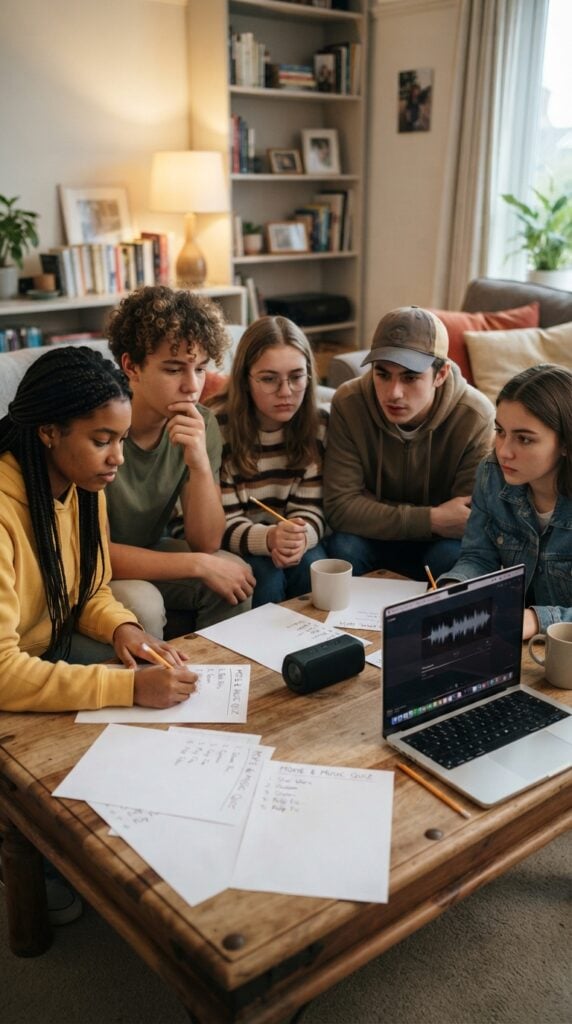
A film and soundtrack quiz tests how well the group remembers movies through their music, characters, quotes, and memorable scenes. It is a useful choice when everyone has watched different films and wants to discover which favourites they have in common.
Prepare questions in several rounds rather than relying entirely on identifying songs. This gives guests who are not strong at music recognition another way to participate.
Use four different rounds:
- Soundtrack round: Play a short, recognisable clip from a film soundtrack and ask guests to name the movie.
- Character round: Describe a character without naming them and ask which film they appear in.
- Scene round: Give three details from a memorable scene and ask the group to identify the film.
- Quote round: Read a short, familiar line and ask guests to name the movie or character.
Write the answers on paper or use a simple score sheet. Let everyone answer independently before revealing the solution, and award a bonus point for explaining how they recognised a soundtrack or scene.
Choose films the guests are likely to know, and include a mix of animated films, family adventures, comedies, and other age-appropriate favourites. Test any audio clips beforehand so they play clearly and do not take too long to identify.
What to prepare: A list of questions and answers, paper and pens, and a phone or laptop with speakers if you are using soundtrack clips.
If the group has very different film preferences, let each guest contribute one question. This keeps the quiz from becoming a test of just one person’s favourite movies.
Girls can turn a familiar living room into a party spot with 33 Birthday Party Ideas for Teen Girls at Home.
18. Perform a Two-Minute Improvised Scene
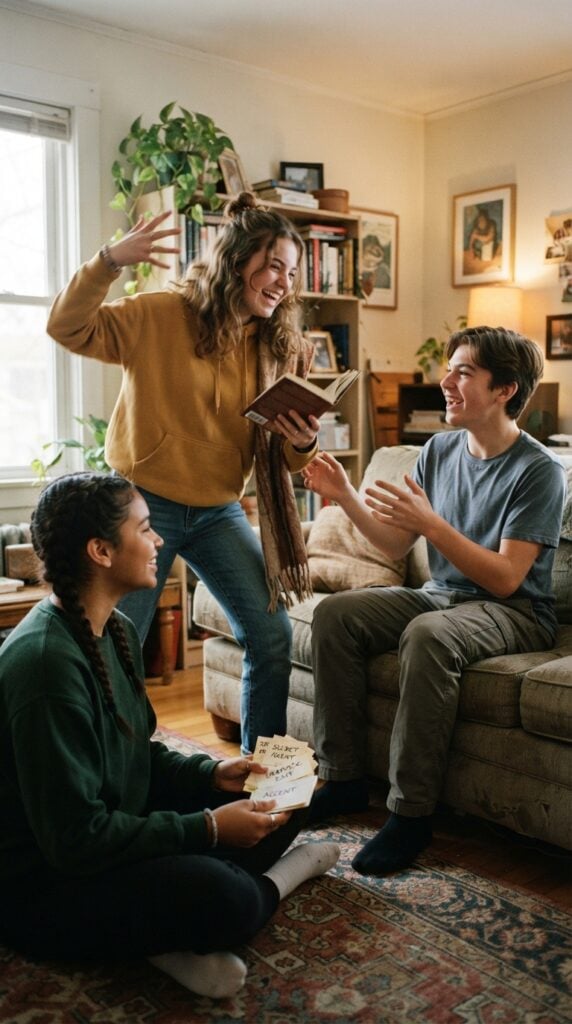
Improvisation is easier when nobody has to invent an entire performance from nothing. Give the group a setting, a situation, and a few character prompts, then challenge them to create a short scene without a prepared script.
Write prompts on separate slips of paper. Settings could include an airport, a restaurant, a space station, or a school talent show.
Situations might involve a missing suitcase, a very unusual customer, or a surprise announcement. Character prompts can be as simple as “someone who takes everything literally” or “someone who has a secret plan.”
How to play:
- Draw one prompt from each category.
- Give the performers two minutes to agree on how the scene begins.
- Set a two-minute performance limit.
- Let the audience suggest one harmless detail that must appear in the scene.
- Switch performers and draw new prompts for the next round.
For example, the group might draw “space station,” “the lunch has disappeared,” and “an astronaut who refuses to panic.” The performers then have to build a story around those three details.
Nobody needs acting experience. A scene can be funny, mysterious, dramatic, or deliberately ridiculous. Guests who do not want to perform can write the prompts, keep time, or help develop the scenario.
What to prepare: Paper slips, pens, and a timer.
Avoid prompts that target someone’s appearance, family, private life, or insecurities. The purpose is to make up a story together, not to pressure a friend into becoming the joke.
A smaller guest list can mean less pressure for the host. 30 Small Birthday Party Ideas for Teens Who Don’t Want a Big Party suits a close-knit group.
19. Run a Paper Airplane Design Trial
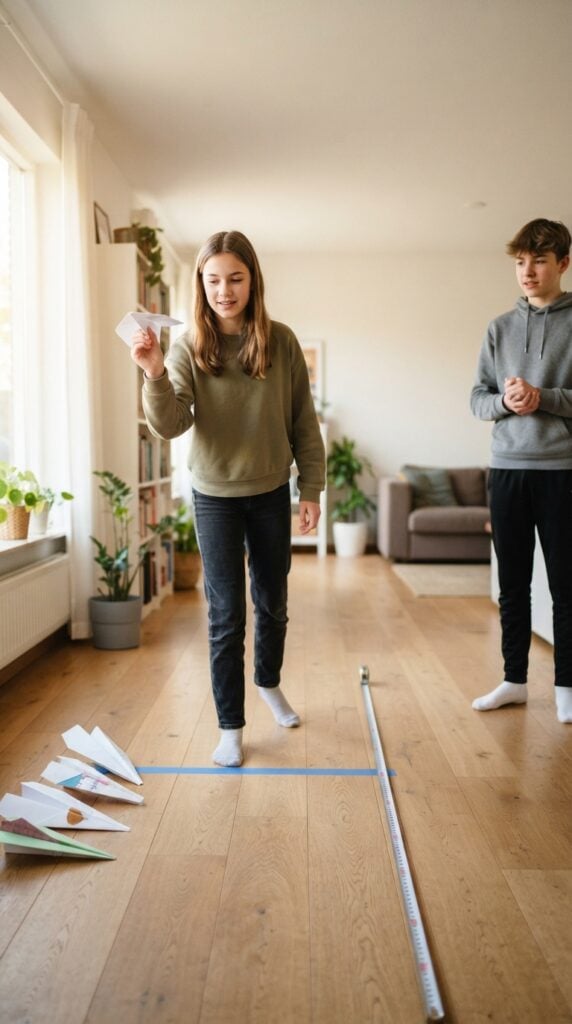
A paper airplane challenge turns a familiar folding activity into a small experiment. Instead of repeatedly throwing planes and hoping for a long flight, participants can compare how different designs affect distance, stability, and accuracy.
Give everyone the same size of paper and allow a few minutes to fold an initial plane. Mark a clear throwing line and choose one test at a time. For a distance trial, measure how far each plane travels.
For an accuracy trial, aim for a large target on the floor rather than simply trying to throw as hard as possible.
Run the trial in stages:
- First flight: Test each plane without making changes.
- Redesign: Adjust the wing shape, folds, or tail.
- Second flight: Test the new design from the same starting line.
- Accuracy round: Try to land the plane inside a marked target.
- Final comparison: Discuss which design travelled farthest and which was easiest to control.
Keep the throwing technique as consistent as possible. If one person throws much harder than another, the results will reflect throwing strength as well as the design. Taking turns from the same line makes the comparison fairer.
What to prepare: Identical sheets of paper, masking tape for marking the line, a tape measure, and a target made from paper or a floor marker.
Run the challenge in a clear indoor space or outdoors away from roads, fragile objects, and people who are not participating. No one should throw planes towards another person.
This activity introduces basic ideas about testing and redesign: change one feature, observe the result, and decide whether the change helped.
Keep costs manageable with 31 Cheap Birthday Party Ideas for Teens on a Budget.
20. Play a Scavenger Hunt With Clue Categories
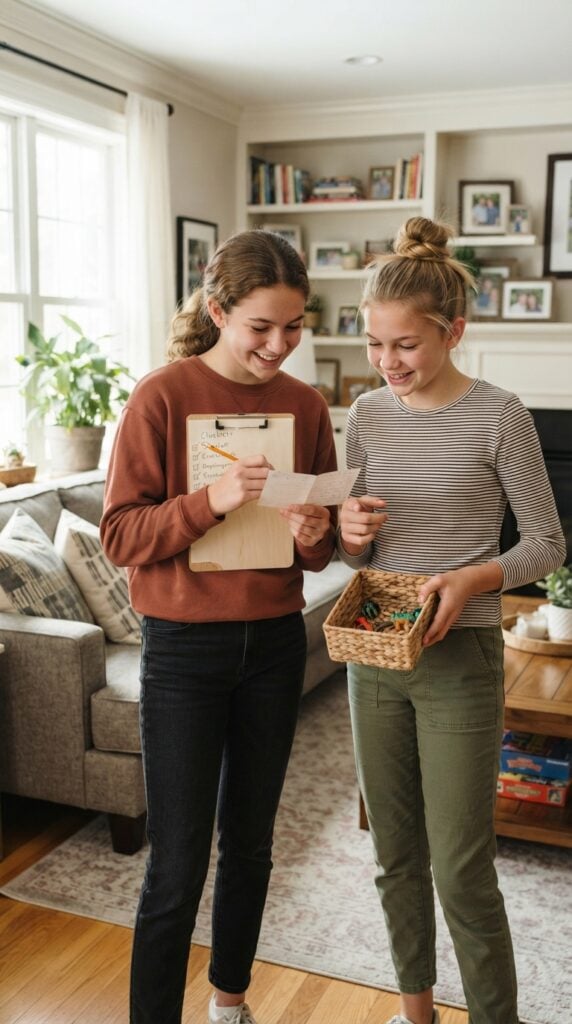
A scavenger hunt can become repetitive when every clue simply asks guests to find an object.
Make it more interesting by organising the hunt around different categories, so participants have to notice details, interpret clues, and solve small problems rather than just collect things.
Prepare a list of household items or observations that are safe and easy to find. Categories could include colours, textures, shapes, useful objects, and items connected to a riddle.
For example, one clue might ask for something soft and blue, another for an object with three different shapes, and another for something used to tell the time.
How to organise the hunt:
- Write 10–15 clues and group them by category.
- Decide whether everyone will search individually or work through one shared list.
- Set boundaries so guests know which rooms and cupboards are off-limits.
- Give a point for each correct answer, with a bonus for solving a riddle.
- Review the answers together at the end, especially when a clue allows more than one reasonable solution.
To make the hunt more thoughtful, include a few clues that ask participants to observe rather than remove objects. For example, “Find something in the room that has a repeating pattern” can be answered by pointing to the item instead of carrying it back.
What to prepare: Clue cards, pens, a timer, and a simple score sheet.
Avoid hiding clues near cleaning products, electrical equipment, breakable items, or private belongings. Make sure every participant can access the search area safely, and offer an alternative clue if an item is too difficult to locate.
The category system helps balance the hunt: guests who are quick at searching can contribute alongside those who are better at solving riddles or noticing small details.
Keep costs manageable with 31 Cheap Birthday Party Ideas for Teens on a Budget.
21. Play Charades With a No-Embarrassment Rule
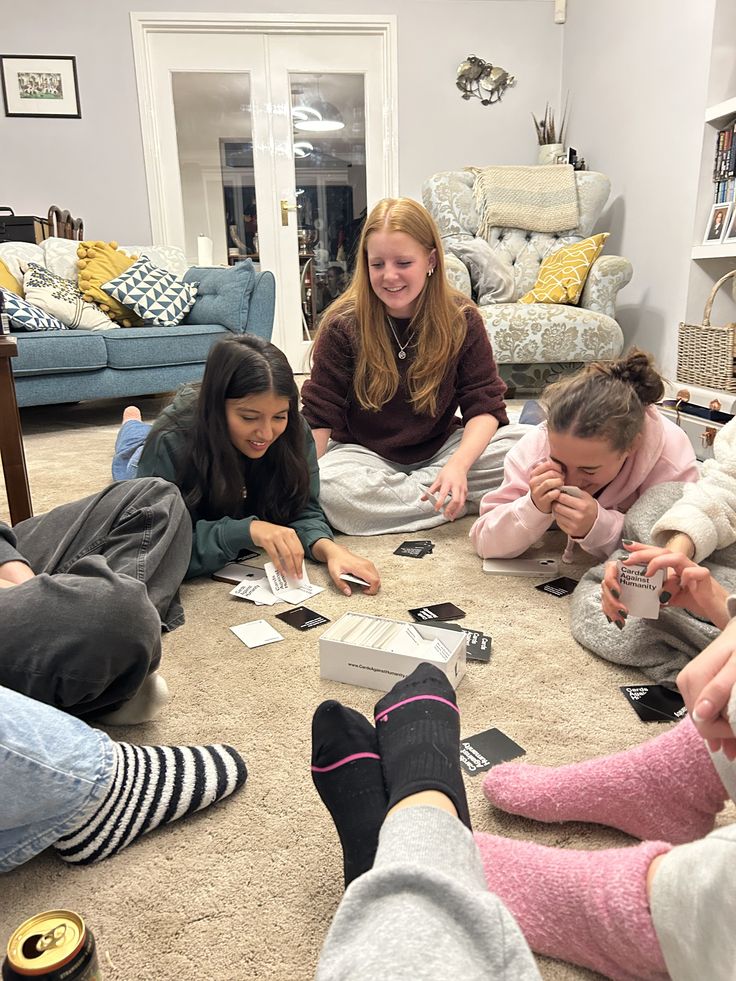
Charades can become uncomfortable when players are expected to imitate a particular person, act out something humiliating, or perform in front of friends who laugh at them. For sleepover ideas for 13 olds, set a rule that keeps the game funny without making anyone the joke.
Write prompts on folded slips of paper, using categories such as fictional characters, everyday activities, animals, hobbies, and movie genres.
Each player draws a slip and acts out the prompt without speaking while the others guess. Allow players to swap a prompt they dislike without explaining why.
How to keep the game interesting:
- Use three difficulty levels: simple actions, recognisable characters, and trickier phrases.
- Add a silent-action twist: players can only use their hands and facial expressions for one round.
- Try paired charades: two players act out a situation together, such as getting ready for school or searching for a lost shoe.
- Keep the scoring flexible: award points for correct guesses, or play without scores if competition takes away from the fun.
Prepare prompts that everyone can understand, and avoid jokes about appearance, family situations, personal fears, or private experiences. The aim is to make acting silly a choice, not something a guest has to endure.
What you need: Paper slips, pens, a bowl or container, and a timer if you want to limit each turn.
Add outdoor games or fresh-air activities before everyone settles in for the night with 30 Outdoor Birthday Party Ideas for Teens for an Epic Celebration.
22. Learn a Short Dance Sequence Together

Learning a dance together gives the group a shared challenge without requiring anyone to be an experienced dancer.
Choose a short sequence from a clean music video or dance tutorial, ideally one with clear movements that can be practised in a bedroom or living room without moving furniture around too much.
Rather than attempting an entire routine, start with four to eight counts of movement. Practise the footwork first, add the arm movements, and then connect the sections. Slowing the tutorial down can help everyone understand the timing before trying it at normal speed.
Ways to organise the activity:
- Choose the song together: Let each person suggest a track before taking a quick vote.
- Learn in sections: Repeat a small part until the group can perform it comfortably, then add the next section.
- Create a group variation: Change one movement or add a simple ending so the routine feels like your own.
- Offer a choreography role: Anyone who prefers not to dance can help choose music, count beats, or suggest the next move.
These sleepover ideas for 13 olds work best when the activity leaves room for different comfort levels. Nobody should have to record or post the dance, and anyone who does not want to perform can still participate behind the scenes.
What you need: A phone or other device for the tutorial, a speaker if available, and enough clear floor space to move safely.
When outdoor plans are off the table, 29 Amazing Indoor Birthday Party Ideas for Teens keeps the fun indoors.
23. Personalise a Plain Tote Bag
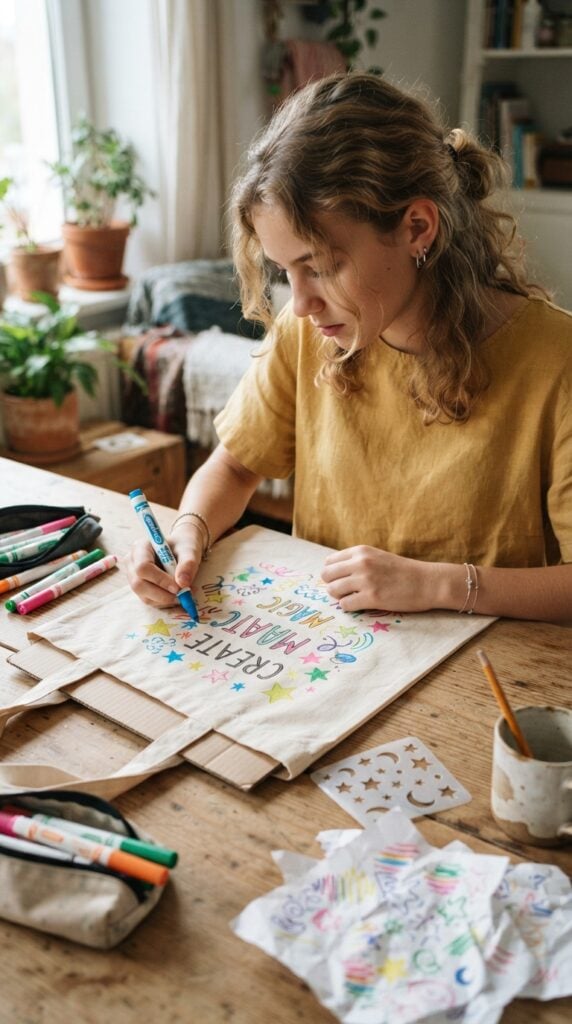
A plain canvas tote bag can become a useful keepsake when each person designs it around an interest, favourite colour, book, hobby, or original illustration.
This activity also introduces basic design decisions: where to place a main image, how to balance lettering with decoration, and which materials will hold up to handling.
Give everyone a few minutes to sketch a design on paper before decorating the bag. This helps prevent overcrowding the fabric and gives each person a chance to decide whether the design should have a central illustration, a small repeated pattern, or a short phrase.
Decoration methods to try:
- Fabric markers: Suitable for lettering, simple illustrations, borders, and small patterns.
- Fabric paint: Useful for larger shapes and layered designs; place cardboard inside the bag to stop paint bleeding through.
- Stencils: Help create neater letters, stars, flowers, geometric shapes, or other repeated motifs.
- Fabric scraps: Can be attached as appliqué, provided the chosen adhesive or stitching method is suitable for the material.
Check the product instructions before decorating, especially for drying time, heat-setting, and washing. Ordinary markers and craft paint may fade or crack on fabric, so use products specifically labelled for textiles. Keep hot irons and sharp cutting tools under adult supervision.
For a more personal result, ask everyone to add one small symbol that represents something they enjoy, not necessarily a matching symbol across all the bags. Each person gets a different design while working on the same project.
What you need: Plain canvas tote bags, fabric markers or fabric paint, cardboard, scrap paper, and optional stencils or fabric scraps.
Need more ideas specifically for an overnight birthday? 27 Sleepover Birthday Party Ideas for Teens They’ll Love focuses on that setup.
24. Play a Pass-the-Drawing Challenge
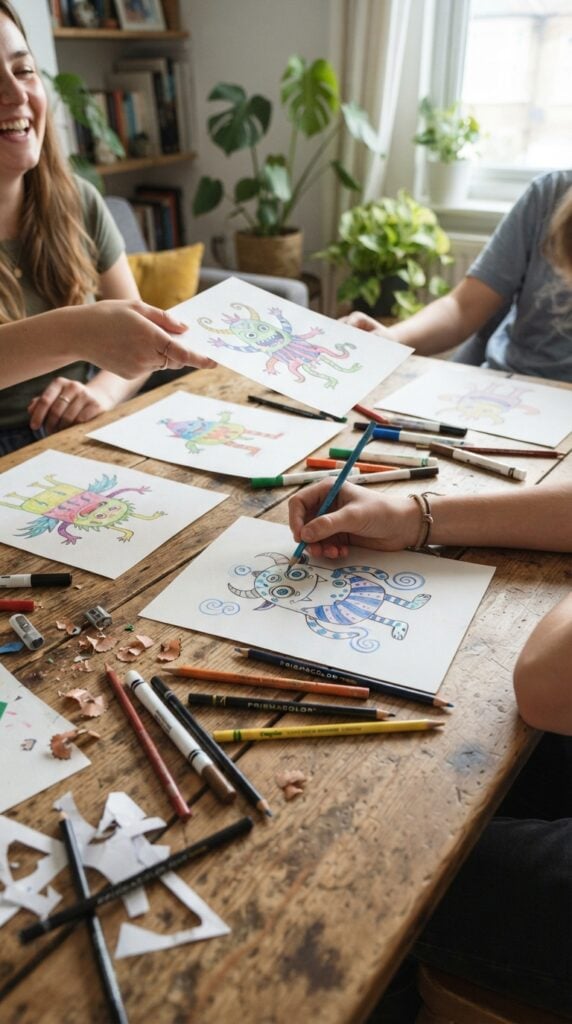
A pass-the-drawing challenge turns one illustration into a group creation.
It is especially useful for a sleepover group with different drawing abilities because nobody has to produce a finished picture alone, and the result often takes an unexpected direction as each person adds something new.
Give everyone a sheet of paper and ask them to draw a simple starting shape or object. After about 30 seconds, pass the paper to the next person.
That person adds a new detail, then passes it on again. Continue until each drawing has travelled around the group several times.
Try different versions to see how the rules change the outcome:
- One-line round: Each player adds to the drawing without lifting the pen from the paper.
- Mystery creature: Start with a head, then let each person add a body part without knowing what the next person intends to draw.
- Story illustration: One person draws a character, another adds a setting, and others contribute objects or events.
- Limited-colour round: Use only two or three coloured pencils or markers, which encourages players to make deliberate choices.
For a more educational twist, ask the group to give the finished drawing a title and write a two-sentence description of what is happening in the picture. This adds a small storytelling and interpretation exercise without turning it into a formal lesson.
Keep the drawings moving at a steady pace, and let players contribute shapes, patterns, or background details if they are unsure what to add.
Avoid judging the pictures by artistic skill; the interesting part is seeing how different people interpret the same starting point.
What you need: Paper, pencils or washable markers, coloured pencils if available, and a timer.
Skip games that feel too childish with 25 Birthday Party Games for Teens That Aren’t Cringey.
25. Set Up a Choose-Your-Own-Adventure Story

A choose-your-own-adventure story lets the group create a plot where every decision changes what happens next. It works well when friends enjoy storytelling but do not all agree on what the characters should do.
Instead of arguing over one storyline, the group can vote on what happens and follow the consequences.
Start with a simple situation, such as a character finding a locked room in an old hotel, receiving a mysterious message, or discovering an unusual object at school. One person writes the opening paragraph, then presents two possible actions at the end. For example, should the character open the door or follow the strange noise down the hallway?
How to build the story:
- Create decision points: Each choice should lead to a different event, discovery, or complication rather than simply changing a character’s direction.
- Keep track of branches: Label each section A, B, C, and so on, then write down which choice leads to each section. This prevents the story from becoming confusing.
- Give everyone a role: One person can narrate, another can record the choices, and others can suggest consequences or vote on the next move.
- Include a few endings: Plan for at least two possible conclusions, such as solving the mystery or discovering that the original assumption was wrong.
To avoid getting stuck, set a limit of three or four major decisions before reaching an ending. The group can also use a simple rule: if a choice creates a dead end, return to the previous decision and take the alternative route.
What you need: Paper, pens, and a few prepared story prompts. A shared digital document also works, provided everyone can contribute without accidentally deleting another person’s writing.
Find ideas suited to teen boys’ interests in 21 Cool Birthday Party Ideas for Teen Boys They’ll Actually Enjoy.
26. Create a Quiet Corner With Independent Activities

Not everyone enjoys continuous games, group conversations, or loud music for an entire evening.
A quiet corner gives guests somewhere to take a break without having to explain why they want some time alone. It can be especially helpful when different friends have different energy levels or someone needs a little space after a busy day.
Choose a comfortable spot away from the main activity area, but keep it within the host’s agreed household boundaries. Add cushions, a blanket, and a small selection of activities that can be started and stopped easily.
Activities to include:
- A short reading selection: Provide comics, magazines, short stories, or a favourite book rather than expecting anyone to finish a long chapter.
- Colouring or sketching: Supply printed patterns, blank paper, and pencils for guests who prefer working with their hands.
- A small puzzle: Choose a word search, logic puzzle, or compact jigsaw that can be left unfinished and revisited later.
- A journaling prompt: Offer optional prompts such as “Something I learned this year” or “A place I would love to visit.”
- Simple paper crafts: Keep a few sheets of origami paper or instructions for folding a bookmark.
The important detail is that the corner should not become a punishment area or a place where someone is sent for being quiet. Guests should be free to use it without pressure to rejoin immediately, while still following the host’s normal safety and supervision arrangements.
Keep the supplies limited and easy to tidy. Too many choices can make the space cluttered, while activities with complicated instructions may defeat the purpose of offering a restful break.
Avoid requiring anyone to share private journal entries or explain personal feelings to the group.
What you need: Cushions, a blanket, books or comics, paper, pencils, and two or three quiet activity options.
Girls who want a celebration beyond the usual themes can try 20 Unique Birthday Party Ideas for Teen Girls That Aren’t Boring.
27. Make Personalised Bookmarks or Mini Memory Cards
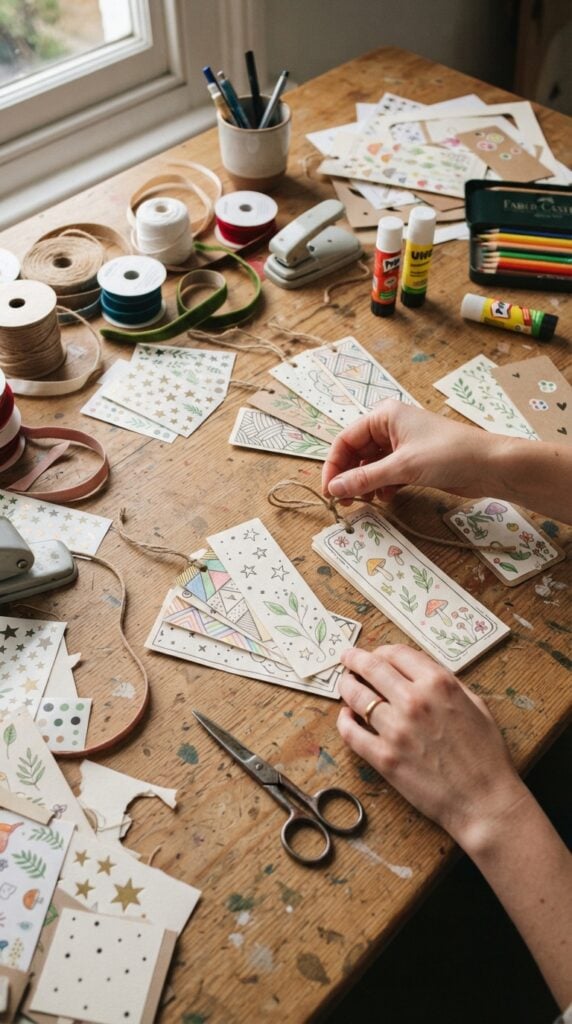
Bookmarks and mini memory cards are inexpensive paper crafts that can be personalised without needing advanced drawing or sewing skills. A bookmark can be useful for someone who reads regularly, while a small card can preserve a funny group quote, a favourite shared moment, or a message to open later.
For bookmarks, cut cardstock into strips approximately 5–6 cm wide and 15–18 cm long.
These dimensions leave enough space for decoration without making the bookmark too bulky inside a book. Round the corners if desired, then decorate with lettering, small illustrations, patterned paper, or a narrow ribbon attached through a hole near the top.
For mini memory cards, cut smaller rectangles from cardstock and give each person a few prompts to choose from. Examples include a favourite song from the evening, a funny fictional moment, a new thing learned, or a kind message for another guest. Keep the prompts light and optional so nobody feels pressured to reveal personal information.
Ways to make the finished pieces more useful:
- Use cardstock rather than thin printer paper: It holds its shape better during regular use.
- Keep decorations flat: Thick embellishments can make a bookmark awkward to place between pages.
- Protect handwritten designs: Allow ink and paint to dry fully before stacking the cards. Clear adhesive film can help protect bookmarks, provided it is applied without wrinkles.
- Make them practical gifts: Add a name or short message to the back so each person can keep their own piece or give it to a friend.
If the cards are intended as keepsakes, agree on what may be written before starting. Avoid including private conversations, unflattering drawings, or messages that could embarrass someone later. The finished pieces should be something the recipient is comfortable keeping.
What you need: Cardstock, scissors, pencils or markers, glue, patterned paper, and optional ribbon or clear adhesive film.
Bring the decorations, food and activities together around 25 Fun Birthday Party Theme for Teens They’ll Actually Love.
How to Choose the Right Sleepover Activities for 13-Year-Olds
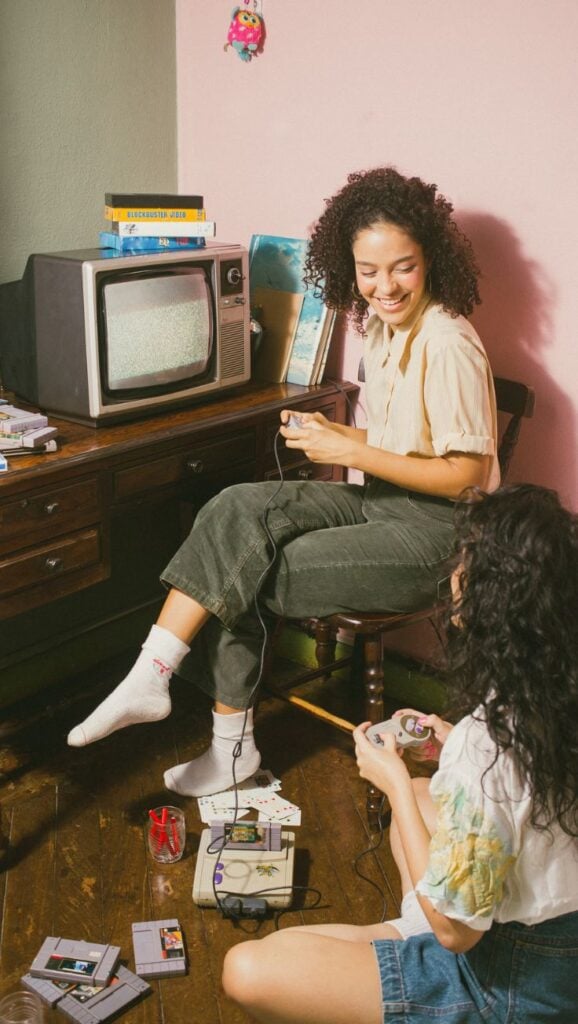
The activity that works for four friends in a living room may not work for ten guests sharing a bedroom. Before choosing games or crafts, check four practical things: how many people can participate, what guests are comfortable doing, where the activity will happen, and what it will cost.
1. Check the Group Size
Count the guests before choosing an activity, then check how many people can take part at once. Some games work well with two players, while others need a larger group to make sense.
For a small gathering, try a shared puzzle, a drawing challenge, or a two-person mystery game. With a larger group, choose activities that allow several people to participate at the same time, or divide the group into smaller teams.
For purchased board and card games, check the manufacturer’s stated player range. A game designed for two to four players may not work well with eight unless its rules offer a suitable team variation. Avoid making one guest wait through several long turns while everyone else plays.
2. Allow for Different Interests and Comfort Levels
Thirteen-year-olds do not necessarily enjoy the same things. One guest may love dancing, another may prefer drawing, and someone else may enjoy solving puzzles. Choosing only one type of activity can leave part of the group with little they want to do.
Prepare a mix of options:
- Talking: a fictional mystery, conversation prompts, or a group storytelling game.
- Making: bracelet designs, tote-bag decoration, or paper crafts.
- Problem-solving: a puzzle, escape-room challenge, or paper engineering task.
- Movement: a dance tutorial, a simple physical challenge, or a scavenger hunt.
Participation should not depend on being willing to perform, appear in a photograph, or share personal information. For activities involving filming, let everyone know beforehand and get their permission before recording. Agree on whether anything will be shared; being comfortable with a private recording does not automatically mean someone wants it posted online.
3. Match the Activity to the Available Space
Look at the actual room before deciding what to do. A bedroom with beds, bags, and furniture may be suitable for crafts or card games but too cramped for running, dancing, or throwing objects.
For a small indoor space, choose tabletop activities, paper challenges, drawing games, or a film quiz. If the group wants to dance or play a movement game, clear the floor first and move breakable objects out of the way. Check that everyone has enough room to move without colliding with furniture.
Outdoor activities need their own checks. Consider the weather, lighting, the ground surface, and the boundaries guests must stay within. Do not assume a backyard is safe for running in the dark simply because it is familiar.
4. Set a Budget Before Buying Supplies
List the activities you want to offer and check what you already have at home. Paper, pens, cardboard packaging, books, and ordinary household objects can support many challenges without requiring a separate kit for each one.
Spend money where a purchase will genuinely improve the activity. For example, fabric markers may be worth buying for a tote-bag project if the guests can use them on other crafts later. A board game may also be a worthwhile purchase if it suits the group size and can be played again.
Check the full cost before committing. A craft kit may appear inexpensive but require extra materials, while a game may not accommodate all the guests. For food activities, include ingredients and any alternatives needed for allergies or dietary requirements.
A practical final check: Before the sleepover, choose a few activities with different purposes, confirm that everyone can participate safely, and have the necessary supplies ready. You do not need to schedule every minute of the night; leaving some unplanned time gives the group room to talk, rest, or continue an activity they genuinely enjoy.
Still deciding what kind of party suits the birthday teen? 25 Best Birthday Party Ideas for Teens covers a range of celebration styles.
Conclusion
From making personalised tote bags to solving mysteries and creating stories together, these sleepover ideas for 13 olds give you different ways to spend the night without relying on one activity to entertain everyone.
Save this list and pick the ideas that fit your group, space, and budget before the guests arrive.