From mystery challenges to mini magazines, these sleepover ideas for teen girls bring fresh ways to laugh, create, compete and stay engaged.
There is a point in most sleepovers when the original plan stops mattering.
The problem is rarely a complete lack of things to do. It is that some activities work for five minutes, some only suit part of the group, and others depend on everyone being in exactly the same mood.
By the middle of the night, a list of twenty “fun” suggestions can leave a host with more options but no better idea of what will keep everyone involved.
That is because a good sleepover activity has to do more than fill a gap between meals.
It needs to give the group a reason to participate, whether that means solving something together, making a decision, learning a skill, creating something, competing or simply having a conversation that would not happen in the same way during an ordinary afternoon.
That is what this list focuses on. These sleepover ideas for teen girls include activities with different levels of energy, preparation and group involvement, so the night can change pace without becoming a rigid schedule.
You will find ideas that work with a small group, options that can handle more people, and a few that leave the girls with something to take home or remember after the sleeping bags are packed away.
Make the night more than just sleeping bags and snacks with 31 Fun Sleepover Ideas for Teens They’ll Actually Love.
Sleepover Ideas for Teen Girls That Are Interesting
1. Create a One-Night Mystery With Clues Hidden Around the House
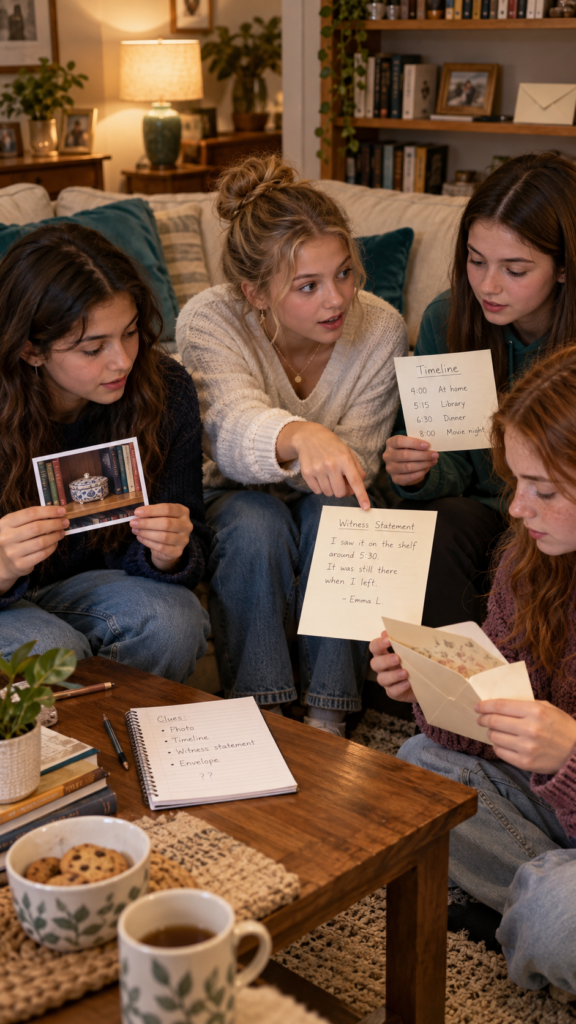
Turn the sleepover into a small mystery that the girls have to solve before the night is over.
The story can be completely fictional: a missing keepsake, an anonymous note, a locked box, a disappeared birthday gift or even a made-up case involving several possible suspects.
The important part is not hiding 20 random clues around the house. Give each girl a piece of information that makes sense on its own but becomes more useful when the group starts comparing what everyone has found.
One person might have a time clue, another a photograph, another a written statement and another something that appears to contradict the original story.
Keep the mystery short enough to solve in one evening. Around 6–10 meaningful clues is plenty for a small group, especially if some clues require the girls to discuss, eliminate possibilities or put information in the correct order.
For a simple setup, prepare:
- A short opening story explaining what happened
- A handful of envelopes containing clues
- Two or three possible explanations for the incident
- One final clue that confirms the solution
- A small prize or reveal for the group that solves it
You can divide the clues between the girls rather than making everyone search for the same pieces.
That gives each person information the others need, so the mystery depends on collaboration rather than whoever happens to find the most clues first.
It also makes this different from a standard scavenger hunt. The goal isn’t to race around the house collecting objects; it is to work out what happened from incomplete information.
Make it more interesting: Include one clue that initially points toward the wrong conclusion. The group has to notice that it conflicts with another piece of evidence before they can reach the answer.
A birthday sleepover needs a little more structure. 27 Sleepover Birthday Party Ideas for Teens They’ll Love has ideas for the full celebration.
2. Run a “Pitch It or Pass” Night
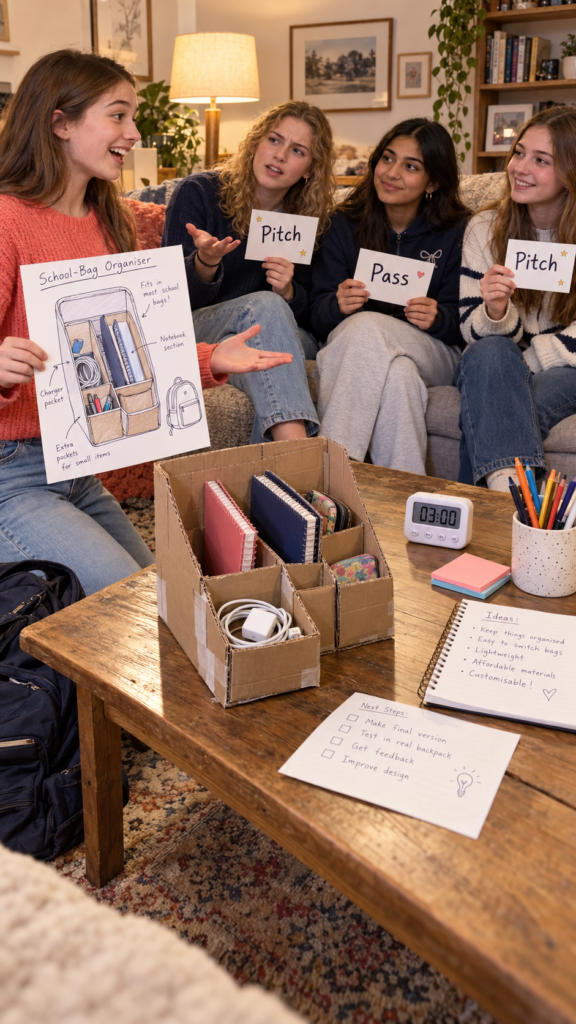
Give each person a completely ordinary problem and ask her to invent something that solves it.
It could be a better way to organise a school bag, a product for people who always lose their chargers, an app that fixes an annoying everyday problem or a deliberately ridiculous invention that nobody needs.
Each person gets a few minutes to prepare a short pitch explaining the problem, the proposed solution, who would use it and why anyone should care.
The others become the judging panel and can ask questions before deciding whether they would “invest” or pass.
You don’t need to turn this into a serious business exercise. The useful part is learning to explain an idea clearly and respond when someone asks, “But why would anyone buy that?”
Try judging the pitches on:
- Problem solved: Is there a real reason for the product to exist?
- Clarity: Could someone understand the idea after a one-minute explanation?
- Practicality: Could it realistically be made or used?
- Persuasiveness: Did the pitch make the judges interested?
- Originality: Is there something different about the idea?
Make it more interesting: Give everyone the same everyday problem but let them come up with completely different solutions. Comparing the answers can be more entertaining than simply choosing the funniest invention.
3. Make a Tiny Magazine About the Group
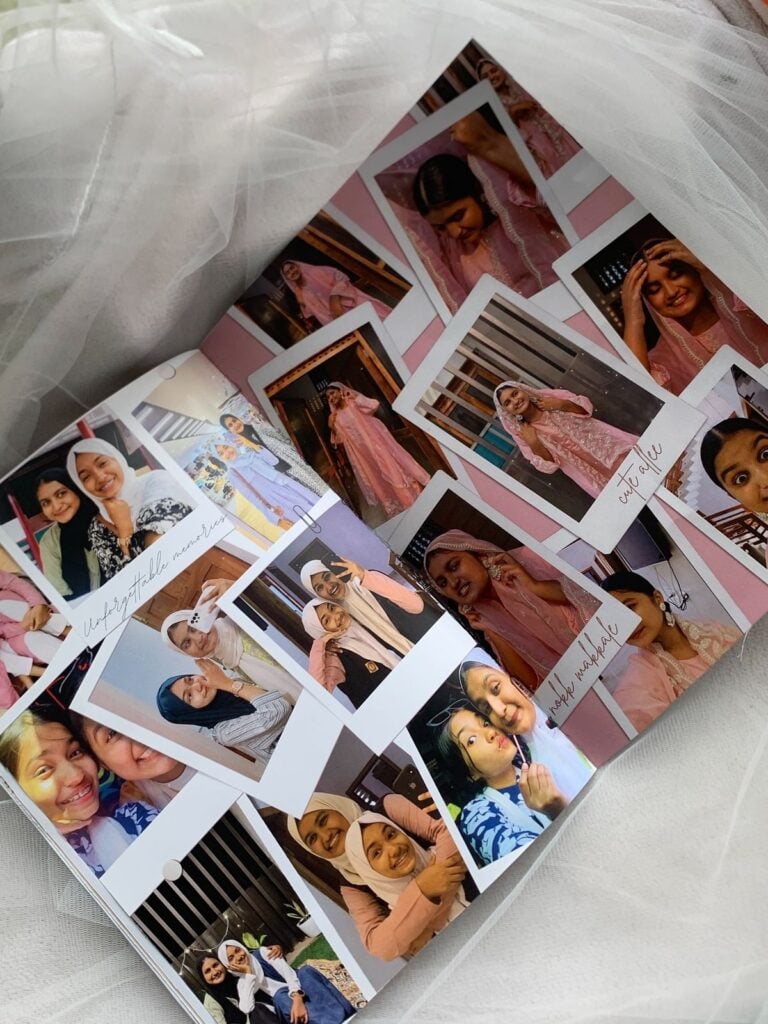
Make a small magazine during the sleepover that reflects this particular group at this particular age, rather than turning it into a scrapbook filled with posed photographs.
Start with a few sections and let everyone contribute.
One person could write a mock advice column, another could create a “currently obsessed with” page, while someone else interviews the others about a favourite film, food, hobby or completely random opinion.
You could include:
- A short interview with each person
- Current favourites and recommendations
- Funny quotes from the evening
- A “things we predict will happen” page
- Drawings or cartoons
- A fictional advice column
- A page of group opinions
- A final page for everyone to sign and date
A paper version is probably more fun for a sleepover because everyone can work on different pages at the same time. If the group prefers digital work, a shared document or simple design tool can work too.
Keep one boundary: Don’t turn the magazine into a place for embarrassing stories, private information or photographs that someone would not want circulated later.
The finished copy should be something everyone is comfortable keeping.
Make it more interesting: Give the magazine a deadline. It has to be finished before breakfast, even if it is only four or five pages. A little time pressure makes the project feel like a real publication rather than a craft that gets abandoned halfway through.
Looking beyond sleepovers? 33 Cool Birthday Party Ideas for Teens They’ll Actually Like has other directions to take.
4. Hold a Blind Ranking Challenge
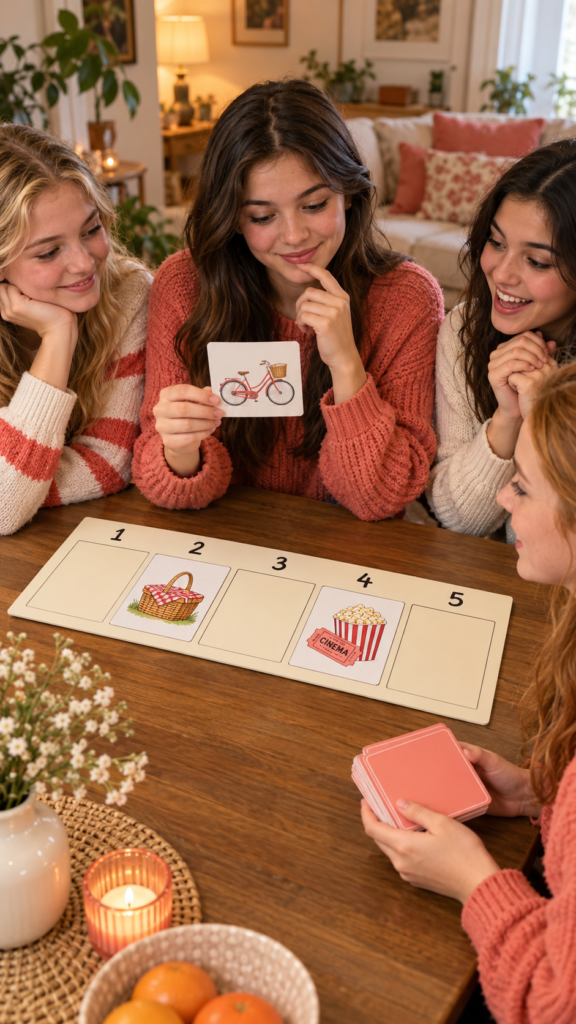
This works because you have to make a decision without knowing what is coming next.
Choose a category and prepare five options, but reveal them one at a time.
The first person has to place the first option somewhere on a ranking from one to five. Once that position is taken, it cannot be changed.
For example, you might be ranking possible holiday destinations.
If the first destination seems worth a number-one spot, the player has to use it without knowing whether something better is about to appear. The next destination then has to fit into one of the remaining positions.
You can use categories such as:
- Places you’d most like to visit
- Foods for a perfect movie night
- Weekend activities
- Songs for a road trip
- School subjects that would make good clubs
- Fictional characters you’d want on your team
The fun comes from the forced decisions, not from having the most unusual questions.
Keep it fair: Use options that everyone can reasonably judge. If half the group knows nothing about a particular topic, the ranking becomes a test of knowledge rather than a social game.
Make it more interesting: Let one person secretly prepare the five options for another person. That way, nobody knows exactly what is coming.
5. Build a Future Me Evidence Box
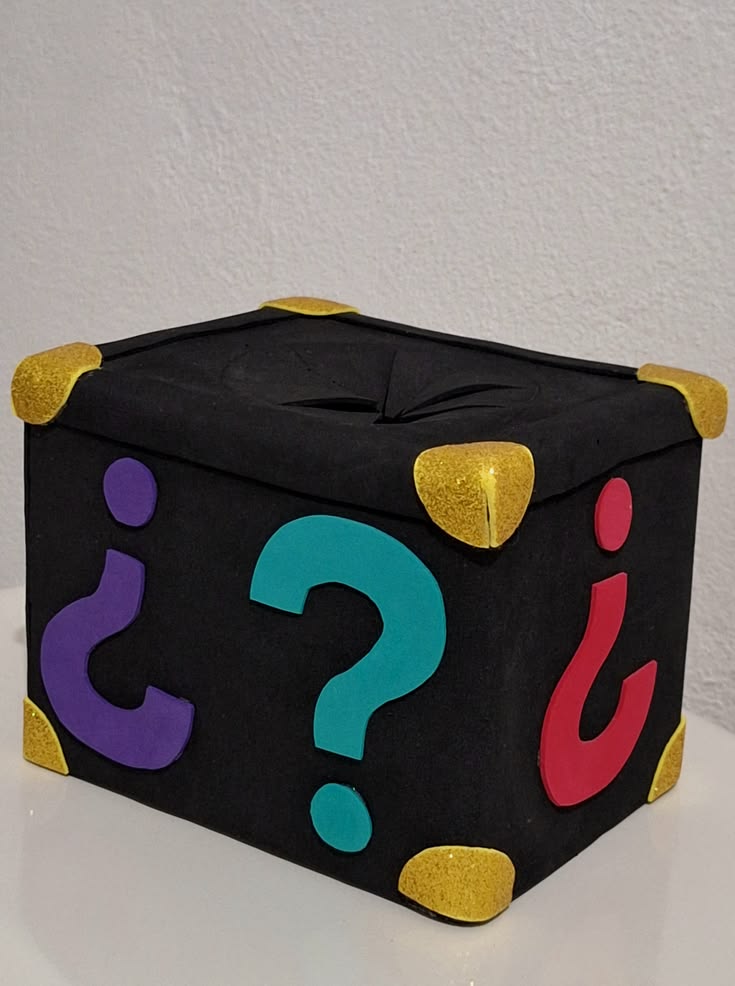
Forgo the usual list of resolutions and make something that captures evidence of who you are now.
Give each girl a small box, envelope or sturdy container and ask her to choose a handful of things that represent her current life.
That could include a handwritten note, a printed photograph, a favourite quote, a small drawing, a prediction about the next few years or a list of things she is currently learning.
Add a few prompts such as:
- Something I hope I still love in five years
- Something I think will change about me
- Something I want to learn
- A prediction about one person in this group
- Something ordinary about my life that I might forget
- A question I want my future self to answer
The important distinction is that this is not a list of things she hopes to achieve. It is a snapshot. Even an ordinary detail can become meaningful later because it records something that seemed too insignificant to remember.
Agree on an opening date, perhaps a birthday, graduation or another milestone several years away.
Make it more interesting: Have everyone write the same five questions on the night and seal the answers separately. When the boxes are eventually opened, you can compare how differently everyone imagined the future.
Keep the night from getting boring with 27 Birthday Party Activities for Teens That Keep Everyone Entertained.
6. Make a Short Film With One Rule
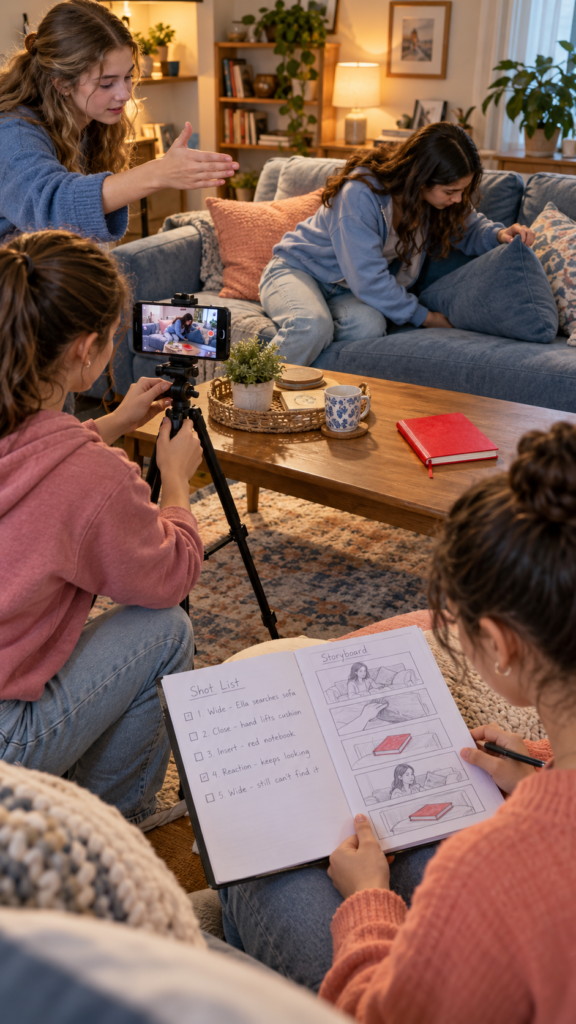
Don’t start with, “Let’s make a video.” Start with a story problem.
Give the group one unusual restriction that forces them to think differently.
For example, the entire film must happen in one room, the main character cannot speak, or an important object must appear in every scene without anyone explaining why.
From there, the group has to decide who will act, who will film, what happens first and how the story ends.
A phone is enough for recording. You do not need elaborate costumes or editing software; the challenge is in making a coherent story with the limitation you’ve been given.
A few rules that work well:
- Keep the finished film under five minutes.
- Everyone who wants to participate gets a role.
- No one has to appear on camera if she doesn’t want to.
- Don’t post the finished video without everyone’s agreement.
That last point is worth keeping in the activity itself. A private sleepover recording does not automatically become content for social media.
Make it more interesting: Put three unrelated objects on the table and require all three to appear naturally in the story. The group then has to find a reason for each object to belong in the plot.
7. Host a Recipe Reconstruction Challenge
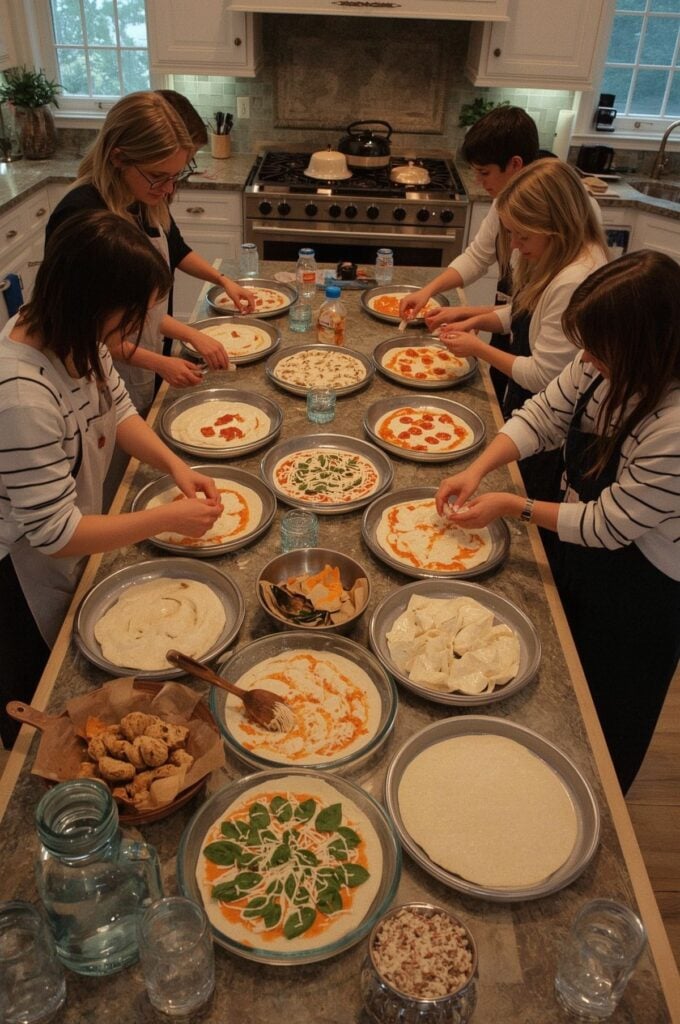
Photo credit: @ c
Instead of handing everyone a recipe and asking them to follow it, turn the food into a small investigation.
Choose a simple food that can be safely prepared at home and give the group a finished sample without telling them exactly how it was made.
Their job is to identify the likely ingredients, work out the method and then make their own version.
They can record their guesses before cooking:
- What ingredients can you identify?
- Which ingredient seems to provide the main flavour?
- Is the texture caused by baking, chilling, mixing or something else?
- Which ingredients are essential and which could be changed?
- What would happen if one ingredient were left out?
Then compare their version with the original.
This introduces sensory observation and basic recipe reasoning rather than treating cooking as simply another snack-making activity.
For a real sleepover, keep the recipe simple and check allergies before choosing the food.
Don’t make an ingredient a mystery for anyone with a known food allergy; the person responsible for the food should know exactly what is being served.
Make it more interesting: Give each team a limited ingredient list and ask them to recreate the texture or flavour using only what they have. The restriction forces them to think about what each ingredient is doing.
8. Create a Museum of Us
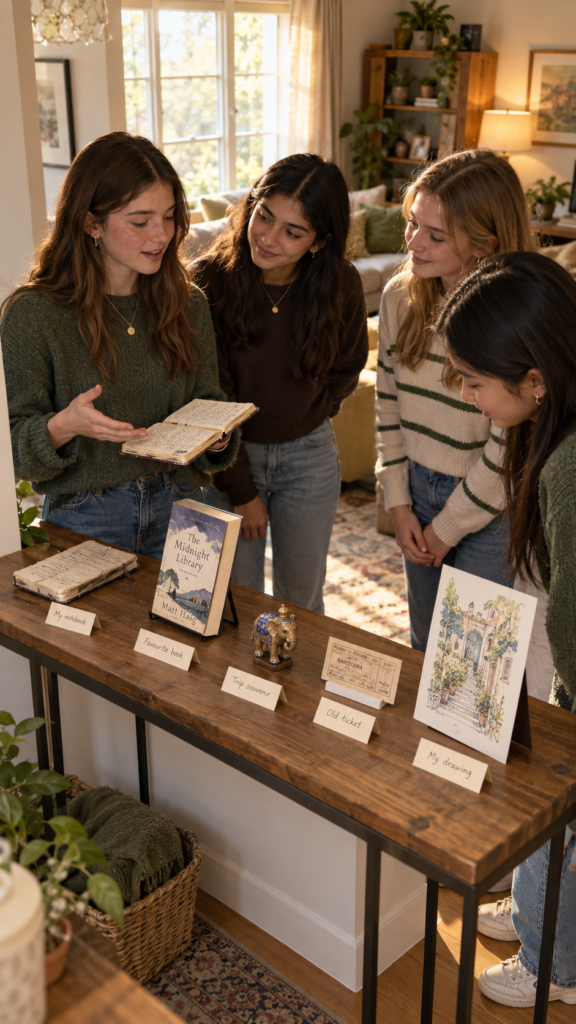
Ask everyone to bring or choose one ordinary object that says something about her.
It could be an old ticket, a well-used notebook, a small souvenir, a drawing, a favourite book, a piece of fabric, a childhood object or something completely unremarkable that happens to have a story behind it.
Arrange the objects as a temporary exhibition. Each person writes a short museum label explaining:
Object:
Year or period:
Why it matters:
What someone looking at it would not know:
Then let everyone walk around and read the labels before the owners explain their objects.
The strength of this idea is that the object does some of the talking. A person doesn’t have to sit down and answer a long list of personal questions; she can decide what story she wants to attach to something she has chosen.
Keep it comfortable: Nobody should be pressured to bring something sentimental or reveal a private story. A favourite pen, book or old receipt can work just as well as a meaningful keepsake.
Make it more interesting: At the end, let everyone write one sentence about the object they found most surprising and give it back to its owner. The responses can become part of the exhibition before everything is packed away.
A 13th birthday can feel special without becoming too formal. 29 Creative Birthday Ideas for a 13 Year Old has age-appropriate ideas.
9. Do a Two-Team Escape Puzzle Without Buying an Escape Room
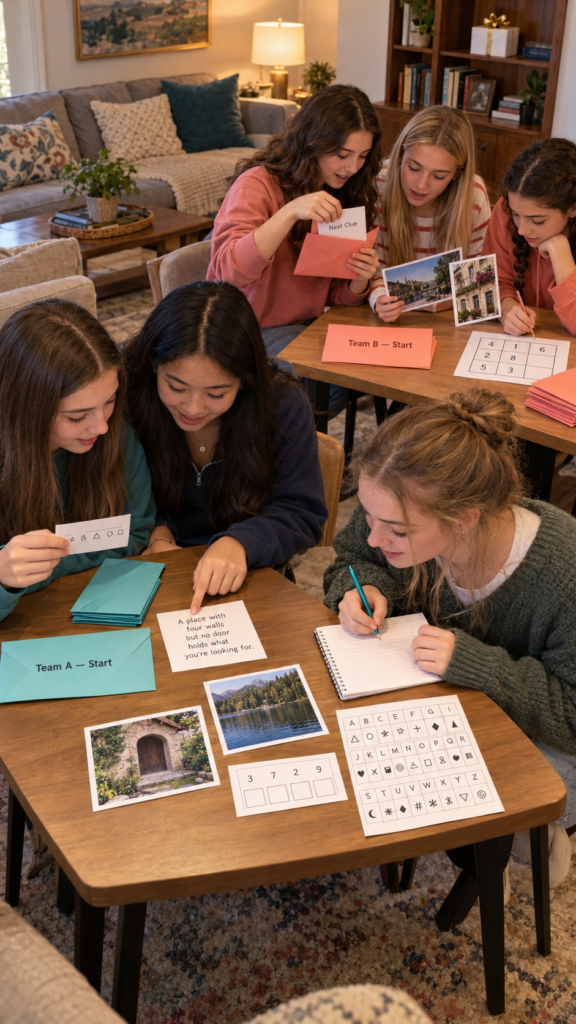
You don’t need an escape-room kit or a room full of locks to create this. What makes an escape puzzle work is the sequence: one answer gives you the information needed to solve the next problem.
Split the group into two teams and give each one a different starting clue. The puzzles can lead them to:
- A number combination
- A word or phrase
- A hidden location
- A photograph with something to identify
- A simple substitution cipher
- A logic problem
- An object that contains the next clue
Keep the difficulty appropriate for the age group. A puzzle that requires specialised knowledge will quickly stop being fun, while clues that can be solved by noticing patterns, comparing information or thinking logically allow more people to contribute.
You also don’t need to make the teams race from room to room. Some clues can be placed at a table, inside envelopes or in ordinary objects around the house.
Make it work better: Don’t let one clever person solve everything. Include different types of clues so that someone good with words, numbers, visual details or logic has a chance to contribute.
Give a teen girl’s celebration a less predictable twist with 20 Unique Birthday Party Ideas for Teen Girls That Aren’t Boring
10. Run a “Teach Us Something” Mini-Class
Give each girl a short slot to teach the group something she genuinely knows how to do.
The subject does not have to be impressive.
Someone might know how to fold a particular origami shape, make a simple hairstyle, take better phone photographs, pronounce a phrase in another language, sew on a button or perform a card trick.
Possible mini-lessons include:
- A drawing technique
- A simple sewing skill
- A card trick
- A dance step
- A language phrase
- A hair technique
- Basic phone photography
- Origami
- A particular game
- A useful keyboard shortcut
Keep each lesson short enough that nobody feels as though she has been asked to give a presentation at school.
The interesting part is the change in roles. The person who normally listens becomes the person who knows something the others don’t, and the group gets to try the skill rather than simply watching her demonstrate it.
Give it a useful ending: After each mini-class, everyone tries the skill once. That turns the activity into a genuine skill swap rather than a series of demonstrations.
Sixteen calls for something a little different. 25 Birthday Party Ideas for 16 Years Olds That Feel Special has memorable options.
11. Make a Group Soundtrack Without Letting One Person Control It
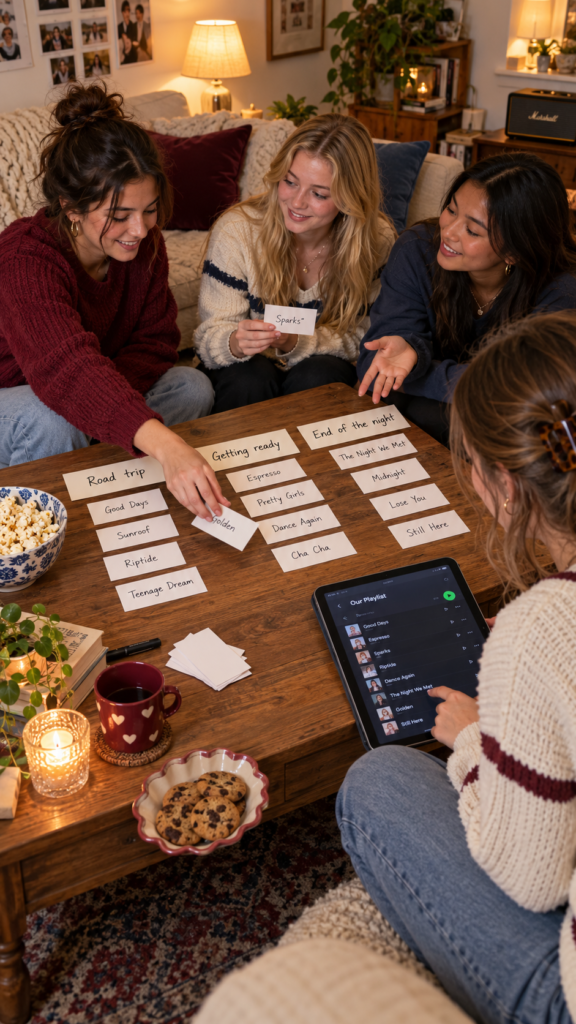
Instead of putting one person in charge of the music for the entire night, build a playlist together.
Give everyone a few categories and ask each person to contribute one song to each. You could use:
- A song you would put on during a road trip
- A song that reminds you of a particular year
- A song you would play while getting ready
- A song the group will probably argue about
- A song you think everyone should hear
- A song for the end of the night
Then listen through the choices and arrange the final playlist together.
This works particularly well as one of your sleepover ideas for teen girls because the playlist can become part of the evening rather than another activity that has to be completed and put away.
One rule worth keeping: Nobody should be pressured to explain a personal reason for choosing a song. A person can simply say, “I like this one.”
12. Hold a Real or Made Up? Internet Quiz
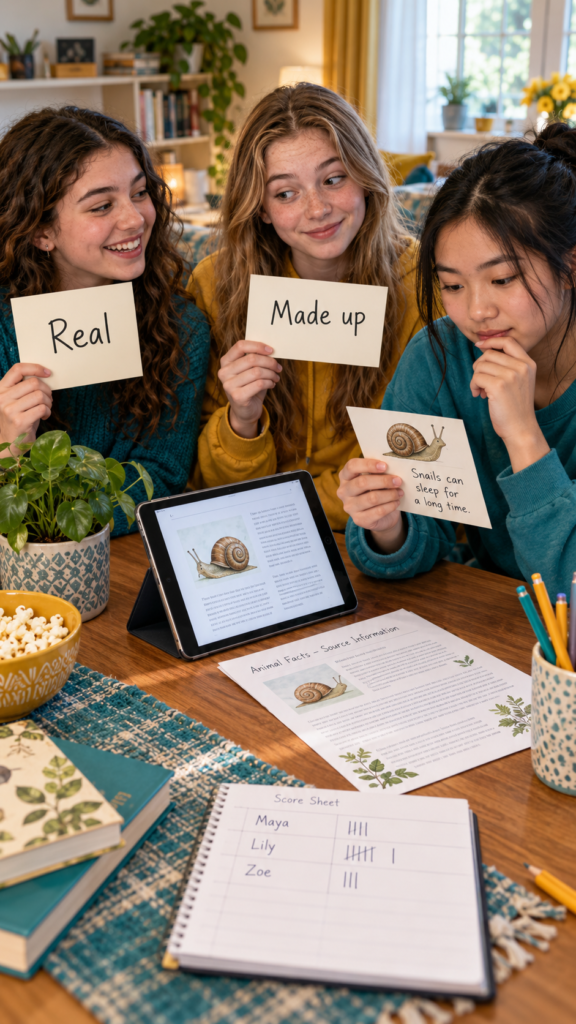
Take strange claims, photographs, headlines or short pieces of information and turn them into a fact-checking game.
The group first votes on whether each item is genuine or made up. Then reveal the answer and, more importantly, show how you know.
For example, you might give them a claim that sounds plausible but contains one incorrect detail. The girls have to look for evidence rather than deciding based on whether the statement “sounds right.”
For a stronger version, use reputable sources when preparing the quiz instead of relying on social-media trivia pages. Depending on the topic, that could mean checking a museum, university, government agency, established news organisation or another primary source.
This makes the activity about more than getting points. It introduces a useful habit: an interesting claim is not automatically a true one.
Keep the research age-appropriate: Avoid deliberately disturbing or frightening internet material. The strange and surprising parts of the internet are more than enough for a sleepover without making someone uncomfortable.
Late-night hunger is easier to handle with 23 Easy Birthday Snacks for Teen.
13. Create a Photo Assignment Instead of a Photo Booth
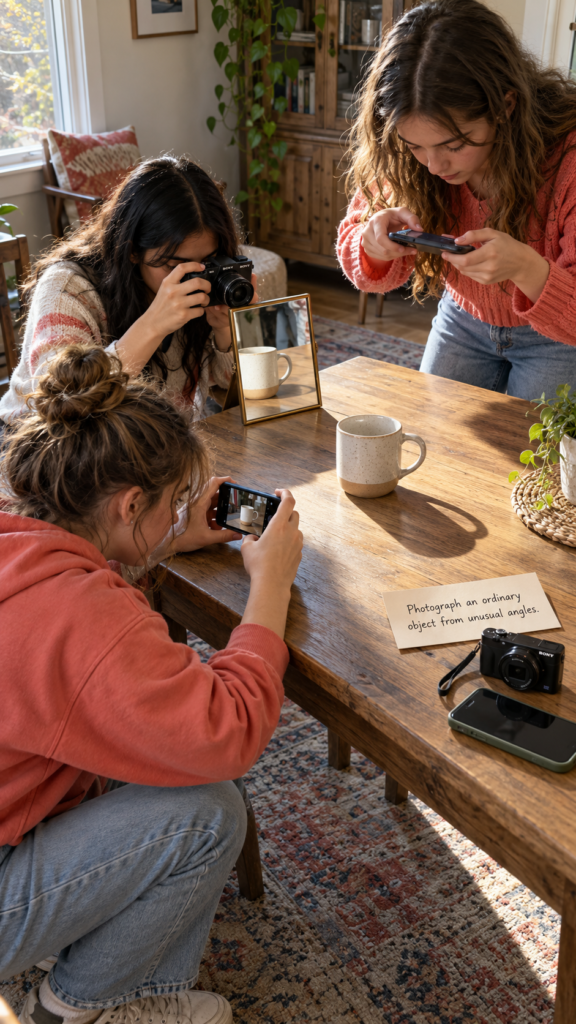
A photo booth gives you a place to take pictures. A photography challenge gives you something to photograph.
Give everyone the same assignment and let them interpret it differently. Try prompts such as:
- Photograph something ordinary so it looks important
- Find an interesting reflection
- Photograph the same object from five different angles
- Make a picture using only shadows
- Create a photograph where the colour is the main subject
- Recreate the composition of an old photograph
You don’t need professional cameras. A phone is enough to experiment with framing, light, perspective and composition.
Afterward, put the photographs side by side and talk about how different everyone’s interpretation was.
Make it more interesting: Give everyone one photograph that they are not allowed to retake. They have to work with the image they captured instead of endlessly trying to get a “perfect” shot.
14. Make a Worst Product Ever Commercial

Invent a product that technically solves a problem nobody has.
The group then has to sell it as if it were a serious product.
Start by deciding:
- What the product does
- Who supposedly needs it
- What problem it solves
- How much it costs
- Why it is “better” than existing alternatives
- What slogan belongs on the advert
Then make a short commercial. It can be filmed on a phone or performed live for the rest of the group.
The fun comes from treating an absurd idea with complete seriousness. A product such as a machine that reminds you where you put your water bottle gives the group plenty to work with without requiring anyone to be the butt of the joke.
Add one constraint: The advertisement has to contain a genuine-sounding customer testimonial and one demonstration of the product. That forces the group to develop the idea instead of simply naming something silly.
From creative projects to group challenges, 27 Birthday Party Activities for Teens That Keep Everyone Entertained gives everyone something to do.
15. Hold a Mini Design Challenge With a Real Problem
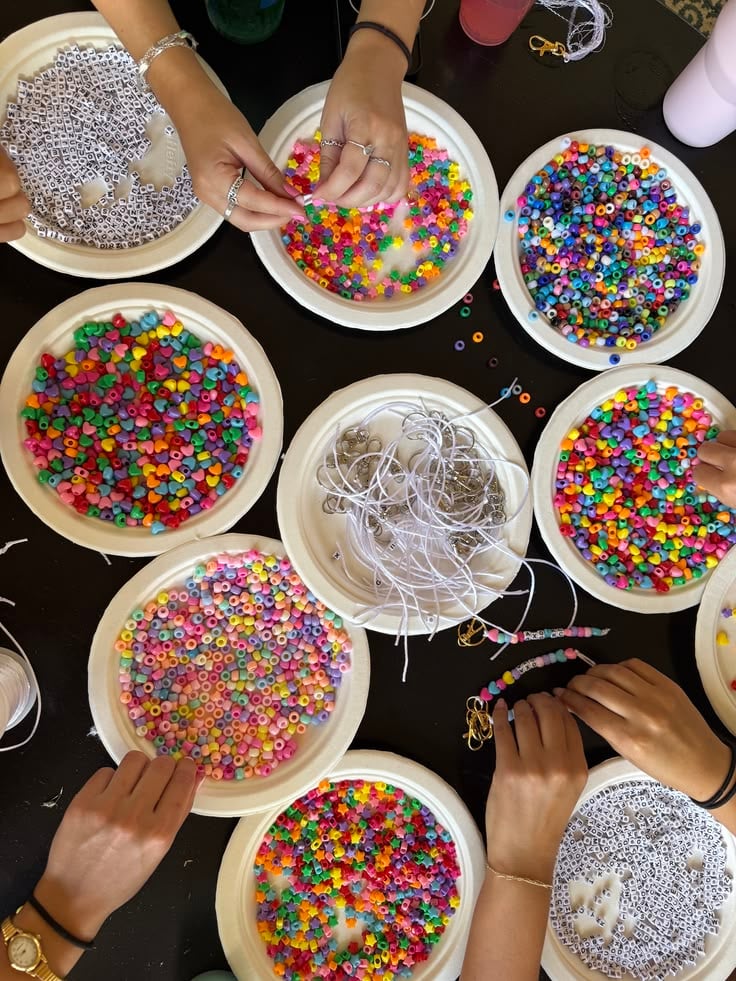
Give the group an everyday problem instead of a blank sheet of paper.
For example:
Design a bedside organiser for someone who constantly loses small items.
Or:
Design a school bag for someone who carries too much every day.
Each person or team sketches a possible solution and explains how it would work.
Ask them to think about:
- Who is the user?
- What is frustrating about the current situation?
- What does the new design need to do?
- What would make it easier to use?
- What could make the design impractical?
This introduces a basic principle of human-centred design: you start with the person’s problem rather than designing something simply because it looks interesting.
You don’t need sophisticated drawing skills. A labelled sketch is enough.
Make it more realistic: Give everyone a limitation such as a small budget, limited materials or a maximum size. Real products have constraints, and working within them makes the challenge much more interesting.
16. Run a Can We Make It Better? Challenge
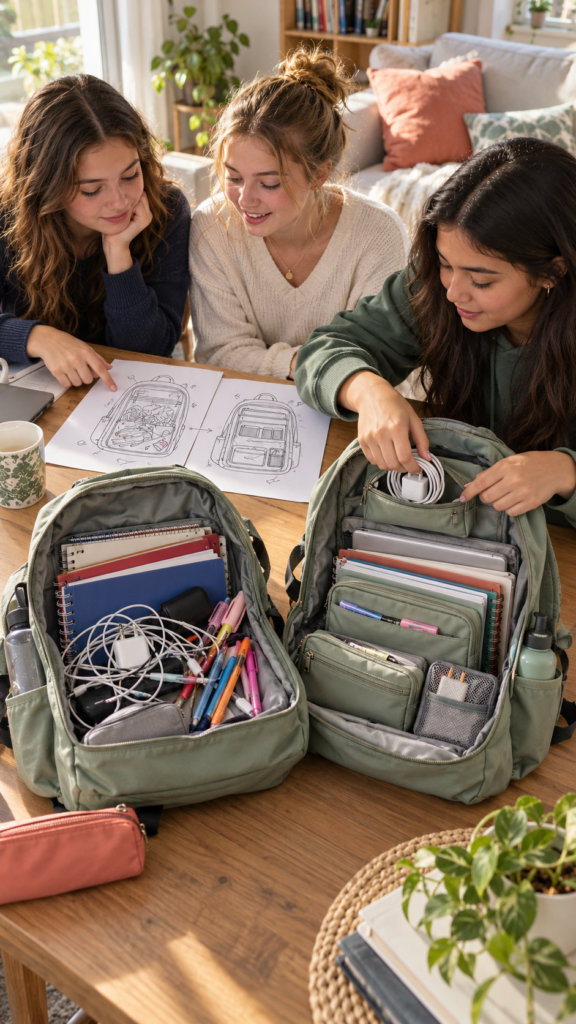
Choose something the group already uses or does and ask one question:
What is annoying about the way this works now?
It could be:
- Packing for a trip
- Organising a school bag
- Setting up a homework space
- Storing jewellery
- Preparing for school in the morning
- Organising a small party
- Keeping track of chargers
- Packing a lunch
First identify the inconvenience. Then redesign the process or object to remove it.
This is slightly different from the previous design challenge because you are improving something that already exists, rather than inventing a solution from scratch.
The group can sketch the new version, make a rough model from household materials or simply demonstrate the improved process.
Ask one useful question before accepting a solution: “Does this actually make the original problem easier?” A complicated invention is not automatically an improvement.
Make the room feel more inviting with 25 Cute Birthday Party Decoration Ideas for Teens.
17. Create a Chain Story Where Nobody Controls the Ending
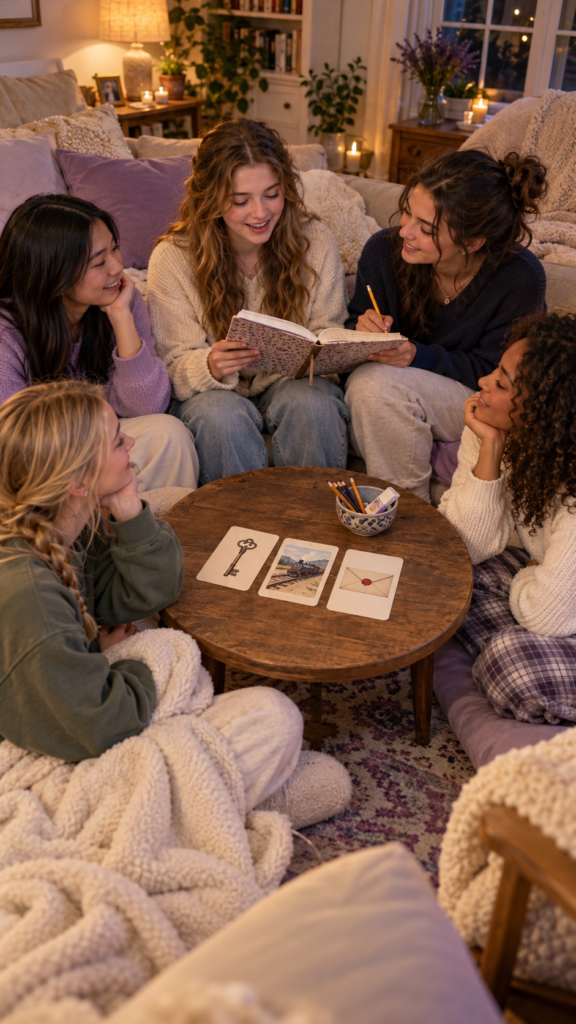
Start with one sentence and let the story move around the group.
The first person establishes the situation, the next person continues it, and so on. Nobody knows the ending in advance.
To prevent the story from becoming predictable, introduce occasional restrictions:
- A particular object must appear
- A character has to change their plan
- Someone must discover new information
- The setting has to change
- A sentence chosen earlier has to become important later
The group can write the story down as it develops or record it as an audio story.
This works especially well when the group includes girls who enjoy different things because you don’t have to be good at drawing, acting or performing to contribute.
Give the final person one job: Bring the story to a proper ending rather than simply stopping when her turn arrives.
-
Hold a Mini Debate Night
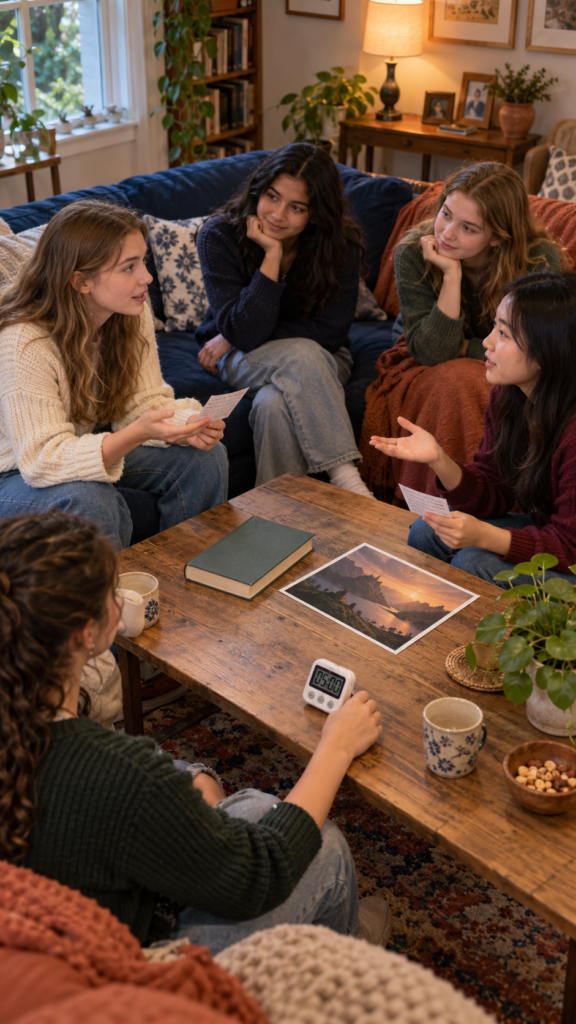
Choose questions that are interesting enough to argue about without turning the sleepover into a personal disagreement.
Try:
- Are books better than their film adaptations?
- Should school uniforms be redesigned?
- Is travelling alone better than travelling with friends?
- Should breakfast foods be available all day?
- Are printed photographs better than digital ones?
Assign sides rather than letting everyone automatically argue for their personal opinion.
Give each side a few minutes to prepare its strongest points, then let them make their case. Afterward, allow everyone to say whether the argument changed or strengthened her original opinion.
The useful part is learning that arguing a position and personally agreeing with it are not the same thing. It also encourages listening because a good response has to address what the other side actually said.
Keep the topics away from personal friendships, politics, religion or anything likely to turn the game into a real argument. The point is practising reasoning, not winning a disagreement with a friend.
Sleepovers involve plenty of eating, so 25 Birthday Party Food Ideas for Teens Everyone Will Want is worth checking.
19. Build a Mystery Box Challenge
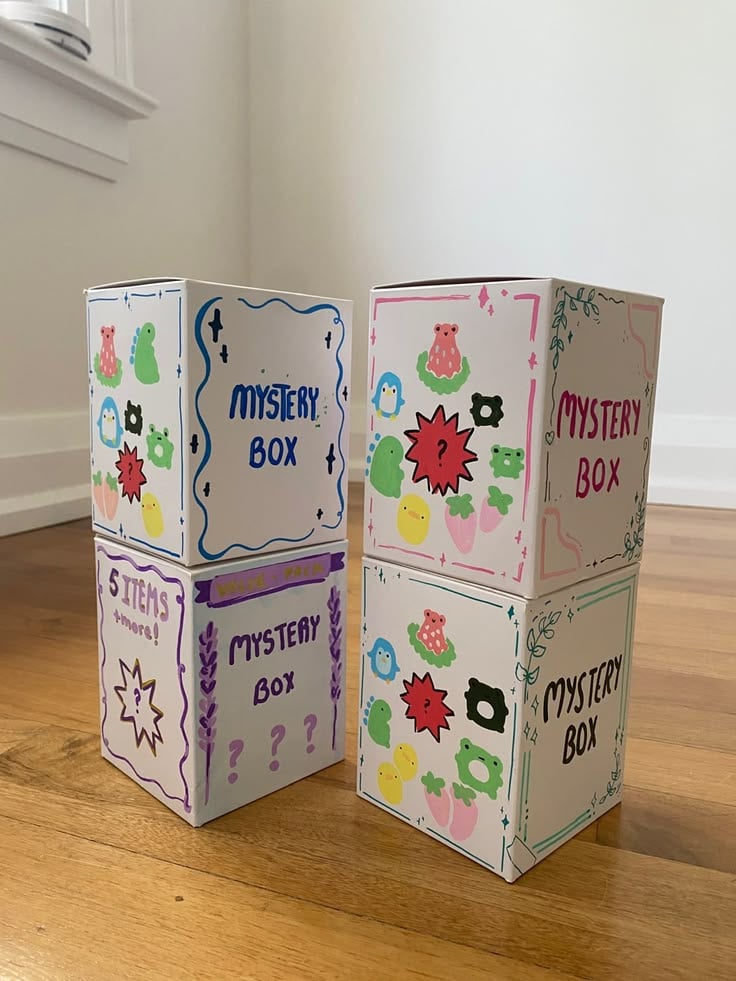
Give each team the same small collection of ordinary materials and one practical problem to solve.
For example:
Build a structure that stands on its own and is as tall as possible.
Or:
Protect an egg from a short drop using only the materials provided.
Other possibilities include building a bridge between two surfaces or creating a container that can hold a specified amount of small objects.
Useful materials might include:
- Paper
- Cardboard
- Paper cups
- Straws
- String
- Tape
- Craft sticks
- Rubber bands
The important rule is that every team gets the same starting materials.
That makes the final results easier to compare and keeps the challenge focused on the design rather than who happened to have the best supplies.
After the test, ask each team what failed, what they changed and what they would redesign with another attempt. That reflection is where much of the problem-solving value comes from.
Make it more interesting: Give the teams a short planning period before they can touch the materials. They have to think through their design first instead of immediately building and hoping it works.
20. Make a Personalised Board Game About the Group
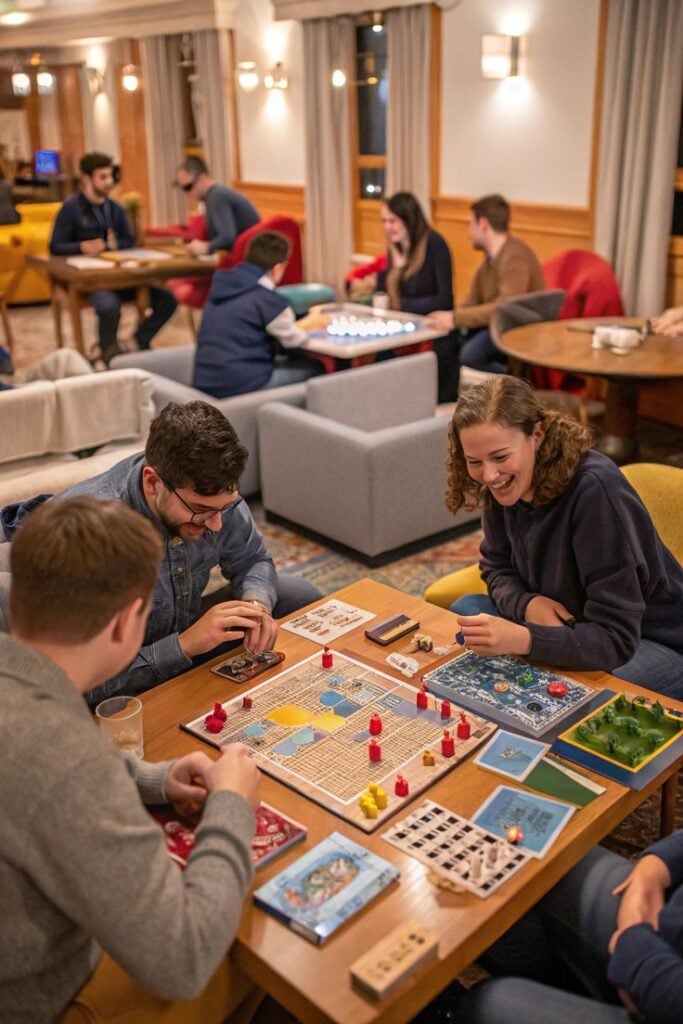
Turn the girls’ own experiences into the material for a board game they can actually play.
Start with a simple route made from paper or card. Instead of filling the spaces with generic instructions such as “move back two spaces,” make the squares specific to the group.
One might refer to a shared memory, another to a favourite food, another to a harmless inside joke, and another might ask a question about something that happened during the school year.
You could include spaces such as:
- Tell the story behind this inside joke
- Name the person most likely to choose this
- Move forward if you remember where this happened
- Everyone votes on the best answer
- Choose another player to answer a harmless question
- Miss a turn while the group decides whether your story is true
The game does not need complicated rules. A dice, playing pieces and a clear way to reach the finish are enough.
The important part is making the questions specific to the people playing. A generic “What is your favourite colour?” doesn’t add much; “Which snack disappeared first at our last outing?” gives the game a connection to a shared experience.
Keep it playable: Don’t make every square dependent on private memories that one person may not know. Mix personal references with questions or challenges that everyone can answer.
The finished board can be photographed or stored away and brought out at another gathering, so the activity doesn’t end when the sleepover does.
A more polished look can change the feel of the whole night. 21 Aesthetic Birthday Party Ideas for Teen Girls has stylish ideas.
21. Do a Taste Test With a Method
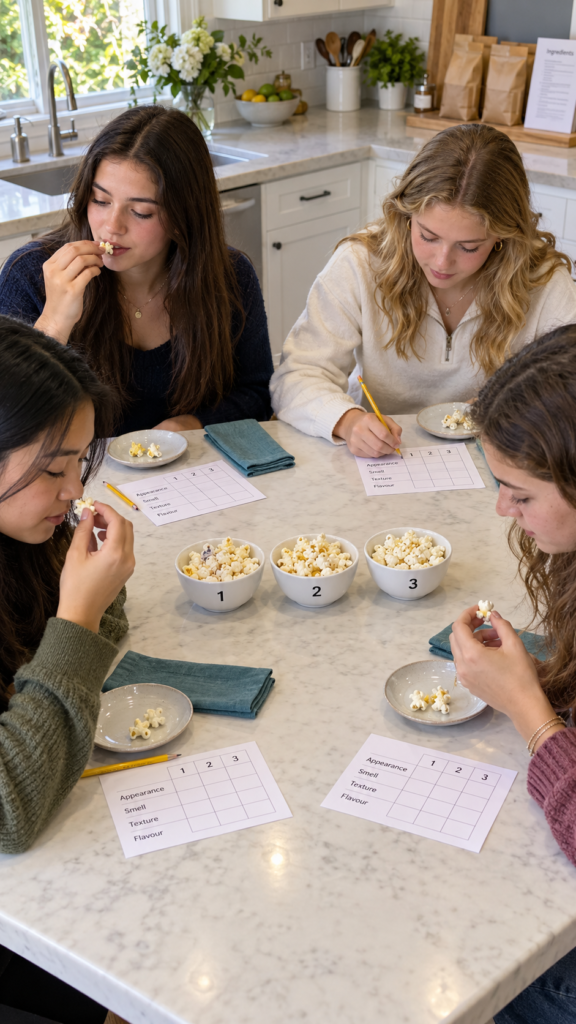
A taste test becomes much more interesting when you stop asking only, “Which one tastes best?”
Choose two or three comparable foods, for example, different brands or versions of the same snack, and decide on the judging criteria before anyone knows which sample is which.
You might score:
- Appearance
- Smell
- Texture
- Flavour
- Sweetness or saltiness
- Overall preference
- Price, if the products have different costs
Give each sample a number or letter rather than its brand name. Everyone records her scores independently, then compare the results before revealing what each sample was.
This can produce a useful surprise: the group may have a clear favourite for flavour but choose a different product when price is taken into account.
For a safe sleepover, don’t make the ingredients themselves a mystery.
Check food allergies and dietary restrictions beforehand, keep original packaging or ingredient information available, and avoid serving an unlabeled food to someone with a known allergy.
FARE recommends that people responsible for someone with a food allergy know the individual’s emergency care plan and how to respond to a reaction.
Add a prediction round: Before tasting, have everyone predict which sample will win. It gives you something to compare with the actual results and stops the activity from becoming simply a snack break.
Add a current twist with 20 TikTok Inspired Birthday Party Ideas for Teens.
22. Create a One Object, Five Uses Challenge
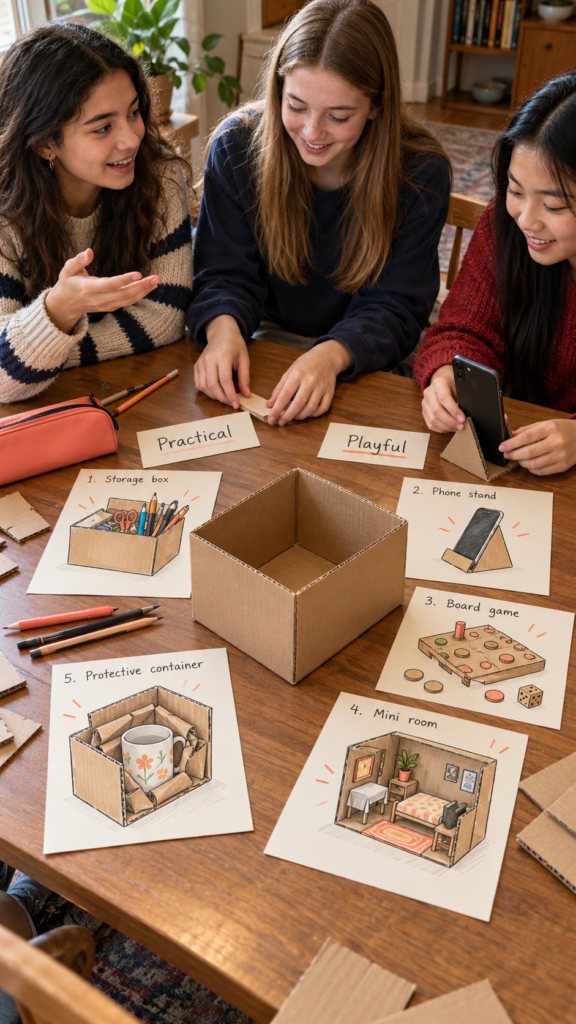
Put an ordinary object in the middle of the table and ask how many useful purposes the group can find for it beyond what it was designed to do.
A cardboard tube, paper cup, scarf, empty box or wooden spoon can work. The object itself doesn’t need to be unusual.
The challenge is to come up with five genuinely different uses, not five variations of the same idea.
For example, if the object were a cardboard box, the suggestions might involve storage, a phone stand, a game component, a model or a protective container.
You can approach the challenge in two ways:
- Everyone works individually for a few minutes before comparing ideas.
- Teams compete to produce the most workable collection of uses.
Then separate the ideas into three categories: practical, possible but impractical, and completely ridiculous.
That last category is worth keeping. Not every idea needs to work; unusual suggestions often help the group think beyond the object’s obvious purpose.
For a stronger challenge: Give each team a specific user, such as a traveller, student, young child or someone living in a small room. They now have to design their five uses around that person’s needs rather than inventing random alternatives.
Home can be the perfect party venue for boys. 35 Birthday Party Ideas for Teen Boys at Home has plenty to try.
23. Hold a Mini Podcast Recording

Photo credit: A.
Choose one subject the group can discuss naturally and record a short private episode.
The goal isn’t to produce a polished podcast. It is to practise having an organised conversation where everyone has a chance to contribute.
Topics could include:
- Things we expected to be different about high school
- Books, films or music worth recommending
- Purchases that were genuinely useful
- Trends the group does not understand
- Things we wish someone had explained earlier
- Places everyone would like to visit
- Skills teenagers should learn before adulthood
Give the conversation a simple structure: opening question → different opinions → examples → final recommendations.
One person can host, another can keep track of time and the others can contribute. If the group enjoys it, swap roles and record a second, shorter episode.
A phone is enough for a private recording.
There is also an important boundary here: recording something does not mean everyone has agreed to publish it.
Don’t upload the recording, share it outside the group or use someone’s voice or image in social content without their permission.
Make the conversation easier: Give everyone one minute to write down two things she wants to say before recording begins. That prevents the most confident speaker from unintentionally taking over the entire conversation.
Girls can turn an ordinary night at home into something memorable with 33 Birthday Party Ideas for Teen Girls at Home.
24. Make a “Three Versions of Me” Portrait Project

Photo credit: @ Unknown
Instead of asking everyone to make a traditional self-portrait, create three different versions of the same person:
How people might see me → what people may not notice → what I am becoming.
The first section can represent the obvious things, interests, appearance, hobbies, school life or personality traits.
The second is about something less visible. It could be a skill she is developing, something she cares about, a habit people misunderstand or an interest she doesn’t talk about much.
The final section looks forward. It might represent a skill she wants to develop, a quality she wants to strengthen or simply something she hopes will be part of her life later.
You can make the portraits with:
- Words and short phrases
- Drawings
- Magazine cut-outs
- Photographs
- Symbols
- Colours
- Small objects
Nobody needs to explain every part of the finished piece.
That matters because an activity about identity can become uncomfortable if everyone is expected to disclose personal feelings in front of friends.
The point is to choose what you want to represent, not to put anyone on the spot.
A useful variation: Let everyone make the first two versions privately and share only the third one. It keeps the activity reflective without turning it into a forced group discussion.
Keeping the guest list small can make an overnight party easier to manage. 30 Small Birthday Party Ideas for Teens Who Don’t Want a Big Party has ideas for smaller groups.
25. Build a Travel Day Without Travelling
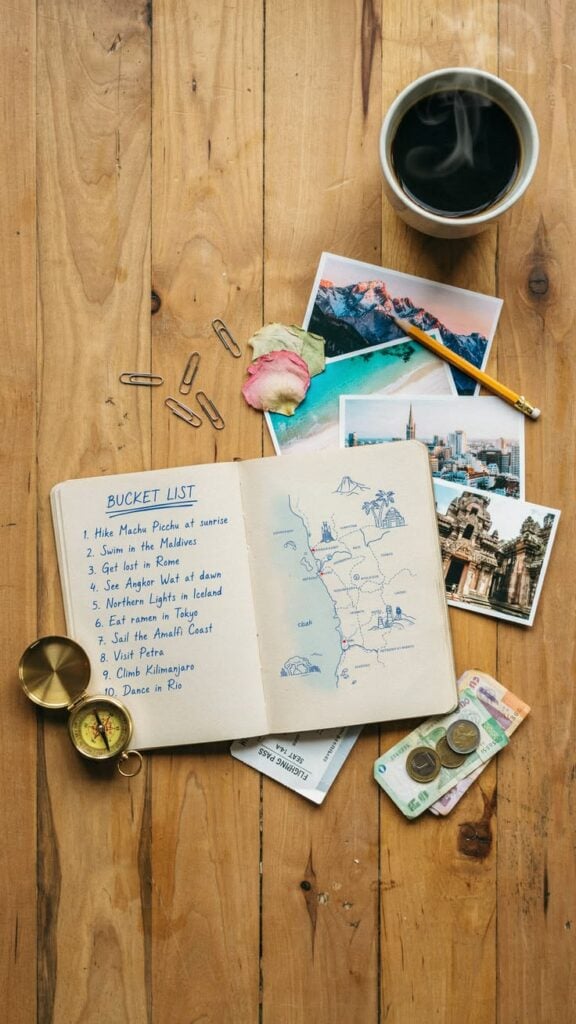
Give yourself a fictional budget and one day to spend in a city or country you would genuinely like to visit.
The challenge is to create an itinerary that someone could realistically follow, rather than simply listing the most famous attractions.
Research:
- How you would get around
- Approximate travel times
- Places to eat
- Entry requirements for attractions
- Opening hours
- Local customs worth knowing
- Activities that fit the budget
- What could realistically be done in one day
Then calculate the total and explain why you chose each part of the itinerary.
This is one of those sleepover ideas for teen girls that can quietly teach something useful: a good trip isn’t just a collection of places you’d like to see.
Distance, opening times, transport, cost and available time can completely change what fits into a day.
For an international version, don’t assume that customs, transport systems or payment methods work the same way everywhere. Have the group verify current information from official tourism or transport sources when possible.
Add a complication: After everyone finishes, introduce one change, the budget is cut by 20%, the weather changes, or one attraction is unavailable. Each person has to adjust her itinerary without starting again from scratch.
26. Create a “Friendship Time Capsule” for the Group
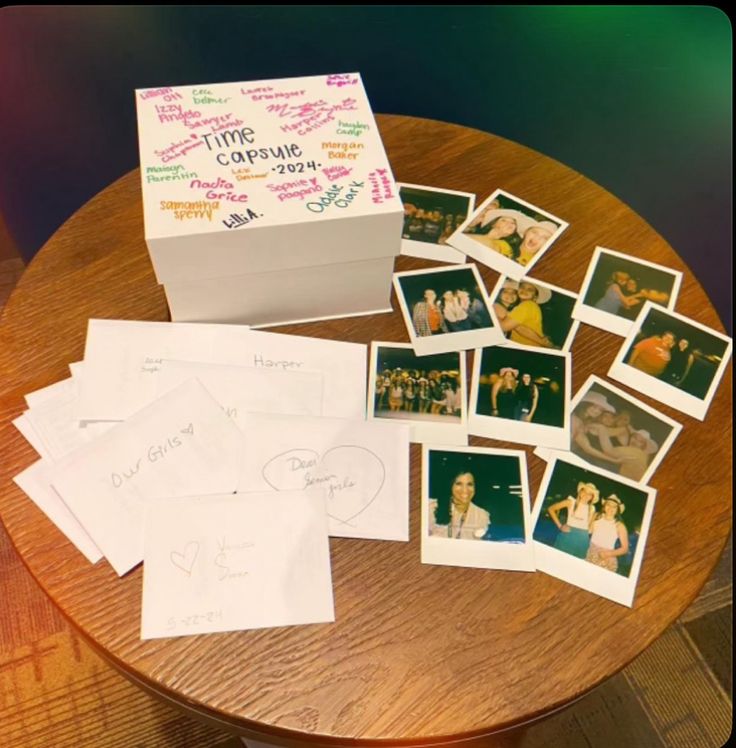
Make one shared time capsule that records the group as it is now, rather than creating six separate boxes of individual memories.
Give everyone a few things to contribute:
- A prediction about where the group will be in a few years
- A photograph from the night
- A current favourite song
- A phrase or piece of slang everyone is using
- A funny memory from the evening
- A short note to the future group
- Something each person hopes they will still do together
Put the contributions into a sealed container and agree on a specific date to open it.
Be precise about the date. “One day” makes it easy to forget; a particular birthday, graduation year or agreed future date gives everyone a reason to keep track of it.
You can also add a simple rule: nobody reads another person’s sealed letter before the agreed opening date.
The best part is that the capsule does not need to contain expensive keepsakes.
Ordinary details, the songs everyone liked, what people were obsessed with, what everyone thought the future would look like, may be the things that make the capsule interesting years later.
Make one decision before sealing it: Decide who will keep the capsule and what happens if the group cannot meet on the chosen date.
That small practical detail prevents a good idea from disappearing into the back of someone’s cupboard.
A fun sleepover does not require a huge budget. 31 Cheap Birthday Party Ideas for Teens on a Budget has affordable options.
27. Host a Skill Swap Where Everyone Leaves Knowing Something New
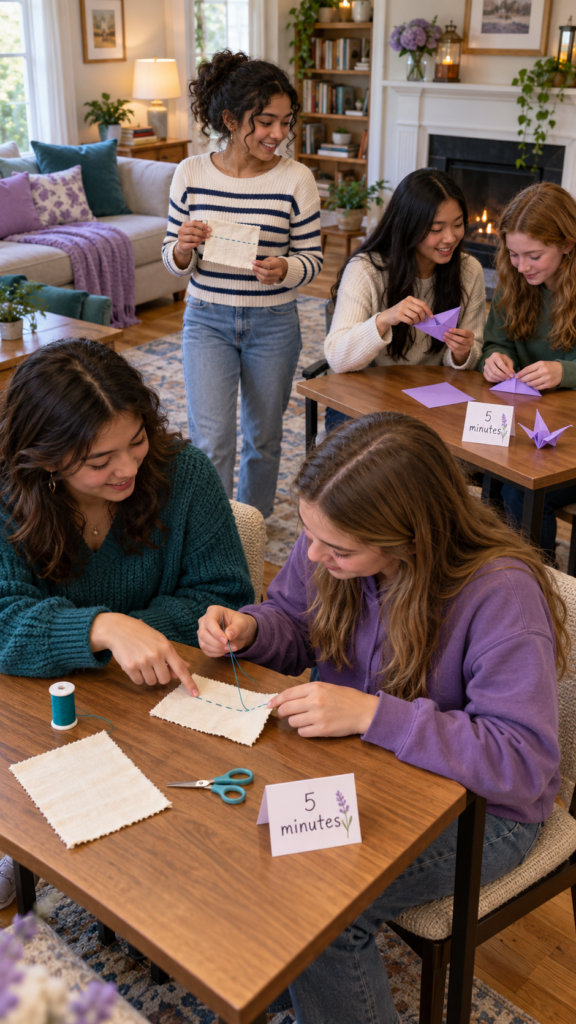
A mini-class puts one person in the teaching role while everyone else watches. A skill swap keeps the group moving, so nobody has to spend ten minutes standing at the front explaining something.
Give each girl one small skill to teach in about five minutes, then rotate.
The trick is to choose skills that can be shown quickly and tried immediately. Someone might demonstrate:
- A simple braid or ponytail technique
- A basic hand-sewing repair
- A card trick
- A few useful phrases in another language
- A quick drawing technique
- How to fold clothes efficiently for a suitcase
- A simple phone photography trick
- A dance step
- A paper-folding technique
- A shortcut or feature on an app everyone uses
Keep each lesson small enough that nobody needs to prepare a presentation. The person teaching demonstrates it once, everyone who wants to tries it, and then the group moves to the next station.
For a larger group, pair girls up and have two skill stations running at once.
Someone who is uncomfortable teaching the whole room can teach just one or two people, which makes this different from the “Teach Us Something” mini-class earlier in the list.
A simple rule helps: the skill has to be something another person can attempt before the five minutes are over.
That stops the activity from turning into a series of speeches.
It also gives these sleepover ideas for teen girls a useful takeaway: everyone contributes something, and everyone leaves having picked up at least one small skill they did not have when the night started.
When everyone needs space to move, 30 Outdoor Birthday Party Ideas for Teens for an Epic Celebration offers plenty of alternatives.
28. Do a Design the Perfect Sleepover Challenge
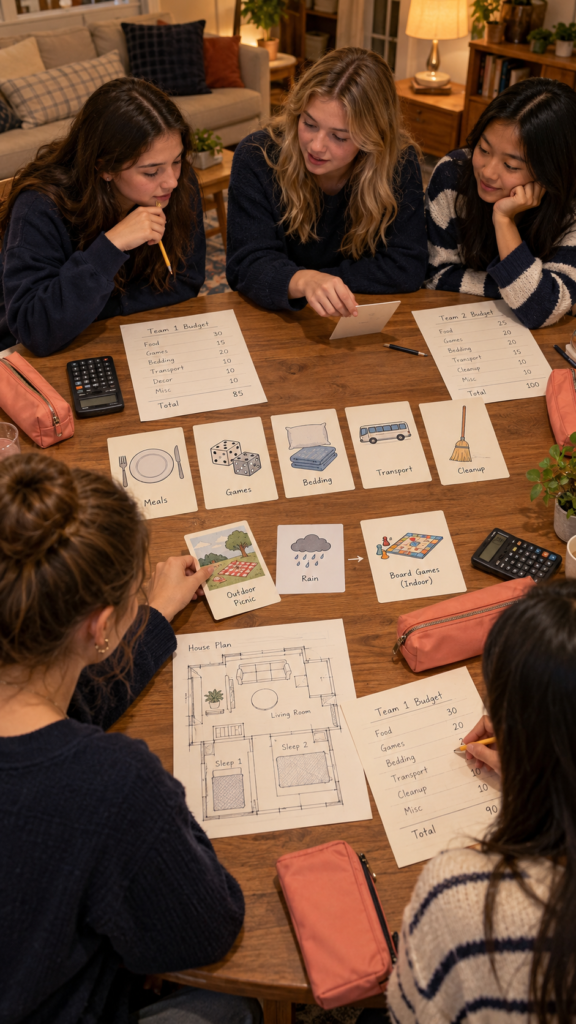
Hand the group a fictional budget and ask them to plan a complete overnight party without spending more than they have.
This works particularly well in teams because there is no single “perfect” answer. One team might spend more on food and keep the entertainment simple; another might choose one paid activity and make the rest themselves.
The plan should cover:
- Activities and games
- Food and drinks
- Sleeping arrangements
- Entertainment
- A realistic schedule
- Transport, where relevant
- A plan for allergies or other important guest needs
- What happens if an activity cannot go ahead
- Cleanup
Give them a few constraints to make the decisions less obvious. For example, the budget could suddenly drop by 20%, one guest could have a food allergy, or rain could cancel the outdoor activity they planned.
That changes the exercise from simply making a pretty sleepover ideas board into a small event-planning problem. They have to decide what is essential, where money can be saved and which details are easy to overlook.
For a competitive version, have each team present its plan in five minutes.
The other team can ask practical questions such as, “What happens if someone does not want to participate?” or “What is your backup if the main activity takes less time than expected?”
The winning plan does not have to be the most expensive or elaborate. Give points for budget control, variety, practicality, inclusiveness and having a workable backup plan.
Bad weather does not have to ruin the plans. 29 Amazing Indoor Birthday Party Ideas for Teens keeps the fun indoors.
29. Have a No-Posting Photo Challenge
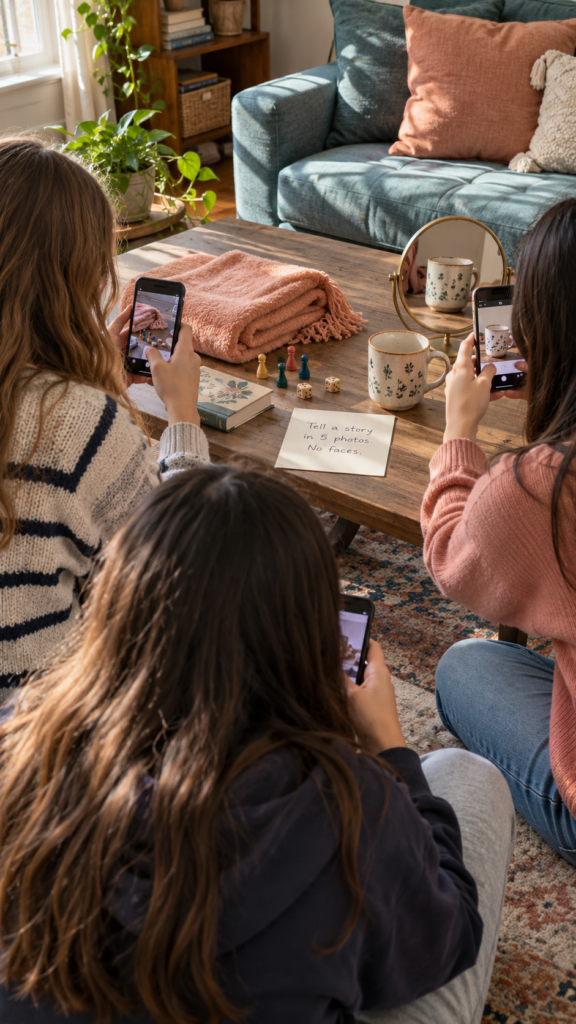
Taking pictures can easily become part of a teenage sleepover, but taking a photo and sharing a photo are two different decisions.
For this challenge, everyone can take pictures throughout the activity, but nothing gets posted while the challenge is running. That removes the pressure to decide immediately whether an image belongs on a story, status or feed.
Give the group a photography assignment instead of simply saying, “Take pictures.” Try prompts such as:
- Find the funniest object in the room
- Take a photo that makes an ordinary item look dramatic
- Capture a reflection
- Create a five-photo story without showing anyone’s face
- Photograph the same object from three unusual angles
- Take a picture that represents the evening without showing the group
At the end, everyone can look through their own photos and decide which, if any, they are comfortable sharing.
A picture should not automatically become a group photo just because several people happen to be in it.
That makes this one of the more useful sleepover activities for teen girls because the conversation can happen naturally: Who is in the picture? Are they happy for it to be shared? Does everyone agree?
You can also make the final selection completely private. The point is not to produce an Instagram carousel; it is to enjoy taking photographs without making public posting the expected end result.
That distinction matters for sleepover ideas for teenage girls, where phones and cameras are likely to be part of the evening anyway.
UNICEF recommends talking with children and teenagers about privacy and what they share online, while CDC guidance also recognises digital behaviour as part of adolescent health and safety.
Need more sleepover-specific inspiration? 27 Sleepover Birthday Party Ideas for Teens They’ll Love covers the birthday angle.
30. Finish With a “Choose Tomorrow Morning” Challenge
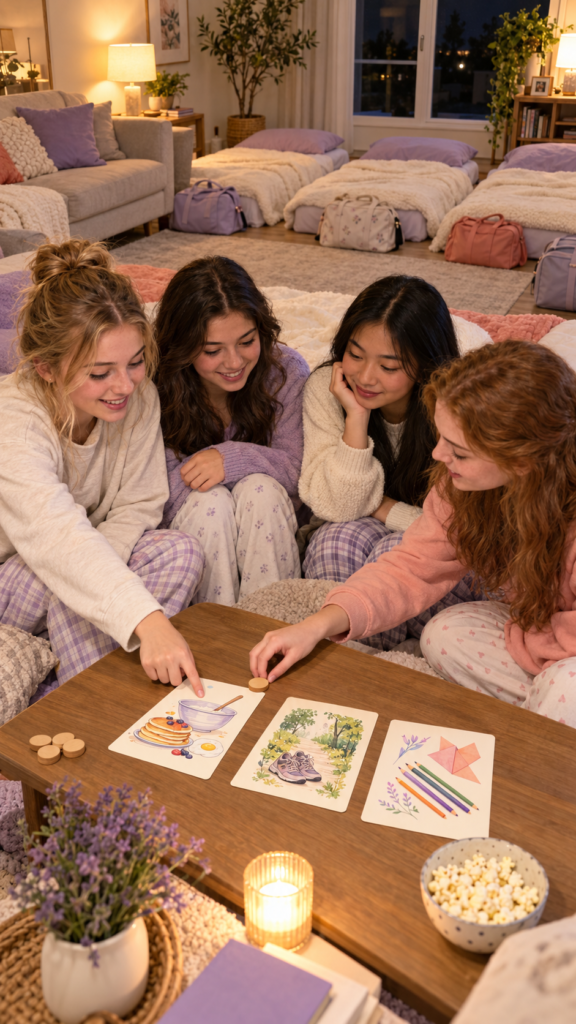
A sleepover does not need to end with everyone trying to stay awake until sunrise.
Instead, decide the morning plan before going to bed. Put several realistic choices on slips of paper or let the group vote:
- Make breakfast together
- Take a short morning walk
- Finish something started during the night
- Open the friendship time capsule
- Take a few morning photographs
- Have a quiet breakfast and talk
- Pack up early for another planned activity
The choice can depend on how the night actually went. A group that is still energetic might choose breakfast and a walk; a group that went to bed late may reasonably prefer food, conversation and enough time to get ready without rushing.
This also gives the evening a natural endpoint. Rather than trying to stretch teen sleepover until nobody has the energy to participate, there is something small to look forward to in the morning.
There is a practical reason to keep this in mind.
The CDC recommends that teenagers ages 13–18 regularly get 8–10 hours of sleep, so treating an all-nighter as the main measure of a successful sleepover is not a particularly useful goal.
The morning plan can be simple. What matters is that the sleepover has a proper close rather than ending with, “I guess we should start packing.”
Late-night games work best when nobody feels forced to participate. 25 Birthday Party Games for Teens That Aren’t Cringey has better choices.
How to Make the Sleepover Feel Spontaneous Without Leaving Everything Unplanned
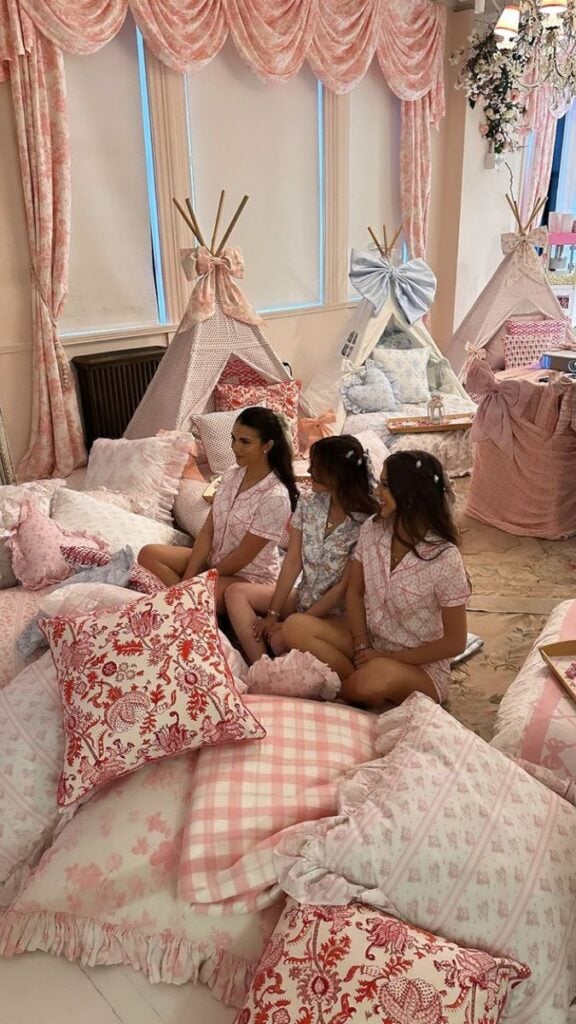
Sleepover ideas for teen girls do not need to run on a strict timetable, but leaving the whole night completely open can leave you scrambling when the room suddenly goes quiet.
Nobody wants to announce, “It’s 9:30, so now we’re doing activity number three.”
Have a few things ready without deciding exactly when they will happen:
- Two or three activities that can start immediately
- Food and drinks guests can help themselves to
- A quieter option for when the energy drops
- One late-night activity
- A simple plan for the morning
Then let the girls choose what comes next. You have enough prepared to avoid awkward gaps, while they still have room to change plans, linger over something they enjoy or skip an activity that is not working.
Not everything needs to be a game. 23 Fun Things to Do at a Teen Birthday Party adds more variety.
Don’t Turn the Sleepover Into an All-Nighter
Staying awake until morning sounds like the traditional sleepover goal, but it does not have to be the measure of whether the night was a success.
Teens aged 13–18 are recommended to get 8–10 hours of sleep regularly, and too little sleep can affect attention, behaviour, learning and overall health.
So give the night a natural wind-down point instead of planning activities right through to sunrise. You could:
- Move from games and challenges to a quieter activity later in the evening
- Let everyone change into pajamas, brush their teeth and settle in without rushing
- Keep a movie, audiobook or simple conversation as an optional final activity
- Have breakfast or another small activity ready for the morning
That way, these sleepover ideas for teen girls fill the evening without turning exhaustion into the main event. The girls can still stay up later than usual while having enough time to sleep and enjoy the next morning.
Teen boys may prefer a birthday built around their interests. 21 Cool Birthday Party Ideas for Teen Boys They’ll Actually Enjoy has ideas to consider.
Conclusion
The easiest way to choose from these sleepover ideas for teen girls is to ask one question: What will give this particular group something to do together, rather than simply something to watch or consume?
That question can narrow a list of 30 ideas surprisingly quickly, and leave you with a sleepover that feels chosen for the girls who are actually there.