Every parent knows how quickly a clean playroom can turn into a sea of toys. One minute everything looks organized, and the next minute blocks, dolls, books, and puzzles seem to cover every corner. Creating a space where children can play freely while keeping clutter under control often feels like an impossible task.
The good news is that the right playroom storage ideas can completely transform the way a space functions. Smart storage solutions help children find their favorite toys, make cleanup easier, and create a room that feels calm instead of chaotic.
Many families discover that simple organization systems work best when paired with child-friendly layouts. Ideas from Montessori kids room designs can help encourage independence while making toys easier to access and put away.
Storage should also blend naturally into the overall design. A beautiful playroom can still be practical when furniture and organization solutions work together. For parents who love clean and clutter-free spaces, minimalist kids room ideas offer inspiration for creating a more organized environment.
Below, you’ll find playroom storage ideas that help keep toys under control while making the space more functional, attractive, and enjoyable for the whole family.
31 Playroom Storage Ideas That Keep Toys Under Control
1. Use Open Storage Cubes
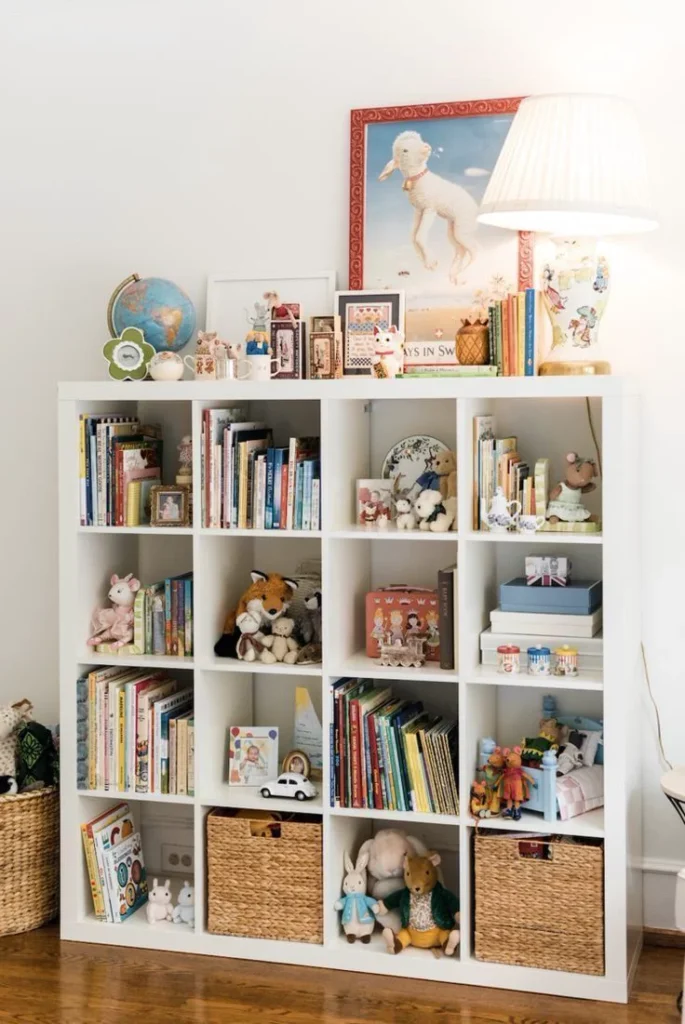
Open cubes remain one of the most practical playroom storage ideas for busy families.
Children can easily see their toys and access them without assistance. Cleanup also becomes much easier because every item has a designated location.
Choose sturdy cubes and pair them with baskets for a cleaner appearance. This system works well for books, puzzles, building blocks, and stuffed animals.
For organized spaces that encourage independence, Montessori kids room ideas offer similar accessible storage concepts.
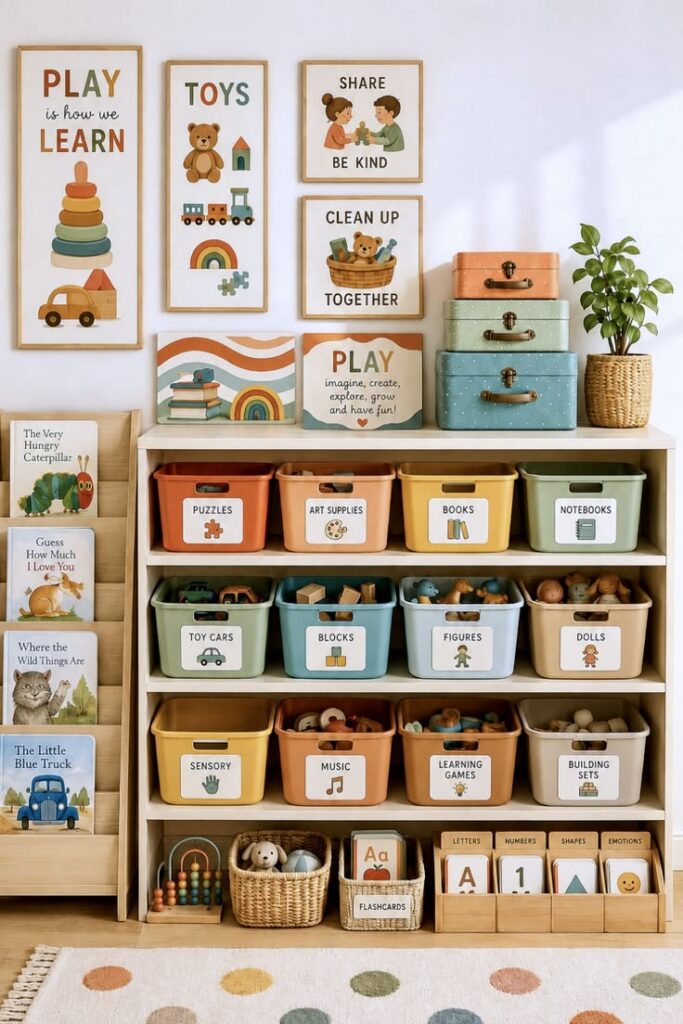
2. Label Every Storage Bin
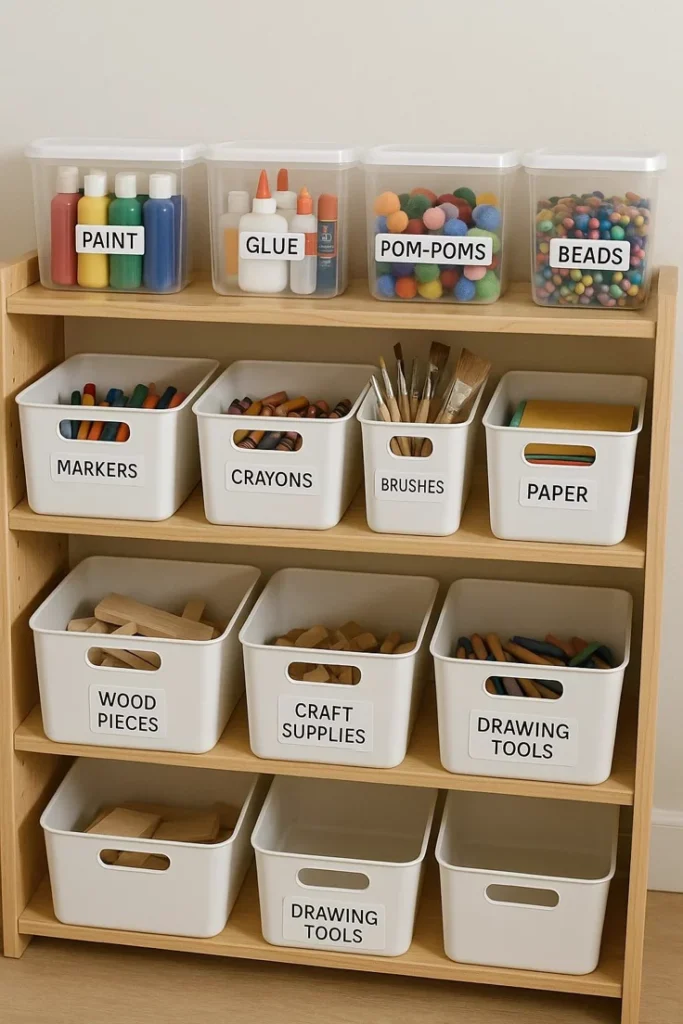
Labels create structure and reduce confusion.
Use words, pictures, or both depending on your child’s age. Clear labels help children understand where toys belong after playtime.
These playroom storage ideas encourage responsibility while making organization feel manageable. Labels also help parents maintain consistent systems.
Even simple bins become more effective when categories remain clear.
3. Add Rolling Toy Carts
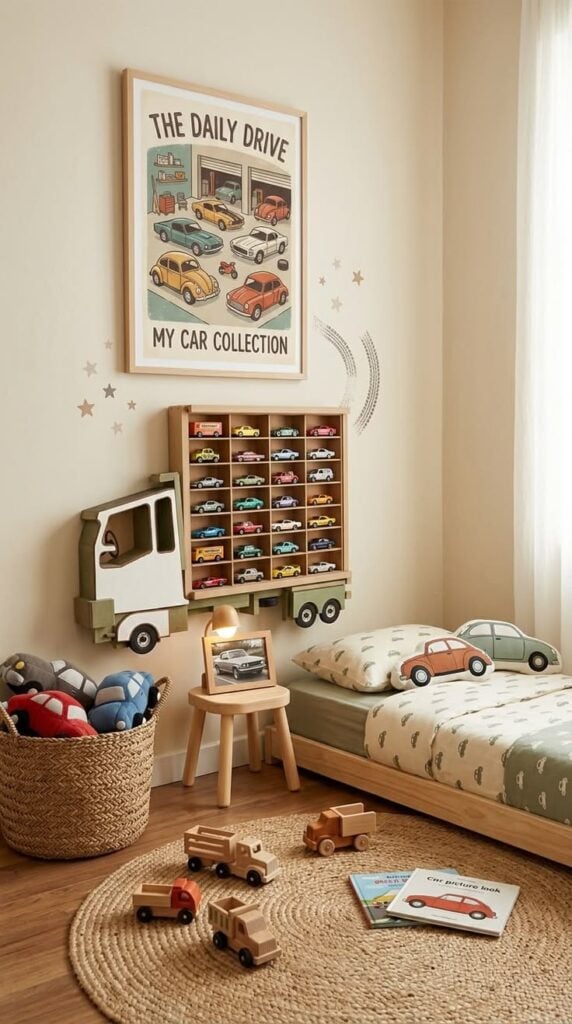
Rolling carts provide flexible storage that moves wherever children play.
Use separate tiers for art supplies, small toys, books, or building materials. The mobility makes cleanup quicker and more convenient.
Many playroom storage ideas focus on accessibility, and rolling carts excel in this area. Children can bring activities closer to their play space and return them afterward.
4. Use Woven Storage Baskets
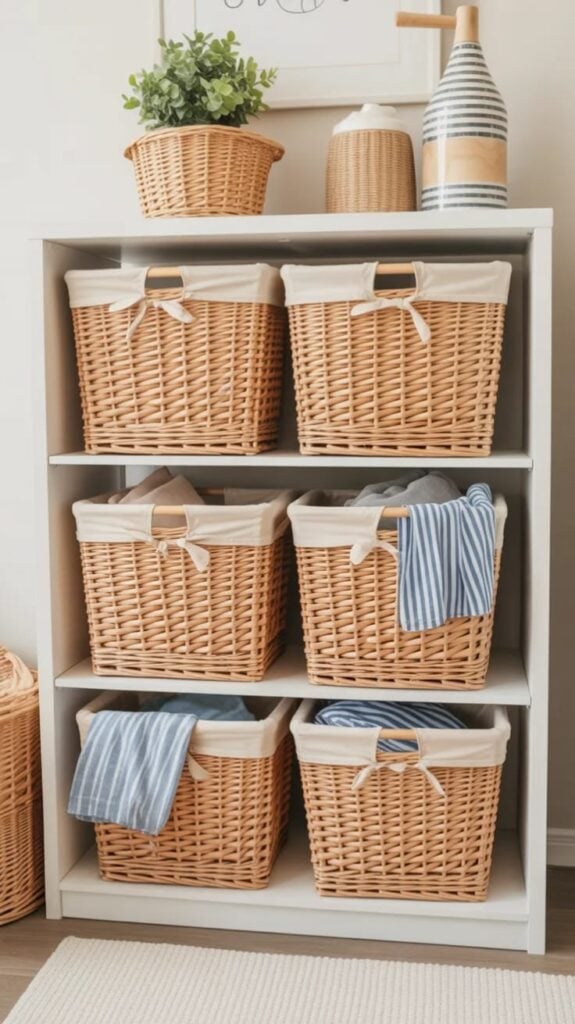
Woven baskets combine storage and style.
They soften the room while hiding visual clutter. Use larger baskets for stuffed animals and smaller versions for toys or craft supplies.
These playroom storage ideas help maintain a warm and inviting atmosphere. Natural textures also work well with many decorating styles.
For cozy design inspiration, farmhouse kids room ideas often incorporate woven storage beautifully.
5. Install Wall-Mounted Bookshelves
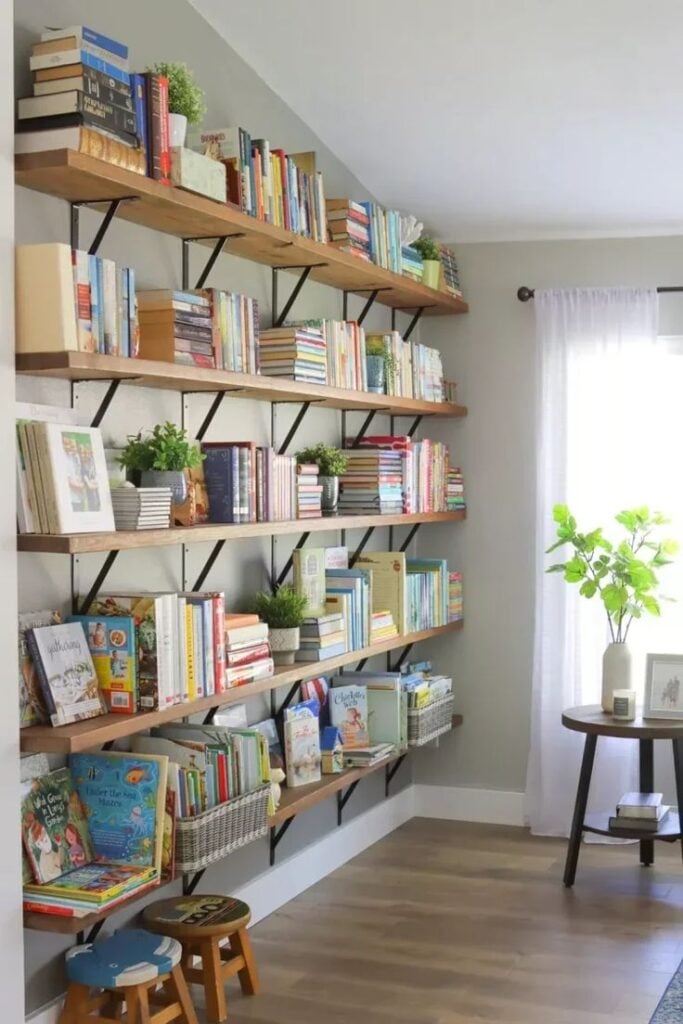
Books often create clutter when they lack a designated home.
Wall-mounted shelves keep books organized while freeing valuable floor space. Display covers outward so children can quickly find their favorites.
Practical playroom storage ideas should maximize vertical space whenever possible. Shelving also turns books into decorative features.
6. Create Toy Categories
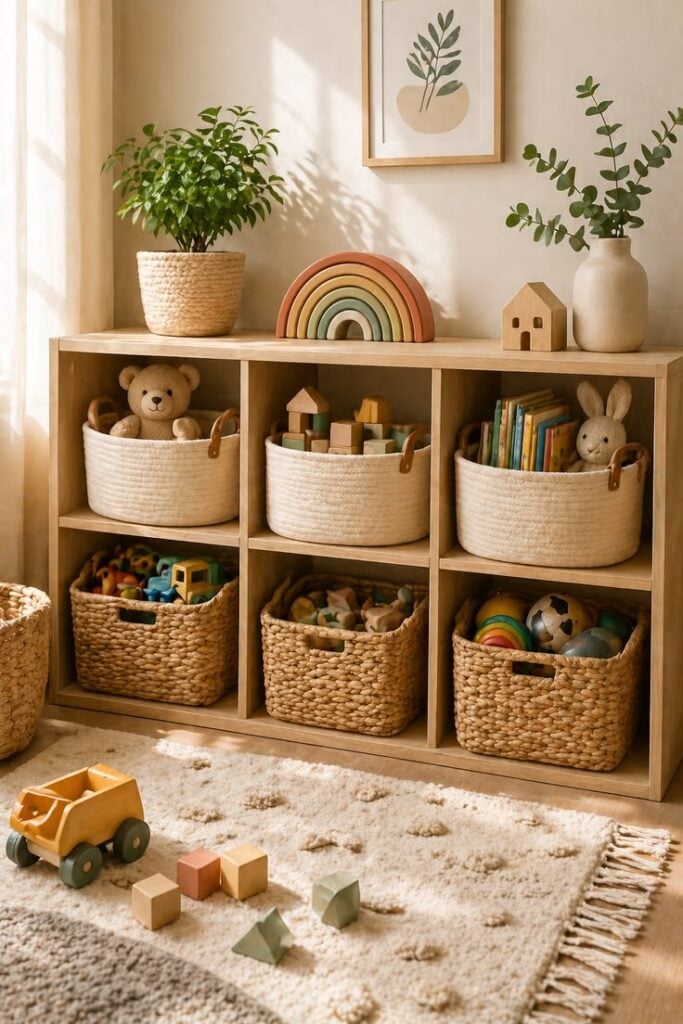
Grouping similar toys together improves organization dramatically.
Store dolls together, building blocks together, puzzles together, and art supplies together. Children can locate items faster and clean up more efficiently.
These playroom storage ideas simplify daily routines while reducing frustration. Categories also help parents identify toys that children no longer use.
A simple system often creates lasting results.
7. Add Storage Benches
Storage benches provide seating and hidden organization.
Use them to store larger toys, blankets, games, or seasonal items. The dual-purpose design saves space while maintaining functionality.
Many playroom storage ideas focus on furniture that serves multiple purposes. Storage benches accomplish this beautifully.
For practical room layouts, shared bedroom ideas for sisters often feature furniture with built-in storage.
8. Use Clear Storage Containers
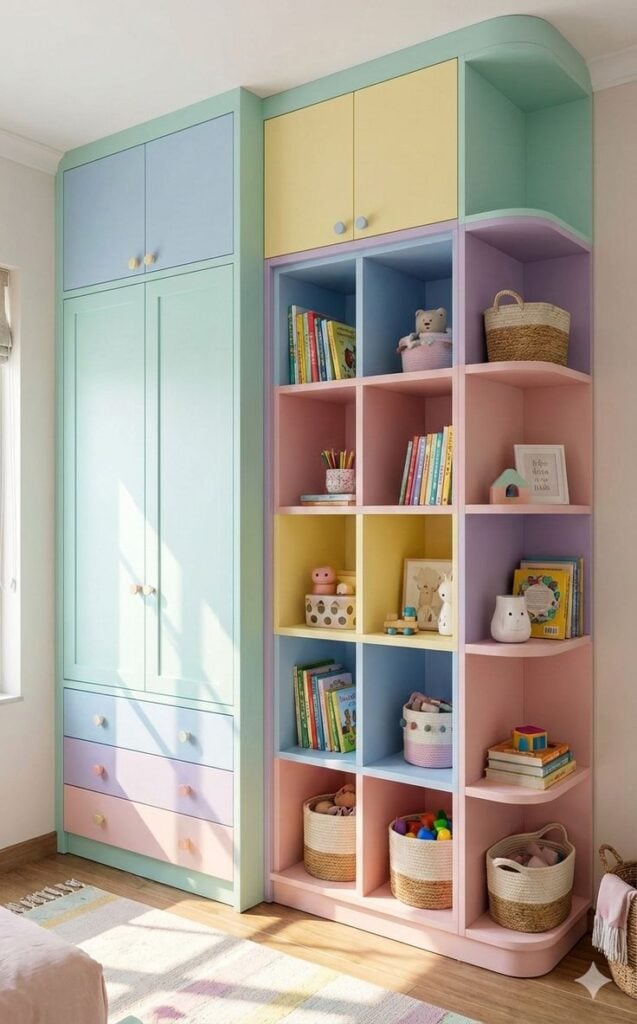
Clear bins make toy identification easy.
Children can see contents without opening every container. This reduces messes and speeds up cleanup time.
These playroom storage ideas work especially well for small toys, craft materials, and building sets. Transparency encourages organization because everything remains visible.
Choose stackable containers to maximize available space.
9. Install Floating Shelves
Floating shelves provide extra storage without occupying floor space.
Display books, educational toys, framed artwork, or decorative accessories. Keep frequently used items within easy reach.
Smart playroom storage ideas often use vertical space to reduce clutter. Floating shelves create storage while preserving room for play.
For compact layouts, Ikea kids room ideas can provide additional space-saving inspiration.
10. Create an Art Supply Station
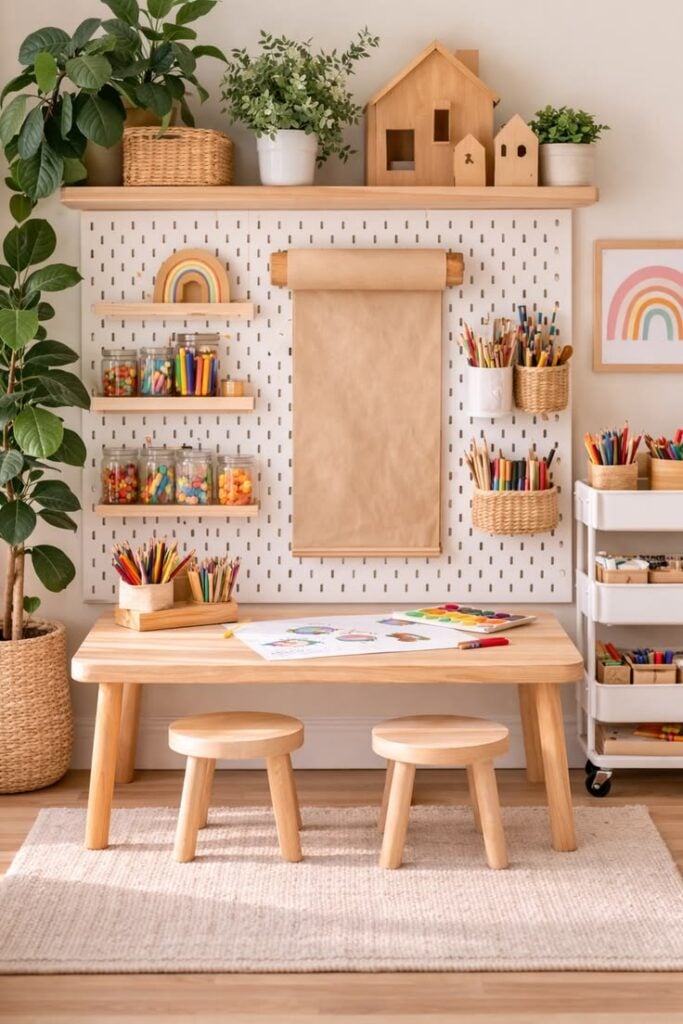
Art materials often spread throughout a playroom.
Dedicate one area specifically for crayons, markers, paint supplies, paper, and craft tools. Use bins, cups, and drawers to keep everything organized.
These playroom storage ideas make creative activities easier while preventing supplies from taking over the room. Children can access materials independently and return them after use.
A dedicated station also encourages creativity without sacrificing organization.
11. Use Under-Bench Storage Bins
Storage bins tucked beneath benches make excellent use of unused space.
Store puzzles, building blocks, board games, or seasonal toys inside them. Children can slide the bins out easily when playtime begins.
These playroom storage ideas help maximize every corner of the room without creating visual clutter. Hidden storage keeps the space looking neat while remaining highly functional.
12. Add a Toy Rotation System
Too many toys often create unnecessary mess.
Store some toys away and rotate them every few weeks. Children stay interested in their playthings while the room remains easier to organize.
These playroom storage ideas reduce overwhelm and make cleanup much faster. The playroom also feels less crowded.
For clutter-free inspiration, minimalist kids room ideas often use toy rotation successfully.
13. Install Pegboards for Accessories
Pegboards offer flexible storage for many items.
Hang baskets, hooks, and containers to organize small toys, headphones, art supplies, and dress-up accessories. Rearrange the setup whenever needs change.
Creative playroom storage ideas should adapt as children grow. Pegboards provide that flexibility while keeping items visible and accessible.
14. Use Matching Storage Bins
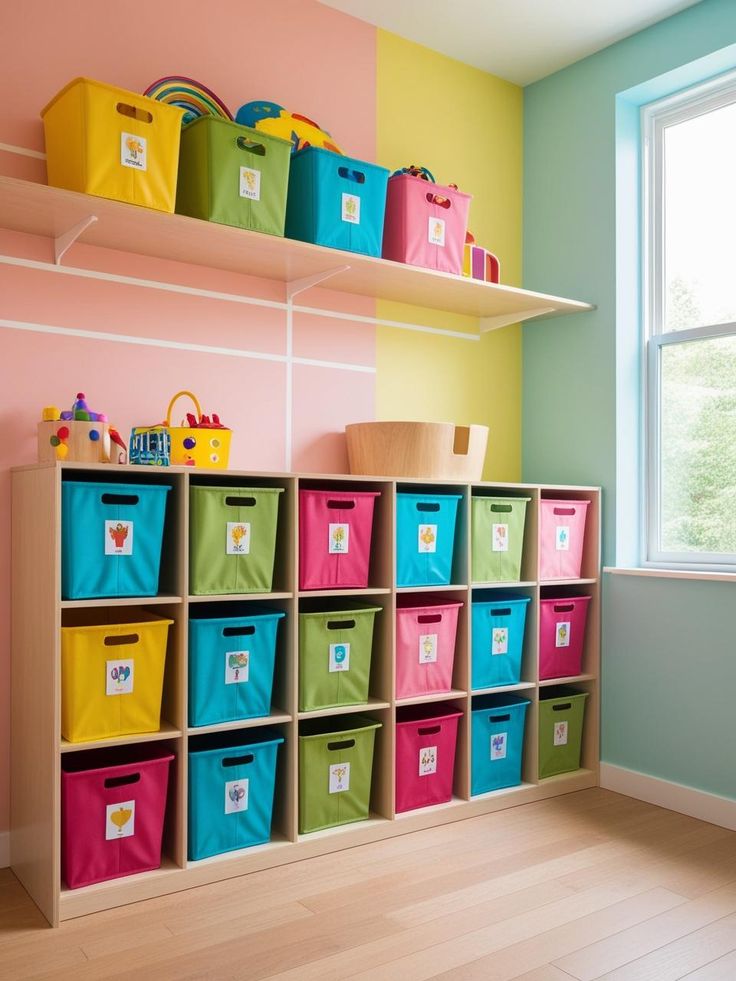
Matching bins create a cleaner and more organized appearance.
Choose containers that fit your shelves and storage units properly. Consistent storage instantly makes a room feel more intentional.
These playroom storage ideas improve both function and design. The coordinated look also reduces visual distractions.
For colorful yet organized spaces, rainbow kids room ideas can inspire creative storage color schemes.
15. Create a Puzzle Storage Zone
Puzzles often become difficult to manage.
Store them vertically in labeled containers, shelves, or magazine holders. This prevents missing pieces and saves valuable space.
Effective playroom storage ideas assign a home to every activity. A dedicated puzzle area keeps collections organized and easy to access.
16. Add Book Baskets Throughout the Room
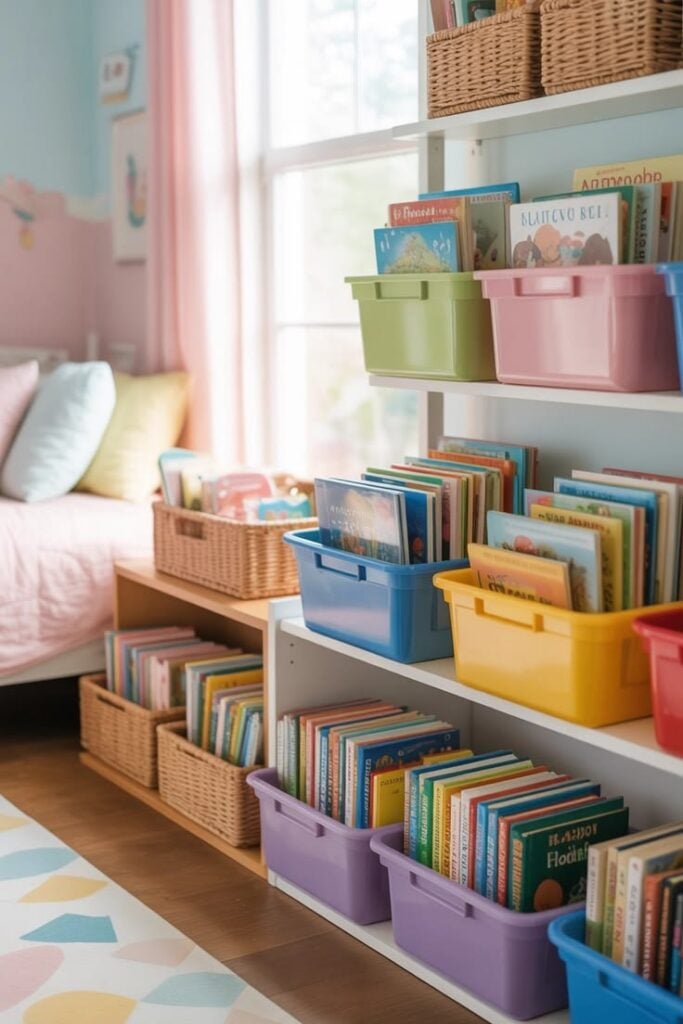
Books do not always need to stay in one location.
Place small baskets near reading corners, play tents, or seating areas. Children can easily grab books wherever they choose to relax.
These playroom storage ideas encourage reading while keeping books organized. The baskets also create a cozy atmosphere.
For inviting reading spaces, fairy tale bedroom ideas often include beautiful book displays.
17. Use Drawer Dividers
Drawers quickly become messy without structure.
Drawer dividers separate small toys, craft supplies, game pieces, and collectibles. Everything stays visible and easy to find.
These playroom storage ideas improve organization while preventing clutter from building up over time. Small items remain contained and accessible.
18. Store Stuffed Animals in Hanging Organizers
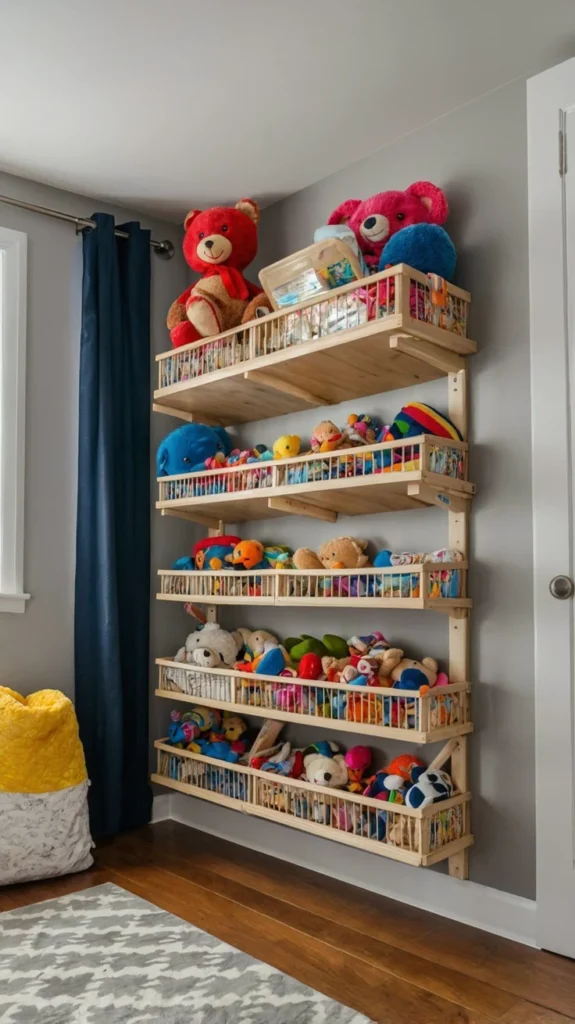
Stuffed animals often occupy large amounts of floor space.
Use hanging organizers, wall hammocks, or vertical storage systems to keep them contained. Children can still access favorites easily.
Practical playroom storage ideas should free up floor space whenever possible. Hanging storage accomplishes that while adding visual interest.
For playful decorating inspiration, woodland nursery ideas often feature adorable stuffed animal displays.
19. Create Dedicated Game Storage
Board games need organized storage to remain usable.
Store games upright on shelves like books. This method saves space and prevents damaged boxes.
These playroom storage ideas make family game nights easier because everything stays visible and accessible.
A dedicated section also simplifies cleanup.
20. Use Multi-Purpose Furniture
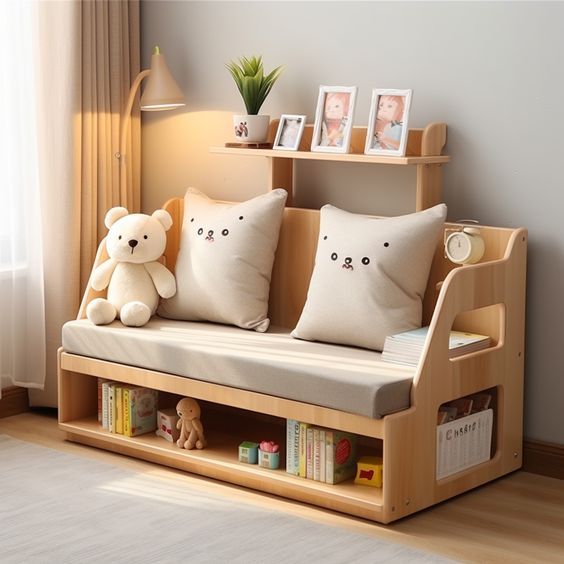
Furniture with built-in storage increases functionality.
Choose ottomans, benches, tables, or seating that conceal toys inside. Multi-purpose pieces reduce clutter while maintaining comfort.
These playroom storage ideas work especially well in smaller homes where every square foot matters.
For rooms that balance style and function, gender-neutral kids room ideas often use versatile furniture solutions beautifully.
21. Install Floor-to-Ceiling Shelving
Tall shelving units provide significant storage without using additional floor space.
Store less frequently used toys on higher shelves and everyday items lower down. This arrangement keeps the room organized while maximizing storage capacity.
These playroom storage ideas help create clear zones for different activities. Vertical storage also makes smaller rooms feel more efficient.
For rooms that make the most of available space, shared bedroom ideas for brothers offer useful organization inspiration.
22. Use Color-Coded Storage Systems
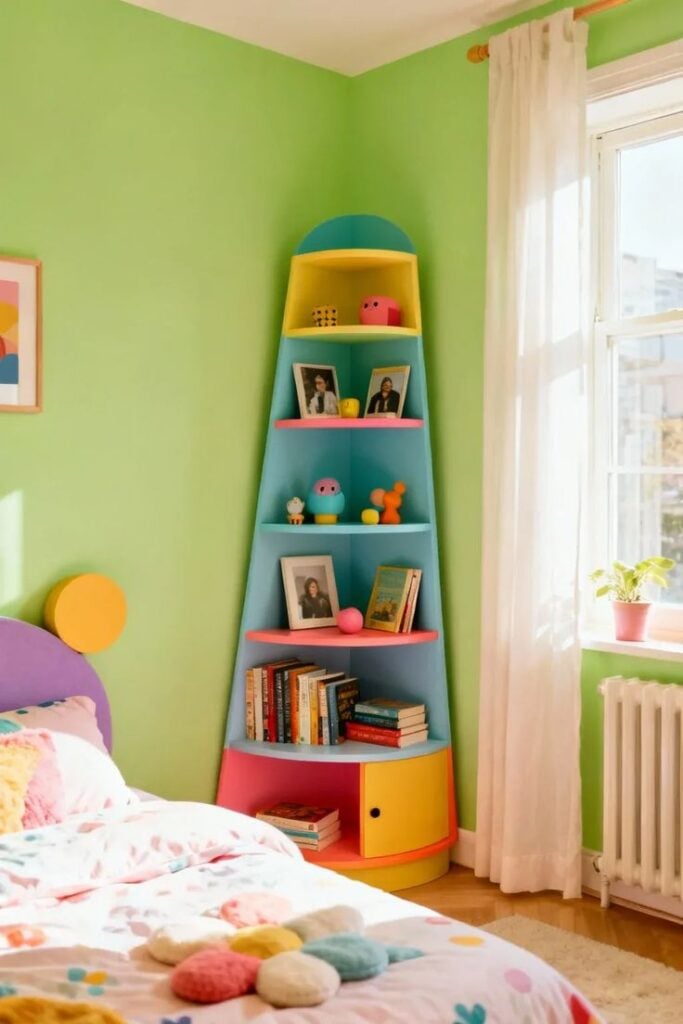
Color coding helps children identify where items belong.
Assign different colors to categories such as books, building blocks, art supplies, or dolls. The system makes cleanup easier and more engaging.
These playroom storage ideas encourage independence while creating a visually organized environment. Children quickly learn where everything belongs.
23. Create a Dress-Up Storage Area
Costumes and accessories often create clutter when stored randomly.
Use hooks, baskets, and low clothing racks to keep dress-up items organized. Children can access costumes independently and return them afterward.
These playroom storage ideas support imaginative play while preventing piles of clothing from accumulating around the room.
For creative play inspiration, princess bedroom ideas can complement a dress-up area beautifully.
24. Add Corner Shelving Units
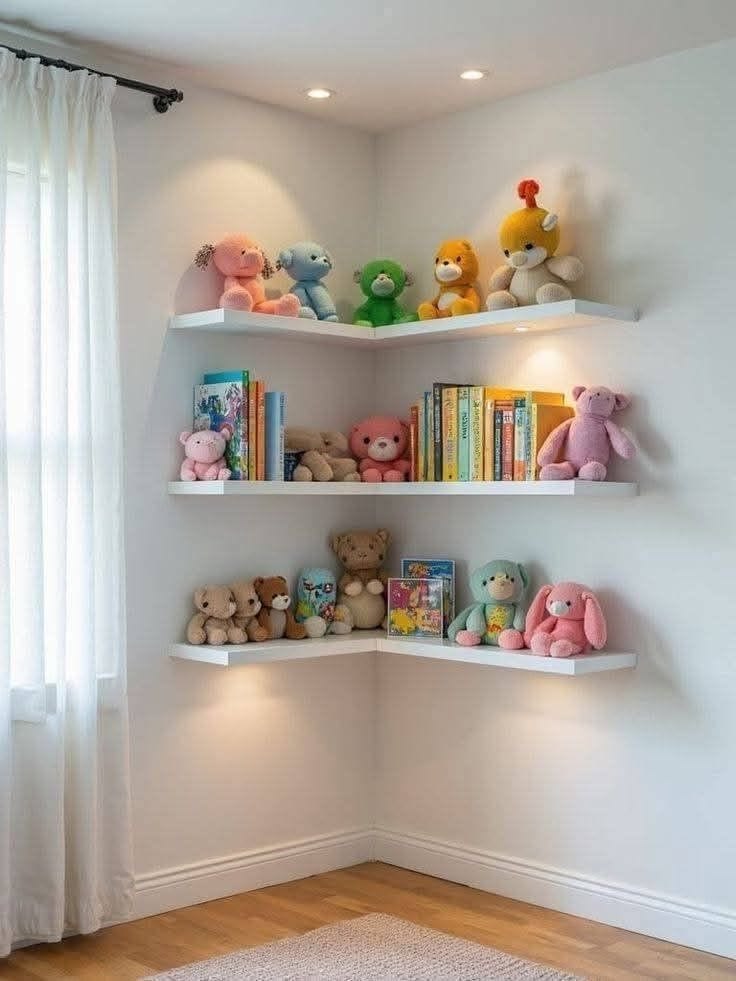
Corners often remain underused.
Corner shelves transform awkward spaces into valuable storage areas. Use them for books, decorative items, educational toys, or small bins.
These playroom storage ideas maximize every inch of available space. The shelves also help maintain open floor areas for active play.
25. Use Toy Chests With Compartments
Modern toy chests often include separate compartments inside.
This feature helps categorize toys while still providing hidden storage. Children can locate items quickly without digging through one large container.
These playroom storage ideas combine simplicity and functionality. The room stays tidy while toys remain easy to access.
26. Add Storage Behind Doors
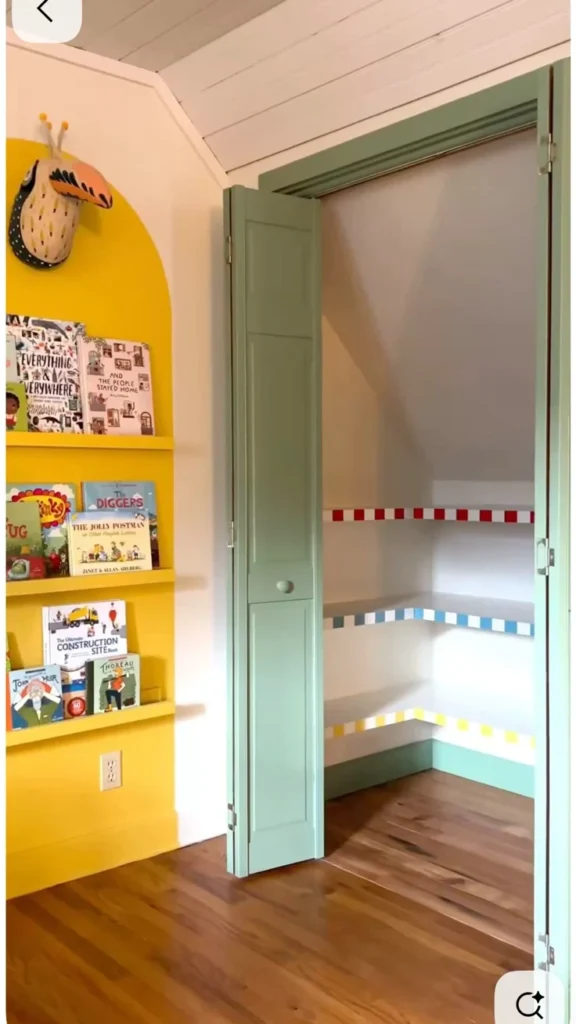
The back of a door offers surprisingly useful storage space.
Use hanging organizers with pockets for small toys, craft supplies, books, or games. This solution works especially well in compact playrooms.
These playroom storage ideas create extra storage without taking up floor space. Every available area serves a purpose.
For compact room inspiration, Ikea kids room ideas often feature clever door storage solutions.
27. Create Zones for Different Activities
Organized playrooms often include activity-specific zones.
Separate areas for reading, art, building toys, and imaginative play help maintain order. Each zone should contain its own storage solutions.
These playroom storage ideas reduce clutter because toys stay near their intended activity area. Children also find items more easily.
28. Use Low Shelving for Easy Access
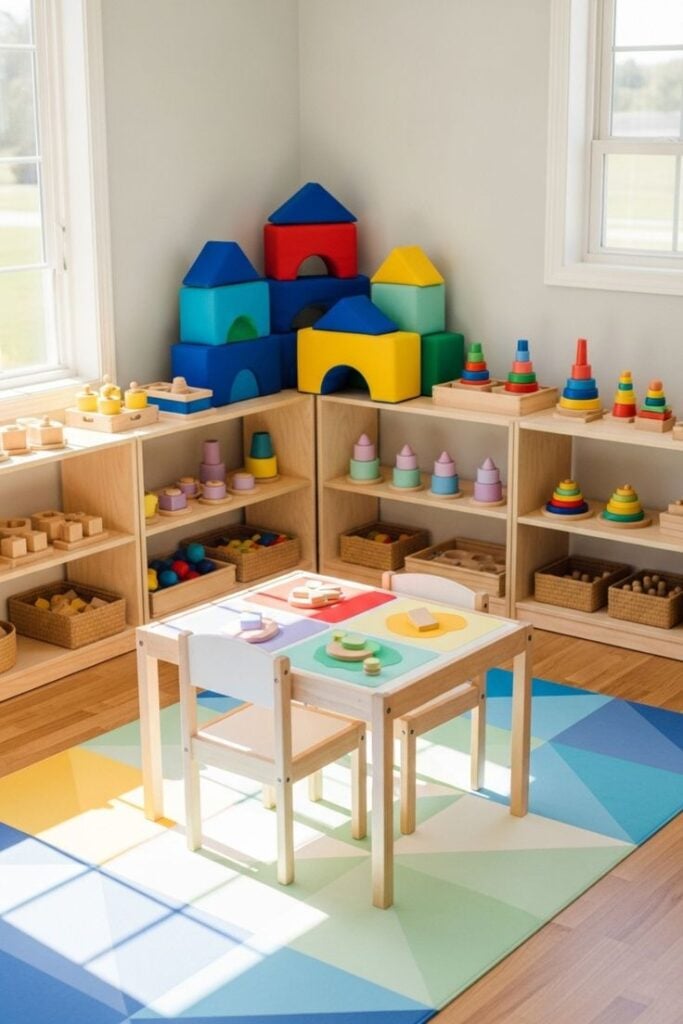
Children should reach frequently used items independently.
Low shelving encourages responsibility and supports self-directed play. Place favorite toys and books within easy reach.
These playroom storage ideas help children develop organizational habits naturally. Accessible storage also simplifies cleanup routines.
For child-friendly room layouts, Montessori kids room ideas provide excellent examples of low-level organization.
29. Store Seasonal Toys Separately
Not every toy needs daily access.
Store holiday items, outdoor toys, or rarely used collections in separate containers. Rotate them into the playroom when appropriate.
These playroom storage ideas prevent overcrowding while keeping favorite toys feeling fresh and exciting.
The playroom remains easier to manage year-round.
30. Add Labels With Pictures
Picture labels work especially well for younger children.
Use images alongside words to help children identify storage categories quickly. This method supports independence and learning.
These playroom storage ideas make cleanup more engaging and less confusing. Children understand expectations more easily.
For learning-focused environments, adventure-themed kids room ideas often incorporate educational visual elements.
31. Maintain a Simple Cleanup Routine
Even the best storage systems need consistent habits.
Encourage a quick cleanup session at the end of each play period. Small daily efforts prevent large messes from developing.
These playroom storage ideas work best when organization becomes part of the routine. Consistency keeps the room functional and enjoyable.
Common Playroom Storage Mistakes to Avoid
One common mistake involves buying storage without a plan.
Random containers often create confusion rather than organization. Start by identifying toy categories before selecting storage solutions.
Another mistake involves placing everything out of reach.
Children need access to toys if you want them to use the storage system independently. Keep frequently used items at child-friendly heights.
Many families also keep too many toys in the room at once.
A crowded space becomes difficult to organize. Toy rotation often solves this problem while keeping children interested in their collections.
For streamlined organization inspiration, minimalist kids room ideas demonstrate how fewer items often create more functional spaces.
Finally, avoid complicated systems.
Simple organization methods usually remain effective for much longer.
Final Thoughts
The best playroom storage ideas combine accessibility, organization, and practicality. When every toy has a designated place, cleanup becomes easier and daily routines feel less stressful.
Open shelves, labeled bins, rolling carts, storage benches, and vertical shelving all contribute to a more organized environment. The right combination depends on your family’s needs and available space.
Most importantly, successful playroom storage ideas help children participate in keeping their environment tidy. Child-friendly systems encourage independence while making organization feel achievable.
With thoughtful planning and consistent routines, any playroom can become a space where creativity thrives without constant clutter taking over.