Creating a child’s room often feels exciting at first. Then the real challenge begins. You want a space that looks beautiful, stays organized, supports learning, and helps your child become more independent. Many parents discover that children thrive when they can easily access their belongings, make simple choices, and explore their environment safely. That is exactly why a Montessori kids room has become such a popular design approach for modern families.
I still remember watching a toddler confidently pick out a book from a low shelf, put away toys without being asked, and choose clothes independently from an accessible wardrobe. The room was simple, calm, and thoughtfully arranged. Yet it encouraged skills that many adults spend years trying to teach. Small design choices truly made a big difference.
One thing I love about Montessori-inspired spaces is that they focus on the child’s needs rather than just adult preferences. Every shelf, basket, and piece of furniture serves a purpose. The result feels peaceful, practical, and welcoming. Parents who enjoy creative children’s spaces may also find inspiration in whimsical room décor ideas that encourage imagination while maintaining a child-friendly environment.
A Montessori room does not have to feel plain or boring either. Natural textures, beautiful materials, and thoughtful décor can create a warm atmosphere that children genuinely enjoy spending time in. If you are working with a smaller bedroom, some small-space room solutions can help maximize functionality while keeping the room organized and accessible.
In this guide, you’ll discover Montessori kids room ideas that encourage independence, support learning, build confidence, and create a calm environment where children can grow, explore, and thrive every day.
Why a Montessori Kids Room Works So Well
A Montessori kids room focuses on one important goal. It helps children do more things by themselves. Instead of creating a room that only looks beautiful, Montessori design creates a space that supports independence, confidence, responsibility, and learning.
Children naturally want to explore their surroundings. They enjoy making choices, solving problems, and participating in daily activities. A Montessori kids room supports these natural instincts through thoughtful organization and child-friendly design.
Unlike traditional children’s bedrooms, everything sits within reach. Books stay accessible. Toys remain organized. Clothing becomes easy to find. As a result, children learn valuable life skills every day.
Additionally, a Montessori kids room creates a calm environment. The layout feels simple and intentional. Children often focus better when their surroundings feel organized and predictable.
Most importantly, this design philosophy helps children develop confidence. Every independent action reinforces their belief in their own abilities.
25 Montessori Kids Room Ideas That Encourage Independence and Learning
1. Use a Floor Bed
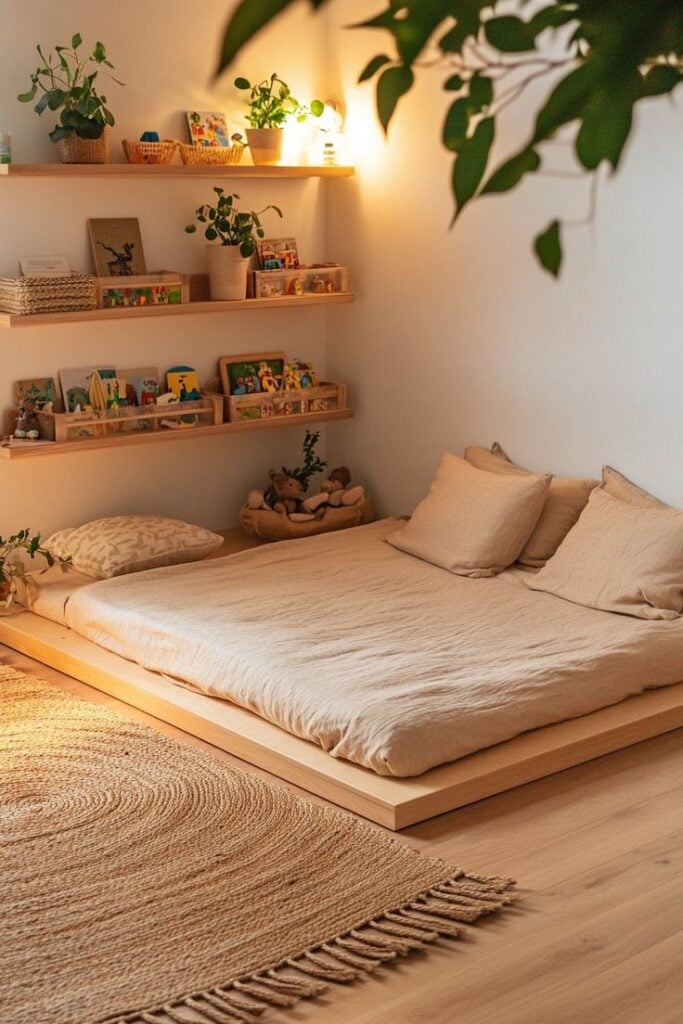
A floor bed remains one of the most recognizable Montessori features.
Instead of placing children in elevated beds, a floor bed allows easy access. Children can safely get in and out without assistance. This simple change encourages independence from an early age.
Additionally, floor beds support freedom of movement. Children can explore their rooms safely when they wake up.
A Montessori kids room always prioritizes accessibility.
2. Install Low Bookshelves
Books should remain visible and easy to reach.
Low shelves encourage children to select books independently. They can browse covers, make choices, and return books when finished.
Furthermore, front-facing bookshelves often increase reading interest.
Parents who enjoy creating cozy reading environments may also appreciate moon and star nursery inspiration for calming spaces.
3. Create Child-Sized Clothing Storage
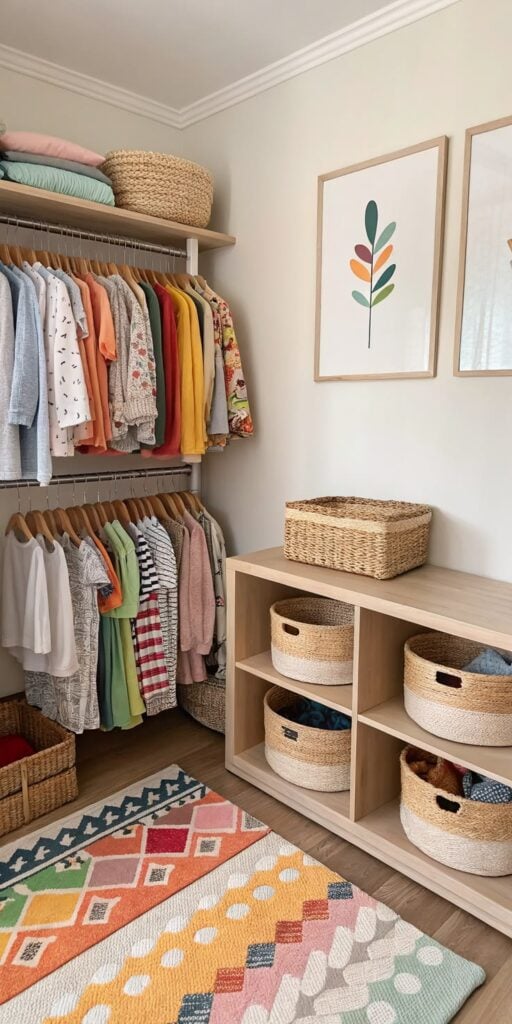
Traditional closets often feel overwhelming.
Instead, use low hanging rods, accessible drawers, and simple baskets.
Children can choose clothing independently each day.
Additionally, this setup encourages responsibility and decision-making.
A Montessori kids room transforms everyday routines into learning opportunities.
4. Add a Small Reading Nook
Reading corners encourage quiet activities.
Place a comfortable floor cushion beside accessible bookshelves.
The area should feel inviting and distraction-free.
Children often spend more time reading when the environment feels comfortable.
Furthermore, reading spaces support concentration and imagination.
5. Use Open Toy Shelving
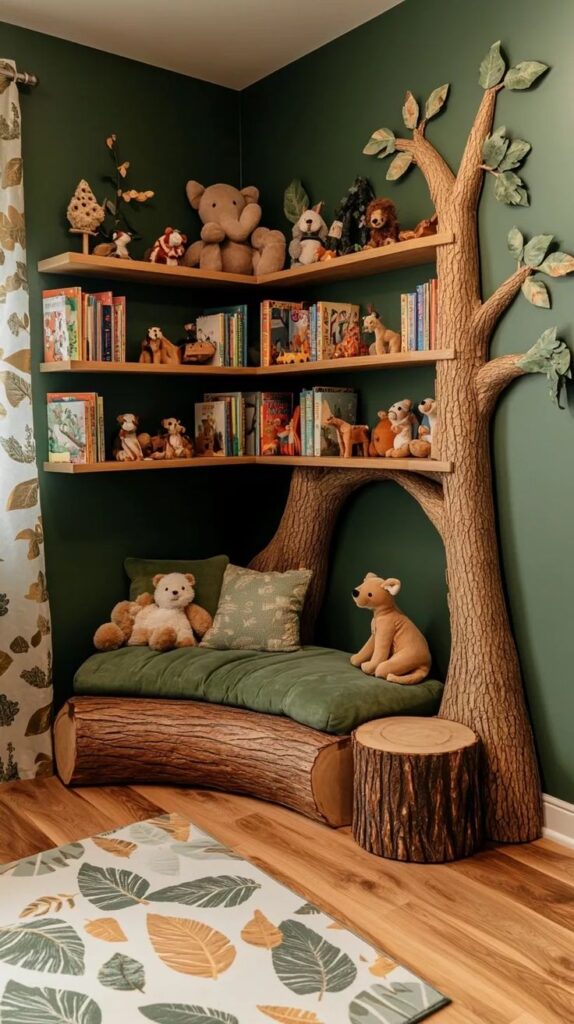
Open shelves allow children to see available toys easily.
Avoid overcrowding the shelves.
Instead, display only a limited number of activities.
This approach encourages focus and reduces overwhelm.
Additionally, children learn how to return items after use.
The room remains organized more easily.
6. Display Artwork at Child Height
Children deserve to enjoy their environment fully.
Hang artwork where they can easily see it.
This simple adjustment creates a stronger connection with the room.
Furthermore, child-level displays encourage observation and appreciation.
Families who love creative environments may enjoy creative art-focused spaces for additional inspiration.
7. Include a Child-Sized Table and Chair

Small furniture promotes independence.
Children can draw, complete puzzles, eat snacks, or work on activities comfortably.
Additionally, properly sized furniture supports better posture and concentration.
The setup encourages children to participate actively in daily tasks.
8. Create a Nature Display Area
Nature plays an important role in Montessori learning.
Display rocks, leaves, pinecones, shells, or flowers.
These items encourage curiosity and observation.
Children enjoy exploring natural materials firsthand.
Parents who love natural decorating styles may also enjoy forest-inspired kids bedrooms for related ideas.
9. Use Natural Materials

Wood, cotton, linen, wicker, and wool fit beautifully within Montessori spaces.
Natural materials create warmth and texture.
Additionally, they often feel more calming than brightly colored plastic items.
A Montessori kids room benefits from simple, high-quality materials.
The overall atmosphere feels peaceful and welcoming.
10. Add a Self-Care Station
Children enjoy caring for themselves.
Create a simple area with a mirror, hairbrush, tissues, and personal care items.
Everything should remain accessible.
This setup encourages independence during daily routines.
Additionally, self-care stations help build confidence.
11. Rotate Toys Regularly

Too many toys can create distractions.
Instead, rotate activities every few weeks.
Children often engage more deeply with fewer options.
Furthermore, toy rotation keeps activities feeling fresh and exciting.
The room stays organized without sacrificing variety.
12. Use Clear Storage Baskets
Organization should remain simple.
Clear bins and open baskets help children identify contents quickly.
This system encourages independent cleanup.
Additionally, children learn classification and organizational skills naturally.
Parents decorating compact bedrooms may benefit from small-space room solutions that maximize storage.
13. Create a Practical Life Area
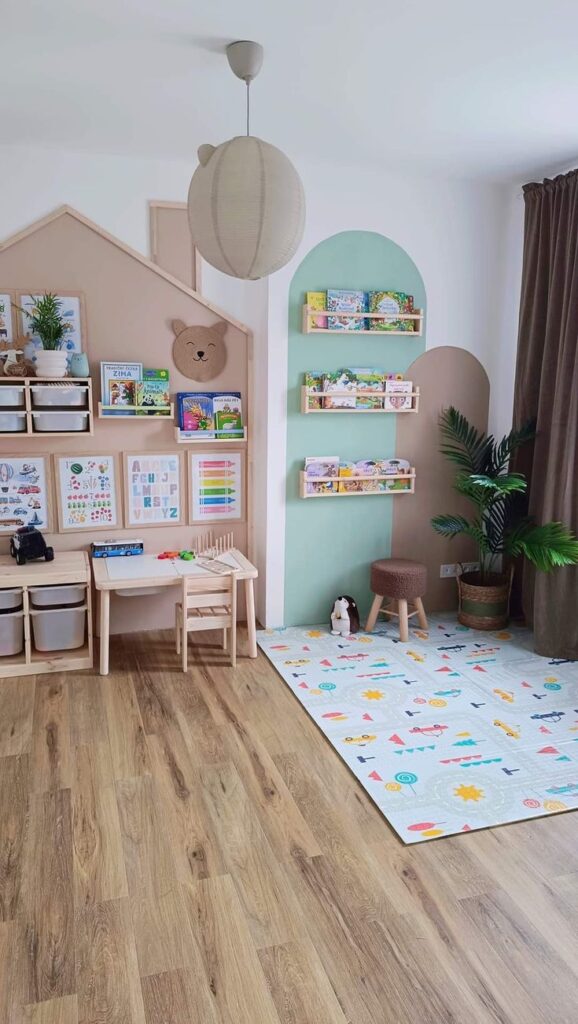
Practical life activities form a major Montessori principle.
Include child-sized cleaning tools, watering cans, or simple organizing activities.
Children enjoy participating in household responsibilities.
Moreover, practical tasks develop coordination and confidence.
The room becomes both functional and educational.
14. Install Accessible Wall Hooks
Low hooks encourage independence.
Children can hang jackets, backpacks, and hats without assistance.
This simple feature supports responsibility.
Additionally, accessible storage helps reduce clutter.
Everyday routines become easier to manage.
15. Add a Calm Corner
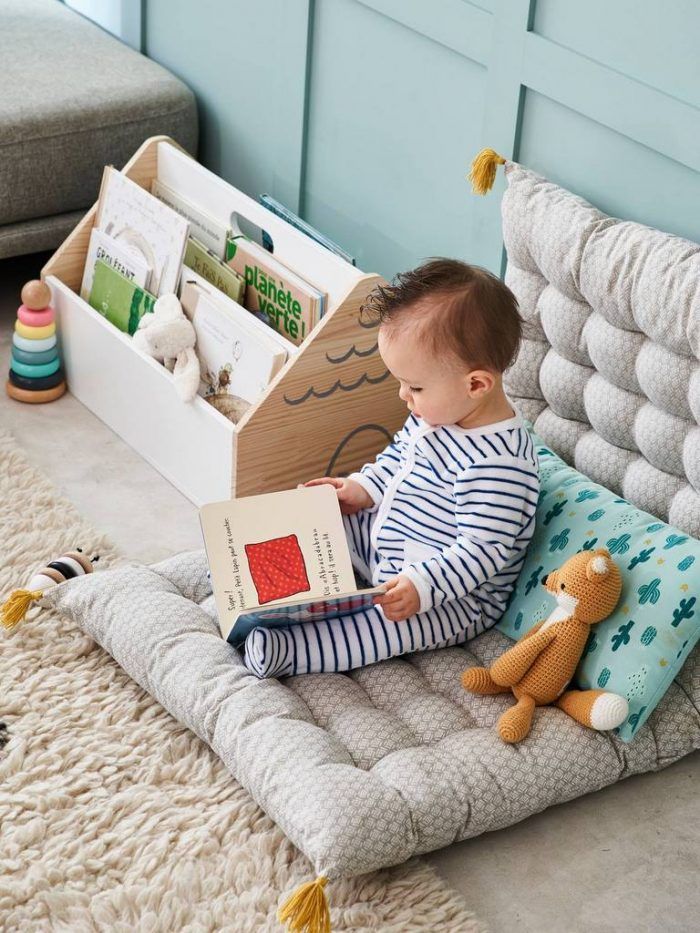
Every child benefits from a quiet retreat.
Create a comfortable space with cushions and books.
This area supports relaxation and emotional regulation.
Furthermore, calm corners encourage self-awareness.
A Montessori kids room should balance activity with rest.
Families who appreciate peaceful interiors may enjoy ocean-themed room décor for calming design inspiration.
16. Display Toys Thoughtfully
Presentation matters.
Arrange toys neatly rather than storing everything together.
Children often engage longer with thoughtfully displayed activities.
Additionally, organized displays promote respect for belongings.
The room feels more intentional and inviting.
17. Create an Art Station
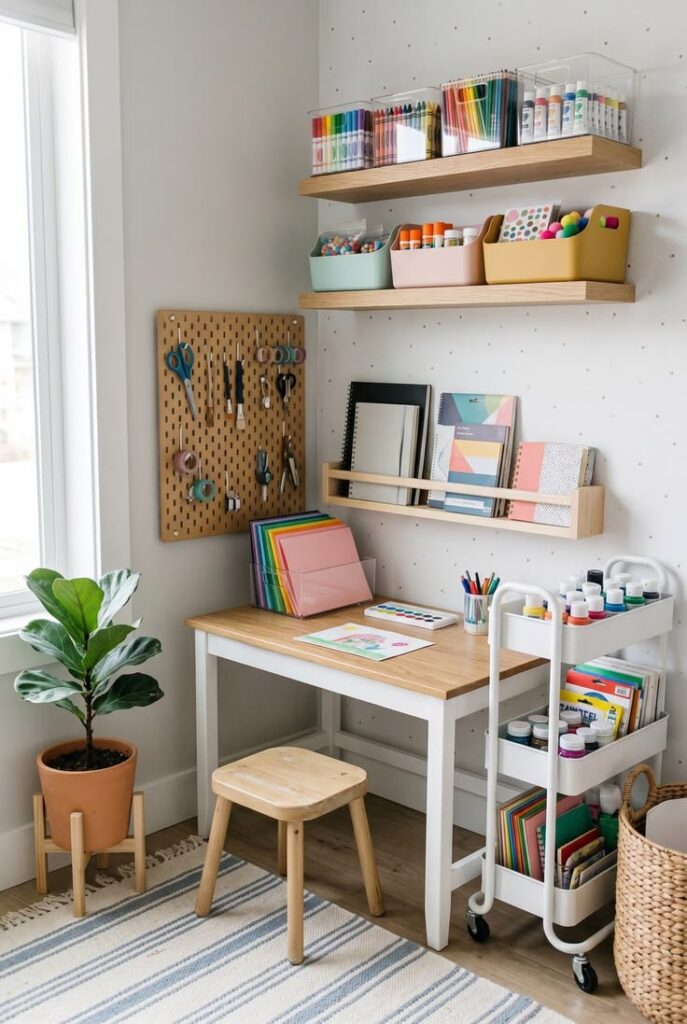
Creative expression deserves dedicated space.
Provide paper, crayons, pencils, and simple supplies.
Keep materials organized and accessible.
Children can create independently whenever inspiration strikes.
Parents who enjoy colorful creative spaces may love bright and colorful room ideas for additional inspiration.
18. Use Neutral Background Colors
Neutral walls support concentration.
Soft whites, warm beiges, and gentle grays create calm surroundings.
These shades allow educational materials and natural textures to stand out.
Additionally, neutral palettes create flexibility as children grow.
A Montessori kids room often relies on simplicity rather than visual stimulation.
19. Add Real-Life Learning Tools
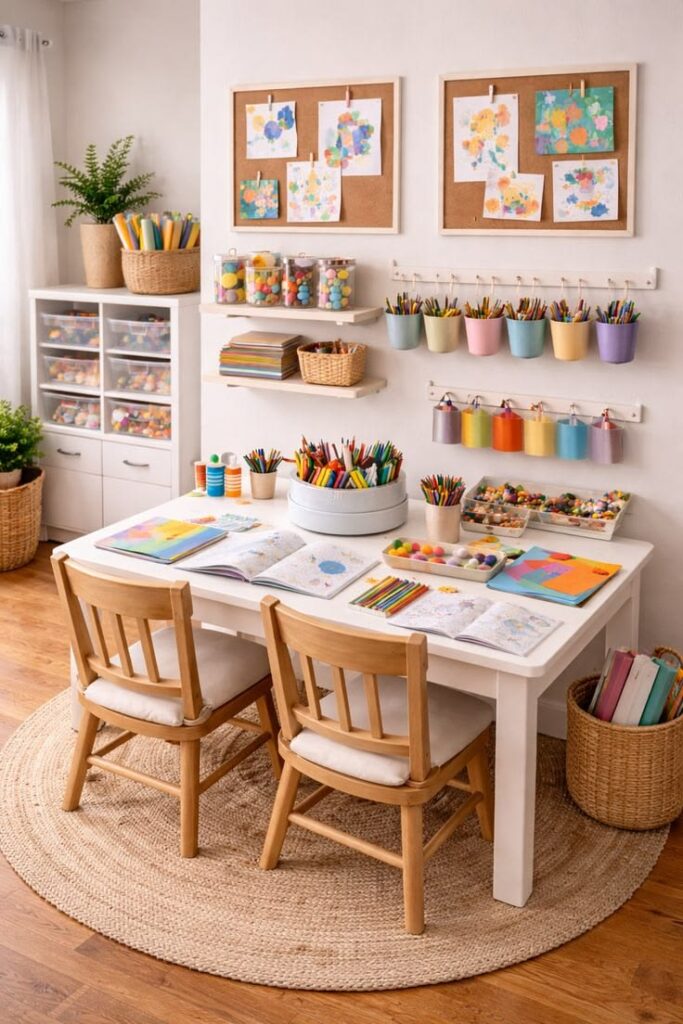
Montessori environments encourage practical experiences.
Include measuring cups, sorting trays, clocks, maps, and educational materials.
Children enjoy learning through hands-on exploration.
Furthermore, real objects often create stronger learning experiences than toys alone.
Families who enjoy educational adventure themes may appreciate future astronaut nursery ideas.
20. Create Independent Morning Routines
Organization can simplify mornings significantly.
Place clothing, shoes, and daily essentials within reach.
Children can complete many tasks independently.
Additionally, routines help build confidence and responsibility.
The entire family benefits from smoother mornings.
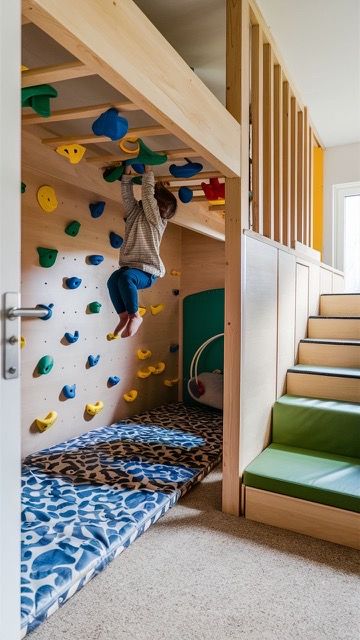
21. Include Movement Opportunities
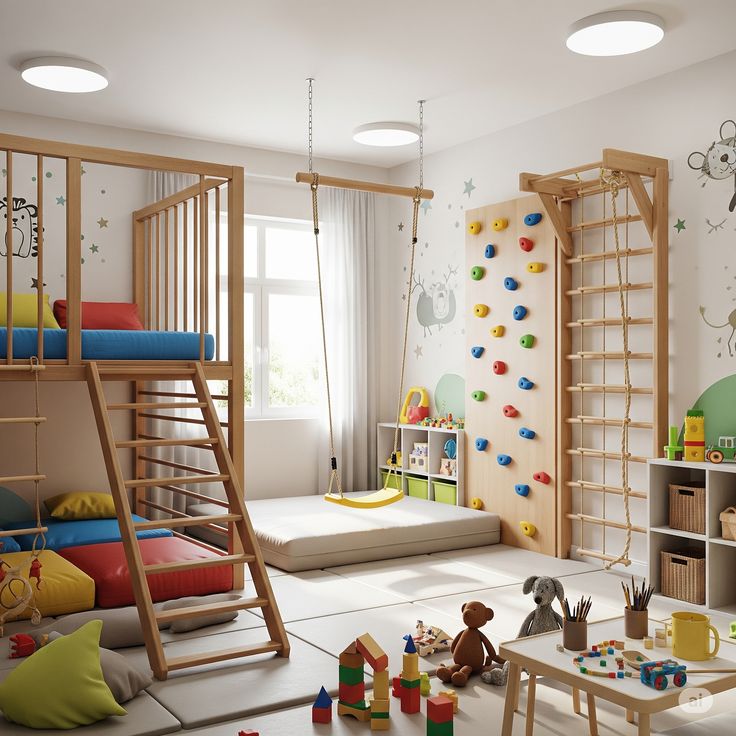
Children learn through movement.
Consider simple balance boards, stepping stones, or climbing elements.
Physical activity supports development and concentration.
Parents who prioritize active play may enjoy active indoor play spaces for inspiration.
22. Add Simple Educational Décor
Decorations should serve a purpose.
Maps, alphabet displays, nature prints, and educational artwork work beautifully.
These elements encourage curiosity without overwhelming the room.
Furthermore, meaningful décor supports learning naturally.
The environment becomes both beautiful and functional.
23. Keep the Room Uncluttered

Clutter often creates distractions.
Limit unnecessary decorations and excessive toys.
A simplified environment encourages deeper engagement.
Additionally, organization becomes easier to maintain.
Children frequently focus better in uncluttered spaces.
Families who appreciate classic organization may enjoy timeless luxury kids rooms for elegant inspiration.
24. Encourage Independent Play

Independent play remains a core Montessori principle.
Design the room so children can access activities easily.
Avoid relying on adult assistance whenever possible.
This approach builds problem-solving skills and creativity.
Additionally, independent play strengthens confidence.
A Montessori kids room supports exploration without constant direction.
25. Create a Room That Evolves
Children grow quickly.
Therefore, flexibility matters.
Choose adaptable furniture and storage solutions.
Allow the room to change alongside your child’s interests and abilities.
A Montessori kids room should support development through every stage.
Parents who appreciate adaptable design may enjoy vintage bedroom styling because timeless pieces often grow beautifully with children.
How to Choose Colors for a Montessori Kids Room
Color influences mood significantly.
Montessori spaces often rely on calm palettes.
Soft greens, warm whites, muted blues, and natural wood tones work particularly well.
These colors create peaceful environments.
Additionally, calm colors help children focus on activities rather than distractions.
However, Montessori rooms do not need to feel boring.
Small pops of color through artwork and books add personality.
Families who love bolder interiors may enjoy mixing colors and patterns while maintaining balance.
Common Mistakes to Avoid
One common mistake involves adding too many toys.
Large collections often reduce focus.
Another mistake involves choosing furniture designed only for adults.
Children benefit when they can access their environment independently.
Some parents also confuse Montessori design with minimalism.
However, Montessori focuses on accessibility and learning rather than empty spaces.
Additionally, avoid excessive decorations.
Thoughtful simplicity often creates better results.
Families seeking playful themes may enjoy cars-themed bedroom inspiration while maintaining Montessori principles.
Montessori Room Ideas for Different Ages
Infants benefit from floor beds, mirrors, and simple sensory materials.
Toddlers thrive with accessible storage and practical life activities.
Preschoolers enjoy art stations and educational displays.
Meanwhile, older children benefit from study spaces and independent organization systems.
The Montessori approach adapts beautifully throughout childhood.
Parents designing younger children’s spaces may also enjoy calming celestial nursery themes.
Older children interested in adventure may appreciate space-themed bedroom designs that encourage curiosity.
Final Thoughts
A Montessori kids room does much more than organize furniture. It creates opportunities for growth, independence, confidence, and learning every single day.
Low shelves encourage responsibility. Accessible storage supports independence. Child-sized furniture promotes participation. Practical life activities build valuable skills.
Most importantly, a Montessori kids room respects the child’s abilities. The design encourages exploration rather than restriction. Children learn to make choices, care for their belongings, and navigate daily routines confidently.
Whether you start with a floor bed, accessible bookshelves, practical life stations, or organized toy displays, every thoughtful change can make a meaningful difference.
With intentional planning and child-focused design, you can create a Montessori kids room that supports learning, encourages independence, and grows beautifully alongside your child for years to come.