If you are a parent, you have probably experienced this before. You spend time organizing your child’s room, putting everything in its proper place, and making the space look nice. Then a few hours later, your child is asking you to reach a book, grab a toy, pick out clothes, or help them find something that is right there in the room. Sometimes it feels like they need help with every little thing. That is one reason so many parents are turning to Montessori Kids Room Ideas. The goal is not just to create a beautiful bedroom. It is to create a space where children can do more for themselves and build confidence along the way.
One thing that makes Montessori rooms so appealing is how practical they are. Instead of designing a room around what adults think looks good, the room is designed around the child. Books are placed where little hands can reach them. Toys are displayed in a way that makes them easy to access and put away. Furniture is chosen to help children move around independently. If you are also trying to reduce clutter and make organization easier, 15 Genius Kids Room Storage Ideas Every Parent Needs is filled with smart solutions that work beautifully alongside a Montessori-inspired setup.
The best Montessori rooms prove that functional spaces can still be warm, cozy, and beautiful. You don’t have to sacrifice style to create a child-friendly environment. In fact, many Montessori spaces have the same calming feel you’ll find in 33 Neutral Kids Room Ideas That Never Go Out of Style and 27 Cozy Kids Bedroom Ideas That Feel Warm and Whimsical. The ideas below will help you create a room that encourages independence, supports learning, and gives your child the freedom to explore their world with confidence.
29 Montessori Kids Room Ideas That Encourage Independence
1. Use Low Open Shelving
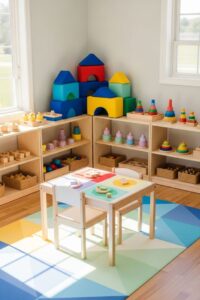
One of the most recognizable features of a Montessori room is low, open shelving. Instead of storing toys and books in tall cabinets, everything is placed within a child’s reach. This allows children to choose activities independently without constantly asking for help. It may seem like a small change, but it can have a big impact on confidence and decision-making.
Open shelves also encourage better organization because children can clearly see where things belong. Fewer toys are forgotten at the bottom of bins, and cleanup becomes much easier. If you are looking for even more organization ideas, 15 Genius Kids Room Storage Ideas Every Parent Needs offers plenty of practical inspiration.
2. Choose a Floor Bed
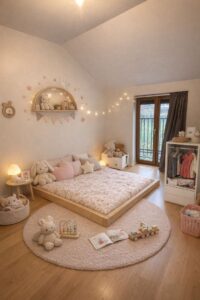
A floor bed is one of the most popular Montessori bedroom features. Instead of sleeping in a high bed with rails, children can safely get in and out of bed on their own. This simple setup encourages independence from an early age and gives children more control over their environment.
Many parents also find that floor beds make the room feel more open and welcoming. The lower profile creates a calm, uncluttered look while making the space easier for children to navigate. It is a practical choice that supports both freedom and comfort.
3. Create an Accessible Reading Corner
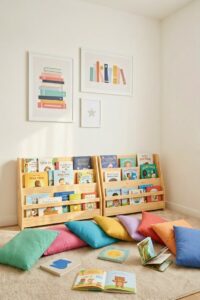
A reading corner becomes much more inviting when children can access it by themselves. Place books on low shelves or front-facing book racks so covers are easy to see. Add a soft rug, a few pillows, and good lighting to create a cozy place for reading and quiet time.
Children are often more interested in books when they can browse and choose them independently. The space does not need to be large to be effective. Even a small corner can become a favorite place for learning and imagination.
4. Keep Toys Visible and Organized
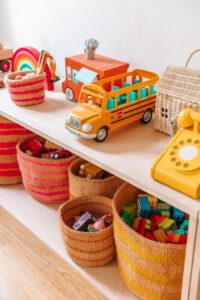
Montessori spaces often avoid large toy boxes because they can quickly become cluttered. Instead, toys are displayed neatly on shelves where children can see all of their options. This makes choosing activities easier and helps reduce overwhelm.
When everything has a designated place, cleanup becomes more manageable too. Children learn responsibility by returning items to the correct spot after use. This simple habit can make a big difference in keeping the room tidy.
5. Use Child-Sized Furniture
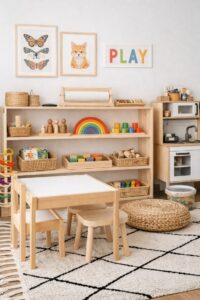
Furniture designed for children helps them feel capable and independent. Small tables, chairs, shelves, and storage units allow children to use their space without constantly relying on adults. The room becomes a place where they can comfortably do things for themselves.
This approach also creates a more welcoming environment. Children naturally gravitate toward spaces that fit their size and abilities. The result is a room that feels designed specifically for them rather than simply adapted from an adult space.
6. Create a Calm Color Palette
Montessori rooms are often known for their calm and peaceful appearance. Soft neutrals, warm whites, light wood tones, and muted colors help create an environment that feels relaxing rather than overstimulating. These colors allow children to focus on activities without too many distractions.
If you love simple, timeless designs, 33 Neutral Kids Room Ideas That Never Go Out of Style offers plenty of inspiration. A calming color palette can make a room feel both beautiful and functional.
7. Add a Child-Friendly Closet
A child-friendly closet allows children to choose their own clothes and participate in getting dressed. Low hanging rods, accessible baskets, and simple organization systems help make this possible. It encourages decision-making while teaching valuable life skills.
Children often enjoy having more control over their daily routines. Giving them access to their clothing helps build independence in a natural way. Small changes like this can create meaningful opportunities for growth.
8. Display Artwork at Eye Level
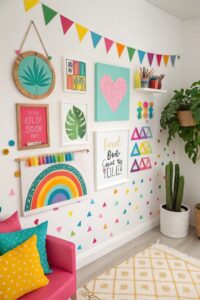
Children appreciate artwork much more when they can actually see it. Hanging pictures at their eye level helps them feel included in the space and encourages engagement with their surroundings. Family photos, nature prints, and children’s artwork all work beautifully.
This simple idea also helps make the room feel more personal. Instead of decorating only for adults, the room becomes a place designed with the child in mind. That shift in perspective is a big part of the Montessori philosophy.
9. Use Natural Materials
Natural materials like wood, cotton, wicker, and linen are common in Montessori spaces. These materials create a warm and welcoming environment while adding texture and character to the room. They also tend to feel timeless rather than trendy.
Many parents love how calming natural materials can be. They help create a space that feels cozy without relying on excessive decorations. For more inspiration, 27 Cozy Kids Bedroom Ideas That Feel Warm and Whimsical shares similar ideas for creating inviting children’s spaces.
10. Rotate Toys Regularly
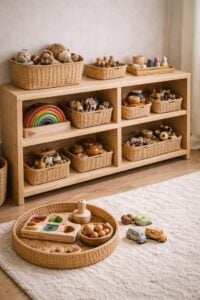
Children do not need access to every toy they own all the time. Toy rotation involves keeping some toys available while storing others away for later. This helps maintain interest and prevents shelves from becoming overcrowded.
Many parents are surprised by how effective this strategy can be. Toys that have been stored away often feel new and exciting when they return. It also helps reduce clutter and keeps the room feeling organized.
11. Create a Simple Dress-Up Area
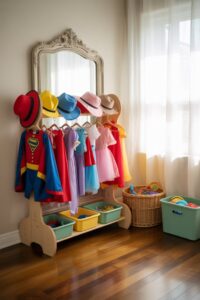
A dress-up area does not need to be elaborate to be effective. A small clothing rack, a few costumes, and a basket for accessories can encourage hours of imaginative play. Because everything is within reach, children can choose and put away items on their own.
This setup supports independence while giving children a chance to express their creativity. It also keeps costumes organized instead of scattered around the room. A dedicated space often makes dress-up play feel even more special.
12. Add a Mirror at Child Height
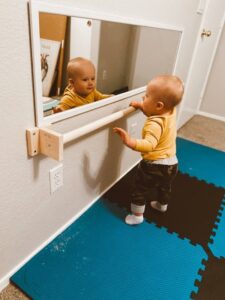
A low mirror is a classic Montessori feature for a reason. It allows children to observe themselves, practice movements, and build self-awareness. Young children are naturally curious about their reflections and enjoy watching themselves learn new skills.
Placing a mirror at their height makes the room feel designed specifically for them. It can also help with tasks like getting dressed, brushing hair, and building confidence. This simple addition offers both practical and developmental benefits.
13. Keep Decorations Minimal
Montessori rooms focus on quality over quantity. Instead of filling every wall and shelf with decorations, choose a few meaningful pieces that add beauty without creating visual clutter. A calmer environment can help children focus and feel more relaxed.
This does not mean the room has to feel boring. Thoughtful artwork, natural textures, and personal touches can still create a warm and welcoming atmosphere. Often, less really is more when it comes to children’s spaces.
14. Create a Practical Life Station
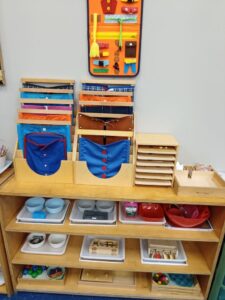
Practical life activities are a big part of Montessori learning. A small station with child-sized cleaning tools, watering cans, or simple daily-use items encourages children to participate in everyday tasks. It helps them feel capable and involved.
Children often enjoy helping when tools are designed for their size. The station can be as simple or elaborate as you like. The goal is to provide opportunities for independence and responsibility in everyday life.
15. Use Baskets for Easy Organization
Baskets help keep materials organized while making them easy for children to access. Toys, books, puzzles, and art supplies can all be stored neatly in labeled containers. This makes it easier for children to find what they need and put things away afterward.
Simple storage solutions often work best in Montessori spaces. If organization is one of your biggest challenges, 15 Genius Kids Room Storage Ideas Every Parent Needs offers even more practical solutions for keeping children’s rooms tidy.
16. Add a Nature-Inspired Touch
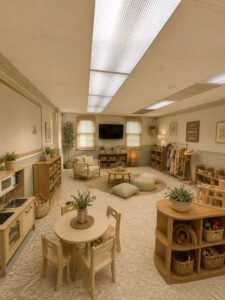
Nature plays an important role in many Montessori environments. Plants, wooden toys, nature artwork, and natural textures can help create a peaceful atmosphere. These elements also encourage children to appreciate the world around them.
You do not need to completely redesign the room to incorporate nature. Even a few simple additions can make a difference. The goal is to create a space that feels calm, grounded, and connected to the natural world.
17. Design a Cozy Quiet Corner
Every child benefits from having a place to relax and recharge. A quiet corner with soft cushions, books, and calming activities provides a retreat when children need a break. It gives them a comfortable place to rest without feeling isolated.
Many Montessori Kids Room Ideas focus on helping children manage their own emotions and needs. A quiet corner supports this goal by offering a peaceful space where they can slow down and reset.
18. Use Low Hooks for Everyday Items
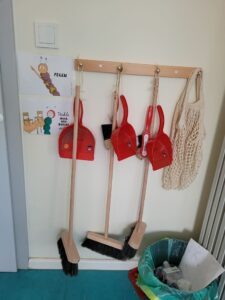
Low hooks make it easy for children to hang up coats, bags, hats, and other belongings without assistance. This simple change encourages responsibility and helps children participate in daily routines.
The idea may seem small, but it can have a big impact on independence. Children feel proud when they can complete tasks by themselves. Creating opportunities for success helps build confidence over time.
19. Keep Books Front-Facing
Displaying books with the covers facing outward makes them more appealing to young children. Instead of seeing only book spines, children can easily spot stories that interest them. This often encourages more independent reading and exploration.
A front-facing book display also adds color and personality to the room. It serves as both storage and decoration. Reading becomes a natural part of the environment rather than an activity hidden away on a shelf.
20. Create Defined Activity Areas
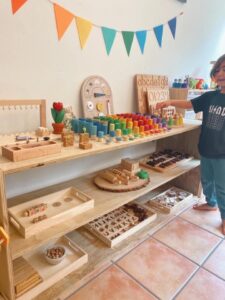
Montessori rooms often divide the space into clear activity zones. A reading area, a sleeping area, a play area, and a practical life area each have a specific purpose. This organization helps children understand how to use the room.
Defined spaces can also make the room feel more functional and less chaotic. Children tend to move more easily between activities when each area has a clear role. This simple strategy supports both independence and organization.
21. Limit Toy Clutter
One of the biggest principles behind Montessori design is that children do not need dozens of toys available at once. Too many choices can actually make it harder for them to focus and engage in meaningful play. Keeping only a carefully selected number of toys on display often leads to more creativity and concentration.
This approach also makes the room feel calmer and easier to manage. Parents spend less time cleaning up, and children find it easier to return items to their proper places. A simple environment often works better than a crowded one.
22. Make Cleaning Supplies Accessible
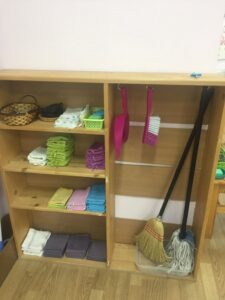
Children love helping when they have the right tools. A small broom, dustpan, hand brush, or cleaning cloth placed within reach encourages participation in everyday tasks. It teaches responsibility while helping children feel capable and included.
Many parents are surprised by how eager children can be to help when given the opportunity. Small tasks become valuable learning experiences. The goal is not perfection but participation.
23. Add a Learning Wall
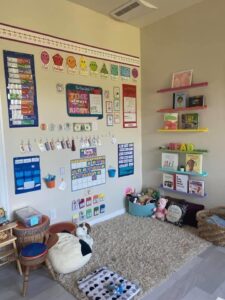
A learning wall can provide opportunities for exploration without overwhelming the room. Display letters, numbers, maps, nature prints, or educational artwork at a child’s eye level. The wall becomes something children naturally interact with throughout the day.
This type of feature helps blend learning into everyday life. It can evolve as interests change and new skills develop. Educational decor often feels more meaningful when it remains simple and accessible.
24. Choose Open-Ended Toys
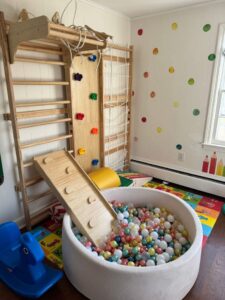
Open-ended toys encourage creativity because they can be used in many different ways. Building blocks, wooden figures, stacking toys, and art materials often provide more value than toys with only one purpose. Children are free to use their imagination rather than follow a specific set of instructions.
This type of play supports problem-solving and independent thinking. It also tends to hold children’s attention for longer periods of time. Many Montessori Kids Room Ideas focus on choosing toys that inspire creativity rather than passive entertainment.
25. Create an Art Display Area
Children love seeing their artwork displayed proudly. A simple gallery wall, clipboards, or display board gives them a dedicated place to showcase their creations. It helps build confidence and makes the room feel more personal.
The display can change regularly as new artwork is created. This keeps the room feeling fresh while celebrating your child’s creativity. Personal touches often make the biggest impact in a space.
26. Use Furniture That Can Grow with Your Child
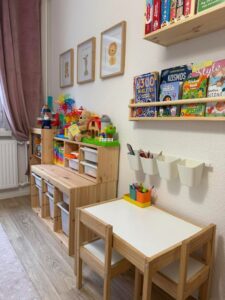
Choosing versatile furniture can save money and make future room updates easier. Simple designs often work well as children grow and their needs change. Beds, shelves, and desks with timeless styles tend to stay useful for many years.
This approach also helps avoid frequent room makeovers. If you enjoy rooms that blend function and style, 23 Modern Kids Room Decor Ideas That Look Expensive offers additional inspiration for creating timeless spaces.
27. Keep the Room Open and Easy to Navigate
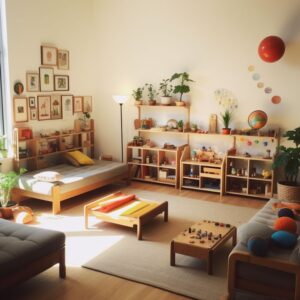
Children should be able to move around their room comfortably and confidently. Avoid overcrowding the space with unnecessary furniture or decorations. Open floor space encourages movement, exploration, and independent play.
This is especially helpful in smaller bedrooms where every inch matters. If you are working with limited square footage, 19 Small Kids Room Ideas That Make Tiny Spaces Feel Magical includes plenty of ideas for making the most of a compact room.
28. Let Your Child Have Some Control
One of the most powerful Montessori principles is giving children opportunities to make choices. Allow them to select books, choose activities, or help organize certain areas of the room. These small decisions help build confidence and independence.
Children often take greater pride in spaces they helped create. The room feels more meaningful because it reflects their interests and personality. Many Montessori Kids Room Ideas focus on creating environments where children feel capable and respected.
29. Focus on Function Before Decoration
A Montessori room is not about following a trend or creating a picture-perfect space. The primary goal is to support your child’s growth, independence, and daily routines. When the room works well for the child, it naturally becomes more enjoyable to use.
Beautiful decor can still be part of the design, but function comes first. The best rooms balance practicality, comfort, and style. That combination creates a space children genuinely enjoy spending time in.
Final Thoughts
At its heart, a Montessori bedroom is about helping children do more for themselves. Simple changes like accessible storage, child-sized furniture, low shelves, and organized activity areas can have a lasting impact on confidence and independence. The room becomes more than a place to sleep. It becomes a space where children learn, grow, and explore every day. That is why so many families are drawn to Montessori Kids Room Ideas when designing children’s spaces.
As you explore these Montessori Kids Room Ideas, remember that you do not need to implement every idea at once. Even a few thoughtful changes can make a noticeable difference. Start with the areas that matter most to your family and build from there. Small improvements often create the biggest results over time.
The goal is not perfection. The goal is creating a room that supports your child’s development while still feeling warm, welcoming, and practical. If you are looking for additional inspiration, 21 Kids Room Decor Ideas You’ll Want to Recreate NOW and 29 Cute Kids Room Decor Ideas That Totally Stand Out offer even more creative ways to design a space your child will love. With the right balance of independence, organization, and comfort, these Montessori Kids Room Ideas can help create a room that truly grows with your child.