Do you have toddlers who absolutely refuse to share? Here is what to do when your toddler won’t share (without forcing it).
In the world of toddlers, sharing isn’t exactly their favorite concept. To them, what’s theirs is theirs, and the idea of everyone having their own toys sounds like a much better plan.
So lets say, you are at a playground, hoping for a fun filled and peaceful outing and your 3 year old is holding her tablet like it is made of gold. Here comes other kids who saw a beautiful pink gadget and would want to have a touch of it. And your toddler says, “It is Mine, I’m not giving you”.
Both toddlers are now dragging, all you can hear is “Give me”, “No, it is mine, you can’t have it”. One second later, both are crying and screaming. Sound familiar? You’re not alone, and more importantly, you’re not failing as a parent.
The honest truth is, trying to force a toddler to share is like speaking a language they don’t understand yet. Their brains simply aren’t developed enough to understand it.
As a parent, you may even be tempted to grab the toy and give it to the other kid so you can teach your kid that it is good to share.
But here’s the thing, forcing a toddler to share always backfires. There are gentle, effective ways to handle these moments that work much better than trying to force it. This post will reveal them and give you practical strategies that actually work.
Here, you’ll learn how to gently guide your little one towards understanding and practicing the wonderful skill of sharing one step at a time.
Why Do Toddlers Struggle to Share
1. They don’t understand others’ feelings yet
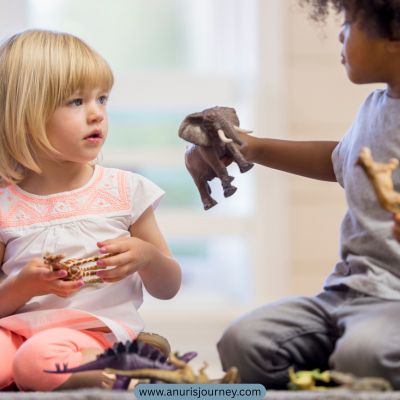
They are acting their age, and genuinely can’t fully understand what someone else is thinking or feeling.
When your toddler snatches a toy, they’re not thinking, “Aisha is going to be sad.” They’re thinking, “I want that toy right now because I want to play with it.” They literally can’t put themselves in Aisha’s shoes yet. It’s not a lack of empathy; it’s a lack of brain development in that area.
2. They’re learning about possession
Everything they own is an extension of themselves, toys, clothes etc, all theirs. So telling them to share what they think is an extension of themselves is hard for them to understand.
3. They haven’t learned how to manage their emotions
Joy, sadness, anger are all new to them and they haven’t learned how to manage these big emotions.
4. They live in the present moment
When they want something, they want it NOW. They can’t think about “later” or “in five minutes.”
If you say, “Give Aisha a turn with the car, and you can have it back in two minutes,” your toddler hears, “Give Aisha your car, and you’ll never see it again.” To them, giving up a toy means losing it forever. This fuels their efforts to hold onto it.
5. Those toys are their comfort zone
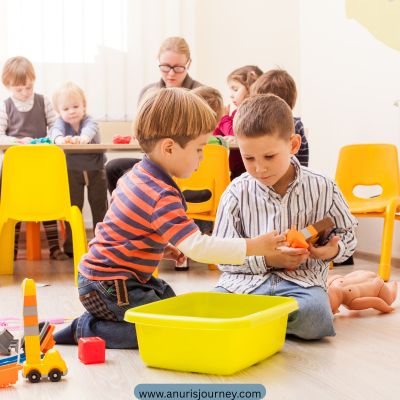
Sometimes, a specific toy isn’t just a toy; it’s a comfort item, a source of security in this big, overwhelming world.
Forcing them to share this item, even for a moment, can feel like a direct threat to their sense of safety and well-being.
Why i shouldn’t force my toddler to share
It causes resentment and can make them feel powerless and unfairly treated. The goal is to teach them to be kind and generous but forcing them or taking the toy away can make them think you are bigger and stronger, and you can take their stuff away anytime.
We want them to learn empathy, turn-taking, and understanding another person’s feelings.
Secondly, when you take the toy forcefully, it makes it look more desirable, they will cling to it more tightly and won’t let go easily next time. It’s now the forbidden fruit, and your child will only want it more.
You might just end up getting immediate results by making them grudgingly comply but it usually creates bigger battles down the line and the real teaching opportunity is missed.
Practical Strategies for Teaching Sharing (Without Forcing)
1. Teach them to take turns
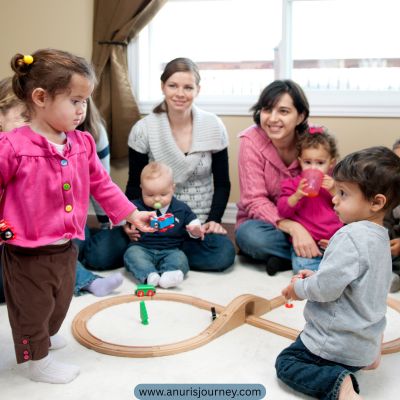
If you can get your toddler to understand the idea of taking turns, then you have solved the issue. Why? Because for a toddler, giving something away feels like it’s gone forever. They don’t understand time yet. But “taking turns” tells them, “You’ll get it back!” That makes a huge difference.
It removes the idea of permanent loss and replaces it with the comforting promise of getting it back later.
2. Use the timer method
Instead of the share word, you can use the timer method, maybe a sand timer or a simple timer app on your phone.
For example, Kemi has the truck. Bola wants it. You step in with the timer. “Kemi, you get to play with the truck until all the sand goes to the bottom. When it’s gone, it will be Bola’s turn.” You hand the timer to Kemi or place it where she can see it. Problem solved!
3. Put things in place to prevent conflict

If you know the toy that always causes fights during plays, get an extra one. Have double of their favorite toys or items. I learned this the hard way when my daughter and her friend spent an entire play-date fighting over one plastic banana while a whole fruit bowl sat ignored.
Rotate toys regularly. When you keep some toys out of sight for a while and then reintroduce them, they feel fresh and exciting.
When you see two toddlers eyeing the same toy, step in before the snatching starts. Redirect their attention to other exciting activities.
This way, you’re actively preventing them and making it easier for your toddler to navigate social play.
4. Initiate the exchange
Sometimes they need a little help. Physically guide their hand to pass the toy over, narrating positively. “Let’s give Ken a turn. Thank you for sharing!”
5. Let them practice sharing with you

Start small at home, let her share with you, her siblings and loved ones. This builds the muscle of sharing in a safe, familiar environment.
6. Learn to praise them when they give
Whenever they corporate and give, praise and appreciate their little effort.
7. Model Sharing in daily life
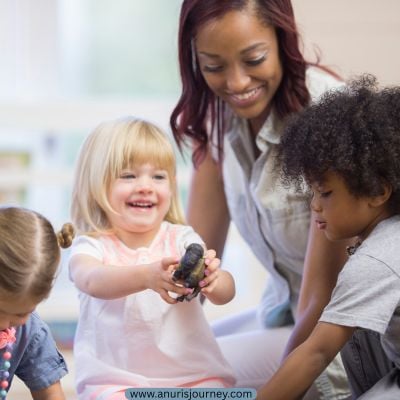
Kids learn by watching us. So be a role model. You need to show them what sharing looks like in real life, every single day.
Look for natural, simple moments throughout your day to demonstrate sharing with your child, your partner, or even other family members.
As they watch you share, they understand that sharing doesn’t mean forever losing something; it means giving a little and sometimes getting something in return.
Always point out when you see someone else (a family member, a friend, or even characters in a book or on TV) sharing. For example if you see two children at the park taking turns on a swing, you might say, “Look at those friends! They are sharing the swing so everyone gets a turn.”
What to Do When Conflicts Happen

Yes, there are days that after all your best efforts, a play-date still went wrong and snatching and screaming starts and tears flow. There are some strategies on how to handle the situation.
- Step in immediately, stay calm and be neutral. Physically separate the children, but do it without yelling or shaming. Keep your voice low and even. don’t take sides. When you react with anger, it just adds fuel to their emotional fire. Separating them stops the immediate conflict and gives everyone a chance to cool down slightly.
- Talk about what happened in a neutral, problem-solving way. Help them understand what the conflict is about and guide them towards a solution. That way, you are modelling and teaching them conflict resolution.
- You can also offer alternatives. When they are excited or stuck on one item, offer other exciting options to divert their attention. If they’re both fixated on the same toy and can’t agree, suggest other fun activities or toys that are readily available. You can also temporarily remove the contested item if it’s causing too much trouble.
- Focus on the behavior, Not the Child. Don’t label them as selfish as that lowers their self esteem and teaches nothing useful, rather focus on the action itself. For example: Instead of saying, “You’re a bad sharer!” or “You’re so selfish!”, you say, “Hitting hurts,” or “Grabbing isn’t kind.” Or, “We use gentle hands with our friends.”
Sharing is a skill that develops over time, just like walking or talking. You wouldn’t expect a 12-month-old to run a marathon, so don’t expect a 2-year-old to naturally share their favorite toy.
Be patient with your child and with yourself. With consistent, loving guidance, your toddler will learn the joy of sharing. And when they finally offer that toy to a friend all on their own, it will be a victory sweeter than any toy.
You may also like:
The Secret to getting a toddler to brush their teeth (without tears)
How to help your Baby through a Sleep Regression (without creating bad habits)