Is it possible to brush your toddler’s teeth without a struggle? Well, let’s find out as I discuss the Secret to getting a toddler to brush their teeth (without tears).
There is one drama that plays out every morning and night in my home, chasing my four year old around the house with a toothbrush.
Once it is time to brush and they see the toothbrush, it becomes a fight, jaws are clamped shut, and they scream so loud. It’s one ritual that leaves me both exhausted and covered in foam.
Does it sound familiar? You are not alone. This is a universal toddler struggle, a true test of wills that every parent faces.
However, here’s the thing: despite the screaming and defiance, brushing their teeth isn’t optional. It’s a battle you just can’t afford to lose. Why? Because it’s about more than just a clean mouth.
It’s about preventing painful cavities, saving you money on future dental bills, and most importantly, building a healthy habit that will last a lifetime.
So what do you do to win this toothbrush battle? First and foremost, you have to stop seeing it as a battle you have to win and start seeing it as a game you play together with your toddler.
The problem isn’t your toddler being difficult. The problem was that you approached it all wrong.
I know most of us use “the hold them down method”. Just hold them down and do it, pin them down, hold their head and try to squeeze open their jaw then brush it as they scream.
But here’s the harsh reality of that method: it simply doesn’t work, and it can actually do more harm than good.
By doing this, you are teaching the child to fear it instead of accepting it. Every time they see the brush, they will remember being held down and fighting. This fear won’t just go away; it will likely escalate, making every future attempt even harder.
Moreover, can you properly clean teeth while fighting a screaming, writhing toddler? You’ll miss spots, the brush won’t reach the back molars, and it’s a huge risk for injury.
Before we look at solutions, let’s talk about what’s actually going on in your toddler’s head when they see that toothbrush. Once you understand the “why”, then you can actually fix the problem.
Why Toddlers Hate Tooth Brushing
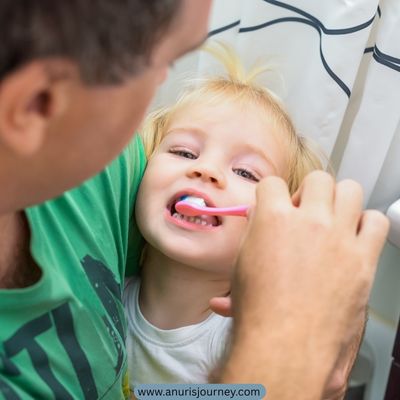
-
It’s a Lot to Handle
Picture this; someone’s trying to put a funny thing in their mouth, then adding tingly, minty foam that might make them gag, and scrubbing all over for what feels like forever.
That tiny toothbrush and minty paste can be overwhelming. For a little one who’s still learning how their body works, that’s A LOT.
Their first response is always a No. This resistance is a completely normal part of their development. Moreover, tooth brushing requires them to stay still and let someone else do something to them.
They will resist it and even take the brush to do it themselves. As if they even know what they are doing? Funny right?
-
It makes zero sense to them
Their understanding is still very low so they do not understand why you’re just interrupting their playtime to do something weird and uncomfortable for no good reason.
-
Fear of the unknown
Kids have a fantastic memory. Think back. Was there a time you held them down? Did you accidentally press too hard and they had a wound? Did they choke on toothpaste once?
What happens is that your toddler remembers that specific bad feeling and now associates the toothbrush with that fear or pain.
Their resistance is a protective reaction to avoid a repeat of that experience. Kids may not understand what brushing is for, all they see is someone who wants to make them do something strange.
When you see their resistance not as defiance, but as a signal of their needs and development, you can start to meet them where they are and find a solution that works for everyone.
How do i get my Toddler to brush their teeth (without tears)
1. Make the toothbrush experience a happy one
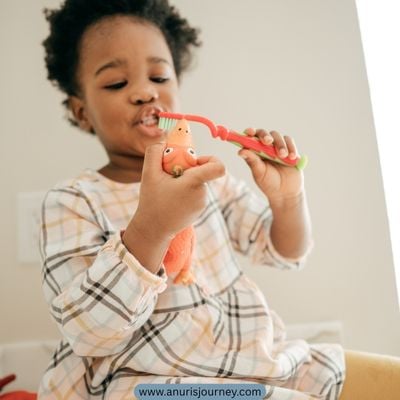
Allow them to play with the toothbrush, let them explore, give them a toy to brush their teeth.
My neighbour’s son spent a week “brushing” his toy dinosaur’s teeth before he allowed the toothbrush near his own mouth.
Make it a toy before it becomes a tool. Give them their own toothbrush to hold while you brush your teeth. Let them brush your teeth.
Forget toothpaste for now. Start with just water until they’re comfortable with the process.
2. Show them, don’t tell them alone
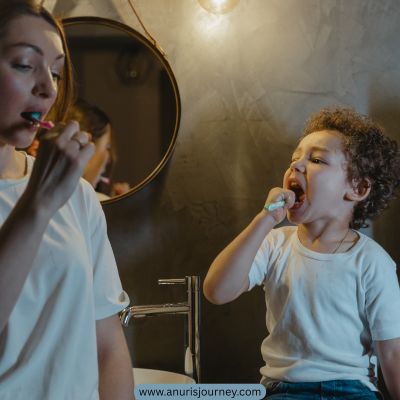
Toddlers learn by watching. Brush your own teeth in front of your toddler. Hum a song, make silly faces in the mirror, and show them how you brush your top, bottom, and side teeth.
For example; before you brush your toddler’s teeth, you say, “Look, Nora! Mama’s brushing her teeth! Zzzzzz, zzzzzz.” You show her how you get your back teeth, then smile and show her how clean they are.
This makes it look like fun and they will be happy to join you when they see you doing it happily everyday
3. Make the part of the process
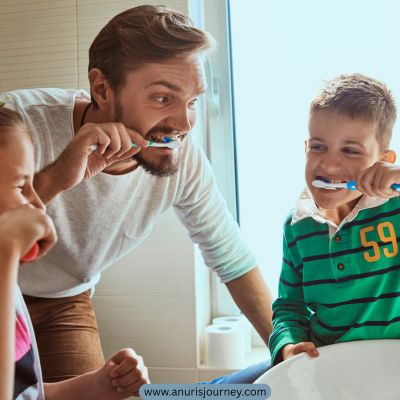
Let them have a say in the colour of their toothpaste, the colour of the toothbrush and even what position they want to take when brushing, sitting or standing
Did you notice that these aren’t yes or no questions. You’re not asking IF they want to brush their teeth, you’re simply giving them control over HOW it happens.
4. Try The “taking turns” method
This one works. You tell them, “You brush for 10 seconds, then I’ll brush for 10 seconds.” Set a timer.
Let them go first. Most toddlers will barely scrub their teeth, but they feel like they’re in control. Then you get your turn to actually clean their teeth.
5. Use Timers, Songs, or Apps to Make Brushing Fun
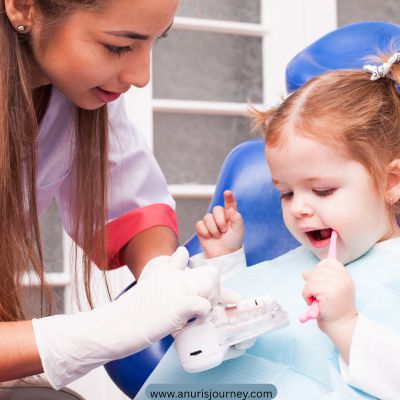
There are apps with timers and songs specifically for tooth brushing or a character brushing their teeth.
This gives them predictability and control. It shifts the focus from the discomfort of brushing to the excitement of watching the timer and songs.
Toddlers love music. Many popular children’s shows (like Coco-melon or Daniel Tiger’s Neighbourhood) have excellent “Brush Your Teeth” songs you can use.
Sing it with them every single time you brush.
6. Create a routine that works for you and your toddler
Don’t try to brush teeth when your toddler is overtired, hungry, or in the middle of a meltdown.
Choose specific times each day for brushing (e.g., right after breakfast and right before bedtime) and stick to them as consistently as possible.
Some families do better with morning brushing, others with right after dinner instead of bedtime. Find what works for you and your family.
7. Making the Bathroom Environment Comfortable
Make the bathroom comfortable, good light, comfortable height (they can use a step stool or allow them to sit on a counter so they can reach the sink and see themselves in the mirror), and even some background music.
8. Don’t underestimate the power of praise

Toddlers love parental attention and approval. They look forward to your praise and it makes them eager to repeat the behavior.
Try setting up a fun and easy reward system your child can see. It could be a sticker for each time they brush, a pretend “tooth fairy” coin they can trade for a small toy later, or just lots of high fives, hugs, and cheering.
The most important part? Give the reward right after they finish brushing, so they clearly understand the connection.
Age-Specific Approaches
What works for a curious one-year-old just starting to get teeth might not work for a strong-willed three year old.
As your child grows and develops, your approach to teeth brushing needs to evolve too.
1. 12-18 Months

This is the age their teeth start developing. They’re just starting to walk, babble more and are easily overwhelmed.
At this age, it is more of cleaning with a clean cloth or a clean finger brush. Don’t worry too much about perfection; it’s about introducing the sensation.
So focus on letting them hold and play with the toothbrush during the day. Let them get used to the feel of it.
Show them how you brush your own teeth and make it fun. Aim for 30 seconds to a minute if possible. It’s better to have a happy 30 seconds than a screaming 2 minutes.
2. 18-24 Months
This is the age you have to develop strong routines. Establish a strict morning and bedtime routine.
Give them choices, ask them “Do you want the red brush or the blue brush?” “Strawberry toothpaste or bubblegum?” This gives them a sense of control.
You can also give them the brush to do it themselves, then follow up and clean it very well. This satisfies their independence while ensuring cleanliness.
3. 2-3 Years
They are grown and are becoming more capable so they understand better.
So involve them in the process. You can tell them, “Can you get your toothpaste?” “Show me how you brush.”
Focus heavily on praise and celebration for even small acts of cooperation. “Wow, you did such a great job brushing your top teeth!”
They are old enough to also understand why they need to brush. So explain in simple terms.
4. 3+ Years
At this stage, what they need is supervision and guidance.
Teach them the proper up and down or circular motions. Use a mirror and show them. “Make little circles on your back teeth!”
Regular dentist visits (every 6 months) will reinforce the importance of brushing from a professional source.
What to do if you have tried everything and nothing works
You’ve tried all the tips, used every trick, and given it your best shot but your toddler still puts up a big fight when it’s time to brush their teeth.
Take a break and try again later. Don’t force it to the point of trauma.
Consulting Your Paediatric Dentist and explain the struggles you’re having with brushing. They’ve seen it all and can offer personalised advice, demonstrate techniques, or identify underlying issues.
It could be due to an underlying physical issue making brushing genuinely uncomfortable or painful. If you suspect pain or discomfort is the primary reason for their resistance, check their mouth thoroughly.
Look for swollen gums, visible teeth coming through, or any other abnormalities. If you find something or are unsure, consult your paediatrician or paediatric dentist immediately.
You may also like:
How to help your Baby through a Sleep Regression (without creating bad habits)
What to do if your Baby won’t stop crying (and you’ve tried everything)